


 EN
 ไทย


Customers Also Purchased
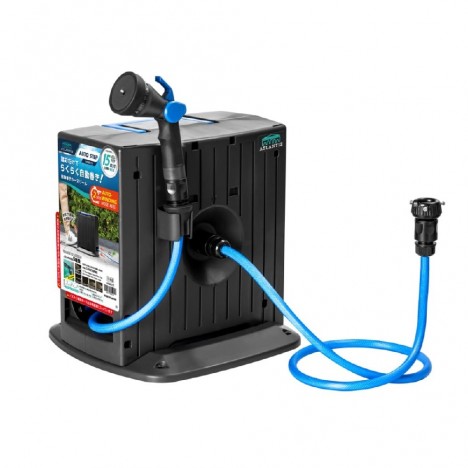
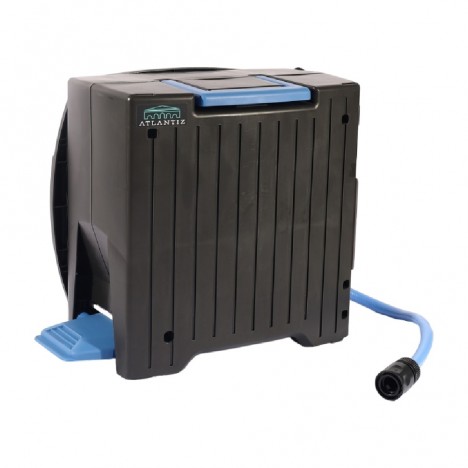
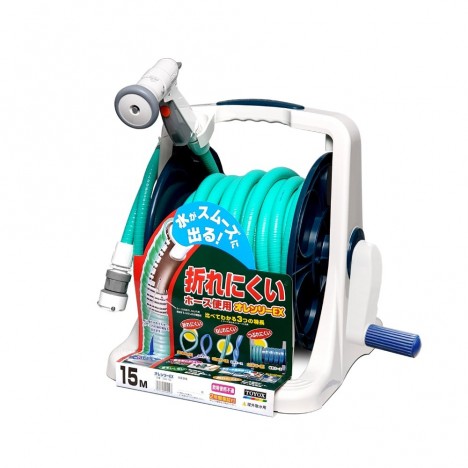
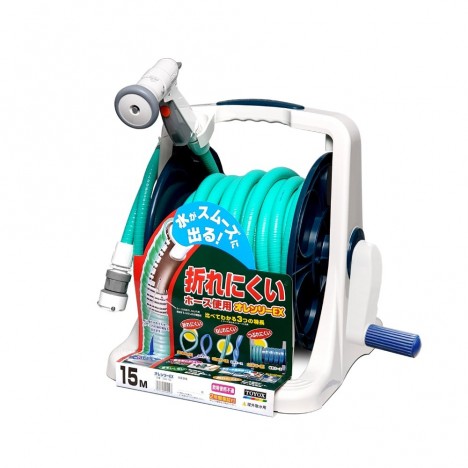
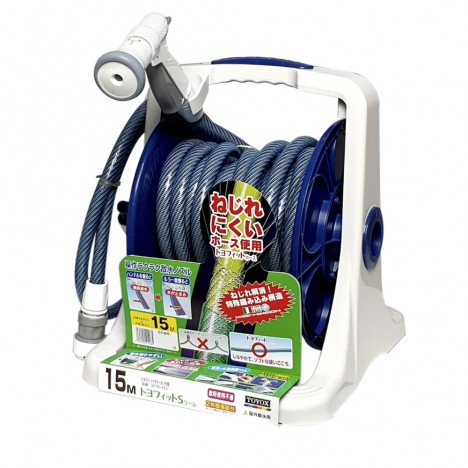
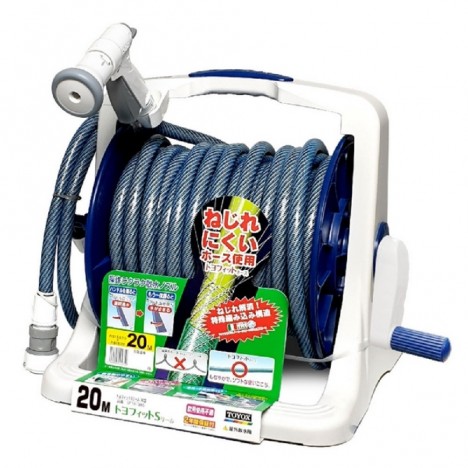
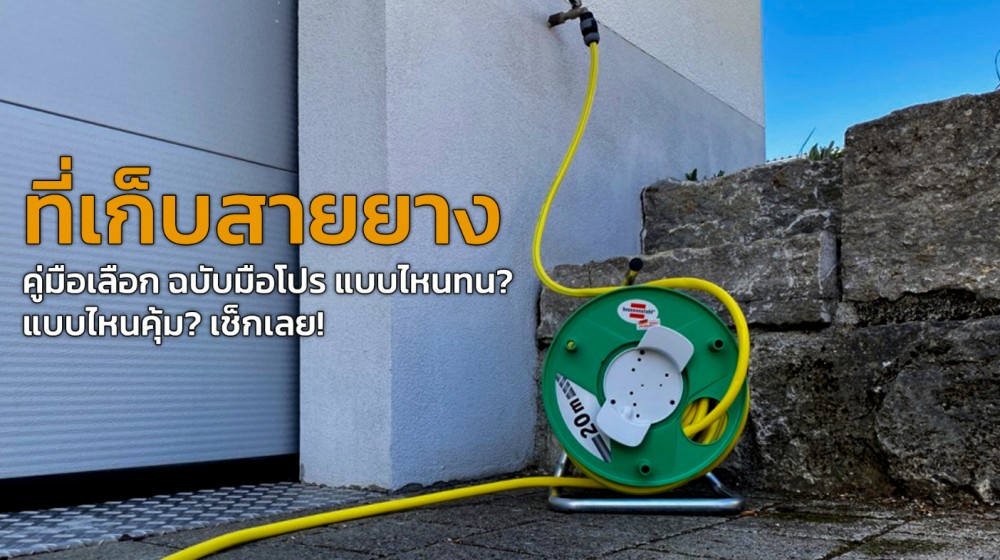
Has this ever happened to you? On a bright weekend morning, walking with a cup of coffee to admire your lovely garden, only for your eyes to catch a "fake green snake"—confused? It's that troublesome garden hose coiled up in a figure-eight, lying scattered across the lawn. Not only is it an eyesore, but when you pick it up to use, it kinks, stopping water flow, and you have to walk back to untangle knots... If this sounds like your déjà vu, trust us: you don't need a new hose. What you're missing is an item called Hose reel/storage .
Having good gardening equipment isn't just about functionality; it's also about design and smart living. In this article, we'll take you in-depth into hose storage—from types and materials to buying techniques based on real trial-and-error experience—so you get the most "worthwhile" and "durable" product possible.
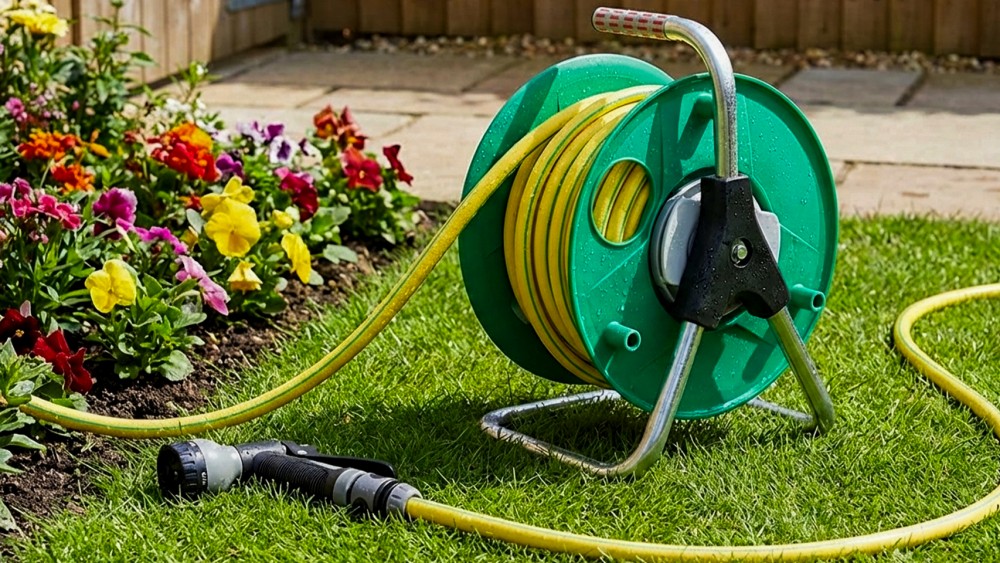
Why is hose storage a must-have your garden can't do without?
Has this ever happened to you? You're enjoying a peaceful mood, dragging the hose to the far corner of the garden, and suddenly the water stops because the hose kinked near the tap, or you waste 5–10 minutes untangling a messy knot. Hose storage—especially models with hose guides or auto-rewind mechanisms—makes watering effortless: pull it out, water, and retract it in 3 seconds. Job done smoothly and cleanly!
Say goodbye to creepy crawlies. This is a big deal! A damp pile of hose on the ground and dark hollows in the coil attract centipedes, millipedes, or even snakes! A hose reel helps break this cycle, letting you handle the hose with peace of mind without having to stay paranoid. If you're sold on getting one, don't rush out to buy a hose reel just yet! Check these 3 simple checklist items first to get the one that perfectly fits your home:
- Mainly consider your space: Limited space/condo? Go for a wall-mounted hose reel! It saves floor space and looks neat and clean.
- Large garden/multiple outdoor taps: A portable hose reel cart is more suitable—wheel it anywhere conveniently.
- Don't buy too much extra length: Measure the distance from the tap to the farthest point of your garden, then add just a little extra, about 2-3 meters. Getting one that is too long is unnecessarily heavy and tiring to reel in.
- Materials must withstand the sun: The sun here is intense—hotter than a microwave. It is recommended to avoid low-grade plastic. Look for UV-resistant ABS plastic, or if you prefer ultimate durability, go for metal.
In brief summary: Buying a hose reel is not just buying an "accessory"—it's buying "peace of mind" and "time" back for yourself. Give it a try; it'll genuinely make life better!
Get to know the types of hose reels
Matching your lifestyle is key to getting the best value. In the market, hose reels don't just come in one type, but are divided into 4 main categories based on usage habits. Let's see which type suits you best!
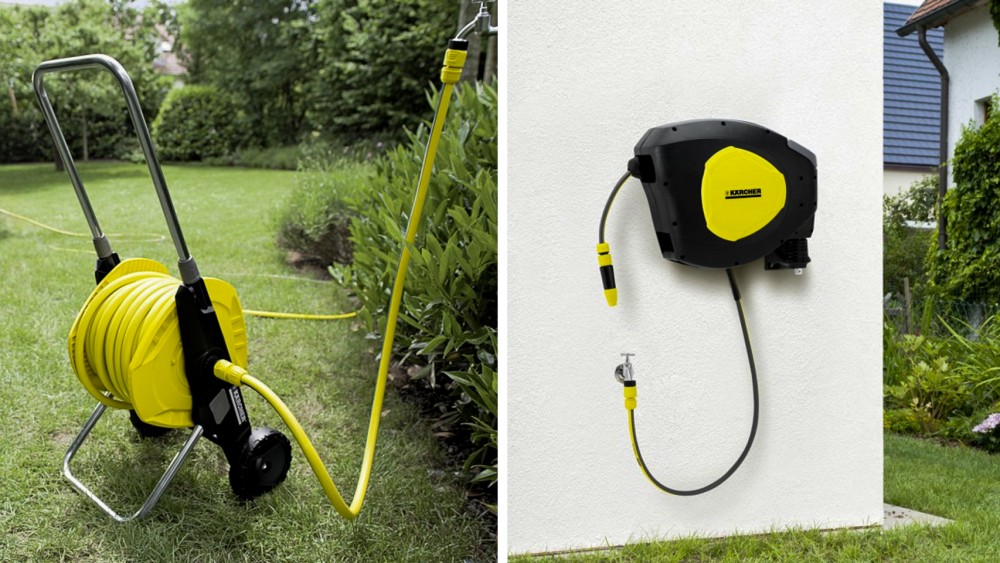
Wall-mounted hose reel
- Features: Fixed to the house wall near the water tap, manually reeled in by hand.
- Suitable for: Detached houses or townhomes with limited garden space and a single, frequently used tap location with no need to move around.
This is the most space-saving option, keeping garden floors clear and clean. However, the downside is that it cannot be relocated; once mounted, it stays put and requires drilling into the wall.
Hose cart or floor-standing hose reel
- Features: Equipped with wheels or a carrying handle, portable, and manually reeled in by hand.
- Suitable for: Houses with large gardens, multiple water taps, or those needing to pull the hose to wash cars in the front and water plants in the back.
Ultimate flexibility: If you easily get bored, love redesigning your garden, or need to use it in multiple spots, this type offers the best value. However, the trade-off is that it takes up storage space and requires bending down when reeling it in.
Automatic retractable hose reel
- Features: (Mostly) wall-mounted casing. Pull the hose out for use, and to retract, just give it a gentle tug to automatically rewind the hose.
- Suitable for: Convenience lovers, homemakers, or anyone who hates manually winding up dirty, muddy hoses.
This is the "game changer" of hose reels. It carries the highest price tag, but offers the greatest emotional payoff: no dirty hands, no back pain, and an instant modern look for your garden. However, be cautious with the internal spring mechanism, which can be difficult to repair if broken.
Hose Reel: Plastic or Metal?
Once you walk into the gardening section, you're bound to feel lost among all the hose reels. The material genuinely affects both your "wallet" and "durability." Let's take a clear look at which type truly suits your usage style.
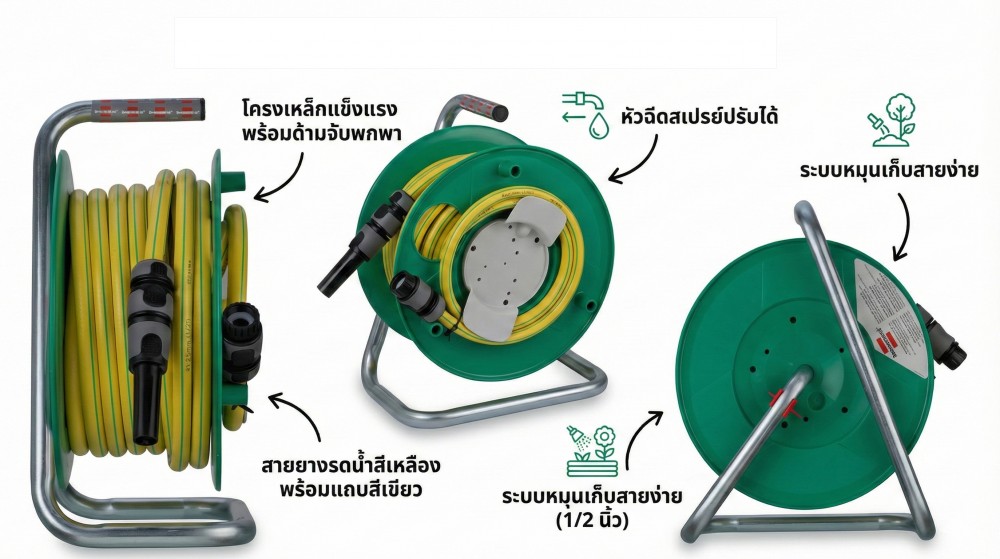
Plastic Hose Reel (Plastic - PP/ABS) – Lightweight, Stylish, and Maneuverable
- Pros: Featherlight and easy to move around. No need to worry about rust. Extremely budget-friendly. Plus, today's designs are stunningly aesthetic—especially automatic hose reel boxes that can easily double as home decor.
- Vulnerability to Watch Out For: Highly susceptible to sunlight. If you accidentally pick standard-grade plastic, exposing it to blazing sun for just a year can make it brittle and crack right in your hands.
- Recommendation: If you choose this path, aim strictly for models labeled "UV Resistant" or made from engineering-grade plastic (ABS). Paying a little extra for long-lasting use is much more cost-effective than buying a new one every year.
Metal Hose Reel (Metal - Steel/Aluminum) – The Heavy-Duty Tank
- Pros: Rock solid! If you use extra-long hoses in the 50-100 meter range, this is definitely the way to go. Its structure effortlessly handles the weight without wobbling and offers superior impact resistance. A must-have for heavy-duty, rugged work.
- Vulnerability to Watch Out For: The arch-nemesis is "rust" (if the coating isn't truly high quality) along with its "heavy weight." Moving it might require an extra pair of hands, or you'll get an impromptu arm workout.
- Recommendation: Don't just look at whether it's steel—check whether it has a thick "Powder Coated" finish. Or, if budget permits, we strongly recommend going for "aluminum alloy." It completely eliminates rust issues 100%, offering a sleek, rugged look built to last for generations.
Pre-Purchase Checklist
Supported Hose Length
- Don't just judge by looks; check if it can actually fit your existing hose length. If you have a 20-meter hose but buy a compact reel that only holds 15 meters... it's a disaster. The excess hose will spill out messily.
- Pro Tip: Always buy one size up. For example, if you have a 20 m hose, get a model rated for 30 m. It will be much easier to wind without being overly tight.
Drum Core Size
- This is a bit technical: a hose reel with a larger central drum core preserves hose condition better than a small drum. The wider bend radius prevents the hose from kinking and ensures smoother water flow.
Fittings and O-Rings
- The weakest points of a hose reel are the connection points between faucet-to-reel and reel-to-hose. Give them a wiggle to see if they fit snugly or feel flimsy and cheap.
- We've previously bought very cheap models, only to find the swivel connector leaking from day one because of low-quality internal O-rings. Water sprayed all over our legs every time we watered the garden... definitely not worth it.
Stability
- For floor-standing or cart models, try giving them a shake or pulling the hose. If the base isn't stable, pulling a long hose will cause the reel to tip over and flip face down, which is super annoying. The base must be wide and have decent counterweight.
Real experiences from the lawn: Things sellers never tell you about hose reels and storage
Never pull it all the way to its limit
For automatic hose reels, many people accidentally pull the hose out until it's completely taut. This is the #1 reason why internal springs "break" or get "stuck". You should always leave about 1-2 coils of hose inside the casing, and avoid yanking hard when it's fully extended.
Always drain the water before storing
Whether it's a manual crank or an automatic hose reel, winding a hose full of water is extremely heavy. Moreover, trapped water pressure can cause the hose to swell or damage the internal reel connectors.
How-to: Turn off the tap -> Disconnect the spray nozzle and purge all remaining water -> Then wind it back up. This saves effort and protects your equipment at the same time.
Mounting location is key
If you choose a wall-mounted hose reel, try to find a spot that avoids the afternoon sun. Trust us—even if the specs say UV-resistant, you know how Thailand's sun is; nothing holds up 100%. Installing it in the shade or facing east will extend the color life and prevent plastic brittleness for another 3–5 years.
Rinse the hose before winding
If your hose is dragged through mud and wound up immediately, dirt and sand will cause friction inside the housing or jam the mechanism. Grabbing an old rag around the hose and wiping it down as it retracts helps a lot.
Conclusion
Choosing a hose reel is like choosing a piece of furniture for your home. Don't just think of it as an agricultural tool to shove in the backyard; see it as equipment that organizes your life. If you ask us which hose reel is the most worthwhile, the answer is "the one that's most convenient for you to use."
We hope this guide helps you make a sharper decision. Go inspect your garden space and choose the right hose reel, so that your next watering session is a moment of joy—not a moment spent untangling knots!
Select Hose reel/storage to suit the application