


 EN
 ไทย


Customers Also Purchased


Have you ever woken up in the morning, stretched in the warm sunlight, walked into the bathroom to wash your face and brush your teeth, but when you turned the faucet... there was only silence? No rushing water, not even a drop—just the hissing sound of air coming out.
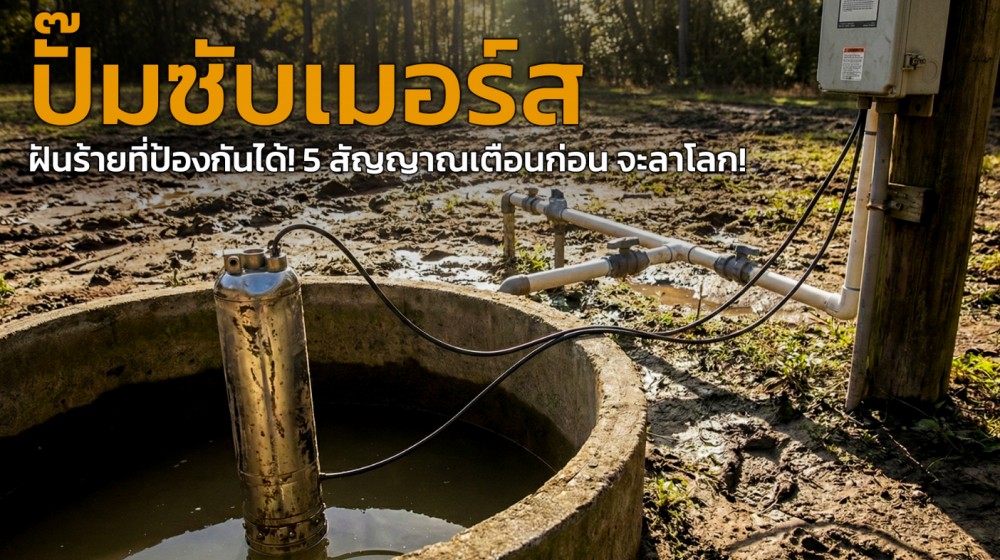
For farmers, this is a disaster that could ruin crops worth hundreds of thousands of THB in an instant. For homeowners, it's the start of an extremely hectic day. But would you believe that before this "water not running" event happens, Submersible Pump submersible pumps (deep-well pumps) submerged dozens of meters underground have already sent warning signs... but you might not have noticed them.
In this article, we'll decode 5 warning signs that tell you your submersible pump is about to fail, along with solutions to help save your money.
First, we need to understand why submersible pumps fail easily without proper maintenance.
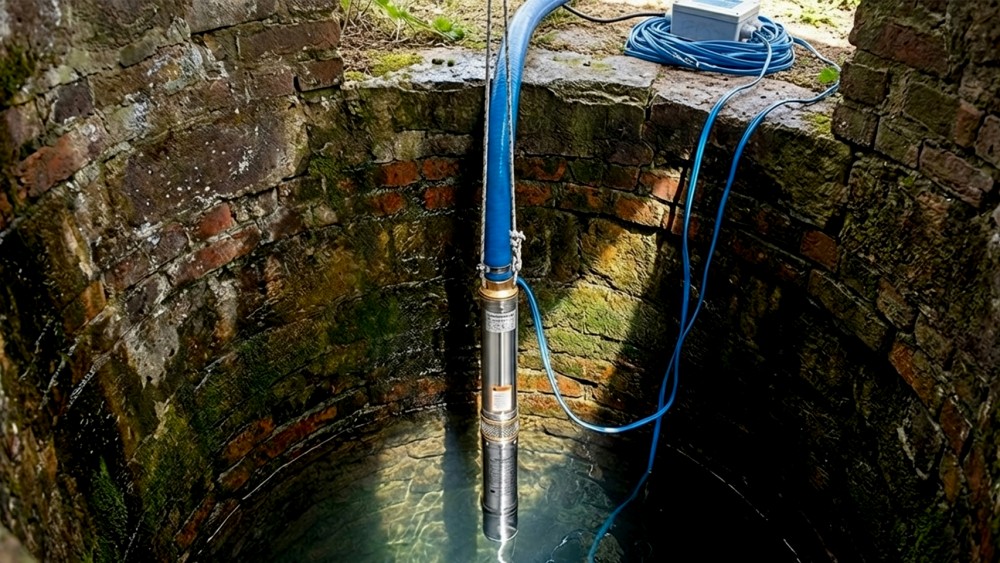
What's scarier than the working environment is being 'out of sight'... If it were an automatic pump in the backyard making grinding noises or leaking water, we'd see and hear it just walking by and fix it in time. But a submersible pump operates 50–100 meters underground. No matter how loud it screams, we can't hear it; no matter how burning hot it gets, we can't feel it. By the time we realize it when the water stops running, it's often too late—the motor might already be burnt out or the impellers stripped beyond repair.
5 Warning Signs of a Submersible Pump Before Trouble Hits
Sign 1: Hearing strange noises from the submersible pump
Normally, a submersible pump operates very quietly because it is deep underwater. But if one day you walk past the wellhead or stand near the control box and hear strange noises, that is the first warning sign.
- Humming: The motor tries to rotate but cannot. This may be caused by a voltage drop or something jamming the impeller.
- Grinding: Sounds like metal rubbing against metal or gravel running through the pipe.
- Water Hammer: A loud "bang!" every time the pump starts or stops.
These noises usually indicate broken bearings or worn impellers from pumping sand over a long period. Sand acts like coarse sandpaper, grinding down the internal pump components every second it runs.
Quick Fix
- Turn off the switch immediately! Do not force it to keep running.
- Check the electric current at the control box to see if it exceeds the rating.
- If the loud noise comes from the pipe, check the check valve to see if it is still functioning properly, because strong backflow can snap the pump shaft.
Sign 2: Electricity bill... skyrocketing like a rocket
This is the most painful sign for your wallet and is often overlooked because people assume the power company raised rates or they used more water. Water bills remain the same and water consumption remains identical, but the electricity bill abnormally surges by 20-30%. Touching the breaker or wiring feels extremely hot.
Your water pump is "over amping." The main causes include degraded motor windings with insulation beginning to melt, causing minor internal short circuits; high friction from stiff impellers or tight bearings, forcing the motor to exert more effort to turn than normal—just like someone trudging through mud requiring much more energy than walking on pavement; or clogged impellers with algae or limescale buildup, making the pump work harder to deliver the same amount of water.
Quick Fix
- Use a clamp meter to measure the operating current and compare it with the pump's nameplate. If the nameplate specifies 7 A but you measure 10-12 A, be prepared to replace the pump before the motor burns out inside the well.
Sign 3: Water flow... weaker than ever
Previously, opening the tap blasted water high up to the roof; nowadays, barely enough flows to wash your hands cleanly. Water flow has noticeably decreased, sprinklers won't rotate full circle or spray distance has shortened, and air bubbles emerge with the water. These submersible pump symptoms are fairly complex: worn impellers mean the pump still spins at normal speed, but the eroded blades can no longer generate head pressure; clogged suction strainers due to sediment, rust, or plastic bags blocking the water intake; or lastly, a dry well—the most dangerous of all! The groundwater level drops to the point where the pump sucks air mixed with water. Ingesting air causes cavitation, which can completely erode and destroy the impellers in just a few hours.
Quick Fix
- Check the well water level immediately
- During the dry season, throttle down the valve at the wellhead to match the well's recharge rate.
- If the water level is normal but the pump discharge is weak, you may need to pull up the pump to inspect the impellers (floating sand impellers are plastic and wear out faster than stainless steel).
Sign 4: Discolored water... mixed with sediment
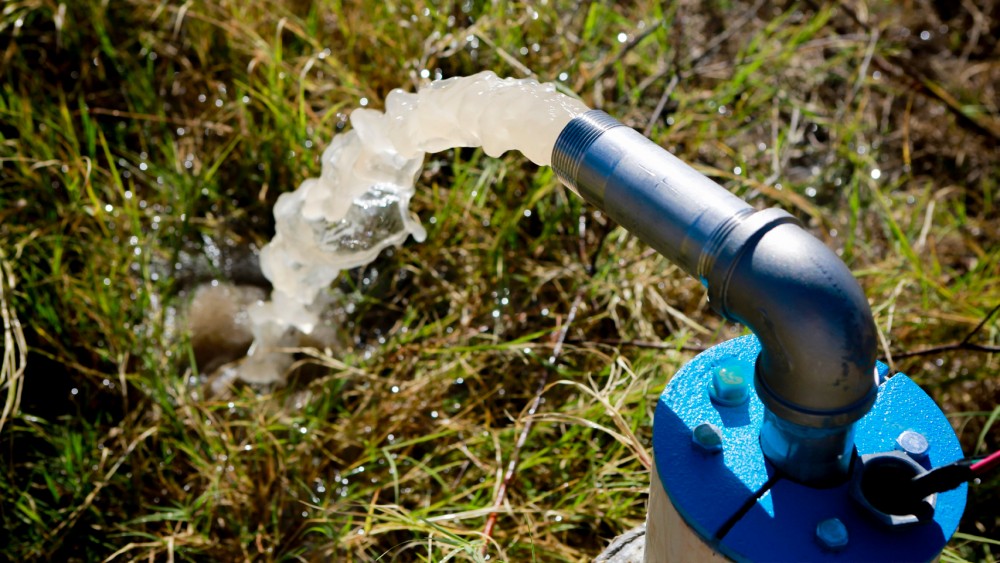
Good groundwater should be clear and clean (or clear after filtration). But if out of the blue, the water starts becoming cloudy, turns red or brown, or contains sand particles... the well might be damaged/the casing cracked, gravel packing from the side of the well is flowing into the pipe, or the pump is installed too deep and sucking up silt from the bottom of the well. The submersible pump itself may be corroding, with mounting bolts or the cast iron pump housing beginning to deteriorate. Sand is the ultimate nemesis of submersible pumps; if sand gets mixed in, the submersible pump will fail very quickly, and sand will also damage valves, faucets, and household appliances in your home.
Quick Fix
- Stop using the submersible pump and perform well flushing (Air Lift).
- Pull up the submersible pump to check its depth level and adjust it higher to escape the sediment zone.
Sign 5: Rapid on-and-off cycling
Hearing the control panel click "click... click... click..." every 2-3 minutes or even more frequently? The submersible pump runs briefly, stops, and then starts again, even though the water usage remains the same. This condition is called Short Cycling. The cause does not come directly from the pump itself, but from accessories.
- Pressure tank deterioration: Loss of air charge in the tank or a ruptured rubber diaphragm prevents pressure accumulation, causing the system to trigger the pump immediately even when a faucet is slightly opened.
- Malfunctioning pressure switch: Settings are adjusted too stiff or too soft.
- System water leak: A cracked underground pipe or a leaking toilet causes pressure to drop constantly.
Why is it dangerous? Each motor start draws 3-5 times higher current than normal (Inrush Current) and generates high heat. Frequent starting will eventually cause the "capacitor to blow" or the "motor winding to burn out."
Quick Fix
- Check the air pressure in the pressure tank (inflate to specification).
- Locate and fix leaks in the house.
Deep Dive - The Invisible Silent Killers
Besides the 5 physical signs, there are 2 invisible enemies that cause submersible pumps to meet an early demise.
Voltage drop and power surge issues
Thailand and voltage drops go hand in hand, especially at the end of transmission lines. Submersible pumps require a stable voltage, such as 220V +/- 10%.
- If voltage drops (e.g., down to 180V): The motor will lack rotational torque, but it will attempt to draw more current (high Amps) to maintain power > resulting in severely overheated and burned-out windings.
- Solution: Install a control box equipped with Phase Protection or Voltage Protection that cuts power immediately when the electrical supply is abnormal. Don't scrimp on a panel costing a few thousand baht, because it protects a pump worth tens of thousands.
Lightning strikes
It doesn't even need to strike the well directly; just striking the ground within the nearby vicinity, the massive electrical surge will travel through the soil into the pump's power cable submerged in water.
- Consequences: Melted wiring, exploded control box, motor shorted to ground
- Solution: Install a surge protector (lightning protection) in the control panel and properly ground the system to standard.
Maintenance Survival Guide
If you've read this far and are starting to worry, don't panic. Here is a simple maintenance checklist that will help extend the lifespan of your submersible pump.
Monthly
- Listen to the sound: Walk over and listen to the pump running to check if it still sounds smooth.
- Inspect water color: Pour water into a clear glass to check for sediment.
- Check for heat: Feel the power cord (with caution) or touch the circuit breaker to see if it is excessively hot.
Every 6 Months
- Measure electric current: Use a clamp meter to verify if current draw remains normal.
- Check the pressure tank: Tap to listen or measure air pressure.
- Clean the control box: Dust it off and tighten wire connection terminals (loose connections = fire hazard).
Annually
- Check water quality: Test pH levels; if water is highly acidic, a grade 316 stainless steel pump may be required.
- Inspect rope/wire sling: Check if the suspension rope/cable is still strong (never let the pump hang solely by its power cable!).
Q&A
Q: Can a submersible pump be left running all day?
A: If the cooling system is properly designed (water continuously flows over the motor), submersible pumps are capable of continuous duty. However, it is best to allow rest periods or use a float switch shut-off system to prevent overloading.
Q: Is a flow sleeve (shroud) necessary?
A: Highly necessary! If the well casing is much larger than the pump (e.g., a 4-inch pump in a 6-inch well), water flows over the pump too slowly, failing to cool the motor adequately. Installing a cooling shroud to direct water flow will keep the motor cool and significantly extend its service life.