


 EN
 ไทย


Customers Also Purchased
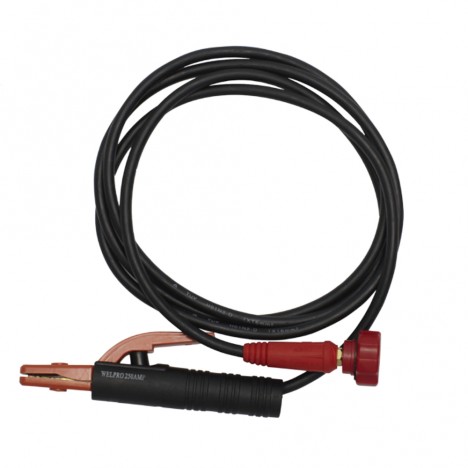


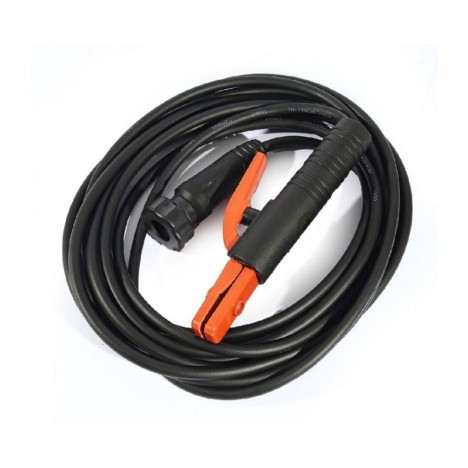

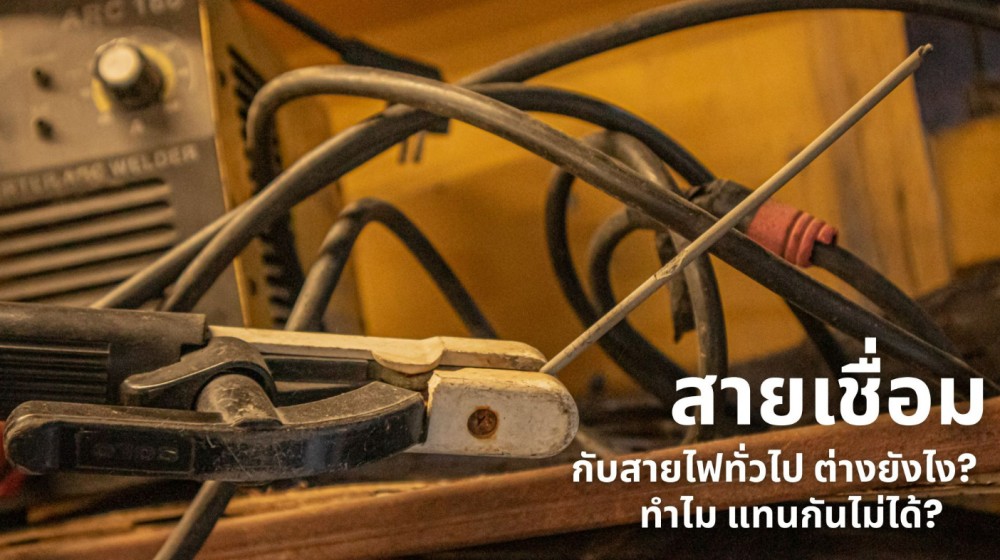
Have you ever wondered: “If I don't have a Welding Cable welding cable, can I use regular household electrical wire instead?” It sounds harmless because both welding cables and electrical wires fundamentally conduct electric current. But in reality, what happens on the job site isn't that simple.
Welding draws sudden, continuous high current and must withstand conditions dozens of times tougher than household wiring—including heat, moisture, abrasion, dragging across the floor, contact with steel, and flying weld spatter. General electrical wire simply cannot withstand this type of environment.
In this article, we will explore and answer why a welding cable is not just a regular wire that is thicker or more expensive, but is practically a piece of safety equipment in welding work. We cover electrical reasons, construction, resistance to heat and abrasion, and risks many people might never have known—helping you better understand welding cables, choose appropriately, and avoid dangerous risks from using the wrong type of cable.
How is a Welding Cable different from regular electrical wire?
A welding cable is a special type of electrical cable designed specifically to handle welding current. Welding current surges and fluctuates extremely quickly, especially during arc ignition, where the current can spike instantly in a fraction of a second.
This requires the welding cable to handle high peak currents without building up excessive heat. The internal conductor structure of a welding cable must therefore have extremely fine stranding to distribute current and heat effectively.
Meanwhile, general electrical wire designed for residential or factory wiring operates in a much steadier manner, with constant current flow that doesn't spike or fluctuate rapidly like an arc strike in welding. Even the insulation design is distinctly different; household wire is not built to withstand sudden heat, floor abrasion, repeated twisting from being dragged around jobs, or welding sparks. Therefore, using general electrical wire in place of a welding cable causes it to wear out quickly, heat up rapidly, and exponentially increases the chances of electrical problems.
Importantly, General electrical wire is designed to handle only about 10–30A, based on cross-sectional sizes used in households, unlike welding applicationswhich typically require a starting current of 150–200A or more. This makes it even clearer that general electrical wire can never safely handle the high current loads that welding cables encounter.
Understanding Welding Cables, Ground Cables, and Other Cables
In addition to Welding Cable Mistakes You Shouldn't Overlook Always remember that all types of welding machines—whether MMA, MIG, TIG, or other systems—generate massive thermal energy from the electric arc within a split second. During arc striking, the current surges to levels that general electrical cables are never designed to handle, easily causing the cable to overheat until the insulation becomes brittle, melts, or blisters.
Not to mention the continuous pulling and twisting forces from moving the welding torch or holder along the workpiece, which puts far more stress on the welding cable than one might expect.
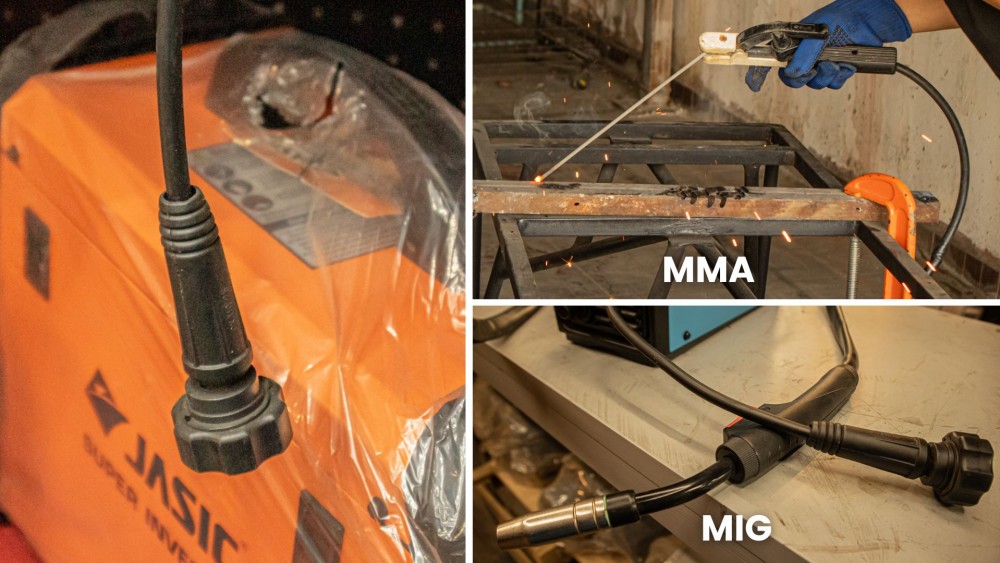
Moreover, a welding cable does not merely serve to carry electric current from the machine to the workpiece; it is an essential component of the entire welding system. Each welding process involves different types of cables, as follows:
1. Welding Cable with Electrode Holder
This is the assembly used for stick welding (MMA / Stick), which most people are probably most familiar with. The welding cable connects directly to the electrode holder to deliver direct current to the electrode used for striking the arc. Cable flexibility is vital here, as it must move constantly throughout the welding process.
2. Ground Cable
Many people overlook this part, but the ground cable or earth cable makes up half of the welding circuit. Without a ground cable, the current cannot complete a circuit, and an arc cannot form.
The ground cable also requires a welding-grade cable because it must handle the same high currents as the output lead. Using a standard electrical wire as a ground cable will cause heat to build up until the insulation becomes brittle, cracks, or easily burns—especially when clamped to steel structures that have sharp edges, rust, or experience vibration during work.
3. MIG and TIG Welding Cables
In MIG and TIG welding, both systems utilize welding cables to carry electric current from the welding machine to the torch. Machines for these processes must also support high currents of 100–200A and above, which standard electrical wires certainly cannot handle.
However, MIG and TIG machines also require dedicated cable assemblies, such as wire conduits and gas hoses for MIG, or argon gas hoses and control cables for TIG. Therefore, standard welding cables or regular electrical wires cannot replace these integrated cable assemblies at all.
4. AC Input Cable
This is the power cord that handles the standard domestic voltage of 220V and the actual current drawn by the welding machine, such as 10A, 15A, or 20A. The suitable cable for connecting AC power to a welding machine is a standard power cord, such as VCT or heavy-duty rubber cable rated for the machine's current draw specifications.
Internal Construction of Welding Cables: The Difference Beneath the Insulation
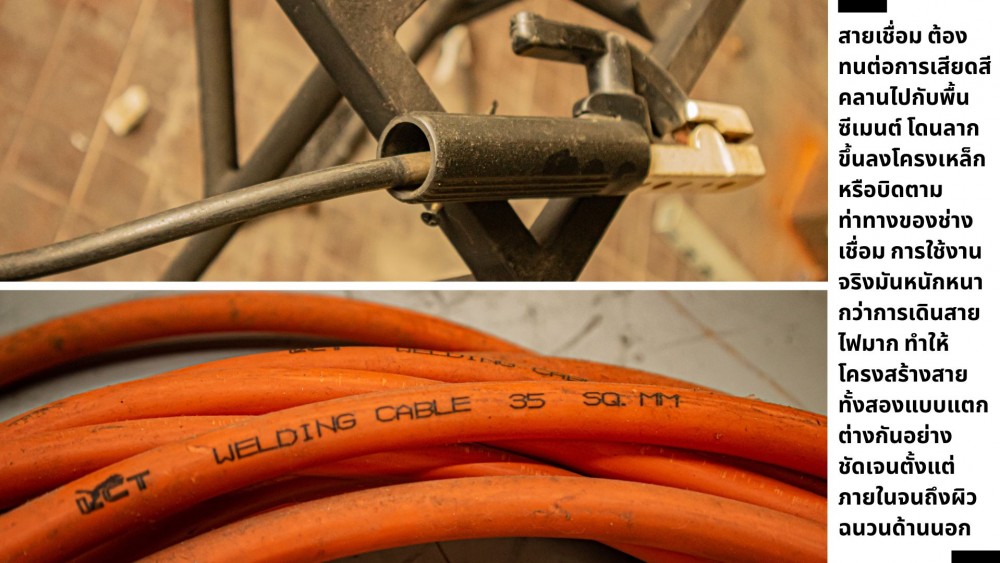
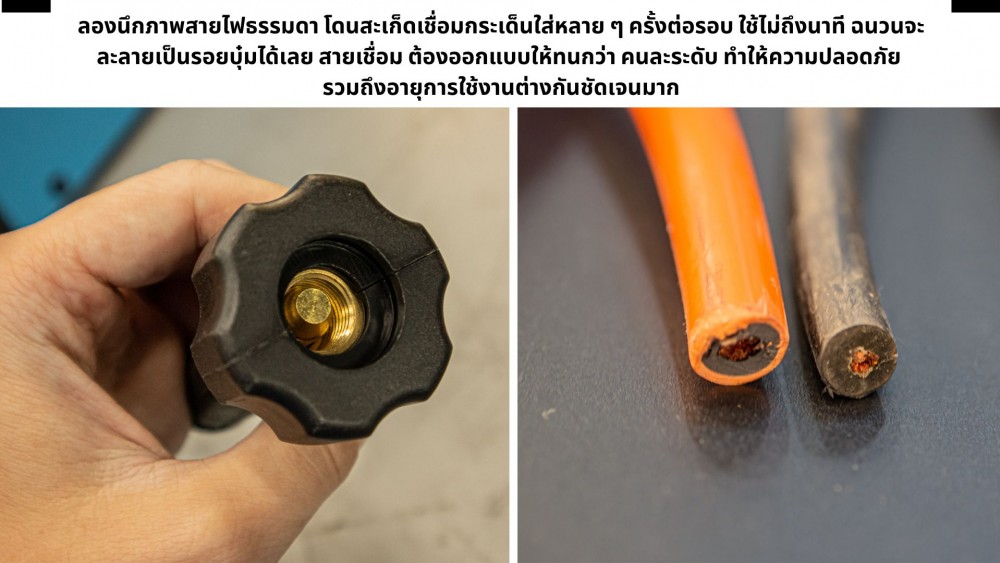
If you cut the end of a welding cable and a standard electrical wire to compare them side by side, the difference is obvious without needing any explanation. A welding cable consists of a massive number of copper strands that are many times thinner than those in standard electrical wire.
These fine copper strands (Fine Strands) provide maximum flexibility. Even when bent at sharp angles or twisted around, the copper strands do not easily break.
In contrast, standard electrical wires use thicker copper strands in fewer numbers because they are designed for structural rigidity when run through conduits or cable trays. However, as is well known, "rigidity does not equal flexibility." When dragged across the floor or twisted along with the welding torch, the internal copper strands can gradually snap one by one until conductivity fails and heat accumulates.
Why Are Welding Cables More Flexible Than Standard Electrical Wires?
This flexibility comes from a exponentially higher number of copper strands. A 35 mm² welding cable may contain more than 1,000 copper strands, whereas general electrical wire contains only tens to hundreds of strands.
The more strands and the smaller the strand size, the higher the flexibility. This is ideal for welding work that requires maneuvering the welding cable and torch around the workpiece, pulling cables up structures, working at heights, or constantly moving. Using general electrical wire in these cases is not only difficult to handle, but also dangerous.
Heat: Often Overlooked, but Crucial for Welding Cables
Welding is the process of melting metal, which requires intermittent bursts of very high current. Each time an arc is struck, the electrical load surges rapidly. General electrical wires designed for lower currents will accumulate heat until the insulation softens. Once the insulation begins to degrade, it becomes brittle, cracks, melts, or leaks, leading to potential short circuits.
Welding cables are specifically designed to handle this load, withstand higher temperatures, and dissipate heat much better.
How Different Is the Insulation? And Why Does It Matter?
Another major difference between welding cables and general electrical wires is the "insulation"—and they are worlds apart. Beyond " Get to Know Electric Welding Cables! What's the Difference Between Black and Orange? ", most welding cables feature synthetic rubber insulation such as EPDM or Neoprene, or special-grade PVC insulation that resists heat, friction, abrasion, moisture, oil, and welding spatter. In contrast, general electrical wire uses lower-cost materials that cannot withstand the high heat of welding, welding spatter, or proper abrasion resistance.
How Risky Is It to Use General Wire Instead of Welding Cable?
Using general wire instead of welding cable can lead to several serious issues. Many people don't realize this is a genuine and severe hazard. At first, everything might seem normal, but over time—especially in continuous welding conditions or high-heat environments—the danger accumulates until it becomes a major problem.
Using general electrical wire instead of welding cable completely exceeds the wire's design specifications. Manufacturers do not design general wires to handle sudden high-current surges or the heat buildup from welding.
Using it this way is neither safe nor appropriate from an electrical engineering perspective. Even if the current flows once connected, it does not mean it is safe or capable of supporting real welding work.
Potential risks that may follow include:
- Wire heats up until the insulation becomes brittle, cracks, or bubbles If you continue to force its use, heat buildup will multiply and affect the internal conductors, drastically reducing current transmission efficiency.
- Insufficient current causes the arc to stutter and cut out Not only does this degrade weld quality, but it also forces the welding machine to work harder than normal.
- Insulation melts, leading to a short circuit Can turn into a fire within a matter of seconds
- Risk of electric shock or on-site fire In confined spaces or damp areas, when insulation is compromised and conductors touch the ground or any structure
All of these issues result from using the wrong type of cable, having nothing to do with the quality of the welder or welding machine itself.
Conclusion
Let me summarize it simply in one sentence like this: Welding cables are specifically built to handle heavy-duty use, high heat resistance, high flexibility, and provide better safety than general electrical cables—they must never be used interchangeably. Every type of welding requires a high and stable current, which general electrical cables are never designed to handle. Even if they work temporarily, accumulated risks will escalate into bigger problems than most people realize.
If you want safety, good weld beads, and extended welding machine life, choosing the right type of welding cable is the most worthwhile investment in the long run. High flexibility, heat-resistant insulation, and fine copper stranding are engineered for maximum welding performance, without worrying about heat, durability, or short circuits.
Choosing Welding Cable Good quality is the answer that protects your work, your machine, and helps you work safely.


