


 EN
 ไทย



Customers Also Purchased
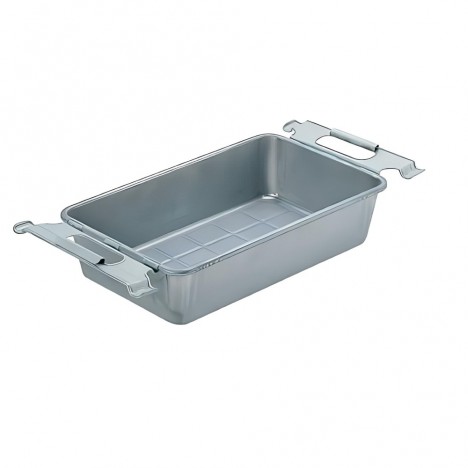
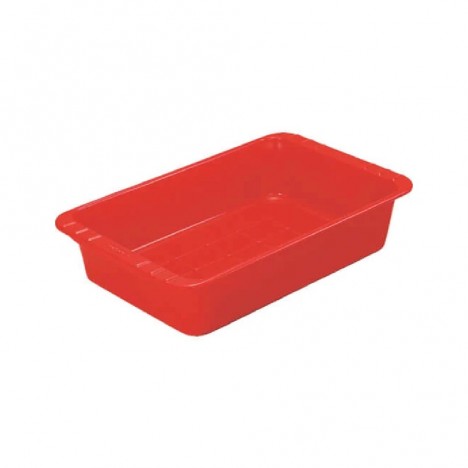
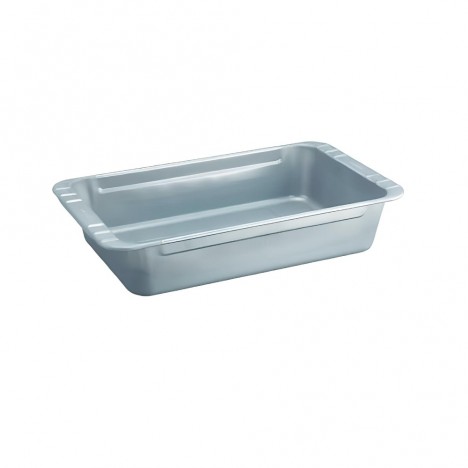
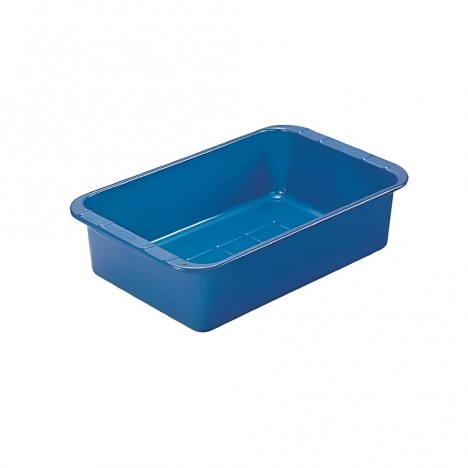
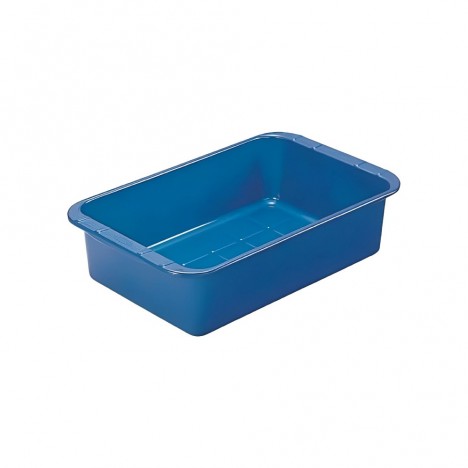
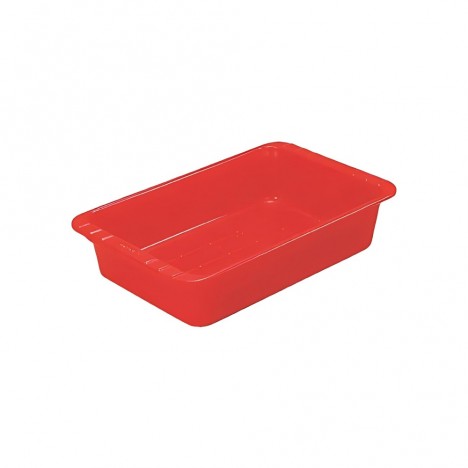
If you ask mechanics, "When loosening bolts, removing spare parts, or organizing small components, what do you use to hold your items?", the most common answer you'll hear is simply, "I use Steel Tray this—it's cheap, tough, and gets the job done no matter what." And the next question is... in an era where plastic trays come in endless varieties—beautiful compartments, lightweight designs, bright colors, with wheels, and with lids—why do so many technicians still choose steel trays as their go-to workbench companion? In this article, we'll break it down from every angle to see why plain-looking steel trays still win the hearts of real working professionals.
Steel trays aren't just about familiarity; they represent trust built right on the job site
When talking about steel trays, many people probably picture the exact same scene... an old steel tray in the storage room that's likely been in use for over ten years, full of chipped paint, dents, and scratches. But surprisingly, it still works just fine—no cracking, no brittleness, and no snapping in half to cause headaches.
Compare that with some plastic trays we've seen: after just a year of use, a hard drop onto the floor cracks them, placing something a bit heavy warps them, and they lose their shape, leaving you sighing, "Wow... I just bought this recently." This is precisely why many mechanics trust steel trays without a second thought.
- Steel trays withstand impacts very well. When we sweep bolts into the tray or toss tools in hastily without arranging them neatly, they handle it all without fuss.
- When exposed to oil, grease, or various engine degreasers, they won't melt, swell, or turn brittle. This is unlike certain types of plastic trays that, when exposed to these harsh chemicals for a long time, start to become brittle, lose their finish, and eventually crack, forcing us to replace them anyway.
- After long-term use, even if they look a bit aged, they can still handle tough jobs just as well. Rust might pay a visit over time, but unless it reaches a critical state of decay, it remains a tray that performs its duty to the fullest.
These things aren't textbook theories; they are real day-to-day, on-site experiences that technicians encounter themselves. Real use, real breakage, trial and error—all of it gradually builds an "unconscious trust" that when it comes to heavy-duty, messy, rugged jobs filled with oil, grease, and piles of bolts and screws,
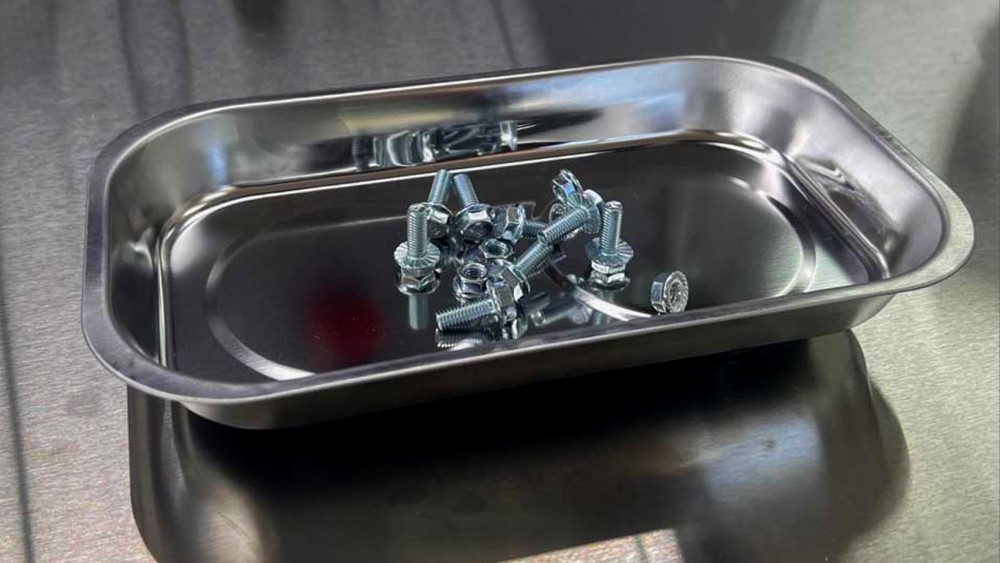
Steel Trays: A weight that seems like a drawback… but turns out to be a strength on a technician's workbench
When choosing storage trays, many people often think that lighter is better because it's easy to lift and convenient to move around. Plastic trays completely satisfy this point. But try picturing a technician's workbench:
- A workbench packed with bolts, washers, spring washers, bearings, rubber bushings, and various small parts all over.
- One hand holding a wrench, the other holding the workpiece, sometimes sweeping parts into the tray without gently placing them down.
- Or in some jobs, having to quickly pull the tray closer with just a single fingertip.
In situations like this, a tray that is "too light" easily slips, drops off the bench, or slides from impact. Once the tray moves, the contents move with it, turning into the dreaded task of picking up scattered parts that everyone hates. However, a steel tray, with its slightly heavier weight, instead makes it:
- Grip the bench more firmly without easily sliding around.
- Stay put without bucking away when throwing items into it forcefully.
- Stack more stably when arranging multiple trays on shelves or rolling carts.
A technician once joked with us: "Plastic trays are great when you have to carry them long distances, but steel trays are great when doing real work in one spot, taking a beating all day long." It sounds funny, but if you've worked on heavy-duty job sites, you know it's so true. That weight, which seems like a disadvantage, becomes a "stability" that significantly reduces the issue of spilled, rolling, or flying parts.
The clattering sound that many technicians secretly love (even though their wives say it's utterly annoying)
Anyone who has spent time in an auto garage, machine shop, or maintenance bench is probably familiar with this sound… It comes as a combo pack: the background chatter of people working and the constant clatter of metal impacting metal.
- The sound of bolts hitting a steel tray with a distinct "clink-clank."
- The sound of wrenches, pry bars, and large breaker bars dropping into the tray with little mercy.
If you can picture it and think, "Yeah, that sounds familiar," it means you and I have definitely shared the same atmosphere. It's not just annoying noise; from many technicians' perspective, it's the "sound of progress."
Someone once told me, "Just hearing the bolts drop into the steel tray tells me that the assembly is almost back together or the job is nearly finished." It's like the daily rhythm of work. When switching to plastic trays, the sound becomes softer, quieter… but the feel simply isn't the same.
Of course, from an acoustic engineering perspective, a steel tray is practically a prime source of resonant noise. But in a mechanic's world, these very sounds make them feel like they are "truly in work mode." It might not be the primary reason for choosing a steel tray, but it’s a subtle charm that plastic trays simply cannot provide.

Withstands heavy loads, sharp edges, and pointed objects—real workshop work isn't just about small screws.
When we talk about storage trays, many people primarily think of storing small "nuts, screws, and washers." High-quality plastic trays certainly do an excellent job at that. But in the real life of a tradesperson, work is never that tidy. In a single tray, you often find:
- Drill bits with sharp points that could easily puncture cardboard boxes.
- Sharp metal shavings from grinding that can cut your hand if you accidentally brush against them.
- Small scrap metal plates left over from cutting, piled up messily in a single tray.
- Screwdriver bits and impact driver bits, often tossed into the tray without any neat arrangement.
- Large bolt heads or parts with hard, sharp edges that are ready to scratch the tray walls at any moment.
If you put these items in thin-walled plastic trays, over time you'll start to see scratches, both deep and shallow. Walls may develop hairline cracks unnoticed, and when you carry the whole tray and it suddenly cracks open mid-way... you know what happens next. In contrast, even if a steel tray gets scratched or dented, its structural integrity remains intact for long-term use. This is why many mechanics believe that "steel trays are made for things you wouldn't dare put in a plastic tray." Especially for work involving sharp, heavy, or high-impact objects, steel trays serve as a much more reliable "frontline shield."
Chemicals and oils: Steel trays aren't afraid of what certain plastics fear.
Take a look around any workbench. Imagine what you'd see: engine oil, gear oil, degreasers. Some of these liquids are harsh enough to degrade certain plastics, making them brittle, cracked, or noticeably dull. If we use plastic trays without knowing their exact material composition, there's a chance they will deteriorate prematurely without us intending it.
A steel tray's enemy is "rust," but generally, if it has a decent coating and isn't submerged or left with standing water continuously, it withstands these chemicals quite well. Plus, if the coating starts to peel, you can easily apply anti-rust primer or repaint it to keep using it. Simply put, in a world full of oils and solvents, steel trays are easier to maintain than plastic trays in many situations.
Used for ten years, it might not look as pristine as day one… but it remains the tray mechanics trust.
Yes, steel trays don't stay looking great forever. The paint might chip, and dents might form from the impact of heavy parts. Scratches cover the bottom of the tray, and some corners might start showing rust. It might sound like an old item nearing the end of its life, but to many mechanics, this isn't a "flaw" at all. On the contrary, it represents "marks of experience" on the same tray that has accompanied them for years—like the worn spots and scratches on a long-used workbench: the older it gets, the more familiar it feels.
We once saw a workbench with an old steel tray sitting next to a brand-new, nice-looking clear plastic tray that the owner had just bought. The result was that the clear plastic tray became a clean storage spot for infrequently used, neat, and lightweight items. But that old steel tray was the one used every single day—nuts, screws, grease-stained spare parts, and heavy metal components were tossed into it without a second thought.
When asked, "Why not use the new tray? That one looks nicer and is clear too," the answer was simple yet profound: "This one has been with me for a long time. I know the feel of it. It's tougher too. Putting heavy, dirty stuff in a steel tray is better—no regrets if it gets beaten up."
It's no longer just about durability; it has turned into a unique bond between the mechanic and the steel tray. Most steel trays don't simply "break and get thrown away"; rather, they gradually "age alongside us." Sometimes, looking at the tray feels like seeing a tangible history of all the repair and modification jobs that have passed through our hands over the years.
Total long-term cost: Steel trays might not be the cheapest when purchased, but they offer the best value in real-world use.
From the perspective of garage owners, factory owners, or tradespeople who have to buy their own equipment, choosing a storage tray isn't just about looking at the shelf price, but rather the "total cost." If a plastic tray is cheaper but breaks easily and needs replacing every year, compared to a slightly more expensive steel tray that lasts 5–10 years, the average annual cost of a steel tray might actually be lower. Not to mention...
- The cost of time when items in the tray spill everywhere, leaving you picking up screws one by one.
- The headache cost when you can't find things because the tray broke right when you were at your busiest.
So when they say "steel trays are a better value," it doesn't mean they don't know the benefits of plastic trays, but rather they're judging based on real, on-the-job experience.

So what should a good steel tray for technical work actually look like?
If you're starting to feel like "Alright, steel tray it is," the next question is: which kind of steel tray? Which one is truly suitable for technical work? Choose the wrong one, and it might just end up being a cluttered tray sitting in the corner of your workbench instead of serving as a genuine work aid.
From talking to seasoned technicians who load their tools into pickup trucks and travel between job sites, as well as quietly observing workbenches across various garages, we've summarized it simply for you—read this and you can pick the right one immediately without having to guess.
- Appropriate steel thickness: If it's too thin, the tray bends easily; under heavy loads, the bottom might sag. If it's too thick, the overall weight becomes unnecessarily heavy.
- Neatly hemmed edges with no sharp edges: A good tray has hemmed or rolled edges that leave no sharp burrs, since technicians reach in and out of the tray all day long.
- Solid welds that don't penetrate through or bulge, especially at the corners: If the welding is done right, the tray won't easily split or crack.
- A decent rust-preventive coating: It doesn't need to be heavy-duty industrial luxury, but having basic protective coating significantly extends its service life.
- A size that fits your workbench and work style: Some prefer shallow trays to see all parts at a glance, while others prefer deep trays to accommodate larger items as well.
- A confident feel in hand: This is purely subjective, but it matters. Try picking up the tray with a simulated moderate weight; if it feels rigid, easy to handle, doesn't flex, and doesn't slip, it's the right fit for you.
Conclusion
Plastic trays may be suitable for light-duty tasks, portable jobs, or those prioritizing cleanliness. But for rugged work full of oil, metal shavings, sharp edges, and heavy items, steel trays remain the go-to choice for most mechanics without a second thought. So, next time you walk into a garage and see a worn steel tray sitting on a workbench, take a closer look... It might not look fancy, shiny, or brand-new like something in a catalog, but trust me, that tray has weathered far more real work than you'd imagine. And that is precisely why real mechanics still choose steel trays to this day.
Select Steel Tray More