


 EN
 ไทย


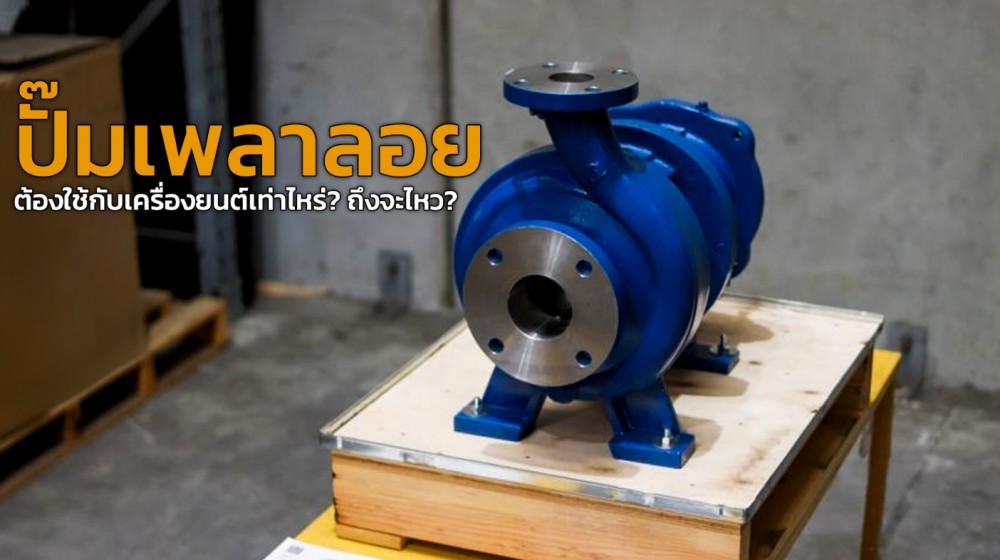
Customers Also Purchased


Early on a Sunday morning, waking up to water the garden with high spirits after having just picked up a Centrifugal Pumps Unit brand-new unit the day before. Upon arrival, the pump was mounted on the stand, shaft connected, pulleys aligned, and ready to go. Started the engine, water began to flow, but... it was a slow, weak trickle. In the end, it delivered less than half the expected water volume! On top of that, the engine overheated severely. If the engine could complain, it'd probably be thinking, "Hey, I'm working way beyond my capacity!"
So, how many horsepower does this bare shaft pump actually need to handle the job? In this article, let's have a casual chat to help you make the right choice in practice: what engine size each bare shaft pump size should be paired with, what happens if the engine is too small, and how much spare power you should leave for smooth operation without premature breakdowns.
What is a bare shaft pump? Why do you need to consider horsepower carefully?
To put it simply, a bare shaft pump is just the bare pump unit without a built-in motor. It requires a shaft and pulley connected to a power source, such as a gasoline or diesel engine. The advantage is that you can pair it with various engine sizes depending on the job, and you can switch engines if you already have one at the farm or garage without needing to buy a complete pump unit every time.
- What RPM do you want the pump to spin at?
- How high (in meters) do you need to pump the water?
- How large is the delivery pipe, and what is the required flow rate per hour?
- Is the suction distance deep or very long?
However, the downside is that if you choose the wrong engine size, your operation will stall immediately. Unlike small household centrifugal pumps with pre-assembled electric motors where everything is already matched, with a bare shaft pump, you are the one who has to match them yourself—assessing how much load the pump demands and whether your existing engine can handle it. Simply put, a bare shaft pump doesn't just ask "how many horsepower is the engine?", it also asks:
All of these factors determine whether your engine is "sufficient" or "straining".
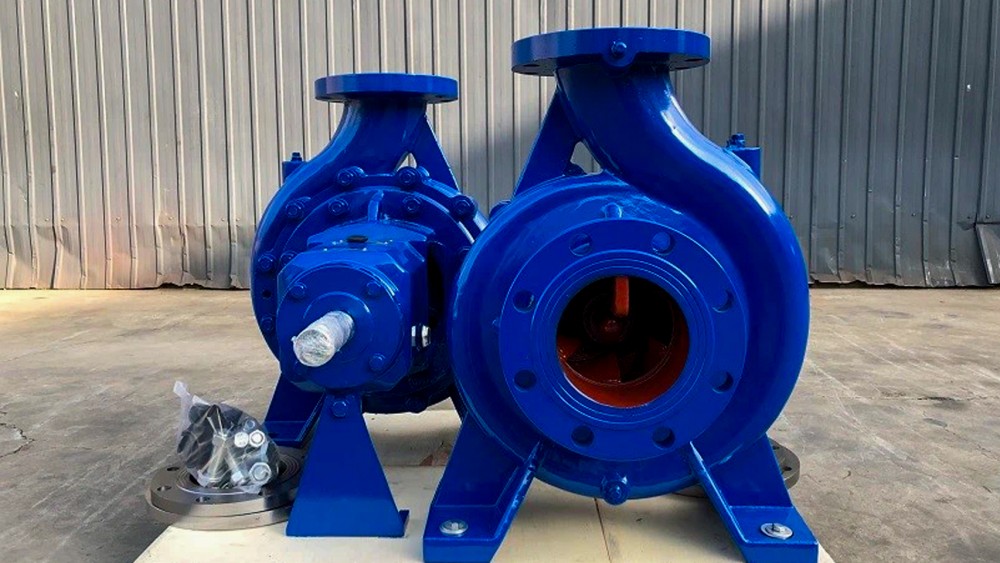
Horsepower, cc, pulleys, and RPM for bare shaft pumps: The overall picture you need to understand first
When people talk about a 5.5 HP, 6.5 HP, or 9 HP engine, they are usually referring to horsepower. But when you go to buy an engine, you see it specified in "cc"—such as 196 cc, 212 cc, or 389 cc. So how do they relate? Roughly speaking, the gasoline engines we typically use with bare shaft pumps in our country fall around these ranges:
- 5.5 HP is around 160–200 cc
- 6.5–7 HP is around 200–220 cc
- 9–13 HP is around 300–400 cc and up
These numbers give a rough idea of how much power the engine has. However, when paired with the actual pump, two other crucial factors come into play: the pulleys and the pump's operating RPM.
Imagine this: the engine runs at 3,600 RPM (which is roughly the maximum speed of small gasoline engines), but the pump may require an operating speed of 2,800 RPM, or some models work best at 3,000 RPM. We use pulleys to gear down or adjust the speed appropriately.
- Small engine pulley + large pump pulley = reduced speed, but increased torque
- Large engine pulley + small pump pulley = higher speed, but requires more power from the engine
Many people match them roughly just so the belt is tight and it turns, without considering what speed the pump is actually rotating at. Consequently, in some setups it "spins faster than necessary," heavily straining the engine without any real gain in efficiency, or it spins too slowly, resulting in water flow that isn't as strong as it should be.
Whether it can handle it depends not just on horsepower, but on the job at hand!
Suppose you have a 2-inch, 3-inch, or 4-inch bare shaft pump. These numbers don't just indicate pipe size; they also reflect the pump's characteristics—whether it handles high flow rates and how much power it needs to turn smoothly. Some see a 3-inch pump and assume a small engine can drive it, but in practice, the pump stalls and the water trickles out like someone barely awake. The fault isn't with the pump at all; it's simply that the engine doesn't have enough power.
In reality, a bare shaft pump is just like a worker: heavy work demands high effort, while lighter tasks require less power. The factors that make it work harder or run comfortably are roughly as follows:
- Suction/Discharge Port Size: The larger the port, the more water is moved at once, so the pump naturally requires more power.
- Discharge Height (Head): This is like carrying heavy items up a mountain; the higher it goes, the more tiring it gets. Even if the water volume is not massive, climbing higher means the pump needs more power.
- Suction Depth/Length: Pumping from a shallow 1-meter pond versus a deep 3–4 meter pond is like sipping water from a glass vs. drawing from a deep bucket. The flow resistance differs significantly.
- Pipe Size and Length: A pipe dozens of meters long, with a few bends and fittings, slows down water flow due to increased friction, forcing the pump to work harder.
- Water Characteristics: Clear water is easy on the pump, but turbid water, water with sediment, or grass debris forces the pump to fight higher viscosity, requiring extra engine power as a margin.
Simply put, bare shaft pumps aren't matched to an engine based solely on pump size, but rather on actual job site conditions. With the same pump, drawing clear water over a short distance will run smoothly on a small engine. But if you use it to pump muddy water from a deep pit up a 6–7 meter slope, that same engine will be gasping for breath.
That's about it—keeping it friendly and sharing from hands-on job site experiences. If you'd like to expand this into a longer article paragraph or add light humor to make it even more lively, just let me know!
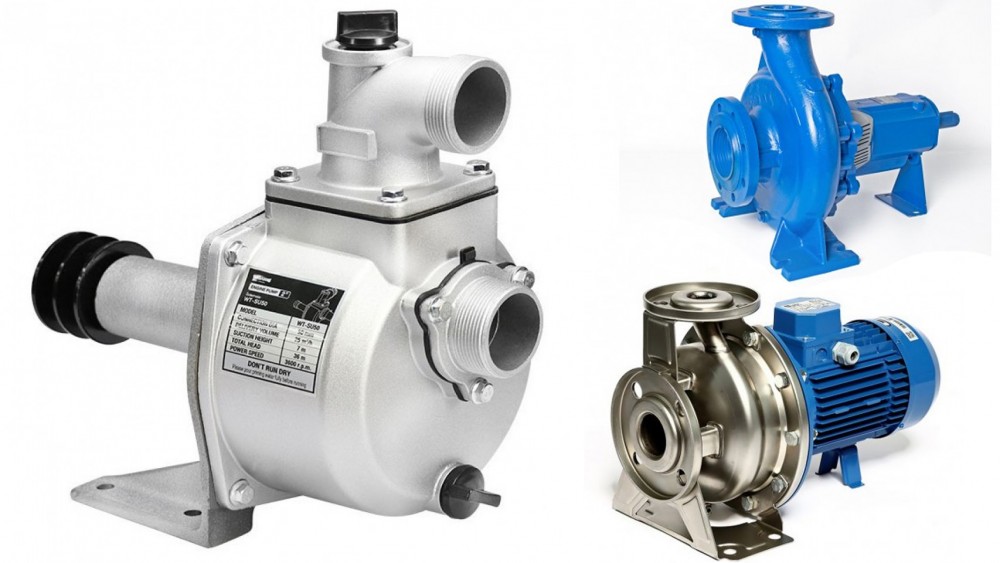
Field Experience: What engine size should be used for 2-inch, 3-inch, and 4-inch bare shaft pumps?
At this point, many people probably want a rough number: "So in the end, what engine size do I need?" Let me provide an overview based on discussions with customers, agricultural mechanics, and specs from several popular bare shaft pump models (note that these numbers are just general guidelines; you must always factor in your actual working conditions).
2-Inch Bare Shaft Pump: Compact and agile; a 5.5–7 HP engine is plenty.
The most common applications for a 2-inch bare shaft pump are pumping water from a canal into vegetable plots, pushing water up a slight incline, or transferring water from one pond to another over short distances. For most general, non-demanding uses:
- A gasoline engine around 5.5–7 HP is generally considered "sufficient."
- Used in conjunction with pulley sizing to keep the pump's RPM within the manufacturer's specified range.
However, if you start pushing it harder, such as:
- Pumping up to a height of 15–20 meters
- Piping longer than 100 meters with multiple bends
- Water with high sediment content
Sometimes a 5.5 HP engine will start to struggle. Many users therefore step up to a 7–9 HP engine to maintain extra reserve power and prevent the engine from running under full load constantly.
3-Inch Bare Shaft Pump: The versatile mid-size workhorse; a 7–9 HP engine is the sweet spot.
The 3-inch bare shaft pump is what most farms and orchards use most frequently, as its flow rate per hour is quite good without being overly bulky. From experience, for general water pumping tasks such as:
- Pumping from a ditch into field plots over a delivery distance of 50–100 meters
- Vertical lift of no more than 10–15 meters
Most are paired with engines around 7–9 HP, which hits the sweet spot—neither overloaded nor sluggishly strained. However, if using a 3-inch bare shaft pump for high-elevation delivery or very long pipe runs, some cases I have encountered even step up to an 11–13 HP engine to prevent RPM drops under full load, allowing the pump to operate at peak efficiency.
4-Inch Bare Shaft Pump: Heavy-duty, high-flow work requires sufficient engine power
For 4-inch bare shaft pumps, most customers who purchase them have demanding jobs, such as pumping water into large-scale rice paddies, sugarcane or cassava plantations, or construction dewatering where rapid drainage is required. Overall, for general pumping and transfer without extreme elevations, the engines typically paired with them are:
- 9–13 HP for standard applications
- For extreme vertical lifts, very long distances, or maximum flow requirements, some upgrade to even more powerful engines, subject to pump limitations and piping system design.
A common mistake is that many want to "save on budget" and end up pairing a 7 HP engine with a 4-inch pump. The result:
- The engine has to run at high RPM constantly
- After operating for a while, the engine overheats, RPM drops, and water flow becomes erratic
- Engine lifespan is prematurely shortened without you even realizing it
Looking at the long run, investing a bit more so that the engine has about 20–30% reserve power is usually well worth it in terms of both time and repair costs.
What happens if you use an undersized engine? It's not just "slow water flow"
Many assume that "using a slightly smaller engine is fine, it just outputs a bit less water," but in reality, the downsides go far beyond that.
- The engine operates at full capacity constantly. It is like forcing a 1-ton pickup truck to haul 2 tons uphill—the engine is continuously pushed to its absolute limit, temperatures rise, and components wear out much faster.
- RPM drops and flow becomes inconsistent. When the pump encounters heavy loads—such as fully opened valves, longer pipes, or multiple bends—an underpowered engine will immediately bog down. Water that should have discharged powerfully trickles out weakly or surges erratically.
- Unnecessary fuel consumption. An engine running at full capacity constantly, even if smaller, can in certain situations consume more fuel than a larger engine operating comfortably within its power band.
- Risk of overloading both pump and engine. If the piping system is restricted or throttled to a point where the pump demands high power—such as improper valve timing or using undersized pipes—a small engine bears an excessive burden, risking long-term damage to both the pump and engine.
In summary, an undersized engine doesn't just mean "weak water pressure"; it leaves the entire system struggling miserably—the engine, the pump, and the owner having to endure watching over it.
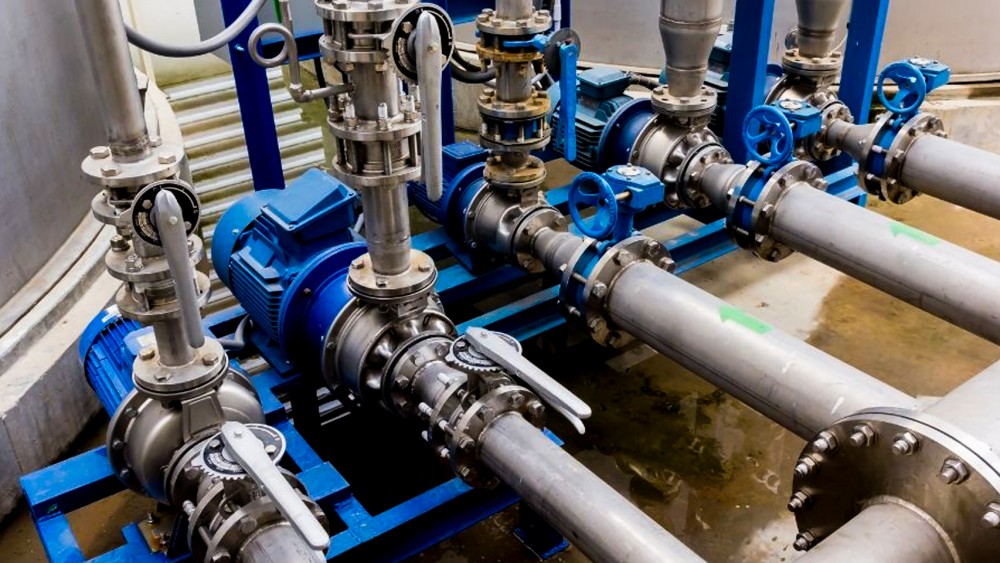
So how do you know how much horsepower a bare shaft pump needs? Where can you check?
If you take a look at the bare shaft pump itself, you will see a small metal plate attached to the side. That is the "nameplate," which lists almost all the pump's key specifications. Here is what you should look for:
- Suction / Discharge size – e.g., 2", 3", 4", etc.
- Flow rate (Q) – sometimes written in liters/minute or cubic meters/hour
- Total Head (H) – the vertical height the pump can deliver water, such as 25 m, 32 m
- Optimal rotation speed (RPM) – some models specify operation at 2,800 or 3,000 RPM
- Required Power (or Shaft Power) – some brands explicitly state roughly how much driving horsepower the pump requires, such as 4 kW or 5.5 HP
If you are lucky and your bare shaft pump clearly indicates the Required Power, it makes things easy. Just compare that figure to the engine's horsepower and add a 20–30% margin to find the approximate suitable horsepower.
However, if this figure is missing, what you can do is consult the manual or details from the seller and describe your application thoroughly. An experienced technician can help estimate the required horsepower quite accurately.
Summary: How to easily match an engine to a bare shaft pump without making mistakes
At this point, if we were to summarize briefly "How much engine power is needed for a bare shaft pump?", keep this checklist in mind:
- First, know what size the bare shaft pump is (in inches) and its approximate head/flow rate specifications.
- Base it on your actual usage: how far it needs to pump, how high it delivers, and whether the water is clear or muddy.
- Use general guidelines: 2" usually pairs around 5.5–7 HP engines, 3" around 7–9 HP, and 4" around 9–13 HP, then adjust up or down depending on the application.
- Add a 20–30% horsepower margin so the engine is not running at full load continuously.
- Align the pulleys and RPM properly to what the pump actually requires—neither rotating too slow nor too fast.
If you view the bare shaft pump and the engine as partners that need to work in unison—rather than one constantly dragging the other along—you will easily find the ideal balance for your job.
Select Centrifugal Pumps Unit here