


 EN
 ไทย


Customers Also Purchased


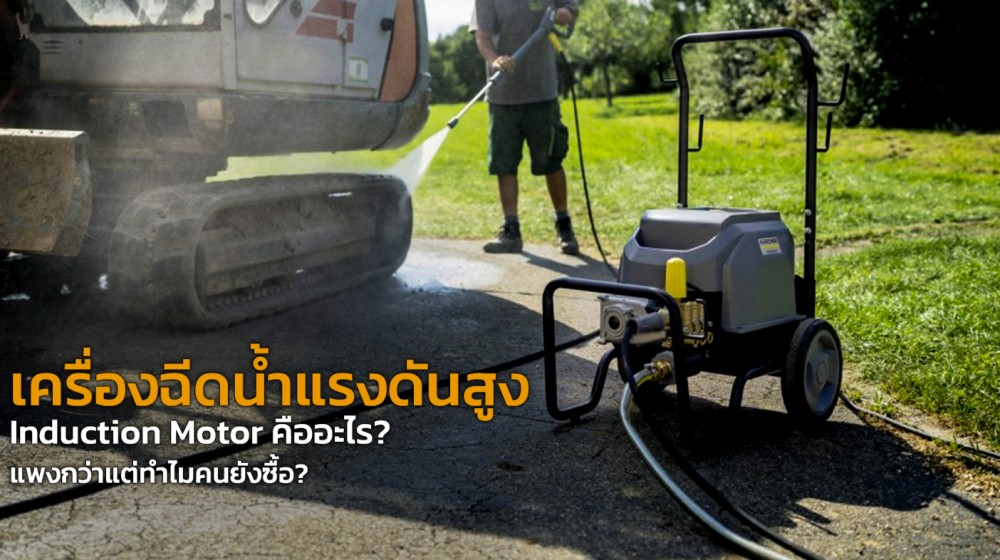
If you walk into a tool shop looking to buy something, strolling along and suddenly catching sight of High-Pressure Washers all around you, looking similar in yellow, blue, and grey. Some models are cute and compact like toys, while others are massive—looking ready to wash a semi-truck! But when you glance at the price tag, some high-pressure washers are under 3,000 THB, while others soar close to 10,000 THB, even though both clearly state "150 bar pressure." "Wait, so what's the difference?"
The answer lies in the words "Induction Motor." This type of motor is nothing new, but it is the core reason why premium high-pressure washers are far smoother, quieter, and more durable than general models. To put it simply: a carbon brush motor is like an engine needing frequent spark plug replacements, while an induction motor high-pressure washer is like a tough diesel engine that keeps going long-distance without throwing a tantrum, even after hours of continuous use.
What is an Induction Motor High-Pressure Washer?
Let's put it simply: pressure washer motors basically come in just 2 main families—carbon brush motors and induction motors. The names might sound like a physics class, but it's actually much simpler than you think. Picture it like this…
A carbon brush motor is like a machine with internal parts rubbing against each other constantly. These "carbon brushes" deliver the electrical current to spin the coils and run the motor. They are lightweight, affordable, and reasonably powerful, but the downside is the continuous friction. Simply put, they will definitely wear out, plus they produce that distinct rattling/whirring noise during operation—anyone who has used one knows the sound by heart.
Meanwhile, an Induction Motor is like a machine that requires no physical contact. It uses the principle of electromagnetic induction to spin the rotor entirely without contact brushes. The result: no easily worn-out parts, quiet operation, and a level of smoothness that feels like a whole different world.
To put it in plain terms: carbon brush motors are great for occasional use, like weekend car washes or light patio cleaning. But if you use it frequently, daily, or run it non-stop for hours, an induction motor high-pressure washer is the only answer that saves you long-term headaches. Sure, the manufacturing cost is significantly higher, and the price rises accordingly. But in terms of value, it's a one-and-done purchase. No annual brush replacements, no waiting for the motor to burn out, and best of all, it's so quiet you might even forget it's turned on!
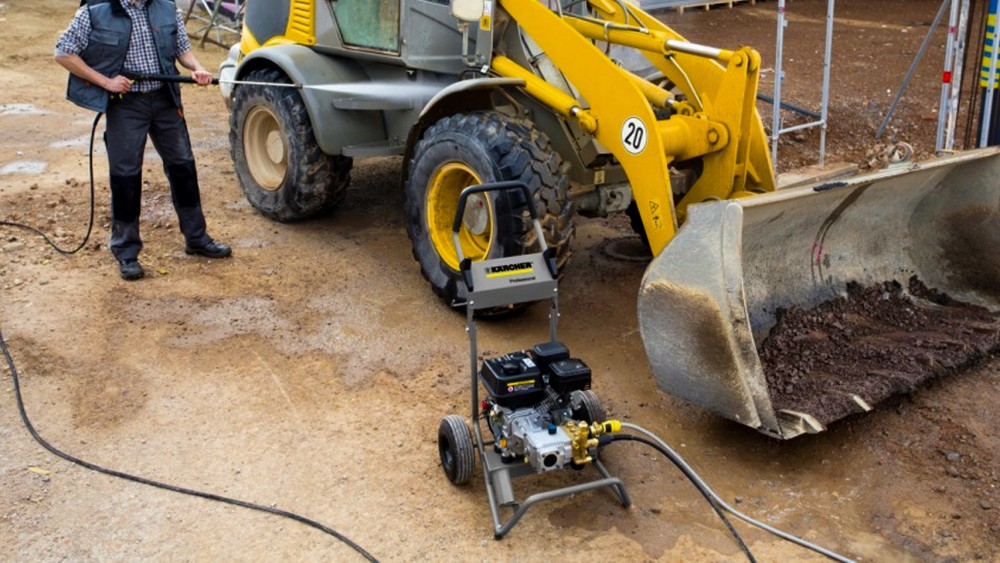
Induction Motor High-Pressure Washers Are More Expensive, but Why Do People Still Buy Them?
When talking about expensive items, many people assume you're just paying for the brand name. But in the case of an Induction Motor High-Pressure Washer, you are paying for "long-term peace of mind." You're not paying for a label, but for a motor engineered to handle heavy workloads effortlessly, genuinely saving you repair time and long-term costs. Imagine running your washer continuously for hours without resting, without worrying about smoke or loud noises annoying the neighbors. That is the distinct difference real users appreciate. Let's look point by point at why you should choose one.
Induction Motor high-pressure washers are quieter, so neighbors won't complain
The noise level of a conventional high-pressure washer is just as loud as a lawn mower, around 90–100 decibels. Turn it on, and the whole street knows! But with an Induction Motor high-pressure washer, the sound is much more "steady" and "smooth" because there are no carbon brushes creating frictional noise. Some models are so quiet that you hear the sound of water hitting the floor clearer than the machine itself. You can wash your car in front of the house in the morning without worrying about neighbors silently cursing you.
Induction Motor high-pressure washers are more durable
Carbon brush motors are like machines that require "repairs along the way" because carbon brushes wear down with every use. Their average lifespan is only about 200–300 hours before they get noisy or lose power, requiring new brushes. But with an Induction Motor high-pressure washer... you can forget about replacing spare parts altogether. It can run continuously for thousands of hours without ever opening the casing. It is perfect for car wash businesses or enthusiasts who wash their car every week.
Smooth operation, more stable pressure
Anyone who has used a carbon-brush high-pressure washer knows that it can sometimes "stutter", spraying inconsistently with fluctuating motor RPM. With an Induction Motor, however, it's like having a pro regulating the pressure at all times. The water stream is smooth, steady, and uniform every second. When cleaning heavy grime like mud or grease stains, it delivers far greater confidence without fear of pressure drops midway.
Runs continuously without easily overheating
This is a benefit that everyday users really appreciate. Carbon brush high-pressure washers start emitting a hot smell after about half an hour of continuous use, requiring a cooldown break. In contrast, an Induction Motor high-pressure washer can run continuously for over an hour and remain rock steady. Because the system has no brush friction, heat doesn't build up, allowing seamless continuous operation—ideal for those who like to wash their cars thoroughly and without rushing.
Lifespan of an Induction Motor high-pressure washer is many times longer
Putting all these factors together, it's no surprise that this type of motor lasts 3–5 times longer, with some users keeping theirs running for up to 10 years without ever opening it for repairs. A technician once joked, "It will only break down when the owner stops washing cars," which is barely an exaggeration. If used properly, it can truly be a long-lasting companion right alongside your vehicle.
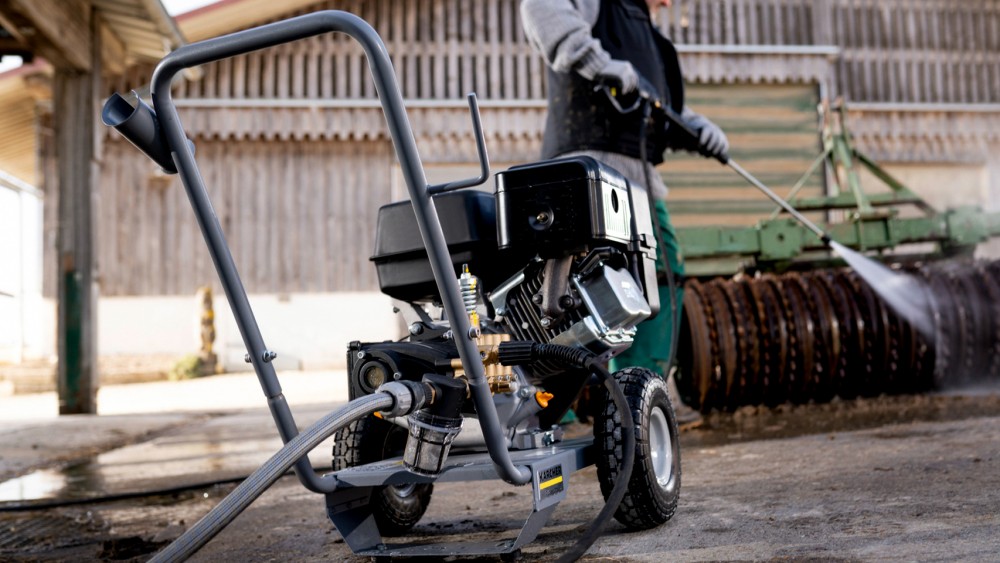
Who is an Induction Motor high-pressure washer suitable for?
Not everyone needs to invest in an Induction Motor high-pressure washer. If you only wash your car once a week or spray off the driveway once in a while, a standard model will do the trick. But if you fall into any of the following categories, it's definitely worth it:
- Washing cars frequently or using it almost every week: If you love cars, wash them every weekend, or run a small detailing shop in front of your garage, an Induction Motor high-pressure washer is the ultimate fit, engineered for heavy-duty use and extended runtimes without resting.
- Wanting a quiet machine that doesn't disturb anyone: Carbon brush models tend to produce a high-pitched whine that might get you dirty looks in residential neighborhoods. An Induction Motor high-pressure washer is much quieter, so you can wash your car early in the morning or in the evening without worrying about complaints.
- Don't want frequent repairs or have no time to tinker with machines: Some people give up the moment they see "replace carbon brushes" (haha). Induction models have no frequently replaced parts. Regular basic care is enough to enjoy long-term, worry-free use.
- Looking at the long term rather than the initial purchase price: These machines are suitable for the "buy it once, buy it right" mindset. Though slightly more expensive, running for a decade with virtually no repairs makes them a great investment, especially if you rely on them for your livelihood.
However, for light users who only wash their car once a month and occasionally spray down patios, standard carbon brush high-pressure washers remain a great choice. They are more affordable, lighter, and easier to store without overthinking. Simply choose according to your lifestyle, because ultimately, the best pressure washer is the one that best suits your needs.
Is it worth the extra cost?
The answer is: "It mostly depends on how you use it." If you wash your car once a month, a carbon brush machine priced at 2,000–3,000 THB is probably sufficient. But if you need a machine for frequent use that is durable, quiet, and low-maintenance, an Induction Motor high-pressure washer is definitely the right choice, offering peace of mind and performance differences from day one.
Think about it: if a carbon-brush high-pressure washer lasts 2–3 years before needing replacement, while an Induction Motor high-pressure washer lasts 8–10 years without repairs, it really isn't more expensive in the long run. Plus, it eliminates repair hassles and machine downtime.
Especially for anyone who has ever experienced the machine cutting out halfway through washing a car or doing an important job, you know just how much having a reliable machine can reduce stress. Some say, "Pay a little more, but avoid headaches throughout its entire lifespan"—that is truly the real value of an Induction Motor high-pressure washer. And looking at it from a safety angle, this type of machine also keeps the electrical system more stable because there is no friction generating sparks inside the motor, making it ideal for homes with children or areas requiring extra safety.
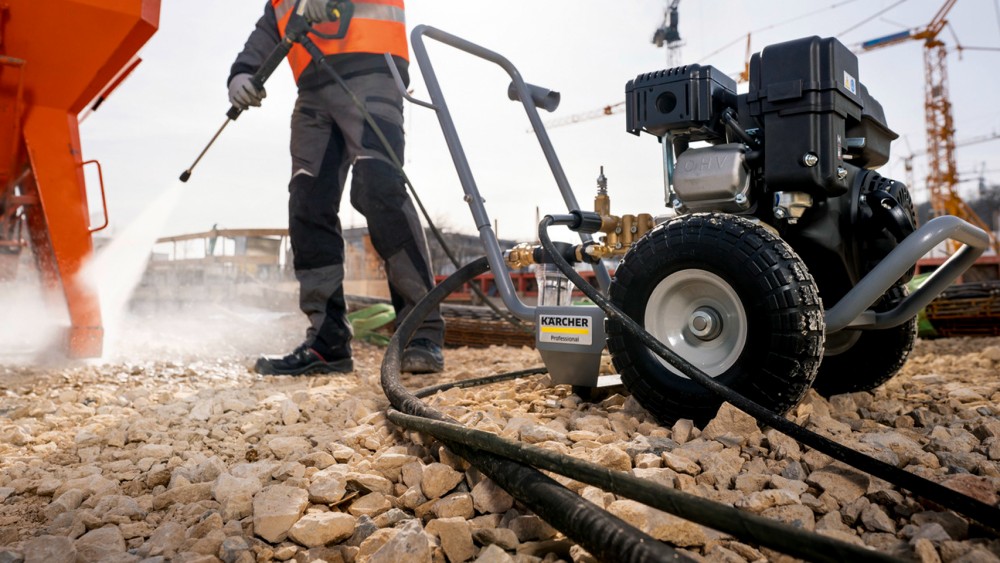
Q&A: Induction Motor High-Pressure Washers
Q: Is an Induction Motor high-pressure washer really worth it in the long run?
A: Absolutely worth it. While a carbon brush model lasts 2–3 years, an Induction Motor high-pressure washer can last 8–10 years without needing repairs. The cost per year is actually cheaper, and you don't have to waste time replacing spare parts or dealing with breakdowns in the middle of a job.
Q: Is an Induction Motor high-pressure washer really quiet?
A: Yes, absolutely. The average noise level is much lower than conventional models, so much so that sometimes the sound of water hitting the ground is louder than the machine itself. You can wash your car in front of the house without neighbors complaining for sure.
Conclusion
An Induction Motor high-pressure washer may not be cheap, but if you look at it in terms of value, lifespan, stability, and quietness, it is an investment that pays you back in "time and peace of mind" that is definitely well worth the price.
Sometimes expensive things... aren't expensive because of the brand, but because they are designed so that you don't have to replace them often.
Select High-Pressure Washers More