


 EN
 ไทย



Customers Also Purchased
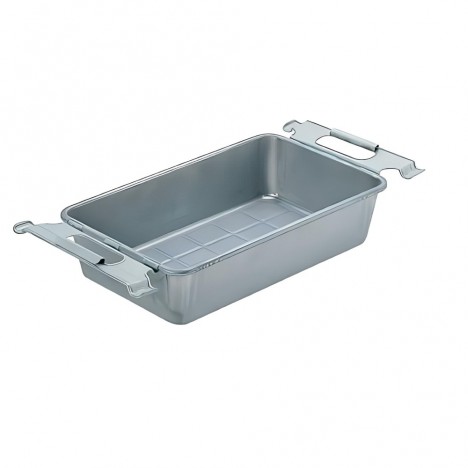
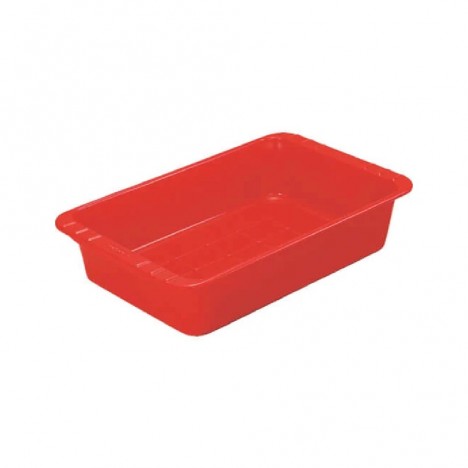
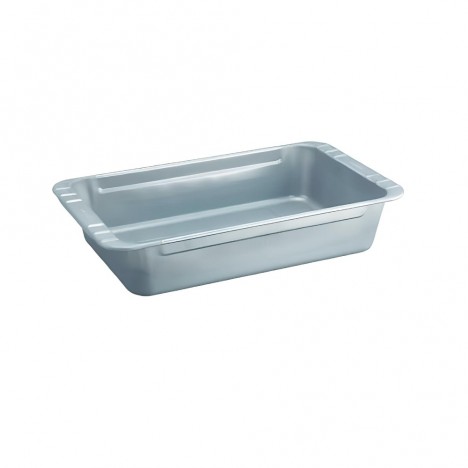
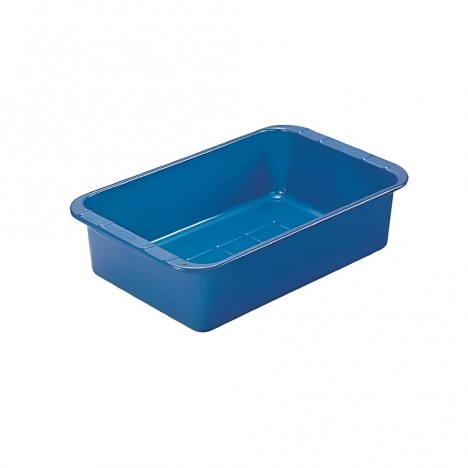
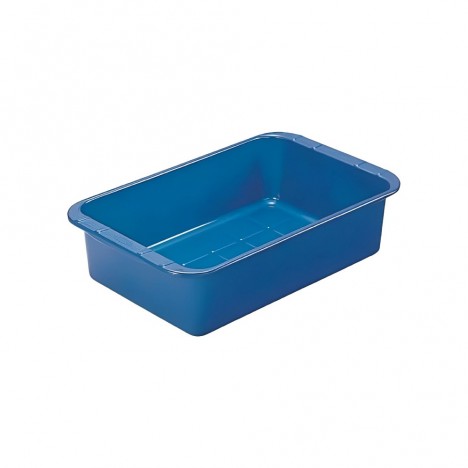
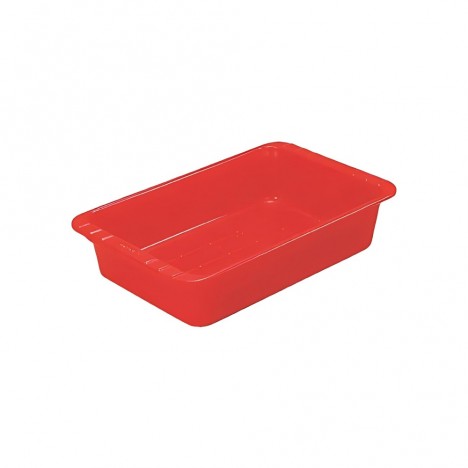
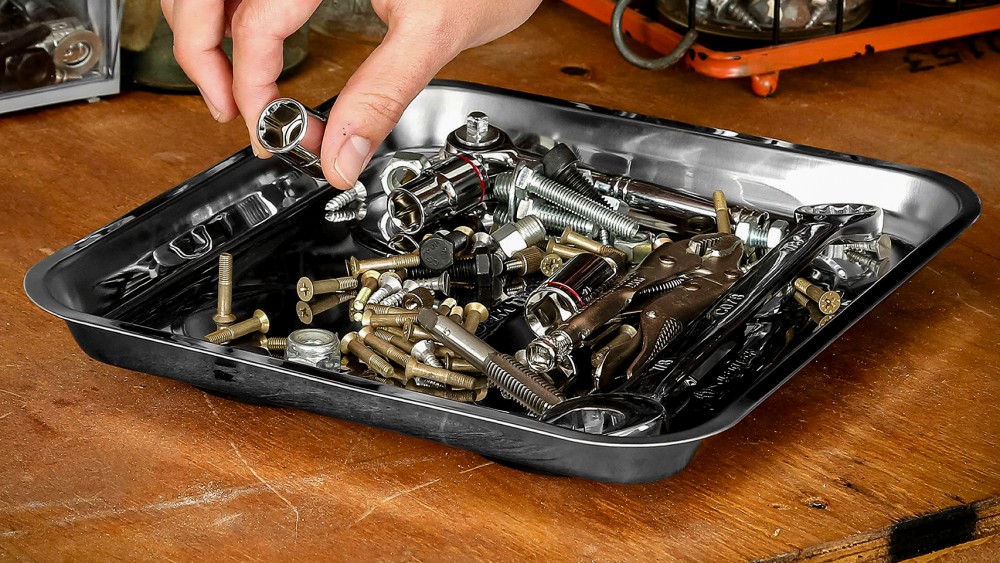
Take a look at any mechanic's workbench, and you'll find steel trays on almost every single one—whether it's an engine repair bench, a metalworking table, or even an electrician's workstation. Glance around and you'll spot steel trays everywhere, both large and small, neatly organized to hold nuts, screws, bearings, or tiny components that must be kept separated and safe from getting lost.
However, what many people might not notice is… Steel Tray they are definitely not all the same. Some trays start rusting after just a few months, while others have been in service for years and still look like they just came off the shelf—even under identical heavy use. That's because the difference lies entirely in the "material" and the "surface coating."
Simply put, if a steel tray lacks an anti-rust coating or isn't made from quality steel, it's like leaving bare iron exposed to ambient moisture every day. Inevitably, small "rust spots" form and spread into stubborn reddish-brown stains that can't be scrubbed off. Once it reaches that stage, no amount of cleaning will restore it. When a tray truly resists rust, it will stay with you for a very long time.
When Rust Isn't a Small Matter in a Craftsman's Life
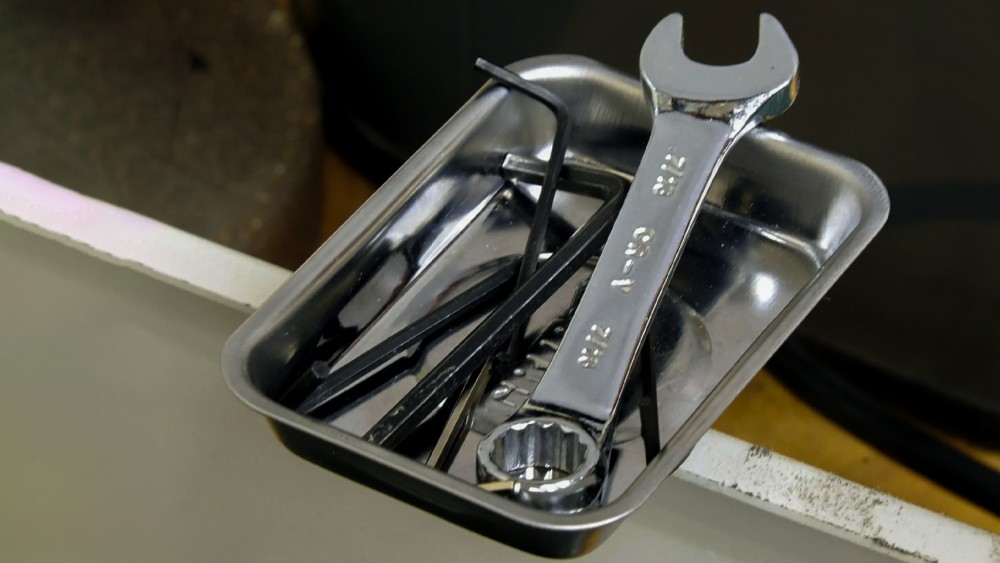
Ask any mechanic in an auto garage or machinery repair shop what frustrates them most, and the answer is almost always "rusted gear." Whether it's a daily-use wrench, a favorite pair of pliers, or even a steel tray holding nuts and bolts, once rust sets in, everything grinds to a halt. You have to stop and scrub, wipe, and clean. Sometimes it won't come off and you're forced to throw it away after only a few months—that's what makes it so painful.
We once spoke with a veteran mechanic who has worked with steel trays for half his life. He told us, "If you want steel gear to last, you have to choose right from the start—don't buy it just because it's cheap." It sounds simple, but it hits the nail right on the head. In a tradesperson's world, nothing is too expensive if it saves you from "wasting time" on the same recurring issues.
Many people might think a steel tray is just a tray, and wonder how different they could really be. But once you use them, you realize the difference is huge! Trays made of thin steel or lacking a proper anti-rust coating develop brown spots after just a few days of exposure to humidity. From that single speck, rust can spread across the entire tray bed within a few weeks.
Simply put, a good steel tray isn't measured by its price tag, but by how long it lasts. Equipment that resists rust well doesn't just keep your workspace organized; it preserves the worker's "peace of mind" as well.
How Do Steel Trays Rust in the First Place?
Before looking at how to pick a quality steel tray, let's understand "why steel items rust so easily." Even the finest, most expensive steel will succumb if used improperly or in an unsuitable environment. Simply put, "rust doesn't discriminate" haha! Even if a professional mechanic takes great care of their tools, keeping them in high humidity or exposing them frequently to chemicals will still trigger rust. Let's break down the main causes in simple terms.
- Ambient Humidity – In garages or machinery repair shops, this is a major culprit. Humidity levels stay consistently high, especially during parts-washing or when using slow-evaporating lubricants, leaving moisture constantly lingering in the air. Steel behaves like a sponge, easily absorbing moisture; without a good surface coating, you'll see brown spots appear within just a few days.
- Chemicals – Degreasers or certain solvents definitely help keep trays clean, but excessive use gradually wears down the protective coating. Eventually, rust finds a way to take hold.
- Scrubbing too aggressively – Many steel trays are ruined because of "over-scrubbing." When a little rust appears, people rush to grab a wire brush or coarse sandpaper to scrub it vigorously. In the end, the protective anti-rust coating carefully applied at the factory is completely stripped away, and from then on, the countdown begins for rust to return even faster than before.
- Storing in damp or constantly wet areas – Some trays are placed under tool benches or near the floor in corners where water frequently drips. These can truly be called a "home for rust." With continuous moisture accumulation and no air circulation, steel simply won't survive.
- Simply put, rust doesn't just happen because an item is old or cheap; it also stems from the environment and how it's cared for. Once we understand the root cause, we will know which type of steel tray suits our work and how to maintain it so it stays on our tool bench for years to come—without having to waste budget buying replacements frequently.
Different types of steel trays offer different levels of rust resistance
Galvanized Steel Trays
This type is the champion of budget steel trays. It's the most common sight in garages and general workshops because it's both lightweight and affordable. Its highlight is the zinc spangle pattern on the surface that looks quite cool, and most importantly, it provides a decent level of rust protection.
"The advantage is its good price and fair durability, but if left in damp areas for a long time, rust spots can still start to appear; you need to wipe it down regularly." Simply put, galvanized steel trays are best suited for dry environments, like on an indoor tool bench, or for holding nuts, bolts, and small parts that aren't exposed directly to water. If cared for properly, it will last a long time.
Chrome-Plated Steel Trays
This steel tray can be called "sleek and premium." The surface is mirror-like and glossy, smooth enough to see your own reflection. It's ideal for automotive garages or tool benches where cleanliness is a priority, as its surface resists oil stains and wipes clean very easily. Additionally, it is much more resistant to abrasion than zinc. No matter how many times you scrub, wipe, or wash it, it stays shiny. Of course, the price goes up along with its looks and durability. Many mechanics choose it because it looks "professional" when arranging tools on a workbench, looking exceptionally tidy and neat.
Stainless Steel Trays
You can truly say it "has no fear of rust." That's because the stainless steel composition contains chromium, which naturally forms a thin protective barrier against rust (known as an oxide film). Even if exposed to water, chemicals, or left outdoors, it will survive safely.
If your budget allows, we definitely recommend stainless steel. It's a one-time investment; you can wash it however you like without worrying about rust. It is perfect for tasks exposed to constant moisture, such as parts washing tables in garages, factory kitchen sinks, or even outdoor areas exposed to rain, because you never have to worry about rust stains.
How to tell if the steel tray you bought is truly durable?
Even with a stainless steel tray, if it's made too thin or poorly coated, it won't be much different from a cheap steel tray. When buying, check these points. I'd like to share firsthand experiences from many technicians who encountered trays so thin they bent easily, or coatings so poor that rust developed within a few months. So, be sure to inspect carefully before paying.
- Weight of the steel tray – A durable tray has a balanced, solid feel in your hand, not so thin that it flexes with your fingers. Just lifting it gives you an immediate sense of how sturdy it is.
- Welded edges and corners – Welds should be smooth, free from cracks, and not sharp enough to scratch hands, so you won't accidentally cut your fingers during daily use.
- Surface finish – If coated, the surface should be smooth, without peeling or bubbling, because these are always the spots where rust likes to start first.
- Bottom of the steel tray – Some models feature "anti-slip rubber pads" or "raised edges" to prevent water from pooling underneath, which is ideal for garages where floors are frequently wet.
Try tapping it lightly with a screwdriver. The sound produced by good steel will be "solid" and not overly reverberant. If it sounds hollow or too light when tapped, that could indicate it is too thin or made from poor-grade steel. Simple little tricks like this are what experienced craftsmen often use. To summarize it clearly:
- Zinc-plated = Economical, general use, requires a bit of care
- Chrome-plated = Sleek and shiny, looks professional, wear- and abrasion-resistant
- Stainless steel = The real deal for rust prevention, long-lasting with no worries
So when choosing a steel tray, think about the environment you work in. If it's in an open garage with high humidity, investing a little more in stainless steel is definitely worth it. But if it's just for holding small bolts on a workbench in a dry room, zinc-plated is plenty. It entirely comes down to your application and budget.
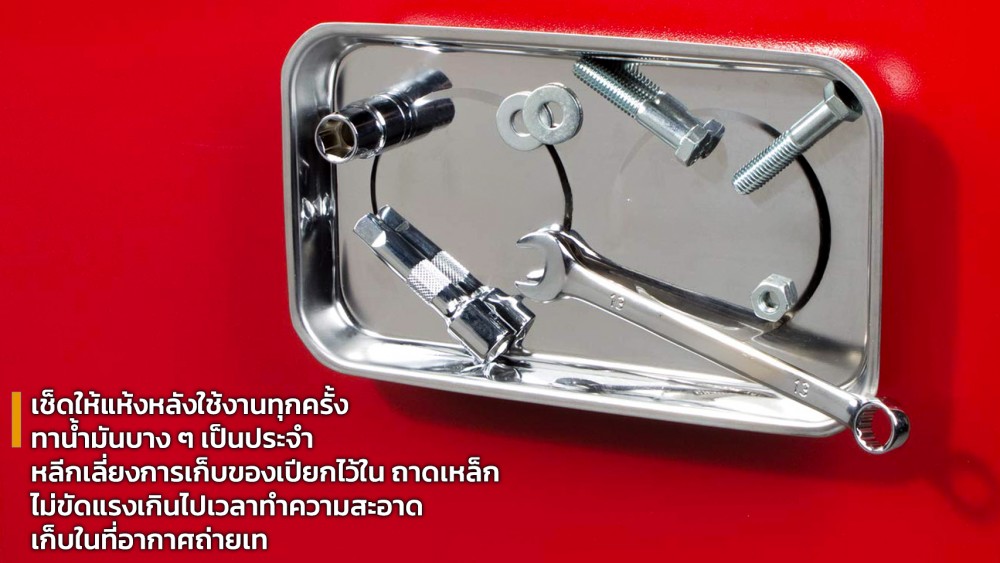
Tips on how to use a steel tray so it lasts a long time
Besides choosing the right type of steel tray, "proper use and care" is the real key that many people often overlook. Even if you buy an expensive, genuine stainless steel tray, using it carelessly or storing it in the wrong place can still lead to wear and surface staining.
Here are some tips I learned from Nueng, a veteran mechanic whose steel work table is still shiny after nearly 10 years of use. Give them a try, and I guarantee your steel trays will last long without needing frequent replacements.
- Wipe dry after every use. It sounds very simple, but many people don't do it. Once the job is done, you're tired and just want to pack up and go home—which I completely understand, haha. But taking just 10 seconds to wipe away water and oil stains with a dry cloth or paper towel before storing will keep your tray looking new for a long time. These moist deposits are prime "rust accelerators."
- Apply a thin layer of oil regularly. Especially on zinc-plated or standard uncoated steel trays, try putting a few drops of sewing machine oil or turpentine on a soft cloth and wiping the tray all over. It creates a thin protective film that seals out moisture effectively. Nueng even shared a secret: "I just use leftover engine oil from cars; a tiny dab does the trick." It's economical and truly works.
- Avoid keeping wet items in the steel tray. This is a common mistake. Right after finishing a repair, people place wrenches or screwdrivers freshly washed with water straight into the tray, thinking they'll wipe everything down together later. In the end, rust forms first right where water pools. To keep your tray lasting long, just make sure "every item is dry before putting it in."
- Don't scrub too hard when cleaning. When seeing a small rust spot, many people immediately grab a wire brush or coarse scouring pad and scrub with all their might. You really shouldn't do this, because harsh scrubbing quickly strips away the anti-rust film or surface coating. Once that layer is gone, rust returns much faster than you'd expect. A soft sponge or a cloth dampened with soapy water is all you need.
- Store in a well-ventilated area. If the tray is in a garage or room with high humidity, don't leave it right on the floor or in a stuffy corner where air doesn't circulate and moisture constantly builds up. Ideally, place it on a shelf, or somewhere with a fan or vent to help dissipate heat and lower humidity so the tray won't face constant condensation on its steel surface.
Are cheap steel trays okay to use?
The answer is: it depends on the job. If it's just for holding general items around the house, without exposure to water or the outdoors, an budget steel tray is quite sufficient. But for industrial work, automotive repairs, or frequent exposure to damp environments, investing a little more in a quality steel or stainless steel tray is definitely more cost-effective in the long run. Good equipment is a one-time purchase, leaving you worry-free about when rust will strike.
Think about it: every time you have to stop and clean off rust, or replace a rusted-through tray, you're losing time and money without realizing it. Choosing quality from the start—even if it costs slightly more—makes life so much easier.
“We used to buy cheap steel trays multiple times, ending up spending extra because rust ate right through them. Once we bought a good one, we've used it for nearly ten years.” That tray is still around today with just a few minor scratches, because sometimes genuine quality proves itself through real-world use.
Modern steel trays: Stylish, durable, and truly designed for craftsmen
Nowadays, steel trays aren't just plain and basic like they used to be. Many manufacturers are paying much more attention to design, such as:
- Powder coating in matte black or metallic gray, which looks sleek and resists fingerprints well
- Built-in magnets to hold nuts or screws in place and prevent them from rolling onto the floor
- Raised edges or built-in dividers to organize small parts neatly
- Foldable designs or carrying handles for easy portability on the job site
Some models even add new features like a 360-degree rotating base for mechanics who need frequent access to items, or an oil- and acid/alkali-resistant coating specially designed for auto repair shops. It can be said that they are both stylish and practical at the same time. Some people even use steel trays for home decoration, such as placing them on work desks for stationery or organizing a small hobby tools corner, which turns into a very cool loft-style decor. All of this makes "steel trays" no longer just tools for mechanics, but also stylish, functional desk or home decor.
Select Steel Tray here