EN
 ไทย


Customers Also Purchased


Have you ever wondered what to watch out for when using Drill a drill? It might not have sharp blades or produce intense heat like other tools such as angle grinders, circular saws, or welders. But sometimes the machine can kick back, and it can be violent enough to sprain or break a wrist. That right there is what we call "Kickback"—an unseen force that can cause accidents in a split second.
Some technicians may have injured their wrists from a drill kicking back while drilling masonry, even while using a heavy-duty drill from a famous brand, simply because they didn't know it had a Kickback Control system that prevents such incidents, and thus didn't activate it. Today, I'd like to invite you to explore what a drill's Kickback system is, how it works, and why it's a vital feature making "modern drills safer than ever."
In this article, we'll demystify how a drill's Kickback system really works, how fast it cuts the torque, and how essential it is for technicians and DIYers like us. Think about it: between a drill that simply feels powerful and one that actively protects your hands, which one would you rather pick up and use?
What is Kickback? How does it happen?
Kickback literally refers to a reactive backward force caused by resistance from the material you are drilling into or driving screws into. Imagine you are drilling steel smoothly, and suddenly the drill bit binds on a very hard steel frame or hits an off-axis angle. The bit can no longer turn, but the motor's rotational energy remains because the drill is designed to keep spinning. As a result, the tool forcefully twists back into the hands or arms of the user holding it.
This kickback force can sometimes be strong enough to injure your wrist or throw the tool into your face before you can even react. If it's a large drill with high torque, it is undeniably dangerous.
Real-world example scenarios
- Drilling into a wall and hitting rebar
- Drilling wood and having the bit bind due to excessive wood chip accumulation
- Drilling at high speed without aligning the bit straight on center
All of these are risk factors that can cause a drill to kick back.
What is the Kickback Control system in drills?
Many people might not know that newer drill models—especially pro or flagship models from various brands—feature technology that automatically reduces kickback, known as an anti-kickback system. (Kickback Control System)

These sensors operate using mechanisms that detect changes in direction (gyroscope) and rotational speed (accelerometer). When abnormal rotation or sudden jerking exceeds the system's preset threshold, an electrical signal is immediately sent to the motor control circuit to shut off power, halting rotational force before it can be transmitted to the user's hands.
Simply put, it helps "shut off the tool for us" at the very moment danger could occur.
How does this system make drills safer?
Many of you may have heard the terms Kickback Control or Anti-Kickback, but wonder whether it really helps. Imagine drilling into a wall that contains rebar inside, and the tool suddenly jerks violently, startling you. If your tool has a Kickback system, it will immediately prevent that from happening. This system isn't just there to showcase technology; it is a mechanism that makes working with modern drills both more convenient and much safer.
1. Directly prevents accidents caused by kickback
Normally, tradespeople have to grip the tool tightly to keep it from kicking back, exerting heavy force with their wrists and arms to counter the tool's rotational force. With large rotary hammers or high-torque drills, the risk of violent twisting is even higher, and often no amount of effort can resist the force. However, Kickback Control detects and cuts power to the tool before that twisting force ever reaches your wrists.
In addition, it helps reduce the sudden jerk that occurs when a drill bit binds in the workpiece, bringing the tool to a smoother stop without violent twists or kicking back at the user. It is truly a technology that enhances both safety and working comfort.
2. Reduces workpiece damage
When kickback happens, not only can your wrist get injured, but drill bits can also bend or snap. Having this system stops the tool from rotating before excessive torque builds up, keeping the drill bit in good condition and preventing workpiece damage. It also reduces damage to material surfaces, such as cracking concrete walls or chipping wood.
3. Boosts confidence for beginners
Beginners using a drill might worry about kickback forces and how to handle them. But with Kickback Control, the tool manages the force for you, allowing you to work with greater confidence without fearing sudden twists. It is also ideal for working in tight spaces, such as awkward corners or overhead drilling, as the system stops the tool immediately upon abnormal binding, reducing accidents in hard-to-control situations.
4. Reduces fatigue
Gripping a drill tightly at all times to guard against kickback is exhausting, especially during all-day drilling. This system saves you from constantly exerting heavy counterforce because you know the tool will shut off automatically if abnormal binding occurs. This puts less strain on your hand and arm muscles, saving your energy and improving concentration over extended work periods.
How fast does Kickback Control react?
Here is something many people might not know: this system "responds in a fraction of a second"! Typically within 0.01 – 0.05 seconds which is faster than we can even react and let go. Professional-grade drills, such as Bosch Professional or Makita XGT, use dedicated microprocessors that work in conjunction with speed and torque control systems.
Which types of drills feature a kickback system?
Currently, most drills equipped with a kickback system fall under the category of hammer drills, rotary hammers, and the group of pro-grade cordless drills What exactly is a hammer drill? Clearing doubts and answering all questions openly because they deliver high torque and are more prone to kickback, especially models manufactured by professional brands. For example:
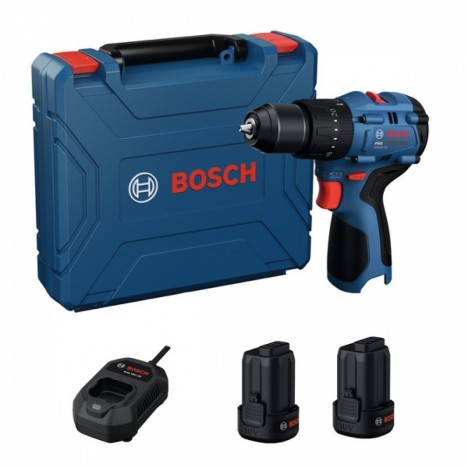
- Bosch GSB 18V-150 C: Features switchable KickBack Control
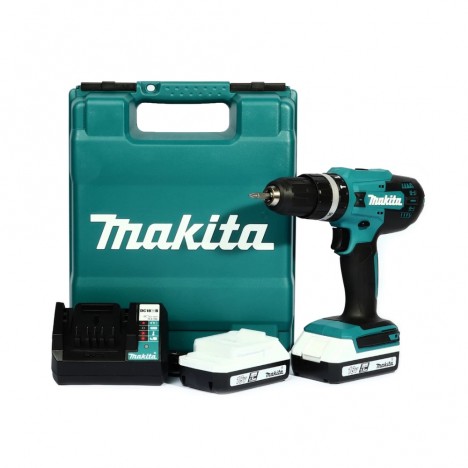
- Makita HP001G (XGT): Active Feedback Sensing Technology (AFT) shuts down the motor if the bit binds
- DeWALT DCD130B 60V. Max: Uses an E-Clutch system that automatically cuts rotation power
- Milwaukee M18 Fuel comes equipped with an AUTOSTOP system that detects kickback forces and shuts off power to protect both the tool and your wrists
- Festool QUADRIVE TPC 18/4: Let's take a look! What can Festool's top-tier drill do? Is it right for you? features torque control and automatic stop upon encountering abnormal resistance, ideal for woodworking and furniture assembly
Are drills with kickback control 100% safe?
No. This system “helps reduce risk,” but it does not completely eliminate accidents. This is because it only activates when the tool detects kickback forces exceeding the preset threshold. If used incorrectly, such as pulling the tool at the wrong angle or drilling without securing the workpiece, kickback can still occur.
Use the drill in conjunction with proper techniques
- Always use both hands to hold the tool
- Make sure the drill bit is tightly secured and centered
- Select the right bit for the material
- Do not apply excessive force; let the bit do the work
- Always wear protective gloves and safety glasses

Feedback from many technicians is quite similar: “It gives you more confidence when drilling,” especially for overhead or ceiling work. Encountering high resistance and having the tool kick back without a safety system is almost guaranteed to twist your wrist.
Should we keep it enabled all the time?
The answer is: “You should always keep it on,” especially when drilling hard materials or using large drill bits. This is because the risk of kickback is very high. While disabling the system might prevent the tool from stopping midway, it also means sacrificing your safety system.
Some drill models allow you to adjust the system's sensitivity, such as stopping quickly or stopping only under severe kickback. This is ideal for those who need continuous drilling while still retaining some safety assistance.
Why is Kickback Control so important today?
In an era where cordless drills deliver increasingly higher torque, brushless motor technology makes tools compact yet exceptionally powerful. This means the risk of kickback is also higher; without any safety protection, this level of power can pose a direct hazard to the user.
The Kickback system has therefore become the new safety standard in the power tool industry, to which every brand is increasingly paying attention.

Conclusion: The Invisible Assistant in Modern Drills
To put it simply, the Kickback system is like a car airbag: you might hope you never have to use it, but when an incident actually occurs, it will help you more than you think.
For me, if anyone is about to buy a new drill—whether cordless or corded—what you should look for besides torque and speed is “whether it has a Kickback system.” Because the moment the tool unexpectedly snaps back, this system might be the only thing standing between you and injury.
And that is the answer to the question: “How does a drill's Kickback system make work safer?” It protects your hands from the unexpected within a fraction of a second. Whether you are a professional tradesperson or just someone who uses a drill regularly for home projects, never overlook the safety of the tool in your hands. A truly great drill isn't just about high power or speed, but about having a system that takes care of both the tool and the user.
And the Kickback system is one innovation that proves Drill modern drills are not made just to drill, but to protect the person holding them as well.