


 EN
 ไทย


Customers Also Purchased


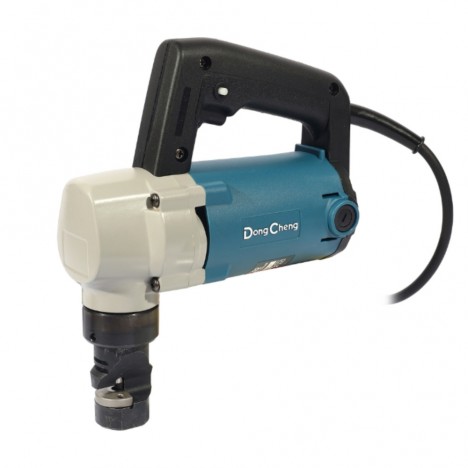


When we talk about Jigsaw and Shear we usually think of woodworking first, right? I do too. The picture in my head is a carpenter cutting boards in the middle of a workshop, with the saw blade spinning at high speed until the faint burnt smell of sawdust lingers in the air.
What if I told you that "electric saws" aren't just for cutting wood? That's right. Many power tools have evolved over time, and several types are designed to be "aggressive" enough to cut materials like "steel" or metal—and they can do it much more accurately, safely, and quickly than ever before.
In this article, I will take you through an in-depth look at what types of electric saws are used for cutting metal, along with their key features, advantages, and points to consider, so you can understand and choose the right tool for your work. Knowing these types of electric saws will help save time, increase safety, and deliver clean, professional-looking cuts.
What Electric Saws Are Commonly Used for Cutting Metal?
Before we dive into the details of each electric saw type, imagine how metalwork has become an integral part of our daily lives—from home fences and steel gates to large building structures. And of course, the indispensable tool at every cutting stage is a cutting machine like an "electric saw." Without it, a job that should take just a few minutes could easily take hours.
There are many types of electric saws with various names. Get It Right: What Are the English Names for Various Types of Power Saws for Tradespeople? Each type differs in design, RPM, and specific applications. Some models are built for fast, powerful cutting in heavy steel structural work, while others offer fine, smooth cuts ideal for artistic or decorative work. There are also differences in weight, maneuverability, blade durability, and operating noise levels—all factors that directly impact the user experience.

Understanding these specific characteristics is crucial because it's what will help you choose the most suitable electric saw for your job. So, let's take a look at metal-cutting electric saws one by one, starting with tools dedicated specifically to cutting steel.
Benchtop Metal Cut-Off Saw (Cut-Off Saw)
Let's start with the benchtop cut-off saw, often referred to by craftsmen as "metal cut-off machine" or "carbide cut-off saw" This is the electric saw we see most often in welding shops or structural job sites. It's usually placed in a prominent corner because it's the primary tool for cutting almost all types of steel workpieces—from steel pipes, angle iron, and hollow section tubes to thick pipes and large steel plates.
Benchtop metal cut-off saws offer high power and efficiency, as large motors enable quick cuts through thick steel. Simply place the workpiece on the base and press the saw arm down to achieve accurate cuts. Furthermore, they are versatile and ideal for general structural steel cutting and welding jobs.
Observations
Despite their high power, this type of electric saw is quite loud, so it should be used in well-ventilated, open areas. It also requires a fair amount of bench space and is not suitable for fine work, such as cutting small parts or curved shapes, because the machine emphasizes power and speed over finesse.
Metal Circular Saw
Many people might wonder, “Aren't circular saws used for cutting wood?” The answer is Yes, but there are also models designed specifically for cutting metal!
Metal cutting circular saws use fine-tooth carbide blades specifically designed for metal, providing clean, smooth cuts effortlessly. They are easy to use even in tight spaces, especially cordless models that enhance maneuverability, cutting sheet metal, pipes, or thin box section steel cleanly and quickly.
It is crucial to choose a circular saw specifically designed for metal cutting. Circular saws for woodworking have high rotational speeds and extremely sharp teeth that are not suitable for cutting metal; the heat generated from cutting steel is so intense that it can quickly wear down the teeth or even cause them to break off from the blade.
The motors of woodworking saws are not designed to withstand the resistance of steel. Misusing them poses risks to both the tool and the operator. Choosing a circular saw clearly specified for metal prevents accidents and long-term wear on the machine.
Observations
Metal cutting circular saws are not suitable for cutting very thick steel, as it causes rapid blade wear and excessive heat buildup. Additionally, carbide blades are more expensive than standard circular saw blades, and you must ensure the blade is explicitly labeled "for metal" for safety.
Metal Cutting Band Saw
When it comes to For detailed work requiring smooth, professional cuts, a "metal cutting band saw" is the answer.
A metal cutting band saw is a power saw that cuts metal accurately and smoothly without generating sparks. The machine is designed to run continuously for long periods without overheating quickly. It is ideal for cutting large workpieces such as round pipes, solid steel, or heavy metal bars, and comes in both benchtop and portable models to suit various applications.
Observations
This type of power saw is more expensive than other types and requires a good understanding of band saw blade tension adjustment, as well as matching the speed to the type of metal. The tool itself is relatively heavy, making it less convenient to move around. However, if cut quality is the priority, this power saw delivers the best results.
Reciprocating Saw / Multi-Purpose Saw
This type of power saw might look like a toy gun in a toolbox, but if you know how to use it, it is an ultimate weapon for craftsmen!
Reciprocating saws can be used on almost any material, including steel, PVC pipe, wood, or brick walls, thanks to their reciprocating stroke mechanism that delivers high cutting force with easy control. The blades can be quickly replaced, with various types available depending on the material to be cut. For repair work, demolition, or tight spaces where large saws cannot reach, reciprocating saws are an excellent choice.
Observations
Reciprocating saws, or multi-purpose saws, are not well-suited for high-precision work due to their significant vibration and kickback, requiring skilled manual control and careful cutting angles. If used carelessly, the blade can easily bend or break. Therefore, it is a power saw better suited for temporary or rough jobs rather than mass production.
Jigsaw with metal cutting blade

A jigsaw is a power saw that can use high-fine-tooth blades to cut thin steel. It is ideal for curved cuts, pattern cutting, or artistic work that requires high precision. The tool is compact, lightweight, and easy to use—ideal for DIYers or anyone looking for a power saw for home use. It is also very affordably priced.
Observations
Jigsaws are not suitable for thick steel or large workpieces because the machine's power and blade speed are insufficient. They require patience and steady feed pressure control. The blades have a short lifespan if used incorrectly, so always choose the right blade for the material.
Which power saw should you choose for metalwork?
This is the most common question many people have, because almost every type of "power saw" seems capable of cutting metal. So how do you choose? Many might think looking at the tool's appearance or wattage is enough. In reality, each type of power saw differs greatly in terms of rotational speed, cutting capacity, blade durability, and operational safety.
Choosing the right power saw for the job depends not just on motor power, but also on the type of steel to cut, material thickness, workspace, and user preference. Large power saws offer high cutting power but require skilled control, while compact portable models are easy to carry but have limitations regarding workpiece thickness. How thick can each type of electric saw cut?
Therefore, before making a decision, you should thoroughly research all aspects, including the type of electric saw, the type of cutting blade, and the actual working conditions, to get a tool that meets your needs and provides the best value.
1. Consider your primary type of work
- Cutting steel structures / thick pipes / hollow structural sections (box tubes): Use a cut-off machine (chop saw) or a band saw
- Cutting thin steel / sheet metal: Use a metal cutting circular saw
- Repair work / cutting in confined spaces: Use a reciprocating saw (all-purpose saw)
- Design work / curves / artistic crafts: Use a scroll saw (jigsaw)
2. Consider motor power
An electric saw for metal cutting should have a motor of at least 1,200–2,000 watts to deliver sufficient torque. For cordless models, choose a battery voltage of 18V or higher to ensure stable cutting power against heavy resistance.
3. The saw blade is a critical component
No matter how good an electric saw is, using an inappropriate blade will definitely ruin the work. A good metal cutting blade must specify that it is intended for metal—many brands will indicate “Metal” or “Steel Cutting”. You should select according to the type of steel, such as carbide blades, abrasive fiber discs, or fine-toothed blades, as each type delivers different results.
4. Safety must come first
Remember that certain types of electric saws for metal cutting can produce sparks and high noise levels. Always use them with safety glasses, heat-resistant gloves, a face shield, and earmuffs for maximum safety.

Summary: Each electric saw has its own unique strengths
As you can see, when it comes to electric saws for metal cutting, there is no "better" or "worse"—it is all about "suitability for the job", because each type has distinct strengths and unique characteristics.
Stationary or benchtop electric saws may be suitable for heavy-duty work that requires speed and stability, while handheld electric saws such as reciprocating saws, jigsaws, band saws, or circular saws offer greater maneuverability, are easy to use, and suit tasks requiring frequent mobility. Selecting the right electric saw is just as crucial as operating it correctly.
Ultimately, whichever tool you choose, Jigsaw and Shear no matter which type, the most important thing is to "understand your work" and choose the tool that suits the actual materials you use.