


 EN
 ไทย


Customers Also Purchased
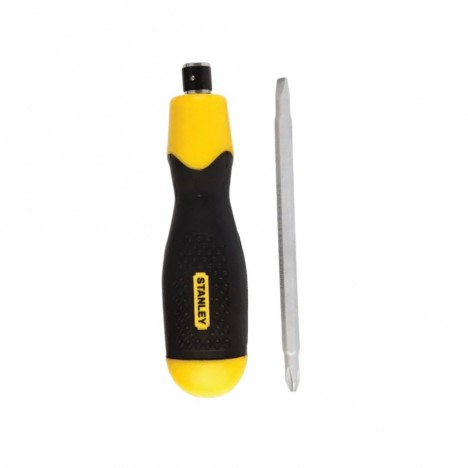



Have you ever observed a phone technician trying to open a smartphone's back cover to replace a battery or camera? The soft "click" of a tiny screw releasing from the chassis marks the beginning of "micro-level precision" that demands intense focus, exact accuracy, and utterly reliable tools. In particular, that "small screwdriver"—which many might overlook—is truly the unsung hero of every repair job.
To put it simply, Screwdrivers these aren't merely small; they are engineered to handle "hair-thin micro-screws" used in smartphones and eyeglasses. Anyone who has ever used an ordinary screwdriver on tiny screw heads and accidentally stripped the head or ruined the threads knows just how vital precision really is.
Such small tools may look simple, but behind them lies engineering for torque balance, tip coatings to resist friction wear, and handles ergonomically shaped to fit fingertips perfectly. Just a slight misapplication of torque can strip a screw or ruin internal components completely.

From Ordinary Screwdriver to Micron-Level Tool
Many think that small screwdrivers in phone repair kits are merely "scaled-down versions of larger tools," right? Honestly speaking... not at all! In the world of phone repair technicians, these screwdrivers are "jewelry-grade tools" demanding extreme precision that puts ordinary screwdrivers to shame.
Consider this: some screws inside phones have a diameter of less than 1 mm! Just one slip while turning can strip the screw head or damage the threads, making it impossible to open the device any further. Some people have even had to replace the entire logic board simply from applying too much fingertip force. These screwdrivers are definitely not toy tools; most are manufactured using CNC machines with micron-level precision to fit the proprietary screw heads deliberately engineered by each brand.
- Pentalobe: Apple's proprietary 5-point star head
- Tri-Wing: frequently found in gaming consoles or certain smartphone models
- Torx: the popular 6-point star head common on Samsung or Xiaomi devices
Some technicians even have a "go-to screwdriver" dedicated to just one brand, because each screw head fits so precisely that the tool must match the exact specification. To put it casually... these screwdrivers don't just "tighten and loosen" like larger tools; they rely on "fingertip sensitivity" far more than brute hand force. Apply just a bit too much force, and the screw head strips; apply too little, and it won't budge at all. This is the art of phone repair that many have never realized. Truly delicate work relies on skilled hands, understanding, and an ultra-precise screwdriver.
Compact Screwdriver Handles with Professional-Grade Design
Ever wondered why "phone repair screwdrivers" often feature a swivel cap or bearing at the end of the handle? Many might assume it's just a stylish design or simply makes turning convenient, but there is actually a "force control" principle behind it. Repairing electronics differs from general handyman work in that you don't need heavy force; instead, you need "steadiness" and fingertip "accuracy." Each rotation of the screwdriver moves only a few degrees while maintaining consistent downward pressure perfectly aligned with the screw head. If your wrist shakes even slightly, a tiny screw head can strip, leaving you unable to disassemble the device further.
A quality swivel handle isn't just attractive—it allows smooth rotation without straining your wrist. Your thumb and index finger drive the turning action, while your middle fingertip or palm rests on the rotating end cap, maintaining an exact "downward force axis" directly aligned with the screw head. Try using one once, and you'll immediately see why virtually every professional technician chooses this type of screwdriver. It lets you work longer without hand fatigue and offers vastly superior precision compared to rigid handles.
Put another way: if an ordinary screwdriver is like a hammer driving a nail—relying on force and single-stroke accuracy—a phone repair screwdriver is like tweezers handling a diamond. It must be steady, delicate, and perfectly timed. Every turn exerts pressure on hair-thin circuits. Thus, it's not just turning a screw; it is genuinely the art of manual fine-motor control.
Why Magnetic Screwdriver Tips Are More Important Than You Think
Many might wonder... "What is a magnetic-tip screwdriver? Is it really better than an ordinary screwdriver?" It is vastly better, especially for electronics repair involving tiny screws. It holds onto screws magnetically—anyone who has ever dropped and lost a screw during a phone repair will understand completely. It virtually eliminates the risk of dropping or sending screws flying, making the process safer and far less time-consuming than constantly having to be on guard with an ordinary screwdriver.
However, not every magnet is suitable for this kind of work. If the magnetic pull is too strong, it may hold certain steel screws so tightly that they become hard to turn, or in some cases, it might even interfere with sensitive electronic circuits. Therefore, a good phone repair screwdriver must be designed with just the right amount of magnetic strength—enough to hold the screw firmly without disrupting the circuitry.

Screwdriver Bit Materials: A Small Detail That Speaks Volumes About Quality
Did you know that a good screwdriver bit isn't just a small steel rod ground into a star or cross shape? The materials science behind it is actually far more complex than that.
Most professional-grade screwdriver bits are made from S2 Tool Steel—a special alloy designed to be "tough without being brittle." In simple terms, it withstands high torque without stripping, chipping, or snapping easily, unlike cheap screwdrivers made from ordinary carbon steel. With cheap bits, encountering even a slightly tight, tiny screw can immediately strip the tip, and just one slip could ruin the entire bit and force you to throw it away.
Some models go a step further with a Titanium Nitride (TiN) coating, which significantly enhances surface hardness and rust resistance. It also makes the screwdriver tip "smoother," sliding in and out of screw heads effortlessly without sticking or binding—even on older screws or within tight recesses in watches and smartphones. Simply put, even after long-term use, it still feels snug, secure, and precise, just like the day you unboxed it.
To put it simply, a screwdriver is much like a fine pen: a great screwdriver tip is like a great pen nib—it writes smoothly without catching, turns directly into place without requiring excessive force, and lets you "feel" that it fits perfectly with every screw in your hand.
Anyone who has used a quality S2 screwdriver will immediately understand that it's not a luxury, but rather the "difference in tactile feel" between an ordinary tool and one genuinely engineered for precision.
A Good Screwdriver = Precision + Peace of Mind
When repairing tiny items like smartphones, earphones, or miniature cameras, concentration is paramount. You have to focus intently on a pinpoint target for long periods while continuously turning the screwdriver without slipping. If you've ever done repairs yourself, you know how quickly your hands can fatigue, especially if the handle is hard or uncomfortable to grip.
This is why an ergonomic handle design is so crucial. A great handle isn't just about good looks; it has to truly "fit the user's hand." Materials like TPU rubber or premium silicone are popular choices because they provide a soft yet firm feel that doesn't slip even when your hands sweat, allowing you to turn continuously without having to wipe your hands constantly.
And believe it or not, "handle balance" also directly impacts accuracy. A handle with balanced weight between the tip and the end helps you drive screws straighter with less effort, providing natural momentum from the tool itself. Some models are even counterweighted right in the middle to make every turn significantly steadier and more precise than conventional screwdrivers.
In short, an ergonomic screwdriver handle doesn't just help you work longer without fatigue; it also delivers smoother, steadier, and more precise turns—so that even after a full day's work, the tool still feels like a natural extension of your hand.

Precision Screwdriver Sets Aren't Just for Phone Repairs
Although named a "phone repair kit," its usefulness doesn't stop at phones! These sets are versatile multitools for practically any precision task imaginable—from repairing cameras, assembling eyeglasses, and opening watches to upgrading laptops, modding controllers, or fixing handheld gaming consoles. Anyone who loves working on tiny gadgets can rely on them completely.
Simply put, a good phone repair kit doesn't just help you fix things; it "makes repairing genuinely enjoyable." Everything is designed for a seamless workflow—from opening the case and picking out the bit to putting it back neatly—like having a tiny assistant keeping everything organized right beside your hand.
So, How Should You Choose a Precision Screwdriver?
- Choose a comprehensive set of bits matching your devices: At minimum, look for Pentalobe, Torx, Tri-wing, and standard Phillips bits, as different phone models use different screws.
- The bit material should be S2 Steel or Cr-V to help reduce tip stripping and extend service life.
- Ensure the handle rotates smoothly: The swivel end cap should feature ball bearings or a smooth rotation mechanism for precise torque control.
- Opt for balanced magnetic tips—with a pull that is neither too weak nor too strong—and look for sets that include a demagnetizer/magnetizer.
- The storage case must be organized and easily portable, because in real repair work, quick access is essential.
Conclusion
Small screwdrivers in phone repair kits may look like simple tools anyone can use, but behind them lies engineering-level precision design—from accurate tips and comfortable handles to durable materials and magnetic strength tuned for every move.
Select Screwdrivers to suit your needs