


 EN
 ไทย


Customers Also Purchased
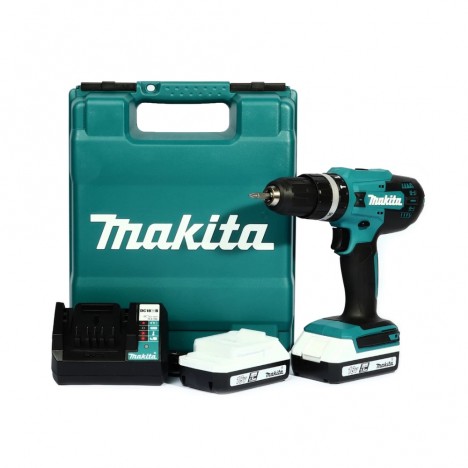
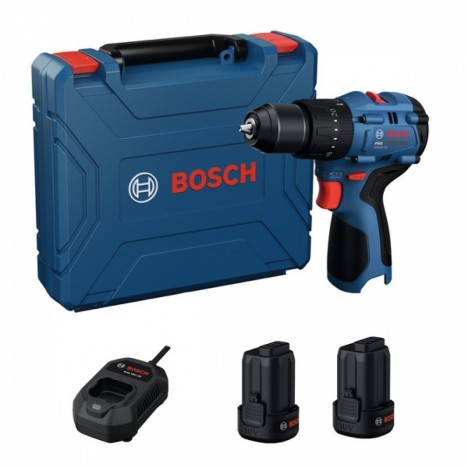


I think many people have encountered this, whether coming into the store or browsing online when about to buy. Cordless drill Then you see numbers like 12V, 18V, and 20V indicated in the model name or on the included battery. It's no surprise to be confused about "how do they differ?" Because if we look specifically at cordless drills, every brand, type, and model specifies this number. Some people love to encourage, saying "Just go for maximum power, 20V is definitely better!" Then others argue, "12V is enough, household tasks aren't that heavy, plus a smaller tool is much more convenient." I've seen countless debates in forums about this.
Nowadays, cordless drills are manufactured in so many designs that unless you look closely, you can hardly tell the difference. Ultra-compact models with surprisingly powerful rotation are available from several brands. Some models are bulky but don't feel noticeably stronger. Looking at the specs, what do the numbers 12V, 18V, or 20V actually tell us?
I used to think, "Higher voltage means more power, doesn't it?" But experts will say that beyond voltage, there are also the motor, battery, and hidden power management system, as well as minor details that all affect rotational power, speed, and tool durability in ways we rarely consider.
So how do we know which cordless drill is "just right" for actual use? In this article, I want to invite everyone to understand in simple terms that the voltage (V) number of a cordless drill seen on the box, model code, or battery doesn't just indicate "more power" or "higher price." It tells a lot about each cordless drill. Let's see how they differ and which one we, as users, should really choose.
What is the battery voltage of a cordless drill?
Many people have probably wondered what the voltage number on a cordless drill box really means. Some might think it's just a number indicating power or merely marketing. In reality, it hides a great deal about energy, design, and tool balance. The better you understand voltage, the more you realize why each cordless drill model delivers such a different feel.
Numbers that define both the power and identity of a cordless drill
First, you need to understand that the number 12V / 18V / 20V seen on a cordless drill is the battery's "voltage." It directly affects the motor's rotational power and serves as a fundamental indicator of the overall performance of any cordless power tool within a battery platform. How to Choose Makita Batteries Without Mistakes: An In-Depth Look at 12V, 18V, and 40V
This voltage is also tied to many factors, such as initial startup response, stability during operation, and the ability to sustain power during continuous, extended use. The higher the voltage, the more energy the internal systems must handle—across electronic components, the motor, and battery thermal management.
Therefore, the number on the box isn't just for show. It reflects the design and balance between "power" and "efficiency" of that cordless drill model—whether it's built to prioritize power, durability, or maneuverability, as well as performance in other aspects such as rotational speed and How is Torque Important in Choosing and Using a Cordless Drill?
Simply put:
- High voltage = Stronger motor rotation
- Low voltage = Motor may have less power, but is easier to control, economical, and agile.

12V cordless drill: Compact, lightweight, ideal for nimble handling
If you are into DIY or general household tasks, let me tell you that 12V cordless drill This is what will truly meet your needs, featuring key highlights such as:
- Lightweight, fatigue-free for long hours of use
- Easily drills through wood, plastic, or thin sheet metal
- Compact size, ideal for tight spaces like under cabinets or in furniture corners
- Affordable price with plenty of models to choose from
However, its limitation lies in the "torque." If the task involves drilling thick steel, driving very tight screws, or driving deep into wood, you may feel the tool slow down or stall. This isn't because the tool is flawed, but rather because it is designed primarily for light-duty tasks rather than heavy drilling, fastening, or loosening.
Makita 12V Cordless Drill: Is the popular model truly powerful, worthwhile, and worth using? To be completely candid, even a 12V cordless drill like the Makita HP333D can easily handle drilling wooden furniture or driving cabinet hinge screws all day long, while still feeling comfortable on your wrist during extended use.
18V Cordless Drills: The Sweet Spot for Both DIY and Professional Work
Now moving on to the professional's favorite choice: 18V Cordless Drills Considered the "most balanced medium size" for general tasks up to semi-industrial applications.
The highlight of these cordless drills is that they deliver noticeably higher torque than 12V models, yet the tool remains manageable in weight. Perfect for drilling steel, masonry (with impact mode), or general fastening tasks like air conditioning, furniture, or light steel framing installations.
I like to call 18V the "entry-level cordless drill" for professionals because it covers almost every type of work. Many models from brands like Bosch also feature various smart systems, such as Brake Stop, Torque Control, or even battery status indicators that help you plan your work better.
If your work isn't just confined to the house but occasionally takes you on-site—such as steel frame installation, masonry drilling with hammer mode, or off-site jobs—an 18V cordless drill is the perfect fit.
20V Cordless Drills: Are They Really More Powerful Than 18V?
Many people wonder: what is the actual difference between 20V and 18V? The answer is practically none, because the operating voltage is in the exact same range.
20V cordless drills are typically found among American brands like DeWalt, which rate voltage by the "Max Voltage" under no load. Meanwhile, European and Japanese brands, as well as Milwaukee, measure by "Nominal Voltage" during actual operation.
To put it simply: 18V (Nominal) vs. 20V (Max) Their actual power is virtually identical; only the measurement standard differs.

There are cordless drills with voltages higher than 18V / 20V, but why are they rarely seen?
There are cordless drills on the market with voltages higher than 20V, such as 36V or 40V Max, especially from pro-tier brands like Makita (40V XGT system) or DeWalt 60V Max, which are used for heavy industrial tasks like concrete work or thick structural steel.
However, the reason we don't often see these cordless drills is that they are "overkill" for general work. They are much heavier, have larger battery packs, and carry a higher price tag matching their specs, making them suitable only for pro tradesmen or large construction sites.
Simply put, comparing them to cars, they're like a large-engine 4WD pickup truck that packs immense power, but isn't practical for daily city driving.
When choosing a cordless drill, is looking only at the "battery voltage" enough?
Not enough! Voltage isn't everything; you also need to look at other factors like the "battery pack" and the "charging system." Because voltage is only one component of the total power. Another equally important factor is "battery capacity" (measured in Ah or Amp-hours), which determines how long your tool will run. For example, an 18V 2.0Ah battery and an 18V 5.0Ah battery deliver the same voltage, but the 5.0Ah one will run for nearly twice as long.
Therefore, when choosing a cordless drill, look at the big picture to get a tool that truly fits your actual use. Don't just pick the most powerful one upfront only to find it's so heavy that it's uncomfortable to hold, or that it doesn't run long due to limited power management. Consider various factors in the cordless drill power system together, such as:
- Match the voltage to the task: Light duty: 12V; General duty: 18V; Heavy duty or industrial: over 20V.
- Check battery capacity: If you use it frequently or for continuous work, choose a higher battery capacity, such as going from 2.0Ah to 4.0Ah or more, to work longer without frequent recharging.
- Do you have a spare battery? Having an extra battery pack for your cordless drill to swap between uses is much more convenient when working on-site or in areas without electrical outlets.
- Weight and ergonomics: A good cordless drill must be balanced—not causing fatigue or being excessively front-heavy when held—and, crucially, feel secure in hand. Even if it doesn't offer the highest voltage, smooth and comfortable operation is far more worthwhile in the long run.
I'd like to add a quick note here. It might not relate directly to the cordless drill itself, as it's cordless tool battery technology, but some brands design systems that support fast charging just like mobile phones. You may need to purchase accessories or a dedicated charger, but for anyone working continuously throughout the day, this system is genuinely a huge help.

Conclusion
It's true that the battery is the cordless drill's power source, but continuous, smooth power delivery only happens when the battery, charging system, motor, and other related components perform at full efficiency and work in perfect harmony. Therefore, before deciding on a cordless drill, ask yourself first: "What will I use it for most often?" and then look at the battery voltage.
Sometimes a 12V drill can deliver torque comparable to another brand's 18V drill due to differences in internal technology, or some 20V models aren't necessarily more powerful if the battery and power management system are inadequate. This is precisely why we should look deeper than just a single number on the box.
What matters most is the overall system; choosing based on your type of work, frequency of use, and practical convenience will definitely get you a cordless drill that is "worth the investment" far more than judging by voltage alone.
Because in the end, Cordless drill the one that is truly right for you is the one that strikes the balance between power, durability, and ease of use.