


 EN
 ไทย


Customers Also Purchased
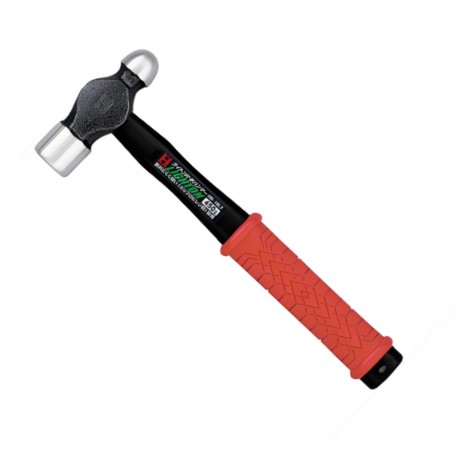


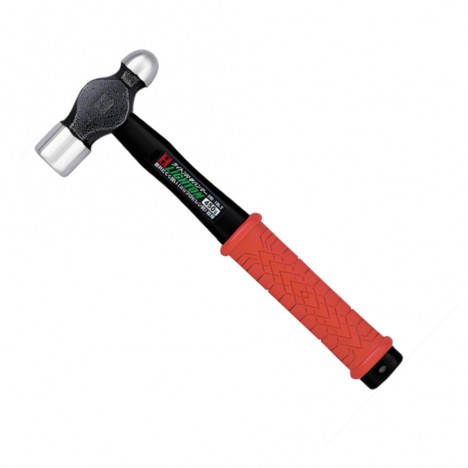
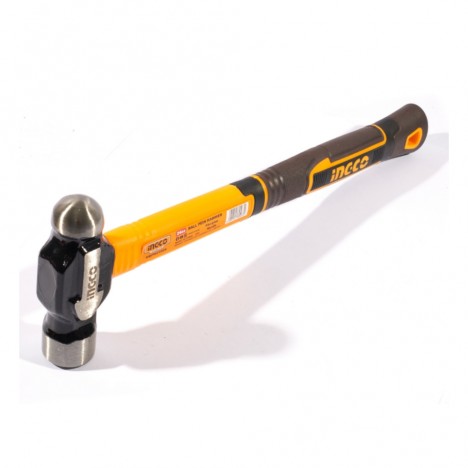
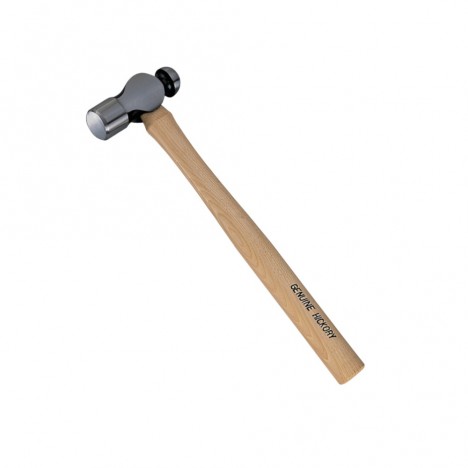
We think that many people (including ourselves), when mentioning a Round Hammer picture in their mind a very classic-looking steel hammer with a wooden handle, just like the ones found in toolboxes—a cool-looking hammer with good heft that immediately makes you feel skilled once you hold it. But did you know... when it comes to actual use, it's not as simple as you think! We remember the first time trying to use a ball-peen hammer to strike rebar. At that time, we thought, "Well, it's just a hammer, how different can it be from an ordinary hammer?" But after striking just a few times, the steel was deformed and flattened, nails were bent, and the handle vibrated through the hand so much that the wrist hurt! That's when we realized... a ball-peen hammer is not meant to be used like an ordinary flat-faced hammer at all.
A ball-peen hammer is actually designed for metal shaping, bending, rounding surfaces, or for use in mechanical, machinery, and machine shop tasks that require "concentrated force" rather than the distributed force of a flat-faced hammer. It sounds subtle, but if misunderstood, the resulting work will be worlds apart.
Can a ball-peen hammer replace an ordinary hammer?
This is one of the very first misconceptions. Many people think that a ball-peen hammer is just another type of hammer that can replace an ordinary hammer, claw hammer, or rubber mallet indiscriminately, which in reality... is not true at all.
Ball-peen hammers are designed specifically for metal shaping, especially in tasks requiring a smooth distribution of striking force, such as shaping curved sheet metal or smoothing out weld beads. This type of work requires an impact without sharp edges that won't leave deep gouges, which a ball head distributes very well. However, if used to drive nails into wood or strike hard workpieces not meant for shaping, the consequence is... the ball peen will wear out quickly and sometimes leave unwanted dents on the workpiece.
Tip From real experience, if your work involves metal shaping, bending, or finishing welds, the ball-peen hammer is the hero. But if you're just driving nails or doing general demolition, a standard flat-head hammer is far more suitable!

The rounder the head, the harder it strikes
We hear this phrase very often: “The rounder the ball-peen hammer, the more powerful it is.” It sounds cool, almost like a mechanic's law of physics, but in reality... it's just a “word-of-mouth myth.” When we were beginners, we believed it too. Seeing the shiny, round head made us think it would add force like a pendulum weight. But once we actually used it for metal tapping, we realized that wasn't true! Because if the head is too round, when you swing the hammer down, it won't “bite” the steel the way you want; instead, it disperses the force all around.
The result is... your strikes miss the target! The steel just won't take shape. Sometimes you strike so hard you tire yourself out, only for the hammer to bounce back, occasionally even leaving your wrist numb.
A story from a blacksmith: a round head is used when shaping large pieces of steel or smoothing surfaces. If you want to strike small, precise spots, the head shouldn't be overly rounded; otherwise, it only hits at the very tip and all the force dissipates. Therefore, don't choose a ball-peen hammer just because it looks cool or has a shiny head. Consider what kind of force your work requires as well.
All ball-peen hammers are the same
Another common misconception we see frequently is that many people think all ball-peen hammers are identical, differing only in size or price. But that's not true at all! Ball-peen hammers come in various types and materials, each with its own characteristics. Take a look at these simple examples:
- Carbon Steel Head: Strong, high impact resistance, suitable for general metalwork, but excessive force may cause dents.
- Brass Head: Used for non-marring applications, such as striking machine parts or delicate workpieces, because brass is softer.
- Stainless Steel Head: Rust-resistant, ideal for outdoor work or tasks exposed to moisture.

Any hammer handle will do; it doesn't matter
When choosing a ball-peen hammer, many people look at the “hammer head” first: Is it genuine steel? Is the finish polished or matte? But they forget to look at the “handle,” which is actually the most crucial part. No matter how good the head is, if the handle isn't balanced or the material doesn't suit the task, it’s no different from holding a lump of steel and swinging it around aimlessly.
Especially with a ball-peen hammer, which has higher recoil than standard hammers, the strike doesn't just sit still—there's a “kickback.” If you're not used to it, your hands will shake, your wrist will go numb, or you might even hurt your knuckle joints, because the round head scatters force in all directions, immediately transferring the rebound shock straight into the handle.
We experienced this firsthand when using a ball-peen hammer with an old, loose wooden handle. Hitting steel hard sent shocks vibrating all the way up the forearm! Just two or three days later, the wrist pain was so bad we could barely hold a hammer. So keep this in mind: if you're buying a ball-peen hammer, don't just look at the head—look at the handle too!
- If you focus on precision work, such as metal forging and shaping, choose a high-quality wooden handle (like Hickory or Ash) because it absorbs rebound shock well without being overly stiff.
- If your focus is on heavy-duty work or prolonged continuous use, a fiberglass or rubber-coated steel handle will help absorb vibrations even better.
Ball-peen hammers don't need much maintenance
This is a misconception that ruins a good hammer the fastest. Many people use a ball-peen hammer and then toss it into the toolbox without wiping it down, covering it, or inspecting the head, thinking, "It's just steel, what could go wrong?" That is completely wrong. Ball-peen hammers, especially high-carbon steel models, boast high hardness but are brittle. If oil stains, sweat, or moisture accumulate, rust forms very easily. Once rust bites into the steel, hardness decreases, and the hammer head can shatter or crack under heavy strikes.

How to Care for a Ball-Peen Hammer to Make It Last
- After every use of a ball-peen hammer, wipe the head dry and apply a light coat of oil to prevent rust.
- Do not store a ball-peen hammer in a damp toolbox or under car floors.
- Periodically inspect the neck area of the hammer for cracks; if there are any, even minor ones, stop using it!
- If it is a wooden handle model, apply wood oil every 2–3 months to maintain balanced moisture.
A senior acquaintance of ours who is a blacksmith once told us: "My ball-peen hammer has lasted 10 years because I care for it like a friend, but I've seen some people crack the head in just one year because they tossed it into a truck bed in the rain every day."
Conclusion
A ball-peen hammer is not just "another type of hammer," but a specialized tool that requires an understanding of force principles, load distribution, and proper maintenance. Many people misuse it because they assume it is like a standard hammer, even though it is genuinely designed for detail and precision.
Select Round Hammer More