


 EN
 ไทย


Customers Also Purchased
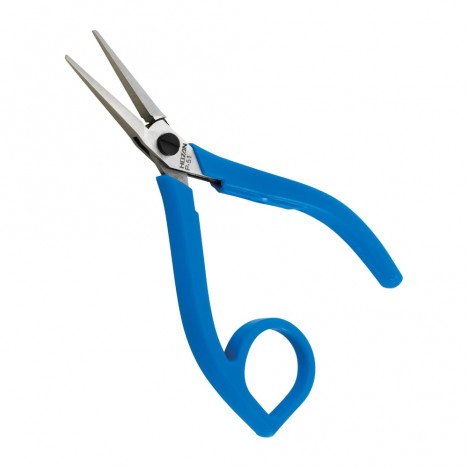
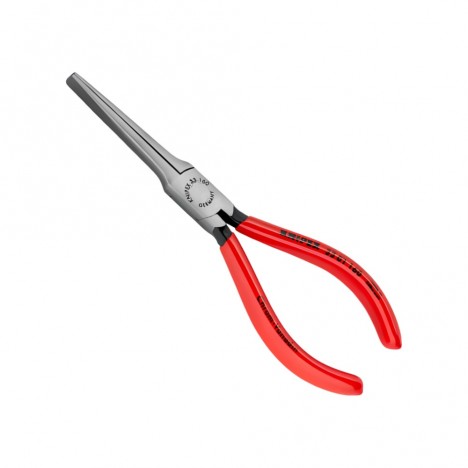
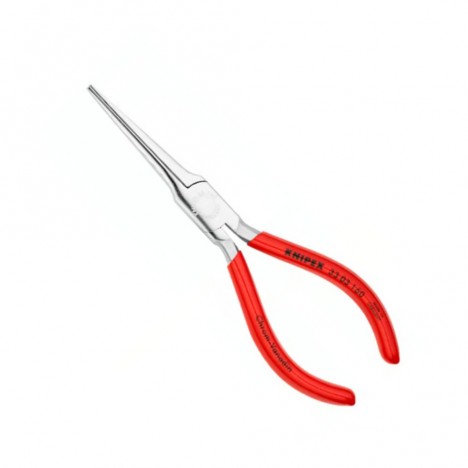

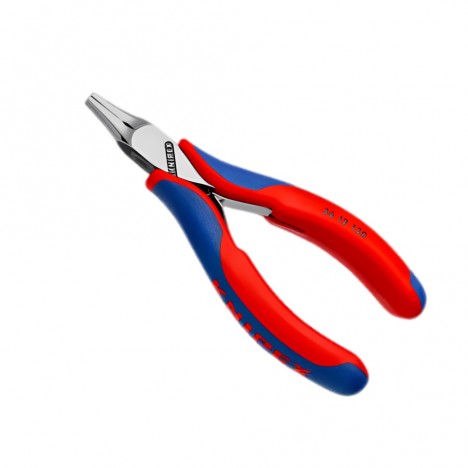
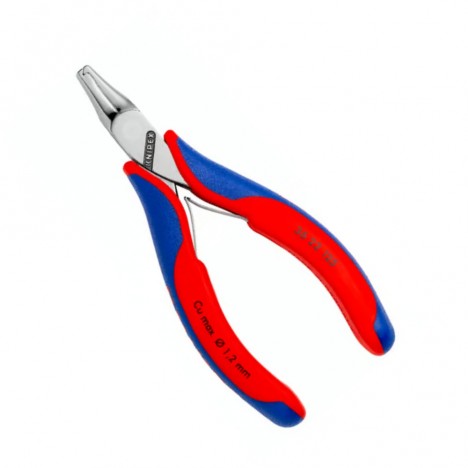
Have you ever walked into a tool store and seen Long Nose Pliers walls lined with so many options that you didn't know which one to pick? Some fit comfortably in your hand, some have slim, tapered tips, but when you pick them up for a closer look, you realize... they are truly not all the same. Some needle-nose pliers have extra-long, slender tips, perfect for electrical work where you need to reach in and grab wires in tight spaces. Some have thicker, stubbier tips meant for gripping or pulling parts that require heavy force. Others have a slight curve, as if "bending down," helping you reach spots your hands just can't get to. Seeing this, you can't help but wonder: why do needle-nose pliers need to have so many different shapes? Can't we just use one?
To be honest, needle-nose pliers are one of those tools that all look the same at first glance, but once you actually use them, you realize that even a tiny difference in the tip completely changes the working feel! We once tried using standard needle-nose pliers to repair wiring under a circuit board. It turned out that when facing an awkward angle, we had to twist our wrists almost to the breaking point just to grip it. If we had bent-nose pliers back then, the job would have been done in no time.
In this article, we'd like to invite you to take another look at "needle-nose plier tips." It's not just about looking good or cool—it's the result of thoughtful engineering designed to fit each specific type of work as ergonomically as possible, whether it's electrical work, electronics, jewelry making, or general home repairs.

Needle-Nose Pliers Aren't Just for Gripping Small Objects
The name says it all: needle-nose pliers. But if you think their main feature is simply having a pointed tip... think again. What truly makes this type of plier an essential item in everyone's toolbox isn't just the pointy tip, but rather "the ability to access tight spaces and provide fine-tuned control over gripping force."
Anyone who has ever repaired electrical appliances or squeezed their hand into a cramped wiring compartment knows... no matter how strong you are, it's useless if you can't reach it! That's when needle-nose pliers become the "silent hero" of the job, allowing us to do what bare hands cannot: pick, lock, squeeze, and pull in spots so tight you can barely see them.
A technician I once worked with said something that I still remember vividly:
"Working to grab wires in tight spaces without needle-nose pliers is like having eyes but no hands."
It might sound like a joke, but anyone who has been in that situation understands immediately. It's absolute truth. Needle-nose pliers are designed to act like an "extension of your fingers"—the tip is slim enough to grip wires in tight crevices, yet strong enough to hold steel or wiring without slipping, crushing, or deforming the workpiece.
And that is why the "tapered tip" of needle-nose pliers varies so much across brands. Some brands design them long and slender to thread deep into narrow gaps, while others make the tip slightly thicker to withstand higher gripping forces. None of this is accidental; it reflects the mindset of the design engineers who strive to make the pliers a true extension of the user's hand.

The Shape of the Tip Affects the Use of Needle-Nose Pliers More Than You Think
Standard Long Nose Pliers
Bent Nose Pliers
Anyone working as an automotive or engine mechanic has surely fallen in love with bent-nose pliers. That's because they let you "reach behind workpieces" without painful wrist twisting. The tip, angled around 45–60 degrees, gives you a clearer view of what you're gripping and better control in awkward angles where straight tips can't reach. A veteran mechanic friend of ours once said,
"Bent nose pliers let you see the workpiece much better while gripping, because the tips don't block your line of sight like straight ones do."
Anyone who has ever had to reach in to grab a pin deep inside machinery or retrieve a dropped screw from a tight crevice knows that bent nose pliers are truly everyday lifesavers.
Short Nose Pliers (Short Nose / Half Round)
Don't underestimate short nose pliers. Even though they look stubby, their "gripping power" is truly extraordinary. This type of tip is shorter and thicker than standard pliers, making it exceptionally strong. It is ideal for high-force gripping, thick crimping, bending wire, or pulling parts that require heavy effort—such as steelwork, mechanical assembly, or heavy equipment repair.
Short tips give you great leverage and control, resist twisting, and won't flex or lose alignment when holding items firmly. Many Japanese brands favor this profile because they focus on high-grade carbon steel that is tough, providing strong gripping power without loosening up. You could say these are the ultimate "heavy-duty workhorses" of the plier world.
Micro / Precision Long Nose Pliers
Now onto the precision side. If you repair mobile phones, craft jewelry, or work with miniature electronics, these are an indispensable companion. The ultra-thin tips taper down to around 1 mm, making them slender enough to reach in and grab wires or resistors on a circuit board without touching anything else. One caution, however: they are not meant for heavy squeezing. Because the tips are so fine, twisting or applying excessive force can bend them easily.
However, when used for the right tasks, they offer precision that feels almost like using your bare hands. Working with them feels like extending your own fingertips just a little further—and in fine detail work like this, even 1 mm makes all the difference!

So how do different brands design their long nose pliers differently?
Once you hold the real tools in your hand, you'll immediately realize that each brand of long nose pliers has its own distinct personality. The weight, tip length, sharpness of the serrations, and the feel when squeezing all differ noticeably right from the first touch. We once spent a long time testing pliers at a tool display, with dozens of models from Knipex, Stanley, and Wera lined up together. The moment you picked each one up, the difference was unmistakable without needing any explanation.
Knipex
Tapered, sharp, and exceptionally rigid tips. Squeezing them just slightly reveals how solid they feel. The serrated jaws grip securely without slipping, making them ideal for holding hard or slick objects like copper wire or small steel pins. In actual use, you'll feel total control with every fingertip movement. Knipex is favored by professional technicians worldwide for its precision and confidence-inspiring clamping force—almost like the pliers amplify your grip effortlessly.
Stanley
A rugged workhorse brand. The tips are slightly thicker than German models, giving a tough, robust feel suitable for general utility, mechanical repair, or construction work requiring gripping, crimping, and pulling resilient parts. While not ultra-thin, the jaws are dependable, so you won't worry about bending the tips when handling heavy-duty items. Truly a "field-ready plier" designed for a comfortable grip and daily use without fear of easy damage.
Wera
These two brands offer a distinctly different feel compared to Knipex. They feel smoother, more refined, and cater to fine precision. The jaws are finely ground—tapered without being fragile—and forged from premium chrome vanadium steel with a silky smooth rust-resistant coating. When gripping items, they feel stable and precise, as if equipped with built-in vibration dampening. Perfect for detail-oriented tasks like electrical work, electronics, or small mechanical assembly.

Good plier tips require a balance between "strength" and "precision"
Many people mistakenly assume that thinner tips are always better, but that isn't true. Excessively thin tips bend easily, especially under heavy squeezing pressure or when gripping hard workpieces like steel wire or seized screw heads.
On the other hand, if the tips are too thick, they may be durable but won't fit into tight spots, forfeiting the primary benefit of long nose pliers.
Therefore, achieving a "balanced" tip design is the most crucial core aspect of this tool type, and that is precisely what each brand strives to perfect in its own way.
- Great plier tips = bend-resistant + secure grip + tight space access
It sounds simple, but in reality, it requires rigorous torque testing, steel flexibility, and precise jaw alignment when fully closed. All of these factors are exactly what make certain pliers several times more expensive than others.
The steel material also affects the "tactile feel when gripping"
Many technicians agree that a good pair of needle-nose pliers shouldn't be judged by its shine, but by the "rebound action" when squeezing and releasing.
- Cheap pliers often use ordinary carbon steel without induction hardening; the tips bend or wear out easily, and the spring return is inconsistent.
- Professional-grade pliers typically use Chrome Vanadium Steel or Nickel-Chrome Alloy with induction-hardened tips, making them 20–30% more resistant to bending and keeping the serrations sharp for years.
“Good pliers aren't judged by the brand name, but by their tips. If they close flush without the slightest gap, even the smallest wire won't slip out.”

Serrations on the Pliers Tips: A Small Yet Crucial Detail
Besides the tip shape, the "serrations" on the pliers tips are another feature that varies from brand to brand.
- Fine, sharp serrations: Grips firmly without slipping, ideal for small workpieces such as electrical wires or copper strands.
- Coarse serrations: Suitable for heavy-duty tasks, such as gripping screws or clamping thick metal pieces.
- Smooth nose: Used for materials where surface marking must be avoided, such as jewelry work or electronic assembly.
Some technicians even keep 2–3 pairs of needle-nose pliers to swap between, avoiding marks on workpieces that require a clean finish.
Conclusion
Before buying a pair of needle-nose pliers, ask yourself: "What kind of work do I do most often?" That answer will lead you to the right pliers. Whether it's straight-nose, bent-nose, or duckbill, just choose the right fit and your work will be much easier.
Select Long Nose Pliers More