


 EN
 ไทย


Customers Also Purchased
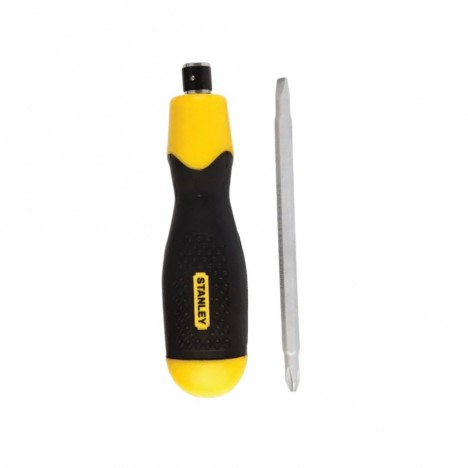



If you have ever assembled furniture yourself or driven screws in tight spaces like under a table or behind a cabinet, you have likely encountered this familiar scenario: the screw drops who-knows-where, and you spend several minutes fumbling around with your fingers—which happen to be too thick—or even end up crawling on the floor trying to retrieve it from under a crevice.
Until one day, a senior technician suddenly spoke up and said, "Why don't you use Screwdrivers a magnetic one! Why waste time picking them up?" The very first time I tried it, I thought, "Wow, this is really convenient!" Just point the screwdriver tip at the screw head, and it "clicks and sticks" magnetically on its own. No fear of dropping, no need for an extra hand to steady it. Once you get the rhythm, tasks that used to take several minutes turn into just a few seconds. It noticeably speeds up the work, especially when working alone with no one to hold things for you, or working in hard-to-reach angles. Having just one good magnetic screwdriver is like having an assistant right beside you.
What is a magnetic screwdriver? It does more than just attract screws
Many people think that a "magnetic screwdriver" is just a screwdriver with a magnet at the tip to prevent screws from falling while driving them in. Which is true... but in reality, the benefits of the magnet go far beyond that.
I used to think it was just a little gimmick, until I actually used it on a day when I had to drive screws into the ceiling, my hands shaking because I was reaching at full arm's length. The screw was on the verge of dropping every second. But once I used a magnetic screwdriver… it held on tight, and there was no hassle of using the other hand to support it. It felt like my life as a technician improved in an instant.
- Helps start driving screws more accurately: The magnetic tip holds the screw head securely. When aligning it with the hole, it won't slip or tilt, allowing you to start driving it perfectly right from the start. Especially when driving overhead or in blind spots where you have to rely on feel rather than sight, a magnetic screwdriver is like a helpful companion holding the screw for you without a complaint.
- Reduces the risk of dropping screws during work: Anyone who has ever installed hinges, furniture, or worked on machinery knows well that a single dropped screw can take away dozens of minutes of your time. Sometimes it rolls under a cabinet or drops into a machine compartment, forcing you to halt the project just to search for what was lost. But with a good magnetic screwdriver, this problem hardly ever happens because it holds onto the screw throughout the job.
- Helps retrieve metal debris or screws stuck inside machinery: This is crucial in mechanical or electronics work. Tiny metal shavings or miniature screws dropped into tight crevices can sometimes be seen but not reached. Without specialized tools, you might have to disassemble the entire machine. But with a magnetic screwdriver, just a light touch pulls it right out—effortlessly and simply.

After using a regular screwdriver, you'll truly understand how essential a magnet is
I still remember clearly when I went to help a friend assemble steel shelving in a warehouse. It was a simple job, but using a standard flathead screwdriver, screws kept falling everywhere! Sometimes they dropped into steel grooves, sometimes they bounced to the other side of the warehouse. We spent more time retrieving screws than driving them!
After that, I grabbed a set of magnetic screwdrivers to try out. This time… everything changed. The screws stuck perfectly to the tip with no fear of dropping, and driving them with one hand became so much easier. Ever since then, I've never gone back to regular-tipped screwdrivers, especially for jobs in tight spaces or at heights like installing ceiling lights or overhead aluminum framing.
How much time can a magnetic screwdriver save?
Don't think it's a minor thing! Based on my own mechanical assembly test, driving 10 screws took an average of about 5 minutes with a standard screwdriver, but with a magnetic screwdriver, the time dropped to just 3 minutes. That's a difference of only 2 minutes per set, but in real work where you drive hundreds of screws a day, it saves hours—plus it cuts out the frustration of dropping and losing screws.

Those working with electricity might wonder: does a magnetic screwdriver affect circuits? The answer is: it depends on the type of work. In low-voltage or general tasks (such as furniture or household appliance repairs), there is no problem at all. However, for electronics with circuits sensitive to magnetic fields, such as HDDs, PCBs, or certain measuring instruments, you should use a non-magnetic screwdriver to prevent damage.
Industrial electrical technicians often choose insulated screwdrivers with magnetic tips made from specialized insulating materials, such as VDE certified models, which offer proper screw retention while remaining safe against electric currents.
Tips for maintaining your magnetic screwdriver for long-lasting use
- Do not expose to excessive heat – Many people might not know this, but "heat" is actually the worst enemy of magnets. If exposed to excessively high temperatures, the magnetic force will gradually fade away unnoticed, leaving it powerless. Therefore, if you've just finished a job involving a hot air blower or worked near a furnace, don't place your magnetic screwdriver near it right away. It's better to wait for it to cool down before use.
- Avoid hard impacts – A magnetic screwdriver is like a good coworker; if tossed around frequently, it can break down. Hard drops or impacts can cause the internal magnet to dislodge or lose its strength faster than usual. So after use, don't let it roll off the workbench or throw it together with other tools. Store it properly so it stays with you for a long time.
- Keep away from important electronic devices – don't overlook this! The magnetic force from the screwdriver tip can interfere with certain devices, such as HDDs, credit card magnetic stripes, or even access keycards. Someone once placed a magnetic screwdriver on their desk near a laptop, and suddenly the hard drive started acting up. So, keeping them stored separately gives you much more peace of mind.
- Regularly clean the screwdriver tip – while working, tiny iron shavings or metal dust often cling to the tip. If left for a long time, they will accumulate until the magnetic pull is reduced or you can't drive screws accurately, as the screw sticks to the debris instead of the magnet. Using a clean cloth to wipe it after every use takes just a moment, but it can extend the life of your magnetic screwdriver significantly.

Used by veteran technicians, loved by modern ones.
A senior electrician we know once said:
“A magnetic screwdriver isn’t much more expensive, but it saves you from losing your temper over small things on the job.”
It's true, because time on the job means money. If you have to waste time searching for dropped screws or re-tightening because screws slipped off, the value of a magnetic screwdriver becomes obvious in just a few days.
And don't forget that good magnetic screwdrivers from leading brands, such as Wera or Knipex, often feature ergonomic grip designs that provide a comfortable, non-slip hold and help reduce strain during prolonged, continuous use.
Conclusion
We used to think that a standard screwdriver and a magnetic screwdriver weren't all that different—until we actually worked in tight spaces and had to drive hundreds of screws a day. That was when we realized that this "little tool" is precisely what makes work faster, saves effort, and prevents unnecessary minor mishaps.
Select Screwdrivers Additional Info