


 EN
 ไทย




Common issues gathered, revealing the secrets to extending lifespan
Would you believe it... one of the most frustrating problems for car owners or anyone with electrical devices relying on backup power is when the battery "Dry Cell Batteries degrades quickly." Even when recently purchased and only used for a few years, headaches start to arise. Some buy one for their car expecting it to start every morning, but after just over a year, the car starts struggling to turn over, requiring frequent jump-starts and causing them to be late for work. Others install a dry-cell battery in an uninterruptible power supply (UPS) expecting computers not to shut down during power outages, but in reality, after less than a year of use, the backup power can't even last long enough to save work.
In reality, "dry-cell battery" doesn't mean it's indestructible or never degrades; its premature expiration mostly stems from usage habits and maintenance rather than the product itself. In this article, Nong Chang will take a deep dive into the common problems people face, their true causes, and simple techniques to help prolong battery life. I assure you that after reading this to the end, you will understand dry-cell batteries thoroughly and save a lot of money on replacement costs.
"Read to the end, and you'll understand dry-cell batteries inside out, prolonging their life by knowing the causes and fixing them directly."
Nong Chang Tells Stories • Last updated: October 2, 2025

What is a dry-cell battery?
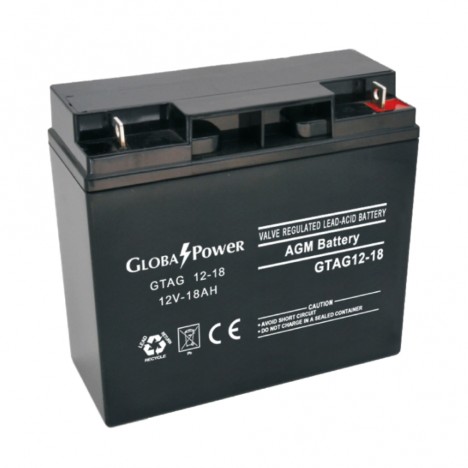
Before diving into rapid degradation or maintenance, let's first understand what a "dry-cell battery" truly is. Many may recognize it as a battery that "doesn't require distilled water," which is correct. But technically, it is a type of battery known as Sealed Lead Acid (SLA) or sometimes called Maintenance Free meaning a sealed battery that does not require checking distilled water levels like flooded lead-acid batteries.
Its internal structure still uses the lead-acid principle, but it is engineered so that the plates and electrolyte remain in a state that does not evaporate easily, such as using AGM (Absorbent Glass Mat) which uses fiberglass mats to absorb the electrolyte, or GEL types that turn the acid into a gel form, eliminating the risk of acid spills or evaporation.
The result is greater convenience, cleanliness, and no need to open caps to top up distilled water. However, that does not mean it will last forever—it still has a finite lifespan. When used correctly, it will last longer, but if used improperly, it can deteriorate even faster than a flooded battery.
Common Issues: Why Do Dry Batteries Expire Quickly?
1. Misapplication / Wrong Usage
One of the most common causes is using a dry battery for the wrong application—for example, putting a battery designed for a UPS into a motorcycle, or using a car battery for a heavy power-consuming car audio system. Using it incorrectly means the current delivery capacity (CCA – Cold Cranking Amps) will be inadequate, eventually causing the battery to deteriorate prematurely.
Additionally, there are many misconceptions, such as using a starting dry battery—designed to provide high current for short bursts—for continuous long-term power delivery like in solar systems or UPS units. Doing so causes the battery to overheat and degrade prematurely. Conversely, using a deep cycle battery designed for long discharges to start a vehicle will make starting difficult, as it cannot supply sudden high currents.
When buying a battery, do not just look at its size or cheap price. You must also check "what it was designed for." For example, for automotive use, choose one with high cranking power. But for solar systems or UPS applications, select one suited for extended power delivery (Deep Cycle). Also, don't forget to match the CCA specification and Ah (Ampere-hour) rating to your application.

2. Incorrect Charging Methods
Charging a dry battery cannot be done with just any charger. Some people use chargers meant for flooded batteries with currents that are too high for dry batteries. The result is excessive heat, acid evaporation, rapid deterioration, or in some cases, swelling and complete failure.
Furthermore, many users leave the battery charging overnight without an automatic shut-off system, or charge it more frequently than necessary. Both scenarios degrade the battery just as quickly, as dry batteries are engineered to accept charging under properly controlled voltage and current conditions only.
Fact Box: Differences in Battery Chargers
- Flooded battery: Uses standard chargers, capable of adjusting to high currents.
- Dry battery: Should use a Smart Charger with voltage regulation and automatic shut-off, equipped with overcharge protection and float charge modes to extend service life.
3. Frequently Letting the Battery Drain Completely
Dry batteries do not tolerate being drained until the voltage drops below 10.5V. Allowing them to completely discharge repeatedly causes sulfation—the formation of lead sulfate crystals on the plates. This continuously degrades charge retention and causes rapid battery deterioration.
Allowing the battery to drain completely also causes the internal circuitry to overheat during the next recharge, as the charger attempts to deliver high current to recover the voltage. This damages the battery plates faster than normal. Furthermore, a battery that is frequently fully discharged accepts less charge each time, permanently reducing its actual usable capacity.
If a vehicle or equipment with a dry battery is rarely used, perform a top-up charge every 1–2 months to keep the voltage level from dropping excessively low.

4. Unsuitable Temperatures
Many people store or use batteries in extremely hot places, such as regularly leaving a car under direct sunlight. Heat builds up inside the battery, causing the electrolyte to deteriorate faster than usual. High heat also increases internal pressure, which can cause the battery to swell. Conversely, an excessively cold environment reduces discharge performance as well; for instance, car batteries parked in snow abroad often struggle to start due to weak power.
Another frequently overlooked factor is ventilation. If a battery is installed in an enclosed cabinet or poorly ventilated space without airflow, accumulated heat will likewise accelerate its degradation.
Batteries are like people; if they are in extreme weather conditions, their health deteriorates quickly. Therefore, a moderate temperature of 20–25 °C is the sweet spot for storage. You should also choose an area that is not humid and well-ventilated so that the battery can operate at full efficiency.
5. Never checking the condition
Even though it is a dry-cell battery, that doesn't mean you can completely ignore it. Many people install it and forget all about it, never checking the voltage, inspecting for swelling, or seeing if the terminals are loose. The result is that one day, when you actually need it, you find there isn't enough power.
Failing to inspect the battery also keeps you from knowing when it starts to degrade. For example, if the voltage continues to drop while it still works, it may indicate that its actual capacity is dwindling. Catching this early helps you plan for a replacement before the battery dies midway through use.
The resting voltage should be between 12.6–12.8 volts. If it frequently drops below this range, it should be recharged promptly. In addition to voltage, inspect the external condition: terminals must be tight and free of oxide deposits or rust, and there should be no abnormal leaks or swelling.
Solutions and tips to extend the lifespan of dry-cell batteries
1. Choose the right battery for the job
Whether used for cars, motorcycles, UPS systems, or solar setups, you must select a type specifically designed for that application. If you make the wrong choice from the start, no amount of care will make it last.
Choosing the right type of battery requires considering voltage (Volt), capacity (Ah), and the nature of the application. For instance, car batteries require high cranking power (CCA), whereas solar or UPS batteries should be Deep Cycle types capable of withstanding prolonged discharges. Additionally, check the installation space and terminal sizes to ensure they match the equipment for optimal performance.
2. Use the proper charger
Investing in a Smart Charger is worthwhile because it can regulate voltage and automatically cut off power to prevent overcharging. Some models even feature a "Desulfation" mode to help reverse sulfation.
In addition, a good charger should feature a Float Charge mode to maintain a constant voltage when plugged in for long periods, such as for rarely used vehicles or UPS systems that must always remain ready. Using the correct charger also reduces internal heat buildup, prevents swelling, and significantly extends the battery's lifespan.

3. Avoid complete discharge
Recharge immediately when the voltage drops below 12 volts; never let it fall below 10.5 volts, as that permanently damages the plates. Maintaining a resting voltage around 12.4–12.7 volts is ideal, as it prevents plate sulfation and keeps the battery ready for use. If you need to store the battery for a long period without using it, perform a periodic top-up charge to keep the voltage within a safe range.
4. Manage temperature properly
Store the battery in a cool, well-ventilated area. Avoid placing it near heat sources or under direct, harsh sunlight. If storing it for an extended period, charge it fully first.
Controlling the temperature not only extends battery life, but also prevents swelling and electrolyte leakage. If the battery must be stored in an enclosed room, adequate ventilation should be provided to prevent heat buildup. In extremely cold climates, check the battery voltage more frequently, as power weakens more than usual. Storing it at 20–25 °C is considered the most suitable condition.
5. Check regularly
- Use a multimeter to check the voltage and record the readings every time to track degradation trends.
- Check for swelling, leaks, and abnormal odors such as burning or acid smells, which indicate internal damage.
- Clean the battery terminals to keep them free of oxide buildup, and keep the terminal bolts tightly tightened to reduce power loss.
- Inspect cables and connectors for damage, looseness, or missing insulation, as these can cause current leakage and accelerate battery degradation.
Never pour water over the battery terminals. The proper cleaning method is to use a damp cloth or a dedicated terminal cleaner spray.
Reference figures to know (12V SLA)
| Battery status (approximate) | Resting voltage ~ 1–2 hrs after disconnecting load/charger | Interpretation / Recommended action |
|---|---|---|
| 100% full | ≈ 12.7–12.8V | Good condition, ready to use |
| ~75% | ≈ 12.5V | Normal operation; plan to recharge if not driving/using further |
| ~50% | ≈ 12.2V | Should be recharged soon to reduce degradation |
| Low / At risk | < 12.0V | Recharge immediately; avoid letting it drop below 10.5V (high risk of severe sulfation) |
| Float mode (maintenance) | ≈ 13.2–13.8V | Holding voltage once fully charged (from a smart charger / charging system) |
| Absorption mode | ≈ 14.2–14.7V* | Constant voltage to top off (*AGM/GEL may differ, choose the right mode) |
Note: The figures are general guidelines and may vary depending on the model, temperature, and parasitic loads. Always refer to the manual of the specific model in use.

Extending battery life is easy—just pay a little attention
The problem of Dry Cell Batteries Premature deterioration is actually no mystery at all. Most cases stem from improper use or minor negligence. If we select the right battery for the job, use a suitable charger, avoid completely draining it, manage temperatures, and periodically check the voltage, rest assured the battery will last much longer than you think.
Some people might be used to buying a new battery every year, but if you change your maintenance routine following these shared techniques, you could save thousands of THB a year.
- Dry cell battery in cars: 2–4 years (with good care)
- Dry cell battery in UPS: 3–5 years
- Deep cycle dry battery for solar: 5–7 years
“A dry battery is like a loyal friend: take good care of it and it’s ready to support you when it matters most—neglect it, and it can act up at any time.”