


 EN
 ไทย


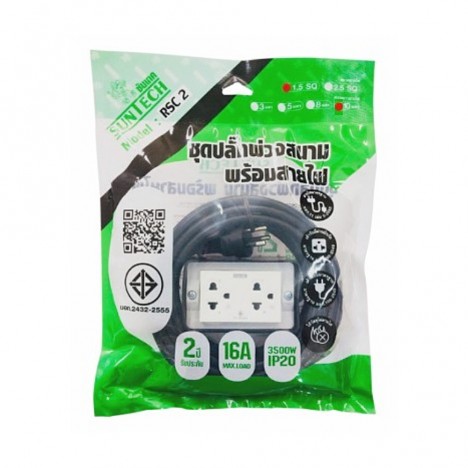


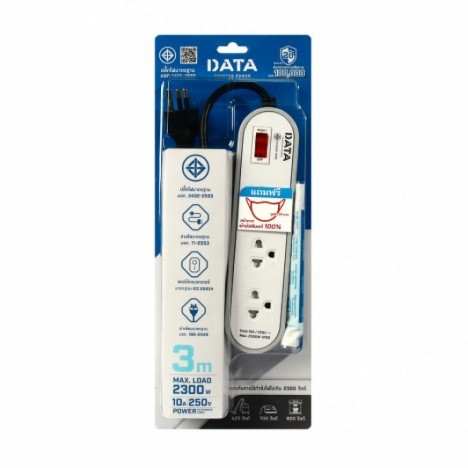
Have you ever seen news reports of power strips catching fire and burning down an entire house? Often, the cause isn't complicated at all—just using a cheap extension strip with high-power appliances, and suddenly it overheats until it melts or sparks dangerously. Nong Chang has experienced it firsthand: plugging an iron and a hairdryer into an extension cord at the same time, thinking a few minutes wouldn't hurt. It turned out the cable got scorching hot to the touch, and finally, the circuit breaker tripped, cutting all power. Fortunately, it tripped in time—otherwise, the fire department would have been needed!
Many people often think the problem comes from "home voltage being too strong" or "excessive voltage", but that's not it at all. Standard household voltage remains at 220 volts, but what is excessive is the electrical current that the cable cannot handle. Electrical Wires & Cables Each type is designed to handle a different amount of current. If you use a small wire rated for only a few amps with heavy appliances, heat will build up continuously until the insulation melts, cracks, or easily catches fire.
Nong Chang invites everyone to get to know "electrical wires" better than ever—no technical background needed. We will explore what's inside a wire, why it easily fails if misused, and how to choose safe cables so you never have to fear fires caused by power strips again.
"Choose the right cable, right size, and use it correctly—cut fire risk by more than half"

Electrical wires are not just plastic-coated cables
Each layer of an electrical wire has a distinct function. For example, PVC insulation is suitable for operating temperatures around 70°C, while XLPE withstands higher temperatures of about 90–110°C, making it ideal for high-load applications or extreme hot environments. Example of selection: THW (PVC-insulated) is suitable for indoor residential wiring with general appliances, while outdoor/underground applications exposed to sunlight and heat should use NYY or XLPE-insulated cables. Understanding these different layers helps you choose the "right cable for the job" and stay safer.
If you look at a cross-section, an electric wire isn't just copper inside wrapped in plastic; it actually has multiple layers, such as:
- Conductor: The larger the cross-section, the more current can flow, resulting in less heat accumulation.
- Insulation (PVC/XLPE): PVC is suitable for operating temperatures around 70°C while XLPE can withstand up to about 90–110°C making it suitable for high-load/extremely hot conditions.
- Sheath / Moisture and UV-resistant layer: Essential for outdoor applications, such as NYY cables.
When buying electric wires, we often see designations like THW, VCT, and NYY. These aren't just cool names, but they indicate crucial specifications.
- THW – Single-core solid copper, PVC insulation, used for conduit/in-wall wiring; should not be directly exposed to sunlight.
- VCT – Flexible stranded copper wire, ideal for indoor extension cords.
- NYY – Thick insulation, UV-resistant, and suitable for direct burial; ideal for outdoor use.
- VSF – Flexible cable for small appliances such as lamps and fans.
Using the wrong wire for the job—such as using VCT outdoors where sunlight makes it brittle and cracked in a few months, or using 0.75 sq.mm THW wire for irons or water heaters—will cause the wire to overheat until the insulation melts!
Why daisy-chaining damages electric wires
The primary cause is that overcurrent causes the wire to heat up because electrical energy passing through a conductor is converted into heat according to the formula P = I²R (power = current squared × resistance). When multiple appliances are used simultaneously, the current increases significantly, causing heat to multiply exponentially. For example, if a small wire rated for no more than 6A is subjected to a total load of 10A, the heat generated increases nearly threefold, leading to deteriorated, cracked, and brittle insulation, as well as a serious fire hazard.
Daisy-chaining / Over-extending = Increases the distance and forces the wire to bear a heavier load than it was designed for.
- Overcurrent: Suppose an iron consumes 1,000 watts and a hair dryer consumes 1,200 watts, totaling 2,200 watts. Our household power is 220 volts → the flowing current is approximately 10 amps. If we use a wire of only 0.75 sq.mm (most handle around 6–7 amps), it is already overloaded, causing it to heat up and degrade quickly.
- Heat accumulation: Power cords that are coiled, bundled, or gathered together dissipate heat poorly, accumulating heat until the insulation melts more easily.
- Voltage Drop: The longer the run, the greater the voltage drop, forcing electrical appliances to work harder; higher current makes the wire get hotter.
- Multi-tier Connections: Every connection point adds heat and the risk of a short circuit. If non-standard connectors or poor soldering are used, with loose insulation or moisture ingress, sparks can occur.

Wire Size = The Heart of Safety
Selecting wire size must always take wire length into account along with load, because longer wires cause voltage drop, leading to electrical appliances not operating at full efficiency and potentially causing the wire to heat up. Therefore, the cross-sectional area should be upgraded larger than the basic table. For example, running power for 30 meters: instead of the original 1.0 sq.mm, move up to 1.5 sq.mm for safety and to reduce voltage drop.
When buying or choosing wires, you need to understand the unit square millimeter (sq.mm), which indicates the copper cross-sectional area—the larger it is, the more current it can handle.
| Wire Size (sq.mm) | Max Current (≈) | Supported Wattage (≈220V) |
|---|---|---|
| 0.5 | ~3–5 A | 600–1,100 W |
| 0.75 | ~6 A | ~1,300 W |
| 1.0 | ~11 A | ~2,400 W |
| 1.5 | ~15 A | ~3,300 W |
| 2.5 | ~20 A | ~4,400 W |
As you can see, most general extension cords use only 0.5–0.75 sq.mm wires. If plugged into a fan and a mobile charger, it's fine, but as soon as a water boiler, rice cooker, or microwave is added, it exceeds the limit immediately.
Which Wire Type Is Suitable for What Job?
Choose the wire type that matches the working conditions and check the safety standard marks every time, such as TIS on the label to confirm that it has passed tests according to Thai standards, and international standards like IEC for installations requiring high reliability, along with reading technical specifications before use.
- VCT (Vinyl Cabtyre Cable) — Flexible, suitable for connecting indoor appliances/extension cords; not suitable for permanent sun exposure
- THW — Conduit routing/in-wall concealment, suitable for permanent indoor installations
- NYY — Outdoor/direct burial, sun-resistant, moisture-proof, suitable for outdoor use
- VSF — Low-power devices such as lamps, fans

Risky habits that quickly damage power cables
- Coiling cables into a bundle: Prevents heat dissipation and causes heat accumulation, degrading insulation faster than normal
- Running unnecessarily long cables: Increased distance = increased resistance = heats up easily, and may cause voltage drops making appliances work harder
- Using old cables with unknown specs: Brittle, cracked insulation may not be noticeable to the naked eye; sometimes the copper inside is already corroded
- Plugging in multiple high-power appliances together: Especially rice cookers, irons, microwaves, and heaters; combined wattage easily exceeds the cable rating
- Splicing cables yourself without proper terminals or standard connectors: Loose connection points cause heat and sparks, risking electric shocks or fires
Check power cables yourself
- Tactile inspection: During use, if it feels abnormally hot, unplug it immediately and allow the cable to cool down before using it again
- Inspect the insulation: If it is brittle, cracked, or has burn marks, replace it immediately. Do not overlook small cracks as they can cause electrical leakage
- Check with a meter or electrical tester: Check that the electrical current does not exceed the cable's capacity (it's easy if you know how to measure current), and you may measure the voltage drop at the end of the line during actual use to see if there is an excessive load.
- Listen for sounds and smell for odors: If you hear a crackling sound or smell burning plastic, stop using it immediately, as heat may have built up and started damaging the cable.
DIY is fine, but know your limits
For anyone who wants to do basic electrical wiring at home or make their own extension cord, it's doable, but you need to know the fundamentals and be aware of the limitations.
- Choose an adequate cable size (at least 1.0 sq.mm or larger if powering multiple appliances) and take cable length into account, because the longer the run, the greater the voltage drop, requiring an appropriately larger wire gauge.
- Use standard-compliant plugs and sockets; always look for TIS certification or international safety standards.
- Solder or tighten screws securely to reduce heat at connection points, and use protective sleeves against moisture.
- Don't forget the ground wire — it helps prevent electric shocks and enables the circuit breaker to trip quickly during a ground fault.

Choose the right cable, use it properly, stay safer
Issues with Electrical Wires & Cables are closer than you think; any household can encounter them. If we understand simple principles—that wire size must match the load, insulation must be sound, and usage must be proper—we can drastically reduce the risk of fires and accidents.
Next time you want to plug in more devices, don't just check if there are empty outlets; check if that power cord can handle the electrical load. And don't forget to look for TIS certification and appropriate wire size, rather than just choosing what is convenient.