


 EN
 ไทย


Customers Also Purchased

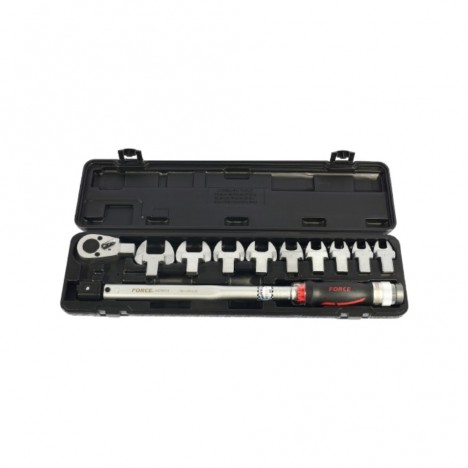


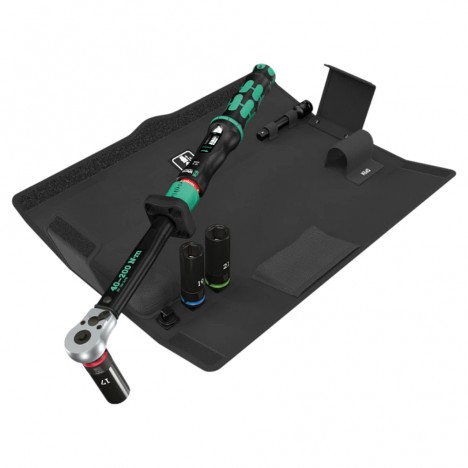

Frankly speaking, when people ask, "What tool truly defines precision?", the first thing that comes to mind is Torque Wrenches or Torque Wrench as one of the very first things, because this is not just an ordinary wrench. It is like a "ruler for torque" that tells you whether you've tightened too much or too little, instantly changing the outcome of your work.
Just imagine: when we tighten lug nuts on a car wheel, if it's overtightened beyond what it should be, the wheel can be damaged. But if it's too loose, there's even a risk of it coming off while driving—it's no joke! That's why torque wrenches have become the secret weapon that novice mechanics, seasoned veterans, and engineers in every field must always keep in their toolboxes. But... the story doesn't end there. Because even technicians with decades of experience still occasionally have "misconceptions" about using torque wrenches. Put simply, no matter how seasoned you are, mistakes can still happen. And sometimes, just a small slip-up can ruin the job or, worse, create serious safety hazards.
In this article, I'd like to invite you to discuss: what are the common misconceptions about torque wrenches that users still frequently make? I can assure you that once you finish reading, you will definitely use this tool with much greater confidence.
You can use a torque wrench just like a regular wrench
When seeing a torque wrench, many people might inadvertently think, "Hey, it looks just like an ordinary wrench—it has a head just like one, so it should be interchangeable." ...Let me tell you, this is one of the most common misconceptions out there.
A torque wrench is actually designed for much more precise work than a general wrench. It is not meant for breaking loose rusty bolts or reckless tightening like a regular box wrench or socket wrench, because inside it lies a fairly intricate "torque mechanism." Every time we use it, it calculates and emits an audible click to indicate that the preset torque has been reached. If we use it improperly or for the wrong tasks, the internal mechanism can easily be ruined.
We've seen it with our own eyes: a mechanic friend of ours grabbed a torque wrench instead of a box wrench to crack open a seized, rusty bolt, thinking simply, "It works the same anyway." The result? It was ruined! The internal mechanism went completely out of whack, the click sound stopped working, the torque readings were skewed, and it could no longer be used. The only option was to shell out money for a brand-new one. In the end, it wasn't just a waste of money—it wasted time and soured the mood across the entire shop.

No need to reset the torque wrench after use
Another misconception we see very often is "just put it away after use, no need to adjust it back." Many people think, "Come on, a torque wrench is sturdy enough; leaving it set at any value shouldn't hurt." But in reality, this is a silent trap that ruins a torque wrench quickly without us even realizing it.
That's because the inside of a torque wrench isn't just solid steel; there is a spring mechanism hidden inside. This very spring is the core heart that allows it to measure torque accurately according to our settings. But if we finish using it and don't dial it back to the baseline setting (normally zero or the lowest setting), the spring remains under continuous compression. Over time, it suffers from fatigue—just like if we were forced to squat all day long; no matter how strong you are, you couldn't take it.
We've made this mistake ourselves before. That day, after finishing tightening wheel lug nuts, we quickly packed it away into the case without resetting it. The next day when we used it again, it turned out the torque reading was off by nearly 10 Nm! That number might not sound like much, but for automotive work, this difference can mean overtightening to the point of stripping threads or leaving it so loose that a wheel could come off on the road. Honestly, we broke out in a cold sweat back then.
All types of torque wrenches are the same
Another very common misconception is that many people think, "A torque wrench is just a torque wrench; whether it's a click type, digital, or beam type, they all work the same." ...It sounds plausible, but in fact, each type has distinct strengths and limitations that are not identical at all.
- Click Type Torque Wrench: The most popular model widely in use. Easy to operate, mid-range price. When the preset torque is reached, a distinct "click" sound is heard. However, the downside is that if you don't stop immediately and accidentally keep turning even a bit more, the torque will instantly exceed the setting.
- Beam Type Torque Wrench: Highly classic. Operated by watching a pointer indicate on a torque scale. The advantage is that there's no complicated adjustment required, but the disadvantage is that you must constantly look down to read the scale. In dark corners or tight spaces, it can be really difficult.
- Digital Torque Wrench: Cutting-edge technology featuring clear numerical readouts. Some models allow you to select multiple units of measurement and even store operational data. However, it comes with a higher price tag and requires careful maintenance, as the internal electronic components are more fragile than those of other wrenches.

It stays just as accurate without calibration
Let me tell you, this is a very common misconception—and not just among beginners. Even seasoned mechanics with decades of experience often share the same mindset: "If I buy a good, expensive torque wrench, it will stay accurate forever." ...It sounds reasonable, but in reality, no matter how high-quality the tool is, using it over time will eventually cause its accuracy to drift.
That's because the internal mechanism of a torque wrench—especially the spring and torque-bearing parts—undergoes gradual wear and tear all the time. Particularly if used frequently in high-precision tasks like engine repair, aircraft maintenance, or critical industrial applications where safety is absolute, even a tiny deviation can lead to disastrous consequences. In fact, the recommended standard is to send a torque wrench for calibration at least once a year to ensure it remains accurate. In settings with heavy daily use, it may need to be checked even more frequently.
I remember it clearly: back then, a coworker at the factory used the same torque wrench for almost 3 full years without ever sending it for calibration. When the company finally mandated an inspection, the readings turned out to be off by nearly 20%! It's truly chilling to think about, because if that were a critical safety application—like machine structures or automotive components—the consequence wouldn't just be "damaged work," but potentially "human lives."

Torque specs don't matter—just tighten it as hard as you can
This is a misconception that we consider quite dangerous, as many people still cling to the old mindset: "tighter is safer." Especially on critical tasks like tightening wheel lug nuts, cylinder head bolts, or structural fasteners, people often rely on sheer force, thinking maximum tightness ensures safety. But the truth is the exact opposite: if over-tightened, threads can strip, bolts can snap, or components can be ruined entirely. This doesn't just mean buying spare parts; it could lead to major repairs. On the other hand, if under-tightened, it's even more dangerous because bolts can back out on their own—which, in cases like car wheels, means the risk of a wheel flying off on the road.
I saw this with my own eyes once. I took my car to a garage, and a pickup truck came in for a tire change. The mechanic rushed to tighten the nuts using brute force alone—likely a novice—completely disregarding any torque specs. As a result, they were over-torqued, and a bolt snapped along the way. Luckily, the truck wasn't going very fast, so it was only a minor incident. But honestly, if that had happened at high speed on a highway, the outcome would have been far more terrifying!
Conclusion
These are the 5 common misconceptions about torque wrenches. Using a torque wrench correctly isn't overly complicated, but it requires understanding and a bit of care: choose the right type, calibrate it regularly, and most importantly, tighten strictly to the torque values specified by the manufacturer.
Select Torque Wrench More