


 EN
 ไทย


7 Common Mistakes When Using a Hand Lift… and How to Prevent Them
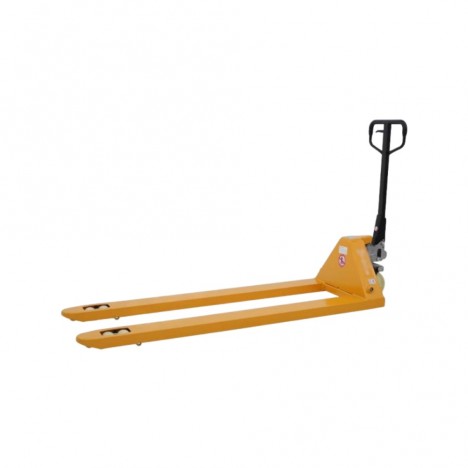
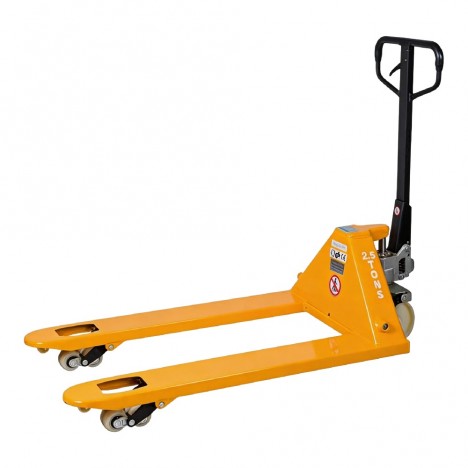
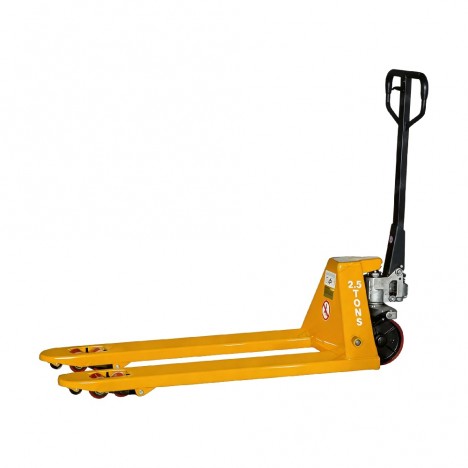
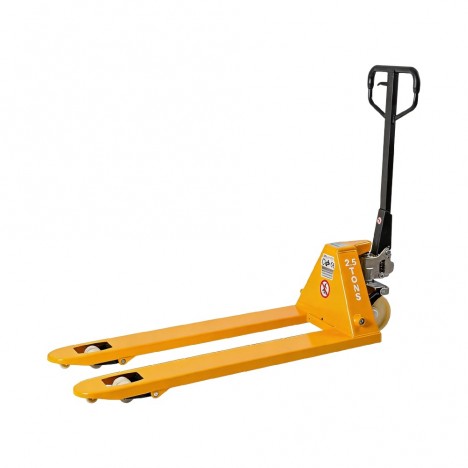
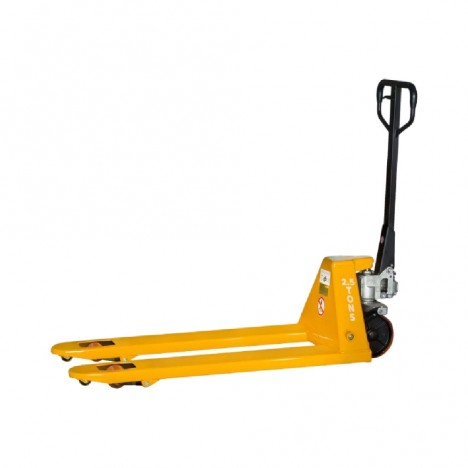
Hand Lift (Handlift) Or what many people commonly know as a pallet jack, is an essential piece of equipment that nearly every warehouse, distribution center, or hardware store must have. That's because it helps both lift and pull, allowing you to organize heavy loads easily without having to rely on large machinery like forklifts.
However, precisely because it is so easy to use, many people often use it incorrectly without realizing it until problems arise—whether damaged goods, broken equipment, or personal injury. Today, Nong Chang would like to invite you to take a look at 7 most common mistakes that often occur when using a hand lift, and how we can prevent them to make warehouse work safer and smoother.
"Hand lifts may be easy to use, but they aren't ordinary carts. Using them correctly starting today means safer operations every day."

Mistake 1: Overloading
One of the most frequent misconceptions is thinking that a hand lift can "lift as much as can fit on the pallet" just because the unit is made of thick steel and the wheels roll smoothly. In reality, every hand lift has a Maximum Load Capacity clearly specified, such as 2,000 or 2,500 kg, according to the manufacturer's design and standards. This figure is not merely a recommendation, but a direct safety limit for both the structural frame and the hydraulic system. Forcing an overload inevitably subjects every component to excessive stress—from the hydraulic cylinder, rubber seals, and valves, to the fork frame and front wheel axles.
When the exerted load exceeds capacity, the hydraulic system may experience pressure drop failure or leakage, causing the forks to unexpectedly sink down. If someone happens to be standing in the path or arranging the pallet at that moment, the result can be dropped items crushing or striking them instantly. Structurally, even slight bending will cause the frame to lose alignment, leading to uneven wheel loads, harder handling, and an abnormal spike in component wear over the long run.
The damage does not stop at the equipment itself. The cargo being carried—which may be fragile items, liquids, or high-value products—can suffer chain-reaction damage. Worst of all is the risk to workers around the lifting area, especially feet, shins, and waists, which are typically aligned with the forks when an unexpected failure occurs.
Prevention: Always read the spec plate before use. Estimate the load weight along with the number of tiers on the pallet and the packaging materials. If the weight is close to the limit, split it into multiple trips to distribute the risk. When stacking, focus on balance—do not stack heavily on the front or to one side causing the center of gravity to shift, and ensure the stack height does not obstruct visibility while moving.

Mistake #2: Using it on slopes or uneven surfaces
Pallet jacks are primarily designed to operate on flat surfaces, whether polished concrete or standard industrial flooring. When a pallet jack is taken onto ramps, surfaces with drainage grates, potholes, or concrete ridges, gravity and momentum instantly become critical factors. The truck will tend to "run down the slope" even on the slightest incline, and combined with a heavy payload, the resulting speed can exceed what the operator can safely stop with arm strength alone.
A common outcome is that the pallet rolls slightly, causing loosely secured goods to shift, fall off, or tilt into obstacles. Another scenario is wheels getting caught in grooves or floor edges, causing the truck to stop abruptly and sending items on top flying due to inertia. All of this can happen in a split second, causing damage to both goods and people.
Prevention: Visually scan the area before starting work to check for inclines, slopes, potholes, or grooves. If it is necessary to move across such surfaces, switch to a more suitable transport method, such as a forklift or handling equipment with better braking systems and balance. Avoid forcing the load up or down slopes using manual human power; while it might feel "manageable" at moments, the accumulated risk is extremely high.
Mistake #3: Not locking the wheels while loading
The moment pallets are lifted or lowered is when a pallet jack is most prone to "rolling away" due to the momentum of the goods and weight transfer. If the model you use features a brake system or wheel lock lever, this is a vital tool that must be used every time—especially on surfaces with even a slight incline that may not be noticeable to the naked eye.
For models without a brake system, use the basic technique of "never letting go of the handle" and always lowering the forks flush to the floor first to provide support. A good practice is to keep the loading area clear with no obstacles in front or to the sides, and have another worker act as a spotter when handling heavy or large items.
Related Articles
- What is a Pallet Jack? Discover the Lifting Equipment Every Warehouse Needs
- How Many Types of "Pallet Jacks" Are There? Which One Should You Choose for Your Lifting Needs?
Mistake #4: Using a pallet jack to lift people
Here are Strictly prohibited Yet it is still frequently seen in places where equipment for working at heights is unavailable—such as placing a pallet on the forks and having a coworker stand on it to pick items from high shelves or change a ceiling lightbulb, thinking "it's just for a moment" and "it works fine."
The problem is that pallet jacks are designed to lift "static" objects with a fixed center of gravity, whereas the human body is constantly moving. Just shifting weight to one side can instantly cause the truck to lose balance. Moreover, pallet jacks lack safety features like guardrails or harnesses to secure a person, resulting in an extremely high risk of falling from heights or tipping the truck over.
Prevention: Never use a pallet jack to lift people under any circumstances. If working at heights is required, use a stable industrial ladder or dedicated personnel lifting equipment (Manlift), complete with standard fall protection gear. Worker safety must always come first.

Mistake #5: Using improper posture/techniques
The safe operating principle is "Push more than pull" Because pushing allows a full view of the path ahead, providing better control over steering and braking. Pulling backward might feel easier at times, but it increases the chance of colliding with obstacles outside your field of vision, especially when the load is stacked high enough to obstruct your line of sight.
Another behavior to avoid is turning the pallet truck while the forks are still raised high. This creates uneven pressure on the wheels and frame, causing certain load-bearing points to wear out quickly, creating noise, vibration, or gouging the floor, which leaves marks and increases friction during future use.
Prevention: Push forward along main walkways. Lower forks completely before turning or swiveling. Keep walkways clear. Establish one-way movement routes to reduce oncoming traffic, and train operators to adopt proper posture from day one.
Mistake 6: Skipping Pre-Operation Inspection
Although a pallet truck looks simple, its "heart" lies in hydraulic systems, seals, valves, wheels, and axles that continuously bear heavy loads. Skipping pre-operation inspection unnecessarily increases the risk of mid-operation breakdowns—whether it gets stuck raised, leaks and collapses, suffers broken wheels that cause loss of balance, or even causes warehouse floor damage from worn-out wheels.
A quick 1-minute checklist: check hydraulic oil levels (look for leaks around seals and the pump piston); inspect front and rear wheels for cracks, chips, or abnormal out-of-round wear; briefly test raising and lowering the forks to check valve smoothness. If any abnormality is found, stop using it immediately and send it for repair—never force continued use just because "you're in a hurry," as rushing is precisely what causes minor issues to escalate.

Mistake 7: Improper Storage and Parking
After finishing work, many facilities often leave pallet trucks parked in walkways, don't lower the forks to the floor, or store them in damp areas—all of which cause both safety issues and reduced equipment lifespan. Leaving forks raised places continuous, unnecessary strain on hydraulic seals, causing fatigue and premature deterioration, while parking where pathways are blocked creates entirely avoidable accident hazards.
Prevention: Park against walls or in designated spots, lower the forks flat to the floor to relieve hydraulic system pressure, and store in a dry, well-ventilated area to retard rust. For warehouses with multiple pallet trucks, designate clear standard parking bays with signs to eliminate confusion and improve orderliness.
Conclusion
Hand Lift Truck It may look like a basic tool, but it's not "just an ordinary cart." Small habitual mistakes—such as overloading, operating on slopes, neglecting to lock the wheels, lifting people, using improper posture, skipping inspections, and parking incorrectly—are all starting points for accidents and escalating costs. Shifting our mindset—prioritizing rated capacity, choosing level surfaces, locking wheels/holding the handle continuously, lowering forks before turning, doing a 1-minute morning check, and parking neatly—elevates team safety, extends equipment life, and noticeably smooths workflow.
Final tip from our technician: “A pallet truck is a loyal coworker. The better we care for and understand it, the more ready it is to help us. Use it properly and maintain it right, and we'll gain both safety and productivity every day.”