


 EN
 ไทย


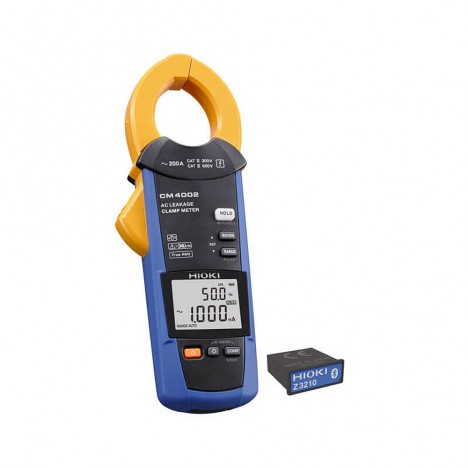


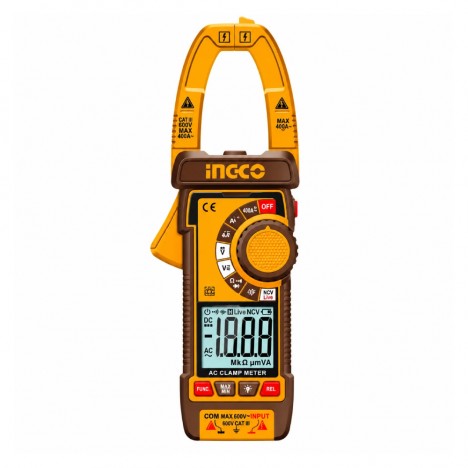

Electricity is the heartbeat of modern life. Every home, building, and factory relies on this power. Yet, electricity is also an invisible and hazardous force. A minor misunderstanding or an improper measuring instrument can lead to severe accidents or unexpected damage.
In the electrical field, certain tools are not merely "optional accessories" but "absolute necessities"—and one of them is Clamp Meters (Clamp Meter) A tool that may casually look like just an electrical meter with clamping jaws, but in reality, it is a technology that makes inspecting and maintaining electrical systems significantly more convenient, safer, and more accurate.
What is a clamp meter?
A clamp meter is an electrical measuring instrument designed to measure electric current (Amperes) without needing to disconnect wires from the circuit. (Read more: Getting to Know Clamp Meters: Essential Tools for Electrical Systems) The method involves clamping the jaws around a wire, and the internal sensing circuit uses electromagnetic induction principles to detect the magnetic field generated by the current flowing through that wire. It then calculates the current value and displays it on the screen. The standout advantages are safety and speed, as there is no need to make direct contact with live conductors.
“An electrician without a clamp meter is like a doctor without a stethoscope—they can still work, but it's much riskier and slower.”

Is a multimeter really not enough?
Multimeter
- Measures voltage/resistance/continuity in detail
- Measuring "current" requires breaking the circuit to connect in series → Risky & time-consuming
- Suitable for small circuits, electronics work, and experimental setups
Clamp Meter
- Clamps externally → Measure current instantly No need to shut down the system
- Safer, especially for high loads/main lines
- Checks phases/load balance smoothly, ideal for Preventive Maintenance
5 Reasons Why Electricians Must Have a Clamp Meter
1) Safety: The Most Critical Factor
Safety is at the heart of electrical work, as even a minor mistake can lead to a serious accident. Measuring current with a traditional multimeter requires "breaking the circuit", which means opening the circuit and connecting the wires directly to the meter. The risks involve electric shock, short circuits, or sparks caused by loose connections.
However, a clamp meter changes everything. Simply clamping the jaw around the wire from the outside allows you to detect current instantly without directly touching the electrical conductor at all. Reducing this direct contact serves as the most essential protective shield for electricians.
Additionally, using a clamp meter helps prevent domino-effect accidents, such as short circuits that trip circuit breakers, shut down machinery, or knock out power to the entire panel—outcomes nobody wants to face.
2) Convenience and Speed: Time is Money
In electrical work, speed is just as valuable as accuracy. A system check that takes only a few minutes could mean saving hours of machine downtime.
Clamp meters help electricians work much faster because they do not waste time cutting or splicing wires, nor do they need to shut down the system. Just walk up to the wire and clamp it to get an immediate reading, making it ideal for tasks requiring frequent checks such as preventive maintenance.
This convenience also extends to checking multiple lines simultaneously. For example, technicians can use a clamp meter to quickly check the electrical load on each phase to see if the load distribution is balanced.
3) Supports every job level
Clamp meters are not limited to large-scale jobs. Even for small household tasks, they are still useful, such as checking for electrical overloads, measuring whether a refrigerator consumes more power than normal, or diagnosing if an air conditioner is malfunctioning.
For industrial work, clamp meters are all the more essential because they are needed to check large motors and main supply lines with currents of hundreds or thousands of amps, which a multimeter could never accommodate.
This versatility makes the clamp meter a "trusted companion" for electricians of all levels, from household and commercial work to industrial plants.

4) Accuracy that is "enough for real-world jobs"
Many people may think that clamp meters are not as accurate as multimeters. In reality, for most applications, the accuracy of a clamp meter is more than enough—such as checking if a motor draws current beyond its rating or whether a household electrical load exceeds the circuit breaker capacity.
Especially in newer models equipped with True RMS, they can measure non-sinusoidal AC currents (commonly found in electronic equipment and inverter machinery) with much greater accuracy.
Simply put, although clamp meters are not designed to replace multimeters 100%, for most electrical work where speed and practical adequacy are needed, a clamp meter fits the bill perfectly.
5) Modern functions
New-generation clamp meters no longer stop at measuring electric current alone. Nowadays, various functions have been added, such as:
- Measures voltage (Volt) for both AC/DC
- Measures resistance (Ohm) and circuit continuity
- True RMS: For accurate measurement of distorted waveforms
- NCV (Non-Contact Voltage): Detects whether a wire is live without contact
- Data Hold: Freezes the measured value on screen for later reading
- Auto Range: Automatically adjusts the measurement range without hassle with dial rotation
- Smartphone connection: Logs data and transmits it via Bluetooth to an application
Related Articles
- Volts, Amps, Ohms? What values can a clamp meter measure?
- Why is "clamp meter" calibration important? And when should it be calibrated?
How to choose the right clamp meter for your job
- Current range: Choose according to the type of work: 200–400A is sufficient for residential use · 600–1000A or higher is recommended for industrial plants
- AC or AC/DC: If working with DC current, such as in automotive or solar cell systems, an AC/DC model must be selected
- True RMS: Essential if working with inverter equipment or electronic circuits
- Jaw size: Choose a size suitable for the cables; if the jaw cannot clamp around them, it cannot be used
- Easy-to-read display: Large screen with clear numbers, easy to read even in the dark
