


 EN
 ไทย


Customers Also Purchased
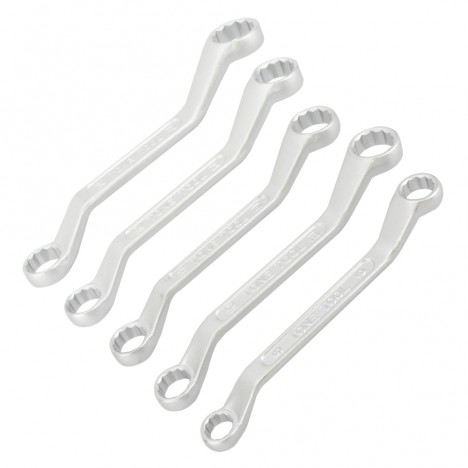
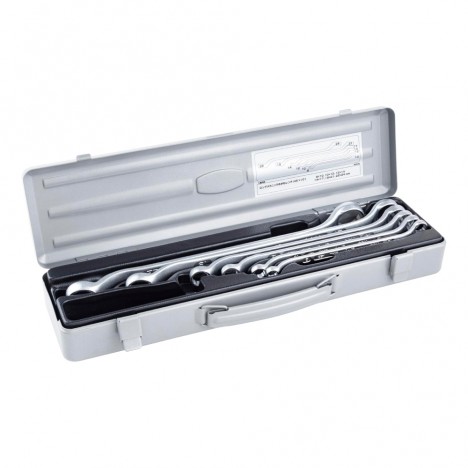
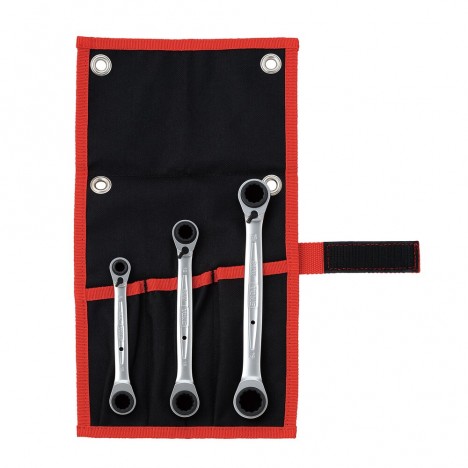

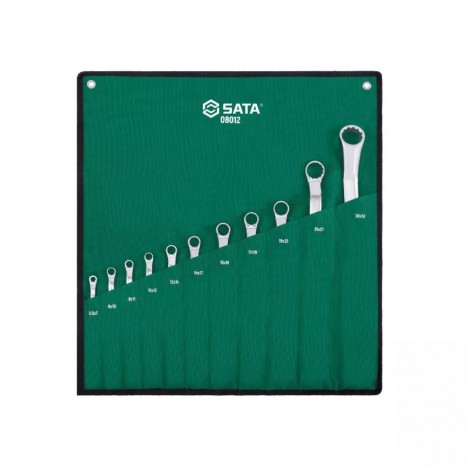
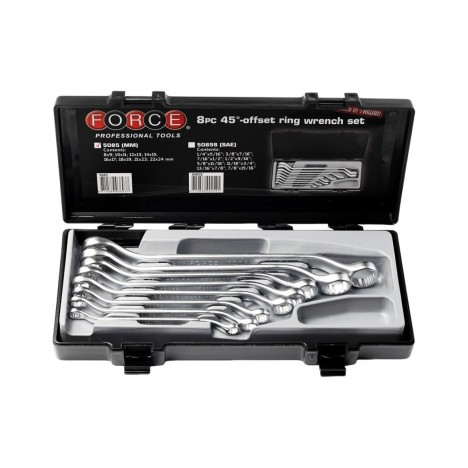
Has this ever happened to you? When walking into a tool store and standing in front of the shelves, Ring Spanner all you see are rows upon rows of sizes and numbers, to the point where you might secretly wonder, "Which one actually fits this fastener?" Many people just make a guess when picking one. When it works, you're thrilled like Man United scoring a goal! Haha, anyway, back to the topic. But... after just a few turns, the bolt head starts rounding off or stripping, leaving the job unfinished and costing you both time and temper.
Problems like this don't always happen because of the ring spanner itself, but mostly because of choosing the wrong ring spanner—much like fielding players on a pitch: put them in the wrong positions, and no matter how skilled Man United's players are, they can easily lose. "A bit caught up in the mood lately, haha!" It's the same with using a ring spanner. If we don't know which types of fasteners to use with a ring spanner, it's easy to ruin the work instead of getting a perfect result.

What is a ring spanner? Why is it different from an open-ended spanner?
First, you need to understand that a ring spanner (box wrench) is a spanner with a completely enclosed circular head, unlike an open-ended spanner which has an open U-shape. Its main advantage is gripping the fastener 360 degrees around, distributing force evenly across the bolt head and significantly reducing the risk of slipping or rounding. In real-world work, this is crucial—especially on bolts that have been tightened for a long time and have slightly worn heads. Using an open-ended spanner often strips them easily, but a ring spanner can still help save the day because it locks onto the entire bolt head, not just two sides.
Which types of bolts and nuts are suitable for a ring spanner?
In reality, ring spanners aren't designed for just a single type of fastener; they are versatile tools that reliably help finish the job nicely whenever picked up. But if you ask which bolts and nuts they suit best, let's cover 4 main, frequently encountered groups.
Standard Hex Bolts
This is the true soulmate of the ring spanner. The hex bolt is considered the standard fastener that tradespeople in every industry encounter—from woodworking and metalworking to automotive engines. Because the bolt head has 6 sides that fit the spanner perfectly, when you slip on a ring spanner, it locks fully around with no room to slip. This gives you total confidence when turning, just like a pairing on the pitch that clicks right from the opening whistle.
Fasteners in tight spaces
Have you ever experienced this? You encounter a bolt deep inside an engine bay or hidden in a dark corner of a machine where an open-end wrench cannot possibly fit. In situations like this, a ring spanner (box wrench) is a true lifesaver. Because its circular head grips the bolt head securely, even though you can only turn it a little bit at a time, you can be sure it won't strip the bolt head. It's a "slow grind, steady clear" pace that, while not fast, definitely gets the job done.
Fasteners requiring high torque
For heavy-duty jobs like lug nuts or large steel structural bolts, picking the wrong tool can ruin the job completely. While open-end wrenches are handy to grab, their jaws spread open very quickly when subjected to immense torque. But if you use a ring spanner, the difference is clear: the force is distributed evenly around the bolt head, so it won't slip easily or warp the tool jaws, allowing you to apply full force. Much like when a football team like Man United needs a dependable defender, a ring spanner is exactly that—solid, precise, and rarely makes a mistake.
Fasteners that are starting to wear or slightly rounded
This is an experience we encountered firsthand. Once, we had to deal with a machine bolt that had been in use for years; its head had started to round off. Trying an open-end wrench was hopeless—it kept slipping off. When we picked up a ring spanner and slipped it on, it managed to turn the bolt out because the pressure wasn't concentrated on just a small corner edge, but distributed all around the bolt head, helping loosen it without causing further damage to the fastener.

So what kind of fasteners are not suitable for a ring spanner?
However, a ring spanner isn't suitable for every situation. For some jobs, it's not the ultimate solution, and forcing it can stall your work and waste more time than you think. Clear examples can be seen in several cases, such as:
Fasteners in deep spots with long protruding studs
Often, when working with steel frames, machinery, or even car suspension repairs, we encounter nuts with long threaded studs protruding far beyond the nut head. When trying to slip a ring spanner over them, it immediately gets blocked because the ring is shallow and not pass-through like a socket. In such cases, no matter how hard you try, it won't fit into place. You must switch to a socket or socket wrench to do the job properly.
Square Nut
It's true that a ring spanner can somewhat grip a square nut, but it's not what it was designed for. Because the contact surfaces do not match completely, the risk of slipping is high. The harder you force it, the greater the risk of severely damaging the nut head. For jobs like this, using an open-end wrench or a matching square socket is much better—it saves effort and reduces the risk of stripping the nut beyond use.
Fasteners that require fast, continuousturning
Imagine assembling furniture with dozens of bolts: grabbing a ring spanner to turn them in small increments would hardly be the most efficient method. Besides wasting time, it completely exhausts your hands. For this kind of task, a nut driver or a socket wrench with a ratchet handle gets the job done much faster, making a ring spanner a poor choice in this scenario.
Real-world experience from the field
We still remember it vividly. When first learning to repair cars and not knowing much about tools yet, whenever it was time to remove lug nuts, we would just grab whatever was near at hand. That day, we tried an open-end wrench, hoping to turn it easily. It turned out not as expected: as more force was applied, the wrench jaws began to splay open little by little, but the lug nut remained just as tight, refusing to budge no matter what.
Honestly, the feeling back then was pure frustration, wasted time, and the fear of damaging the bolt head beyond use. Luckily, a fellow technician was nearby, so we asked to borrow a ring spanner. Once slipped on and torqued with just a few strokes, the bolt that had been stuck for so long broke free much easier than expected.

How to choose the right ring spanner for the job
Here is another top question many people wonder when buying a ring spanner: standing in front of the store shelf, there are usually both 6-point and 12-point types lined up everywhere, making it hard to decide which one is better. Honestly, there's no right or wrong—it just depends on the kind of work you're going to use it for.
6-Point
- Its standout feature is "firmness" because the contact surfaces of the wrench engage completely with the bolt head.
- Suitable for heavy-duty jobs requiring high torque, such as wheel lug nuts and structural bolts
- Much less chance of stripping, providing confidence when applying heavy torque or loosening long-stuck bolts
12-Point
- Its key highlight is “convenience,” as it fits onto fasteners at more angles
- In tight spaces or blind spots, just a slight movement is enough to engage the wrench and turn it
- While not as secure as a 6-point wrench, it is easier and faster to use
And if you want to get true value, we suggest broadening your perspective with the concept of “7 Things You Need to Know Before Choosing the Right Ring Spanner” because it is not just about the number of points, but also about materials, length, manufacturing standards, weight, durability, and even special designs like offset ring spanners that many overlook yet end up using far more often than expected!
Select Ring Spanner More