


 EN
 ไทย


Customers Also Purchased

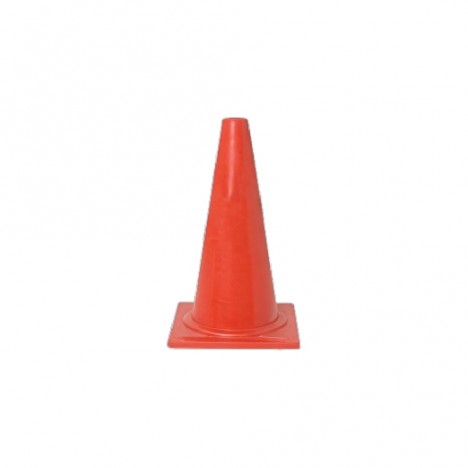
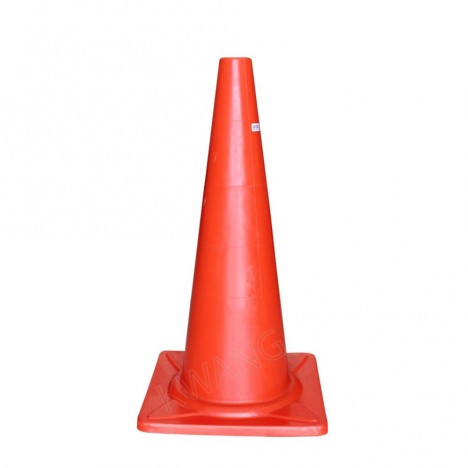
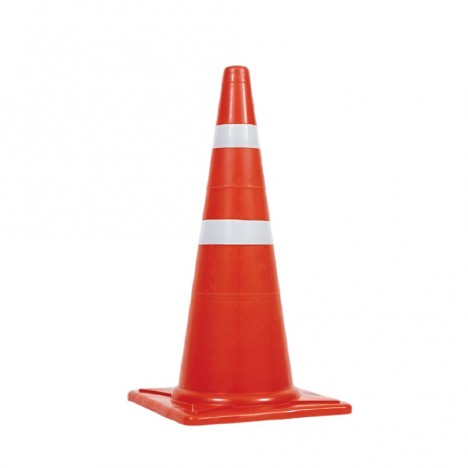
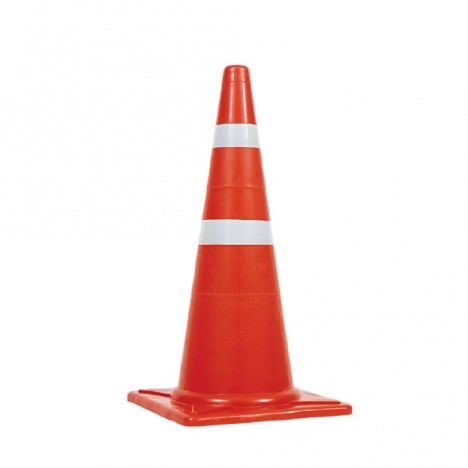
Our roads are full of unexpected events: sometimes a broken-down car, sometimes road repairs, sometimes an accident. But why do we often make it through without major disaster? …Because mostly there are “silent heroes” working right there. Small things like traffic batons, cones, barricade tape, reflective vests, or even signs and barriers may not look cool or fancy, but believe it or not, without these items, the roads would be far more chaotic than you think.
Today, Nong Chang would like to introduce you to 5 traffic control items that we see all the time, but never truly realize how important they are.
1. Traffic Baton: The small red light that stops an entire road of traffic
Honestly, anyone who has had their car break down in the middle of the night knows the feeling well. It's not just stressful; it's terrifying—scared that a car behind will rear-end you without even noticing.
Waving your bare hands at that point is useless; most drivers won't see you, or they might think you're just joking around or a scammer. But once you have a "traffic baton" in your hand and turn on that flashing red light, everything changes instantly. Cars approaching from afar immediately slow down, as if commanded to stop without a single word.
Why Does the Red Light Work So Well?
Red and flashing lights are a "visual language" that humans universally understand without needing to be taught. Our brains instantly interpret it as: Stop! Danger! Even if you are daydreaming or talking on the phone, seeing that flashing red light forces you to look up.
The Design Behind It
- Red/Orange light = Stands out best in the dark
- Flashing light = grabs attention better than steady light
- Lightweight = waving it for a long time won't tire you out
- Some newer models = built-in siren

Without it…
Secondary accidents (incoming cars crashing into broken-down vehicles) happen very frequently. Having just a traffic baton this small is what helps break that cycle of disaster.
To put it simply, a traffic baton isn't a toy, but rather the fine line between safety and tragedy, truly.
2. Traffic Cones: The orange friend that never complains
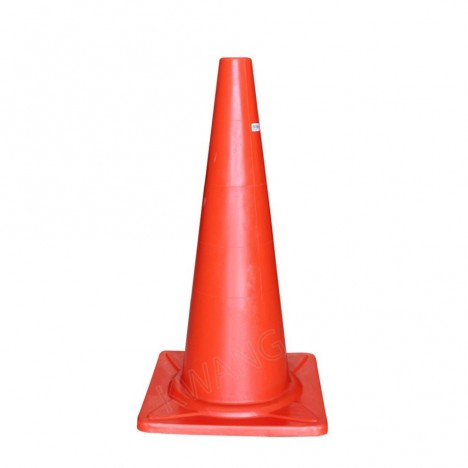
Every morning in front of schools, you'll see Floor Safety Cones orange cones lined up, and vehicles automatically follow the designated lanes. Even without shouting or a traffic warden waving them through, it keeps the road organized in an incredible way.
Why orange?
Orange is the color that contrasts most sharply against gray pavement, green grass, or even wet, rain-soaked surfaces. Simply put, if you don't see an orange cone, you probably need an eye exam. And if it's a model with reflective strips, it stands out even more when illuminated by headlights.
Why a cone shape?
- Wide base → doesn't easily tip over; even if a car clips it, it just bounces back
- Tapered top → doesn't obstruct the driver's line of sight
- Stackable → saves space during transport
This is a design that might look simple, but it is actually thoroughly thought out.
Different cone sizes for different jobs
- Small (30–50 cm) → Parking lots
- Medium (70 cm) → General roads
- Large (90 cm+) → Main roads, motorways

Without it…
Imagine a road under repair without any barricading cones—cars would drive dangerously close to heavy machinery, and countless workers would likely get hit.
Common problems
- Placed too far apart, allowing cars to easily slip through
- Not weighted down, causing cones to blow into the middle of the road and create a hazard instead
- Old, faded cones without reflective strips → Barely visible at night
Traffic cones might look like annoying obstacles you want to kick aside, but they are actually silent orange sentries protecting us every single day.
Related Articles
- Why are traffic cones orange? The reason behind choosing an eye-catching color
3. Barricade tape: a thin strip that can stop an entire street
Who would have thought that a thin strip of plastic could stop people? Yet whenever we see barricade tape stretched out in front of us, we choose to stop without anyone having to say a word.
The language of colors
- Red-White = Strictly prohibited / Do not enter
- Yellow-Black = Caution / Hazard
Pick the wrong color and the meaning changes immediately, which could lead people to misinterpret the warning and walk straight into a hazardous area.
The power of a thin line
It's not physically strong enough to block anyone—a strong gust of wind can blow it away, and it tears easily. Yet it carries psychological power: people see it, respect the boundary, and stop on their own, not daring to cross as if facing an actual wall.

Strengths and weaknesses
- Affordable, budget-friendly
- Easy to carry, convenient to install
- Suitable for temporary jobs
- However, without supplementary signage, some people may not understand why it is restricted.
Barricade tape is thus an "invisible wall" that everyone respects without needing someone to stand guard.
Related Articles
- What do the colors of barricade tape mean? Yellow-black vs. red-white: how do their uses differ?
4. Reflective vest: the life armor that keeps us visible
Nighttime roads are truly the most hazardous zones. Cars drive fast, and visibility is poor. Without a reflective vest, workers or cyclists virtually "disappear" from drivers' view immediately.
Behind the reflective strips
It's not just silver fabric; it uses the retroreflective principle, where tiny glass beads are coated onto the fibers. This causes incoming headlights to reflect directly back to their source, making the wearer clearly visible to drivers from tens of meters away.
Not just a brightly colored vest
Some cheap vests look bright but don't actually reflect light. Wearing them at night barely helps at all. What's more dangerous than having nothing is wearing one and thinking "I'm safe" when you're actually not.

Who should wear it
- Construction workers
- Police / traffic officers
- Night cyclists
- Runners using the road
A reflective vest is "life armor" that keeps us from fading into an unseen shadow.
Related Articles
- Did you know? How to check the quality of a reflective vest?
5. Signs and barriers: the universal language that needs no words
Imagine driving in Bangkok on an early weekday morning. Traffic is normal, but when you encounter a "No Right Turn" sign, you just drive straight, even though no police officer is standing there directing you. Or if you travel to Japan and drive along an unfamiliar rural road, just seeing a red triangle sign immediately lets you know that "there is a hazard ahead."
This is truly the power of Traffic Signs — it is the "universal language of the road" that everyone understands alike. Whether you speak Thai, English, or Japanese, road signs require no translation; they communicate through symbols, shapes, and colors that are standardized worldwide.
Why do signs communicate so effectively?
Because every detail of their design has a reason:
- Red triangle = Warning → Sharp shapes trigger the brain to be "cautious."
- Red circle = Mandatory / Prohibition → A circle is an enclosed shape that looks like a boundary not to be crossed.
- Rectangle/Square = Information → A stable shape that clearly conveys information to be known, not an order.
Just by seeing the shape and color, people understand immediately without needing to read any text.

What about traffic barriers?
If traffic cones are little helpers that mark lanes, barriers are the much more serious "bodyguards." They are used in major operations, such as road closures for bridge repairs, organizing festivals, or blocking off high-risk areas. Having a barrier is like drawing a clear line that says, "This area is strictly restricted."
Some barrier models are also equipped with automatic flashing lights, making them visible from afar at night and enhancing safety even further.
Common mistakes that make signs useless
- Faded signs → Almost invisible at night; drivers cannot decipher their meaning.
- Old barriers without reflective sheeting → Standing right there, but appearing to vanish into the dark
- Wrong placement → A warning sign that should be placed 100 meters before a curve is placed right at the curve instead, leaving cars no time to brake.
All of these lead to communication breakdowns and put the road back at risk of danger.
Why we should look at them differently
Signs and barricades might just be rigid objects standing dumbly in the middle of the road, but in reality, they are a "silent language" that communicates with every road user simultaneously in a fraction of a second. Moreover, they work 24 hours a day without sleep or rest.
Things we take for granted, yet save our lives
Traffic batons, cones, barricade tape, reflective vests, signs, and barricades… all of these are unsung heroes that never ask for thanks, but the result of their presence is that countless millions of road users stay safe.
Next time you see them, please don't view them as mere clutter, because in truth, they might be the only reason you make it home safely tonight.