


 EN
 ไทย


Customers Also Purchased

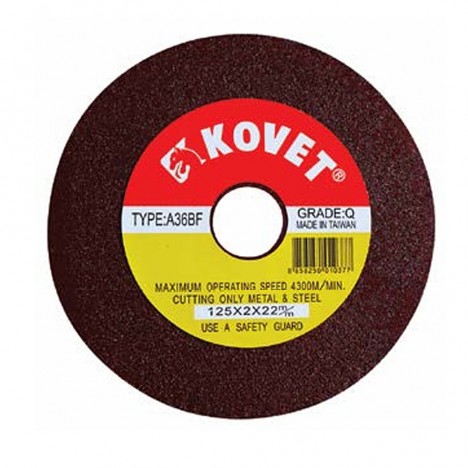
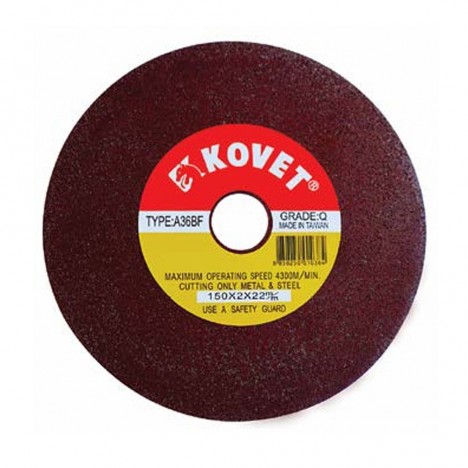
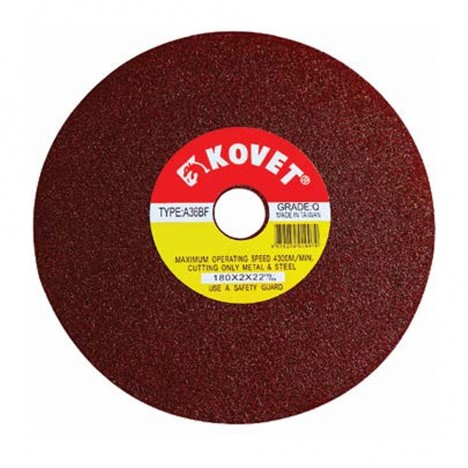
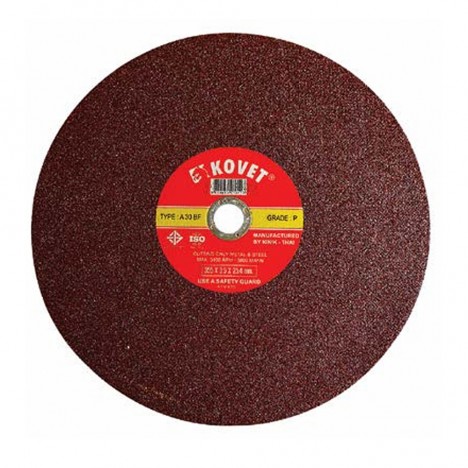
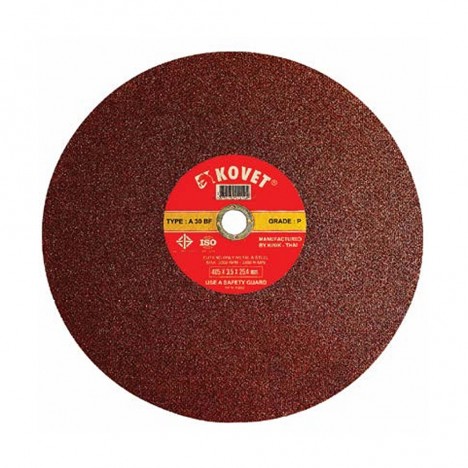
For anyone just starting out in DIY and craftsmanship—whether working with wood, metal, or both—perhaps the most confusing first step is choosing the right cutting disc. There are many types of cutting discs, each with clearly stated specifications on what they can and cannot cut. But the question is, "Why are there so many different types?" And one question I can guarantee every beginner, or even seasoned angle grinder user, will inevitably encounter is: Steel Cutting Disc Why is it strictly forbidden to use it for cutting wood?
I believe whenever any of us buys or chooses a tool to use, one expectation that often comes with the investment is its versatility. Of course, many types of power tools today cater very well to this need and are often paired with various interchangeable blades, bits, or sanding, cutting, and drilling accessories. It's almost like whatever you want to cut with a single tool just comes down to your choice of blade. And a metal cutting disc is one of them.
In this article, I'd like to invite you to take a deep dive into each point regarding the real reasons why using a metal cutting disc to cut wood is prohibited, how dangerous it is, and if you really want to cut wood safely, what kinds of blades and tools you should use. Let's take a look.
Metal cutting discs are designed completely differently from wood cutting blades
At first, I used to think that it might cut wood just fine too, because a cutting disc is simply a flat circle spinning at high speed, so why bother categorizing them so strictly? But after coming to understand this topic, both in theory and through real on-site incidents, as well as 10 safety precautions for using metal cutting discs that beginners must know I completely understood why caution is necessary and why you must never use a metal cutting disc for woodworking!
Structure and materials of metal cutting discs
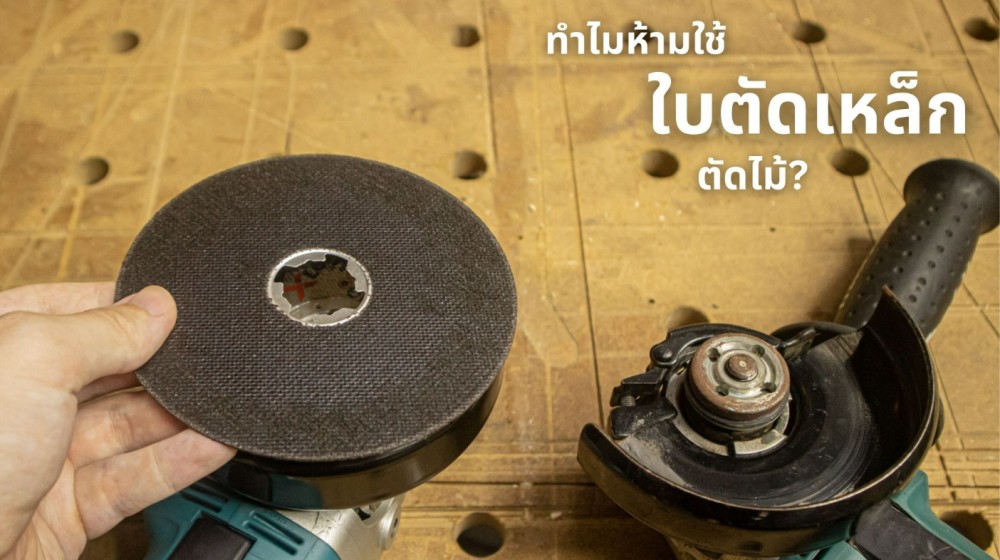
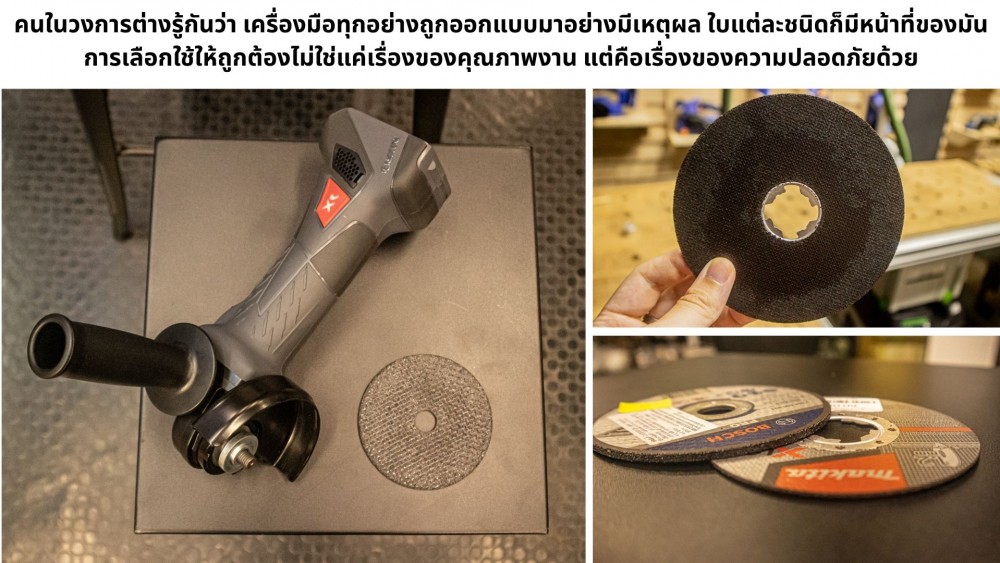
The metal cutting discs we commonly see are dark-colored, thin discs, usually made from resin bonded with abrasive grains, similar to sandpaper, but specifically formulated to erode and cut into metal. The purpose is to generate high friction and heat to penetrate through steel, which is much harder and tougher than wood.
Comparing this to wood, it is completely different. Wood is many times softer than steel. The blade design must therefore account for lower resistance and smooth cutting, rather than just the structural strength of the disc body.
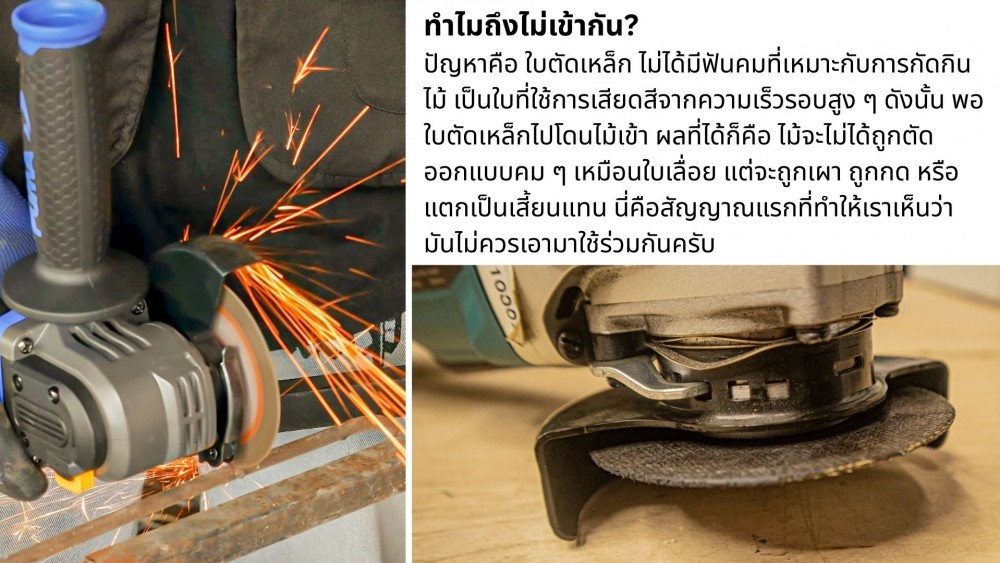
Dangers of using a metal cutting disc to cut wood
For many people, once they understand the nature of a metal cutting disc and realize that using it on wood is incorrect usage, the consequences are obvious and directly affect the work. However, some might not have considered the issue deeply enough, merely thinking they just want to cut the wood quickly without wasting budget on a new blade or wasting time swapping blades.
This kind of mindset is dangerous. Using a metal cutting disc to cut wood comes with many factors to consider—for the workpiece you are working on, yourself holding the tool, the equipment that could be damaged, and even the metal cutting disc itself. Let's see what these risks are.
1. Risk of "kickback"
This is something angle grinder users likely know well. Kickback is a violent and sudden reaction where the cutting disc jerks the tool back toward the user, and it is a major cause of severe accidents on job sites.
Many who have used metal cutting discs know that if used carelessly or on unsuitable materials, the risk of kickback is high. With woodworking, the risk is even greater. When using a toothless metal cutting disc not designed to bite into wood, debris clearance is poor. At the slightest resistance, the tool is ready to violently jerk back at you, causing injuries to arms, hands, or even striking your body.
- Tool kicks back violently, leading to loss of control
- User may lose balance, resulting in injury
- The workpiece being cut is instantly ruined
- There is a chance that the disc might shatter or chip during kickback.
The issue of kickback might be easily resolved by using power tools equipped with safety systems—mechanical features aided by technology. However, there are still material-related risks that no machine, no matter how good, can resolve.
2. High Heat Causing Smoke or Flames
Another issue just as terrifying as tool kickback is the heat. As mentioned earlier, metal cutting discs rely heavily on high friction. When used to cut wood, they don't produce a clean cut; instead, they burn the wood fibers, generating smoke and sometimes even catching fire.
I have seen this with my own eyes when a technician tried to force a metal cutting disc through hardwood. The result was a room full of thick smoke that almost turned into a real fire hazard.
3. Splinters and Flying Wood Debris
Cutting wood with the wrong type of blade, such as a metal cutting disc, prevents the wood from cutting cleanly, causing it to splinter instead. Because this type of disc has no saw teeth to bite rhythmically and relies primarily on friction, the wood fibers are torn, crushed, and scorched rather than cleanly cut.
These splinters are extremely dangerous because they can easily fly into your face or eyes, or pierce your hands—compounded by the heat from friction. Additionally, it ruins the workpiece, as the resulting wood surface may be too rough to use further.
4. Abnormally Fast Wear on Metal Cutting Discs
Many people might not realize that metal cutting discs, which are designed to grind through hard and tough metals, wear down irregularly when used on wood, which is softer and more flexible. Sometimes the disc edge can crack or chip immediately, increasing the risk of the disc shattering while spinning at high speeds. The result is that sharp fragments could fly straight at you.
Why Do Some People Still Use Metal Cutting Discs on Wood?
I see it often on job sites: some people stubbornly continue using metal cutting discs on wood even though they know it's unsafe. Sometimes there are demonstration clips or stories shared in the trade community about real accidents resulting from forcing its use. Frankly speaking, this is nothing new, yet people still choose to take the risk.
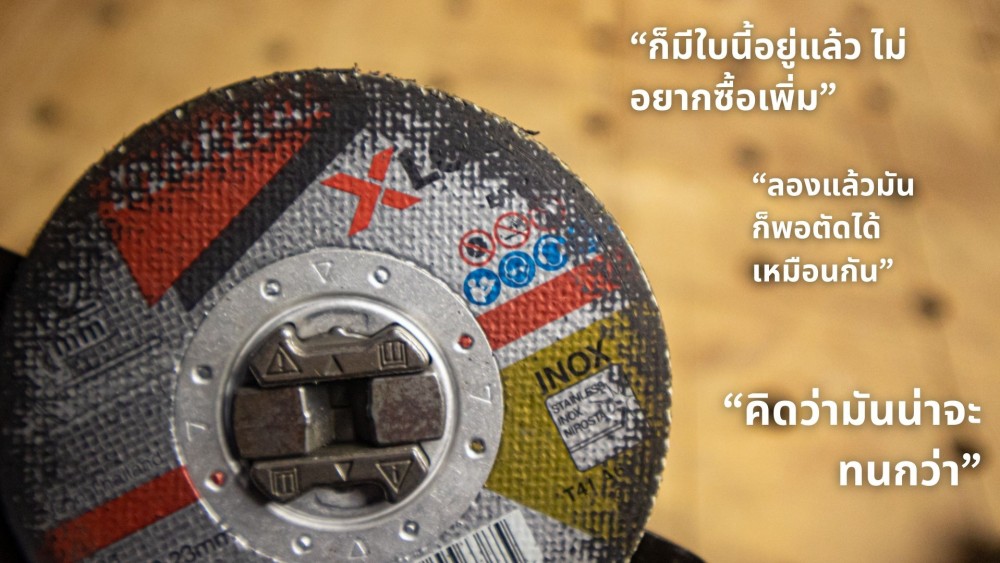
This misunderstanding is precisely why many people inadvertently use cutting discs inappropriately. They assume that because metal and wood are both solid materials, the same disc should work. In reality, even if it cuts through, the quality of work is more "ruined" than "successful," and the latent dangers are simply too high to be worth the risk.
Let's take a brief look at what these common misconceptions are.
- "If it cuts metal, it must cut wood." This is a classic misconception: wood is softer, so it must be able to cut through. But in fact, metal and wood have quite different physical properties. Metal requires high friction, while wood requires a smooth slicing cut, not burning. Therefore, the logic that "if it cuts metal, it should cut wood" does not apply.
- "Using it just once should be fine." Another dangerous mindset, because accidents often happen on that "just once." Some people casually think that trying it just to cut a thin piece of wood won't cause any harm. But the truth is, kickback and fires don't care how many times you've used it—they can happen instantly.
What Should You Use Instead to Cut Wood?
In my opinion, if you want to cut wood and need the right and safest tool, you should switch to a circular saw with a circular saw blade instead—whether for softwood, hardwood, or engineered wood (MDF, particle board)—and you must choose Circular saw blade for wood only, because this type of blade is designed with sharp saw teeth, optimal cutting feed rates, and gullets to clear sawdust, resulting in neat and safe work.
However, if you want to make quick cuts on smaller pieces, a fret saw or jigsaw can also be used.
Angle grinders should not be used for wood cutting, even if a circular saw blade can be mounted.
Angle grinders or disc grinders are primarily designed to be used with metal cutting discs or grinding wheels. Using an angle grinder to cut wood with a circular saw blade is even more dangerous, because angle grinders lack a safe chip-load control mechanism, pose a high risk of severe kickback, and can easily ignite fires due to operating at very high RPMs. This is why professional craftsmen always warn: "Never use an angle grinder to cut wood"—not even worth risking a single trial. Angle grinders are well-suited for woodworking only in rapid sanding applications using sandpaper or flap discs.
Multi-material cutting disc/blade
If your job involves cutting both wood and thin metal in a single operation, it is recommended to use a multi-material cutting blade specifically engineered by the manufacturer. These blades feature durable carbide teeth and specialized geometries that allow cutting both steel and wood without the extreme hazards of a standard metal cutting disc. However, be advised that these blades must be used with the correct, appropriate tools—not mounted on an angle grinder in place of a cutting disc expecting it to cut the same way.
Insights from real-world work
Many times when I read the news or hear stories from fellow craftsmen, there is a recurring theme: using a metal cutting disc to cut wood has been the direct cause of major accidents—such as the tool kicking back violently, requiring multiple stitches, or fires igniting from wood overheating due to friction. Many veteran craftsmen strictly emphasize never taking this risk, as it is never worth the damage to your body or the jobsite.
Conclusion: Never use a metal cutting disc to cut wood!
From the stories and real-world principles I have gathered, it is crystal clear that using a metal cutting disc on wood is a completely unjustified risk. The hazards range from kickback, fires, and shattering discs flying apart to messy finished work and wasted materials.
If you truly need to cut wood, choose dedicated blades such as a circular saw blade for wood or a multi-material blade from a reputable brand paired with the right tool. That alone makes the work vastly safer and yields neat, professional results.
Always remember that Metal cutting disc Use with metals only