


 EN
 ไทย


Customers Also Purchased
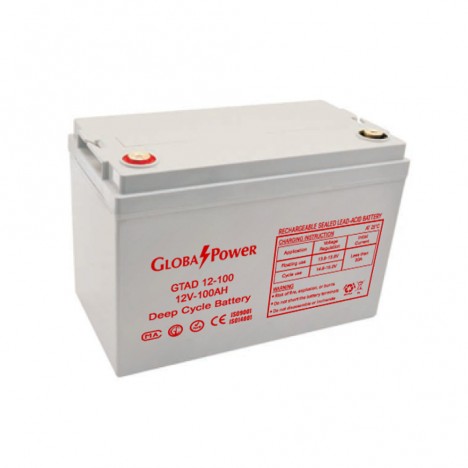
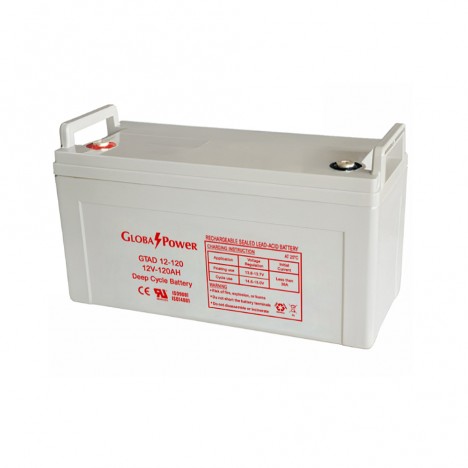
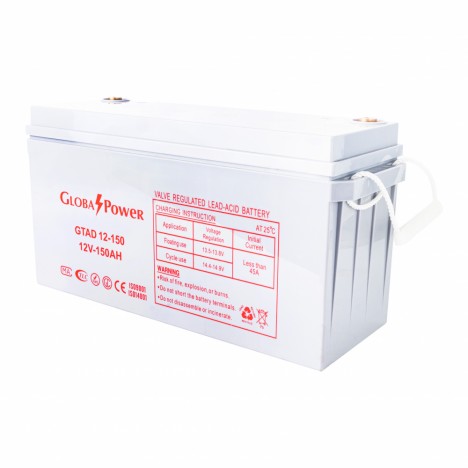
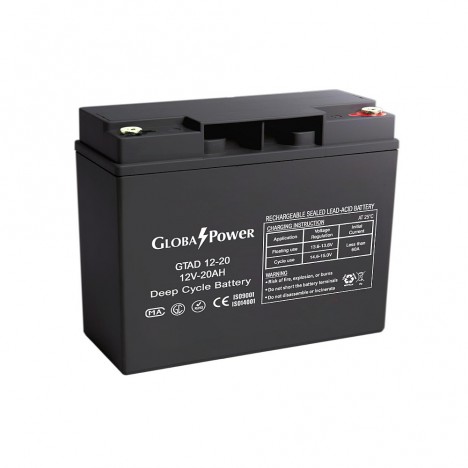
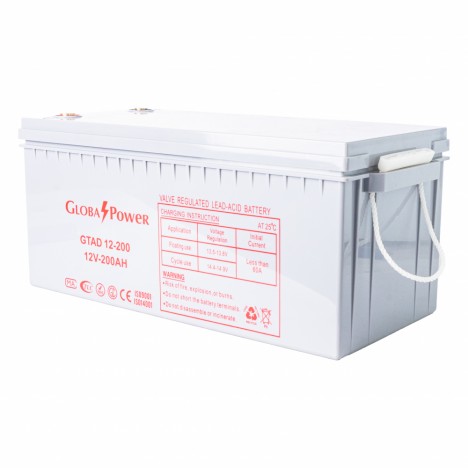
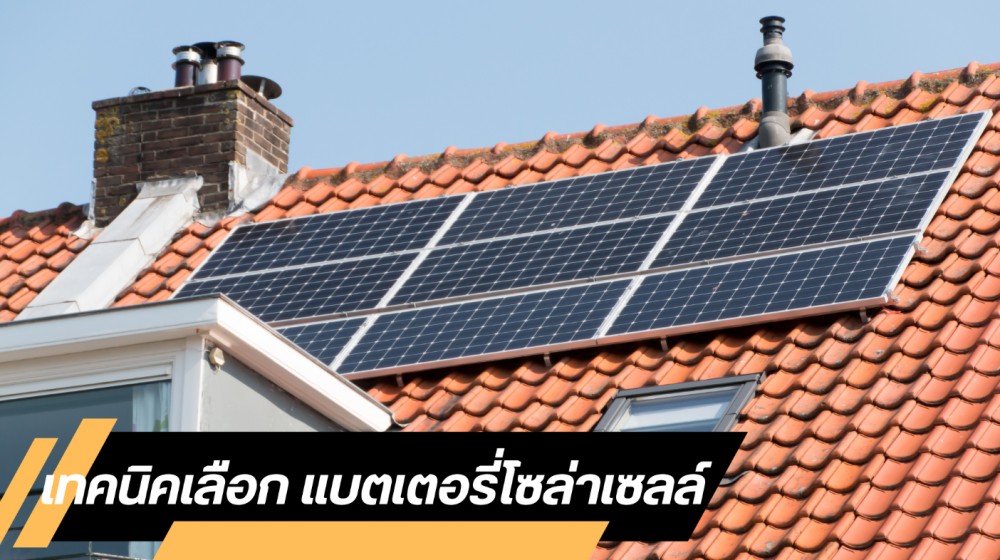
Solar Batteries What voltage is suitable? Which type to choose? How worthwhile is the lifespan?
If you're thinking about installing a solar cell system or looking for a new battery to use with existing panels... but are still hesitating about "which type to choose?"
A popular question that leaves many people at a crossroads is...
- How many volts of solar cell battery should be used?
- Is lithium or traditional lead-acid battery still viable?
- Just how long will it really last?
This article will help guide you on the "right path" from the start without any trial and error, clearing up every misunderstanding thoroughly—no sales pitches, no exaggerations, just practical application.
What is a solar cell battery? And why is it important?
Simply put, if a solar cell system is an engine…
the battery is the fuel tank that you need to size properly. Because no matter how high-quality your solar panels are, if you choose the wrong battery or one unsuitable for your usage,
the power generated... won't be fully stored and will deplete quickly, too.
The main function of a solar cell battery is to "store electricity for use when there is no sunlight."
such as at night, on overcast days, or on days when you need to run electrical appliances longer than usual.
However, choosing a good battery isn't just about looking at the brand or how large it is, because there are several factors you need to know before making a decision.
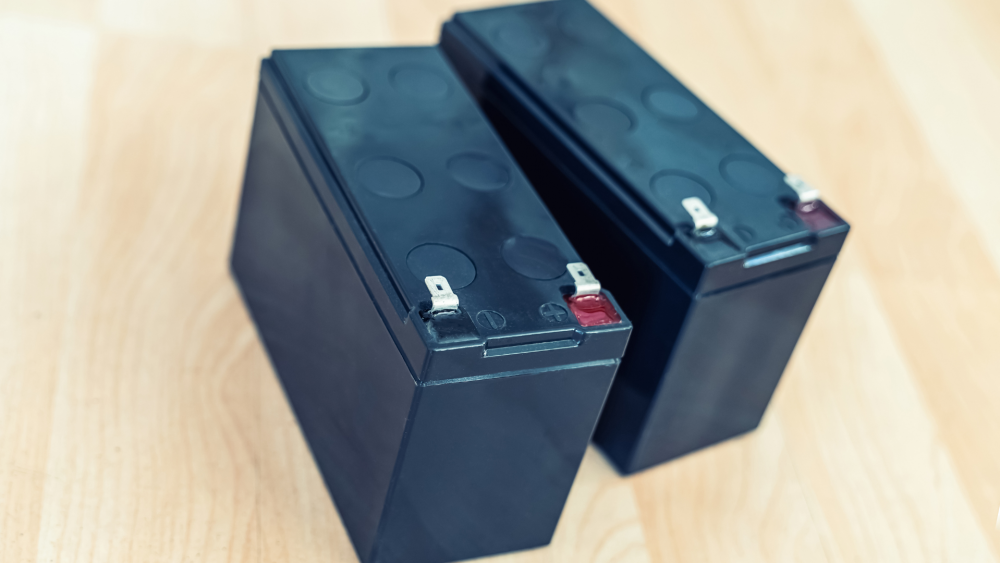
So, how many volts should you choose for a solar cell battery?
There is no single answer to this question… because the "voltage" of the battery primarily depends on your overall system, such as:
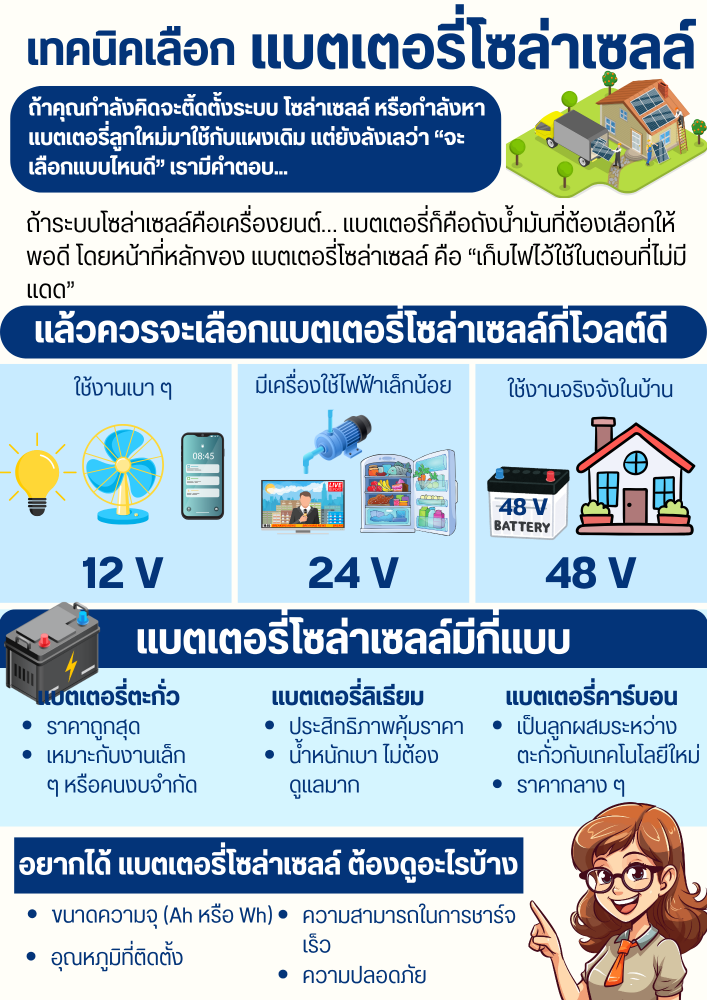
- For just small lights, fans, and phones → 12V is sufficient
- With a few electrical appliances like a TV, refrigerator, small water pump → 24V is ideal
- For heavy use in a home, farm, or small office → go for 48V
Why do you need to think carefully about voltage?
Because if you choose too low a voltage, the system loses more energy through the wiring (low voltage = high current = thicker wiring = energy loss)
It also affects other equipment you need to purchase, such as inverters, charge controllers, and various wiring.
Simply put, choosing the right voltage saves money and operates much more stably.
How many types of solar cell batteries are there? Which one is the best?
This is a classic question that confuses many people because there are so many options on the market today.
However, classified by principle and practical use, there are 3 main types of solar cell batteries popularly used:
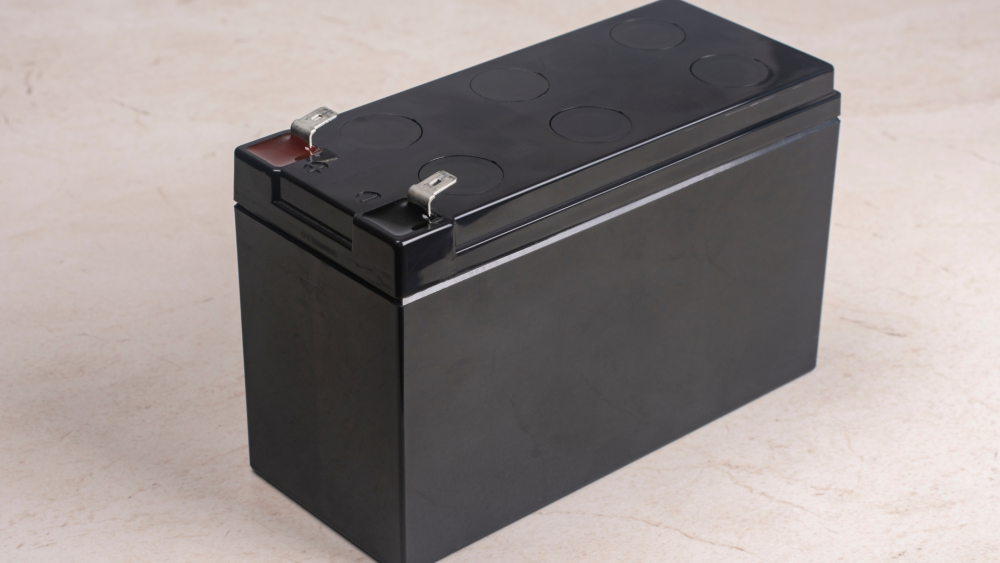
1. Lead Acid Battery
- Lowest price
- Available in both flooded types (Flooded) and sealed types (AGM/GEL)
- Works well for small systems or tight budgets
However, the disadvantages are:
- Requires maintenance and periodic distilled water refilling (except AGM)
- Shorter lifespan than lithium
- Risk of damage if fully discharged frequently
2. Lithium Battery (LiFePO4)
- High price, but the performance is worth the cost
- Charges quickly, supports deep discharge (Deep Cycle)
- Long service life of over 10 years
- Lightweight, low maintenance
Ideal for long-term systems or those who want hassle-free maintenance
3. Lead-carbon battery (Carbon Lead)
- A hybrid between lead-acid and new technology
- Longer lifespan than AGM, but not quite reaching lithium
- Mid-range price
How long is the actual lifespan?
What many people don't know is... batteries don't just degrade by years of use, but by the "number of charge and discharge cycles"
We call this Cycle Life
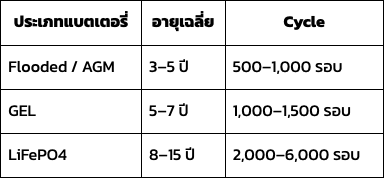
If you use the battery every day (such as a house entirely powered by solar cells), lithium is the most cost-effective option
However, for occasional use such as a garden cottage or a temporary residence, AGM batteries still fit the bill.
What to look for when choosing the right solar cell battery for your needs?
- Capacity (Ah or Wh)
Don't just look at the voltage; check how much power you consume per day and add a reserve of at least 20% for days with poor sunlight.
- Installation temperature
Some batteries do not perform well in extreme heat or cold; certain lithium models should not be charged at low temperatures
- Fast charging capability
Lithium charges faster than lead-acid batteries
If your solar panels generate high power, don't let slow charging waste your energy for nothing
- Safety
Choose batteries with a BMS (Battery Management System) to protect against overcurrent, overcharging, or overheating.
How to choose a solar battery for great value without frequent replacements?
- Start by looking at actual usage: what devices are used, and how many watts per day.
- Choose the right voltage for your system (12V / 24V / 48V).
- For long-term use without headaches, skip cheap batteries and go straight for lithium.
- Don't forget brand reputation, warranty, and after-sales service.
Solar Batteries The best = not just large or expensive, but matching the “job” and “future” of your system.
Hopefully, this article helps you see more clearly that the right battery isn't chosen based on price or promotions alone,
but must be chosen based on what you truly need.