


 EN
 ไทย


Customers Also Purchased


Have you ever noticed that in almost every machine we use in daily life—whether cars, bicycles, washing machines, or even electric fans, up to large industrial machinery in factories—there is a small part working silently inside that is extremely vital? That part is "Bearings"
Bearings are components hidden inside machinery, but without them, these machines wouldn't rotate smoothly or might even break down completely. Knowing basic bearing fundamentals is therefore important for everyone, whether you are a technician or just an ordinary person looking to maintain household equipment.
Today, we'll take about 5 minutes to introduce you to bearings: what they are, why they are important, how many types there are, what to look for when buying, and how to maintain them so they last a long time in your machinery.
What are bearings? And why are they important to all machinery?
Ball bearing They are mechanical parts whose main function is to help reduce friction between rotating parts and stationary parts, enabling rotational movement to occur smoothly and with maximum efficiency.
Imagine a bicycle wheel axle: without Ball bearing bearings, when pedaling, the wheel would rotate with heavy resistance because the axle would rub directly against the hub, generating high heat and wearing out quickly. But with Ball bearing bearings to help, the axle can rotate super smoothly, right?
Main Functions of "Bearings"
- Reducing Friction: This is the most critical function of a bearing. It converts sliding friction into rolling friction, enabling smooth motion and reducing energy loss.
- Load Support: Bearings help support the weight and forces acting on rotating shafts, whether it is downward pressure (radial load) or thrust pushing along the shaft axis (axial load / thrust load).
- Maintaining Clearance and Precision: They help maintain the correct clearance between rotating and stationary parts, allowing machinery to operate with high precision.
In summary: bearings are essential components that allow machinery to rotate, move, and operate efficiently, extending machine lifespan and reducing energy consumption. Without bearings, or if bearings malfunction, the machine cannot operate or will break down very quickly.
Get to Know the 2 Main Types of "Bearings": How Do They Differ?
Most bearings we see can be divided into 2 main types based on the characteristics of the "rolling elements" inside. Each type is suited for different loads and rotational speeds.
1. Ball Bearings
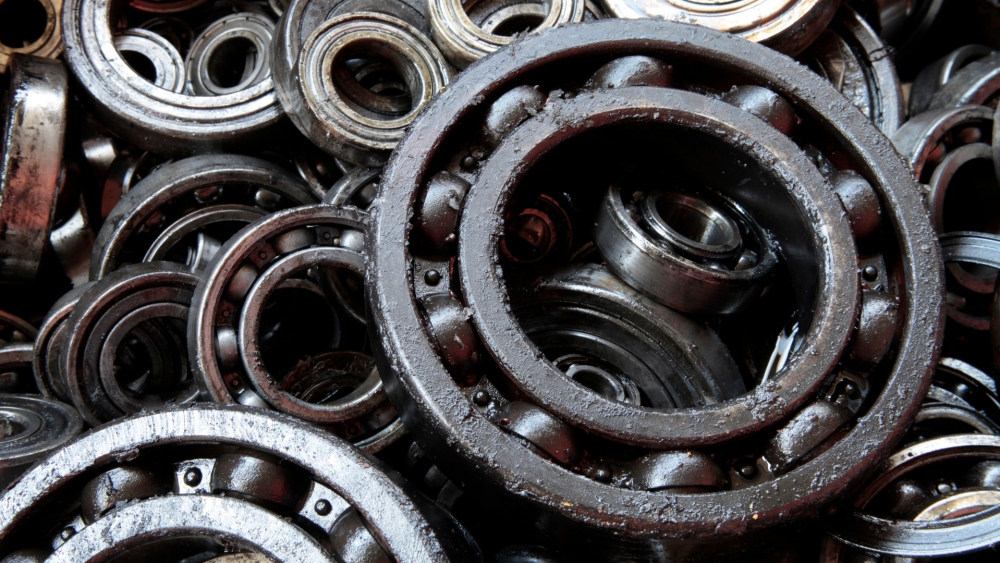
Here are Ball bearing The type we are most familiar with, featuring "spherical balls" as a key component to reduce friction.
Features: Uses small spherical steel balls arranged in grooves between the inner and outer rings of the bearing.
Operating principle: These balls roll smoothly to reduce friction.
Suitable for:
- Applications requiring high rotational speeds: Because it has less contact area than roller bearings, it generates less friction at high speeds.
- Applications with moderate radial loads (Radial Load): This is the load applied perpendicular to the axis of rotation.
- Applications with moderate to low axial loads (Axial Load / Thrust Load): This is the force pushing along the axis (except for certain deep groove ball bearings designed to handle axial loads better).
Pros:
- Performs well at high rotational speeds
- Generates low friction, enabling machinery to operate smoothly and quietly
- Available in a wide range of sizes and at accessible prices
Limitations:
- Relatively limited capacity to handle axial loads (Axial Load)
- Under extremely heavy loads or frequent impacts, the balls may deform or become damaged.
Example applications: Motorcycle wheels, skateboards, fans, small electric motors, household appliances, and certain automotive transmission components.
2. Tapered Roller Bearings / Cylindrical Roller Bearings (Roller Bearings)
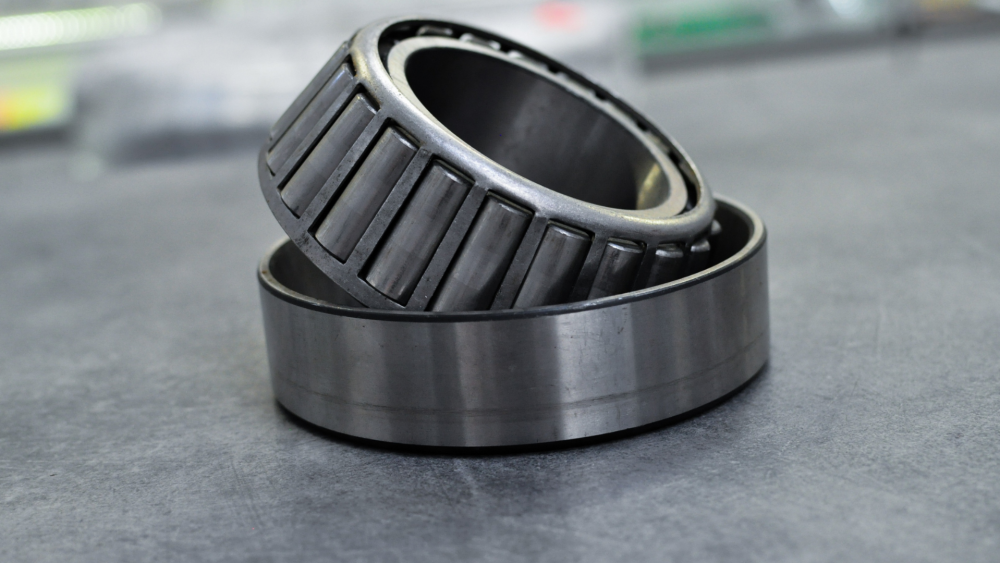
Ball bearing This type uses "rolling elements" shaped asCylindrical orTapered instead of spherical balls, providing higher load-carrying capacity
Features: Uses cylindrical, tapered, or needle rollers arranged in the raceway between the inner and outer rings.
Operating principle: Cylindrical or tapered rollers have a larger contact area than ball bearings, allowing stress to be distributed over a wider area.
Suitable for:
- Heavy load applications (Heavy Loads): Especially very high radial loads (Radial Load)
- Applications with combined radial and axial loads (for tapered rollers): Tapered roller bearings excel at handling loads in both directions simultaneously.
- Applications requiring shock load resistance: Due to the larger contact area, they distribute force better when impact occurs.
Pros:
- Significantly higher load and force carrying capacity than ball bearings.
- High strength and durability, suitable for heavy-duty and industrial applications.
Limitations:
- Generally operate at lower maximum speeds than ball bearings.
- Generate slightly more friction than ball bearings.
- Higher price compared to ball bearings of similar size.
Example applications: Automotive wheel bearings, automotive gearboxes, heavy industrial machinery, conveyor systems, heavy machinery, wind turbines
What should you consider when choosing "bearings"?
Choosing Ball bearing Selecting the right one will help your machinery perform well and last longer.
1. Dimensions
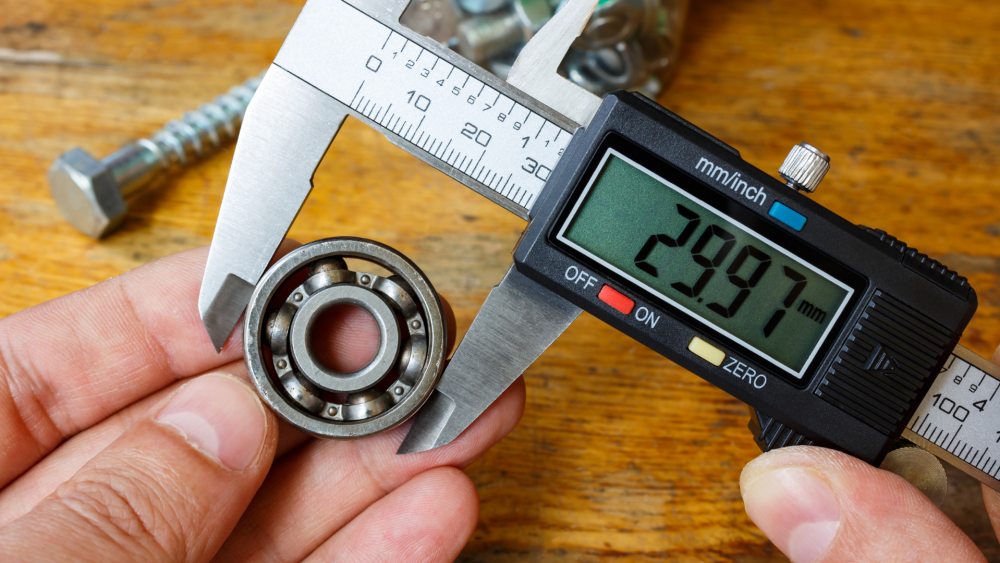
When it comes to bearing dimensions, the key factors to check are the inner bore diameter (shaft hole), the outer diameter (bearing body), and the width (thickness). The bearing dimensions must fit the mounting space and machine shaft precisely. If the dimensions are off even slightly, it cannot be installed, or it could cause bearing damage or malfunction. If you want to learn how to read bearing codes in detail, you can read more in the article Decoding Bearing Codes – What Do They Tell Us?
- Inner Diameter / Bore: The size of the center hole into which the rotating shaft is inserted.
- Outer Diameter: Outer ring size
- Width: Bearing thickness
- Why it matters: The bearing size must fit the installation space and the machine shaft precisely. If the size is off by even a little, it cannot be installed, or if installed, it may cause bearing damage or malfunction.
2. Load Capacity
- Radial Load Capacity: The ability to withstand forces applied perpendicular to the rotational axis (such as the weight of a vehicle wheel).
- Axial Load Capacity / Thrust Load Capacity: The ability to withstand forces pushing along the rotational axis (such as thrust from a fan).
- Why it matters: The selected bearing must be able to withstand the actual loads generated by the machine. Choosing a bearing with a load capacity that is too low will cause the bearing to easily fail or break.
3. Maximum Speed Rating
- Why it matters: All types of bearings have a speed limit for safe operation. Operating beyond the specified speed limit will generate high heat, cause rapid wear, and may result in catastrophic bearing failure.
4. Seals and Shields
- Features: Side covers on the bearing designed to prevent dust, contaminants, and water from entering the rolling elements.
- Seals (e.g., 2RS): Usually made of rubber or synthetic materials, offering superior protection against water and dust. Typically used in dirty or humid environments.
- Shields (e.g., ZZ): Usually made of thin metal with a small clearance gap to keep out larger dust particles, but not as waterproof as seals.
- Why it matters: Dirt and water are the worst enemies of bearings. Choosing a bearing with seals or shields suitable for the operating environment will significantly extend bearing life.
5. Material
- Standard Steel: Commonly used material for most bearings, offering high strength and durability.
- Stainless Steel: Used for bearings that operate in high-humidity environments or come into contact with water and chemicals, as it provides better resistance to rust and corrosion, though at a higher cost.
How do "Bearings" get damaged?
Recognizing warning signs when Ball bearing bearings have issues will allow for timely resolution before damage spreads to other machine components.
1. Abnormal Noise:
- Grinding / friction noise: May be caused by dust or dirt entering the bearing, or a lack of lubrication.
- Humming / groaning noise: May be caused by bearing wear or improper installation.
- High-pitched / whining noise: May be caused by excessive rotational speed or lack of lubrication.
2. Vibration: If the machine vibrates abnormally or progressively worse, it may be a sign that the bearing is starting to fail, worn out, or improperly balanced during installation.
3. Abnormally High Heat: Bearings that malfunction accumulate significantly more heat than normal, which may be caused by insufficient lubrication, overload, or severe wear.
4. Jamming / Stiff Rotation: A bearing that is nearing failure may stick or not rotate as smoothly as before, causing the machinery to run sluggishly.
Main Causes of Damage
- Contamination: Dust, metal shavings, water, or various contaminants getting into the bearing
- Lack of Lubrication: Insufficient lubricating oil or grease, or degraded grease
- Overloading: Using the bearing with a load that exceeds its specified capacity
- Improper Installation: Hammering or applying improper impact forces during installation
- Misalignment: The rotating shaft or related components are not properly aligned
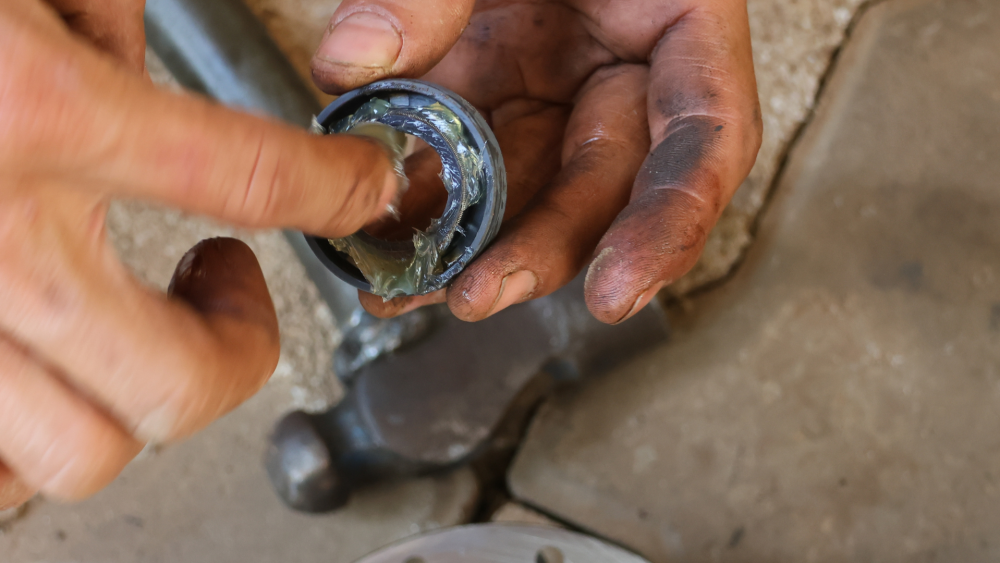
How to Maintain "Bearings" for a Long Service Life?
Maintenance Ball bearing well will greatly help your machinery last much longer.
- Apply the right amount of lubricant: Apply the correct type and amount of lubricating oil or grease according to the manufacturer's recommended schedule.
- Prevent contaminants from entering: Choose bearings with appropriate seals or shields, and prevent dust and water from getting into the bearing.
- Do not overload: Always use the bearing within its specified load limits.
- Install properly: Use appropriate tools to install bearings; do not hammer or apply direct impact.
- Inspect regularly: Inspect bearings and machinery regularly. If abnormal signs are found, inspect and fix them promptly.
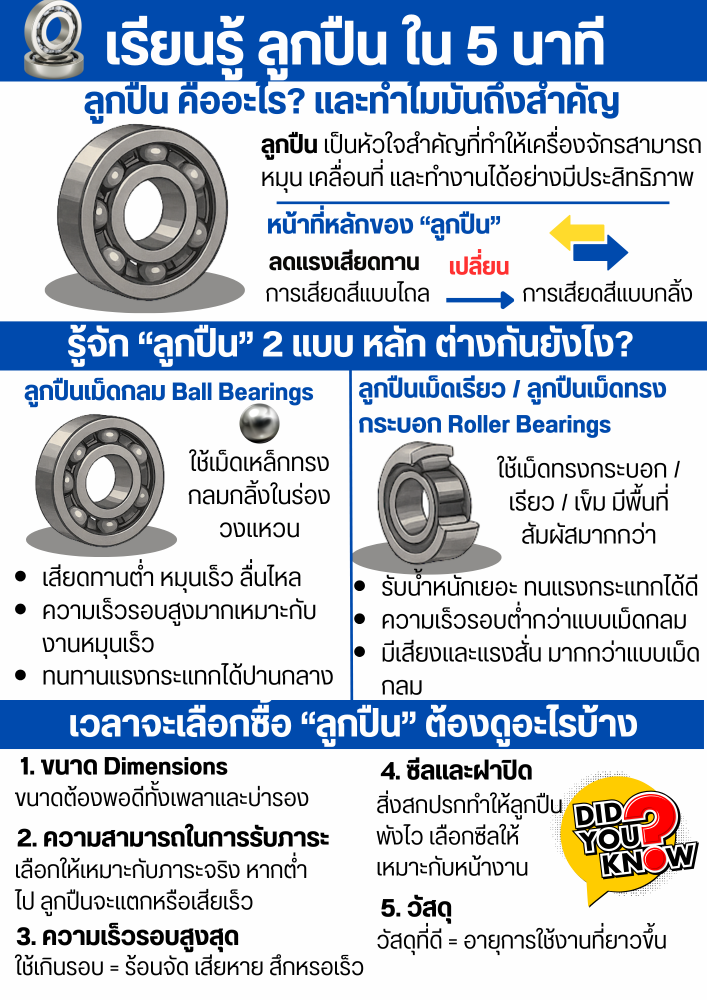
Understanding "bearings" is understanding the heart of machinery!
Ball bearing They may be small parts that we don't see very often, but they are crucial for keeping all types of machinery running well and efficiently.
Learning the basics about bearings—whether types, specifications, warning signs of failure, or maintenance methods—will help you take good care of your machinery, reduce unexpected breakdowns, and extend machine service life significantly. We hope this 5-minute guide is helpful for your work.