


 EN
 ไทย


Customers Also Purchased


Electric Wire hoist An electric hoist is an essential piece of equipment that makes lifting and moving heavy loads much easier. Whether in industrial plants, warehouses, or various worksites, electric hoists significantly save labor, increase speed, and reduce the risk of injury.
However, no matter how sturdy an electric hoist may seem, issues can still arise—such as the hoist jamming, or the chain or wire rope getting stuck, rendering it inoperable. Sometimes, just having a suspended load stuck mid-air can halt the entire operation.
In this article, we'll take you through what can cause these symptoms and simple initial checks you can do yourself to get your electric hoist running quickly again without always having to wait for a technician—and most importantly, to keep operations safe.
What is an "Electric Hoist"? Why is it important?
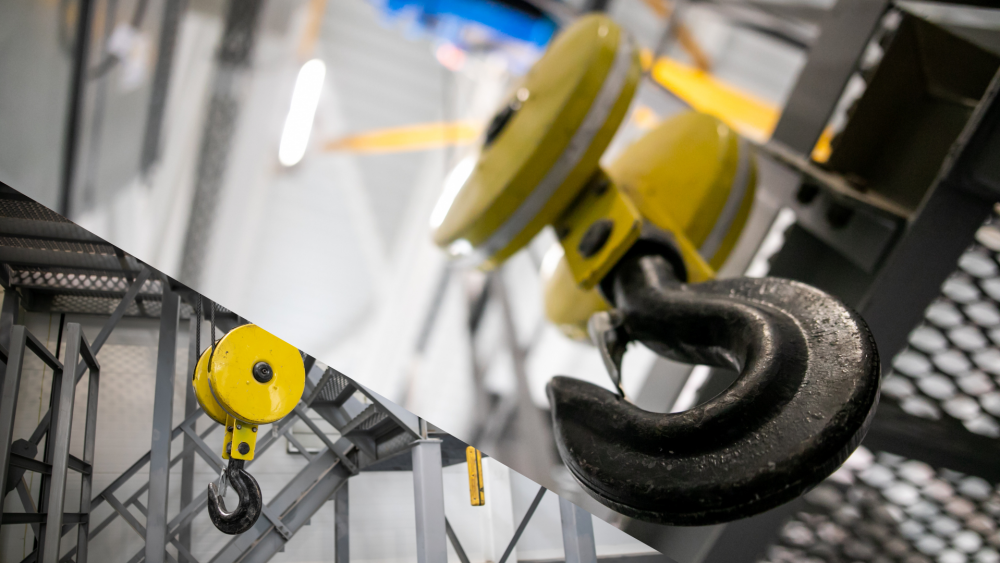
An electric hoist is a device that uses an electric motor to drive gear sets to lift or lower heavy loads via a load chain or wire rope.
The main structure of an Electric Wire hoist electric hoist typically consists of:
- Electric motor: Provides the driving power
- Gearbox: For gear reduction and speed control
- Load Chain/Wire Rope: The part used to tie or hook objects
- Hook: For holding or attaching loads
- Control System: Pushbuttons for controlling lifting/lowering
- Safety System: Such as Overload Protection and Limit Switch
Electric Wire hoist plays an important role in increasing lifting efficiency, reducing manual labor, and improving safety when handling heavy loads across various industries.
Common Problems: "Electric Hoist" Stuck? Chain/Wire Rope Jammed? and Basic Troubleshooting
When your electric hoist malfunctions, try checking and troubleshooting according to these guidelines before calling a technician.
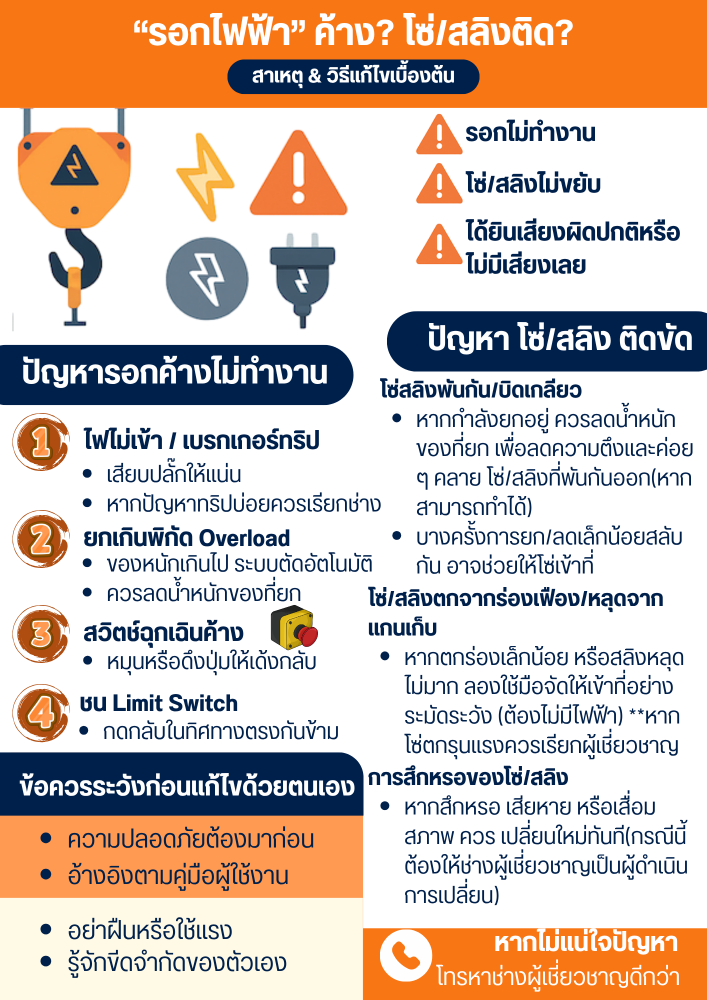
1. Problem: Hoist is Stuck/Not Operating at All
If the electric hoist does not respond at all when you press the button, it may be caused by the electrical system or the safety system.
Cause 1.1: Electrical issue or no power supply
- Symptoms: Pressing the button results in complete silence, no motor sound, or no indicator lights.
- What to check:
- Power plug: Check whether the plug is firmly inserted; it may be loose or disconnected.
- Circuit Breaker / Fuse: Check the electrical control cabinet or main breaker panel to see if the circuit breaker supplying power to the hoist has "tripped" (flipped down) or if a fuse has blown (for hoists using fuses).
- Power Supply: For 3-phase electric hoists, check if any phase is missing (Phase Loss), as the motor will not be able to operate. - Basic Troubleshooting:
- Plug in firmly.
- If the breaker tripped, try resetting it (switched back on). (However, if it trips again immediately, there may be a short circuit or overload issue; you should call a technician).
- If you suspect a phase loss or voltage issue, consult an electrician.

Cause 1.2: Overload Protection Trip
- Symptoms: The hoist may operate briefly and then stop, or not operate at all when attempting to lift a load exceeding its rated capacity.
- What to check: Most electric hoists feature an Overload Protection system to prevent damage to the motor and structure. If an excessively heavy load is lifted, the system will automatically stop operation.
- Basic Troubleshooting:
- Reduce the weight of the load being lifted to below the hoist's maximum rated capacity.
- Some hoist models will automatically reset once the load is removed; some may have a reset button to press, or require waiting for the motor to cool down before resuming operation (refer to the manual).
- If you frequently continue to overload the hoist, it may cause long-term damage.
Cause 1.3: Emergency Stop Engaged
- Problem description: The Emergency Stop Button, typically a large red mushroom-style button, may be engaged/pressed down, preventing the hoist from operating at all.
- What to check: Check whether the emergency stop button on the control pendant or on the hoist itself is pressed down.
- Basic Troubleshooting: Twist or pull the emergency stop button (depending on the type of button) to release and return it to its normal position; the hoist will then be able to operate.
Cause 1.4: Limit Switch Trip
- Symptoms: The hoist will automatically stop operating when the hook is raised to its highest limit or lowered to its specified lowest limit to prevent the chain/wire rope from coming off or the hoist from hitting the ceiling.
- What to check: Check whether the load hook has hit the upper limit switch or has lowered to the lowest travel limit.
- Basic Troubleshooting: If the hook has triggered the limit switch, try pressing the control button in the opposite direction (for example, if it hit the upper limit switch, press the "Down" button), and the hoist should be able to move back.
2. Problem: Chain/wire rope jammed or refusing to move (Chain/Wire Rope Jamming)
If the electric hoist operates but the chain or wire rope will not move or moves with difficulty, the cause stems from the chain or wire rope itself.
Cause 2.1: Chain/wire rope tangled or twisted
- Symptoms: The load chain may be tangled into a mess, or the wire rope may be twisted irregularly, preventing it from entering the sprocket grooves or the drum.
- What to check: Observe the condition of the chain or wire rope to see if it is tangled, twisted, or misaligned.
- Basic Troubleshooting:
- Remove the load from the hook (if currently lifting) to relieve tension.
- Gently untangle the twisted chain or wire rope properly (if it can be done safely).
- Sometimes alternately inching up and down slightly can help the chain seat into place.
- Avoid lifting/lowering loads at an angle or allowing the chain/wire rope to become overly slack, as this can easily cause tangles.
Cause 2.2: Chain/wire rope caught on an obstacle
- Symptoms: The chain or wire rope may have inadvertently caught on a structure, object, or other parts.
- What to check: Inspect the entire path of the chain/wire rope to see if any obstacles are hindering movement, and check whether the hook is snagged on anything.
- Basic Troubleshooting: Carefully clear the obstruction and ensure that the chain/wire rope can move freely.
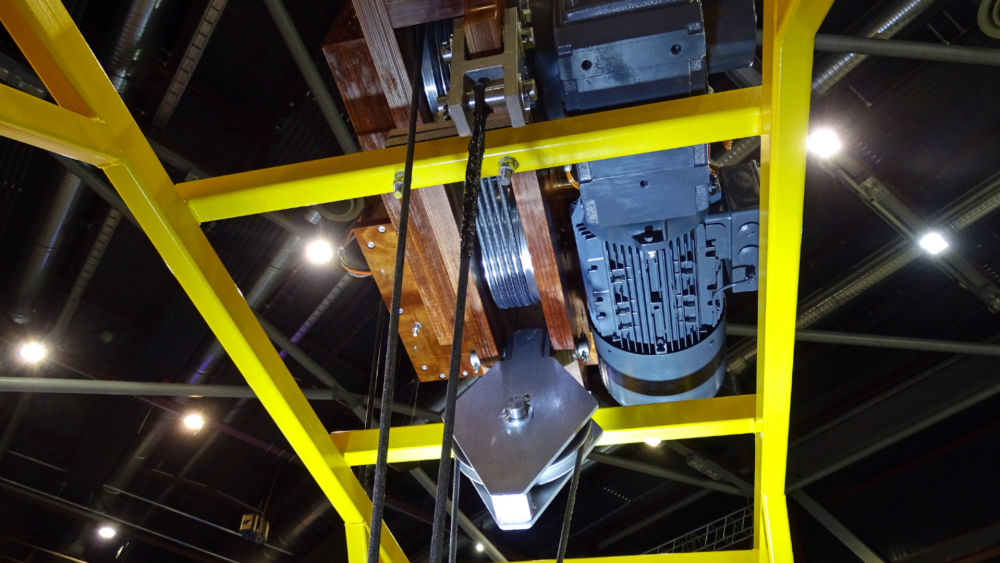
Cause 2.3: Chain/wire rope slipped off the sprocket groove or spool drum
- Symptoms: The chain may have derailed from the drive sprocket groove, or the wire rope may have slipped off the spool drum, preventing lifting power from being transmitted.
- What to check: Observe whether the chain is still seated in the sprocket grooves or if the wire rope is still winding properly on the drum.
- Preliminary solutions (if clearly visible and safe to perform): If the chain has only slightly slipped off the sprocket groove, or the wire rope has come off slightly, try carefully adjusting it back into place by hand (making sure the hoist is disconnected from power first), then test it again.
- Cautions: If the chain has derailed severely, or the wire rope has come off the drum and tangled internally, you should call a qualified technician to fix it for safety.
Cause 2.4: Wear and tear of the chain/wire rope
- Symptoms: The chain may be stretched, twisted, cracked, or the wire rope may have broken strands, preventing it from moving smoothly or reducing its gripping performance.
- What to check: Thoroughly inspect the condition of the chain/wire rope for any signs of wear, damage, or deterioration.
- Solution: If the chain or wire rope is found to be worn, damaged, or deteriorated, it should be replaced immediately. Continuing to force its use is extremely dangerous; in this case, the replacement must be carried out by a qualified technician.
Things to remember before troubleshooting by yourself (for maximum safety)
Before you attempt to inspect or troubleshoot an electric hoist on your own, you should strictly follow these precautions.
- Safety comes first: Always disconnect the power! Before inspecting or troubleshooting any issue related to the hoist or electrical system, you must always disconnect all power supplied to the hoist by unplugging it or switching off the circuit breaker to prevent electric shock or unexpected accidents.
- Refer to the user manual: Each model and brand of electric hoist has different operating manuals and basic troubleshooting instructions. You should read the manual of your specific hoist thoroughly before taking action.
- Do not force or use excessive force: If the hoist jams or stops working, do not repeatedly force the control buttons or use excessive force to pry it, as this may cause further damage to the hoist or create hazards.
- Know your limits: If you are unsure of the cause of the problem, not confident in fixing it correctly, or if the issue involves internal electrical systems, the motor, or complex critical components, stop and call a professional technician immediately for maximum safety.
Please remember that this basic troubleshooting is only part of proper and safe electric hoist operation. You can learn more comprehensive practices from the article 'Do's and Don'ts of Using Electric Hoists' for the utmost safety in your operations.
When to Call a Professional Technician?
Although some problems can be resolved on your own, in certain cases, calling a professional technician is the safest and most appropriate solution.
- Complex electrical issues: Such as the motor not running at all despite normal power input, burning smells, or frequent short circuits.
- Internal mechanical issues: Such as abnormal noises from the gearbox, severe jerking during hoist movement, or damaged gear sets.
- Critical component damage: Such as cracked or elongated load chains/wire ropes, or bent or cracked hooks.
- Persistent problems: If the issue persists after basic troubleshooting, or recurs frequently.
"Electric Hoists" Operate Smoothly with Prompt and Correct Troubleshooting
The problem of "Electric Hoist" Stuck? Chain or wire rope jammed? These issues can happen, but with an understanding of how they work, observing abnormal signs, and knowing the correct and safe basic troubleshooting steps, you will be able to handle these problems quickly.
Resolving issues at the root cause in a timely manner not only prevents work disruptions and keeps your operations running efficiently, but also extends the lifespan of your electric hoist and, most importantly, enhances workplace safety.