


 EN
 ไทย


Customers Also Purchased


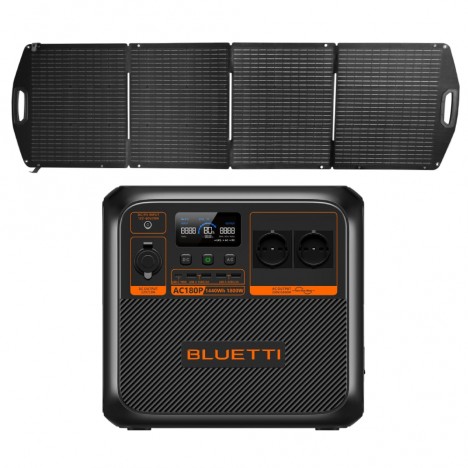
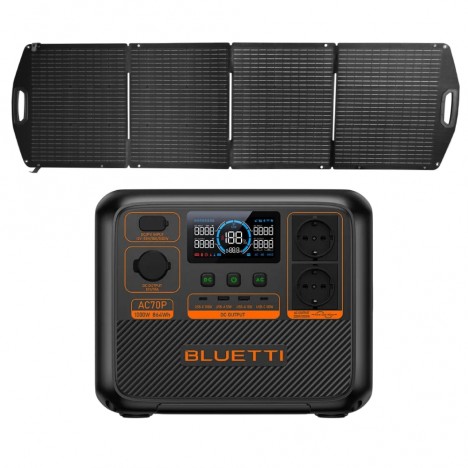
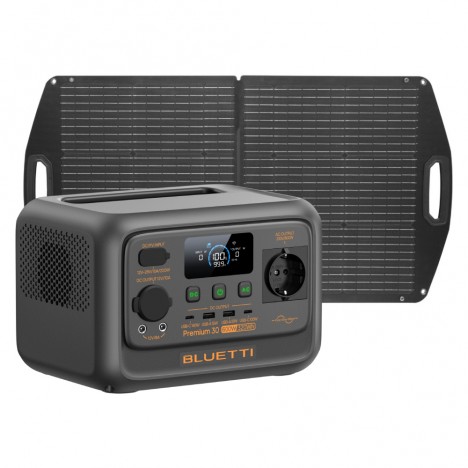
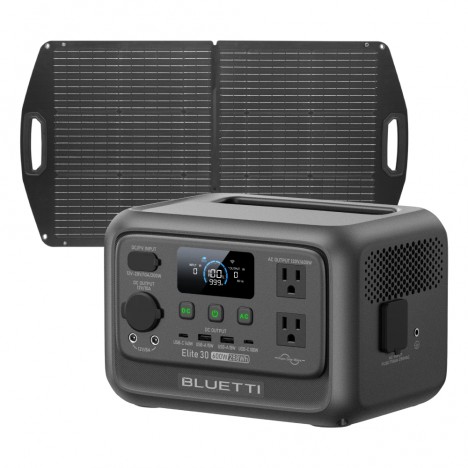
In this day and age, electricity is indispensable in our daily lives—whether at home, working in an office, or running a small market stall. Imagine if the power suddenly went out and the refrigerator shut down, the air conditioner turned off, or power tools stopped working—how chaotic would that be? That's precisely why more and more people are turning to generators, especially in areas with frequent blackouts or where the utility grid is unreliable.
What is a generator? And why do you need to install one?
Why should you have a generator?
- Power outages won't bother you anymore because a backup generator is always ready to go. No need to sit in the dark or worry about food spoiling in the refrigerator.
- Distance is never an issue. Whether it's a construction site in the middle of a field or a wide open area without power lines, a generator has you covered.
- Peace of mind in emergencies: such as running home medical equipment, farm livestock watering systems, or crop water pumps—life goes on smoothly even when the power is out.

What to prepare before installing a generator
Know your usage requirements
Before deciding to buy a generator, simply ask yourself first: "What will I use it for?" The answer will determine which model and size you should choose. Take a look at the examples below for some ideas:
- Use for 1 house: For backup power during power outages, such as running lights, fans, refrigerators, TVs, and similar appliances.
- For power tools on a jobsite: Such as drills, grinders, and water pumps, where the load is relatively heavy.
- For critical equipment: Such as refrigerators, air conditioners, or farm water pump systems that must run continuously.
Then, calculate the total electrical load you want to run simultaneously in watts (W), or in kilowatts (kW) for larger setups, so you can calculate the exact generator size you need without falling short or overspending.
Calculate the generator size
Use this simple formula: Total Power (kW) x 1.25 = Recommended Generator Size (kVA)
Multiplying by 1.25 isn't just a random number; it's a practical safety margin. In reality, we often add more appliances later, such as a new air conditioner or other electrical devices. Moreover, certain appliances like air conditioners and refrigerators draw significantly more power during startup than during normal operation. Without this safety buffer, the generator might not be able to handle the load.
Examples
- Total electrical load = 4 kW (simply put, all your electrical appliances combined consume around this much power)
- Therefore, taking 4 x 1.25 with a safety buffer = 5 kVA. This ensures comfortable operation without worrying about voltage drops when running the refrigerator and air conditioner at the same time.
Choose the engine type
- Gasoline: Suitable for short-term use and intermittent operations, such as running for a few hours during a power outage or carrying to small jobsites. These are very convenient because the machines are compact, lightweight, and easy to refuel, with gas stations widely available.
- Diesel: If you need heavy-duty, continuous operation day and night, this is the answer. Diesel generators are tough, durable, and rugged—ideal for job sites, construction, or farms that require nonstop power generation without a break. Plus, they are more cost-effective on fuel than gasoline in the long run.
Installation Location
- Must be well-ventilated, because generators emit both heat and exhaust fumes. Placing it in a confined or poorly ventilated space could cause the machine to overheat, break down easily, or make it difficult for people nearby to breathe.
- Keep the area at least 1 meter away from walls or flammable materials. Do not place it right against walls or piles of items, as the generator produces considerable heat and exhaust fumes. Placing it too close might turn it into a real grill instead of just a generator!
- Avoid placing it in completely enclosed rooms or under stifling, hot roofs, as that would be like putting the machine in a sauna. The generator would overheat quickly, fail to run at full efficiency, and risk damage, while people nearby might also experience dizziness from the fumes.
Wiring System and Circuit Breakers
- The wiring must be selected to match the actual electrical current load. Don't assume any wire will do, because if the wire is too small, it can overheat to the point of melting the insulation, or at worst, cause an electrical fire. That's definitely not worth the risk. It is recommended to calculate the load first and choose a properly sized wire—or slightly oversize it—for peace of mind.
- There must also be a backfeed prevention breaker to avoid sending power back into the utility grid. Without it, if you run the generator and grid power suddenly restores, current can backfeed into the utility lines, which is extremely dangerous and could electrocute utility technicians performing repairs. You can choose a Manual Transfer Switch (MTS), where you toggle the switch manually, or an ATS (Automatic Transfer Switch), which switches automatically the moment power goes out.

Essential Equipment and Materials for Generator Installation
Generator
Choose a unit matching the size you calculated. Don't pick one that is too small to handle the power demand, or too large, which wastes fuel unnecessarily. As for the brand, choose popular brands with good reviews and reliable service centers so you won't struggle if repairs or spare parts are needed in the future.
Mounting Base
A concrete pad of at least 10 cm thickness is recommended to prevent sinking or tilting during long-term use. If pouring concrete is inconvenient, using rubber mounts or rubber pads to absorb vibrations is also viable, as the machine vibrates quite significantly while operating.
Transfer Switch (Manual/Automatic Transfer Switch)
- Manual Transfer Switch (MTS): Suitable for those who prefer manual control. When a power outage occurs, you have to walk over and flip the switch yourself, which might be inconvenient at night or if you are far away, but it is quite cost-effective.
- Automatic Transfer Switch (ATS): For those who prefer convenience without having to get up and switch anything, this is the ultimate solution. The system detects power outages and automatically switches over to the generator within seconds. It is ideal for households with the elderly, critical equipment, or anyone who doesn't want the hassle during a blackout.
Circuit Breakers and Wiring
- The main breaker should be separated from the primary distribution board for safety and ease of managing the electrical system. Combining them in the same panel can complicate things or cause confusion during repairs or power switching. Keeping them separate from the start eliminates these issues.
- Wiring should be selected appropriately for both the run distance and the power load consumed by the appliances. For instance, if the generator is far from the main panel or powering high-consumption equipment, use larger cables such as 10 mm² or more. For short runs with light loads, 6 mm² may suffice. Avoid undersized cables as they heat up easily and pose a fire hazard.
Exhaust Pipe
- The pipe should be routed outdoors, not just because of the smell or smoke, but purely for health reasons. Generator exhaust contains smoke and gases that are definitely harmful when inhaled for prolonged periods, especially if the elderly or children are nearby, so extra caution is required.
- Install it securely; do not leave any leaks or clogs. If the pipe detaches while the machine is running, smoke will blow right back into your home or factory, along with a lot of noise. Simply put, it's smelly, dangerous, and annoying all at once.
Grounding System (Ground Rod)
- Drive the ground rod into the soil at least 2.4 meters deep. It's not just about pounding a piece of metal into the dirt and calling it a day, as this depth directly affects the ability to dissipate electrical current into the ground. If it's too shallow, it won't help much in the event of an electrical leak. It needs to reach a level where the soil is moist enough to conduct electricity well to be truly safe.
- Helps protect against current leaks and electric shock. Without a proper grounding system, any leaking current will flow into you instead of into the earth. Even a mild shock is startling, but a stronger one can be fatal. Therefore, never overlook this step.
Fuel System
- If using diesel or gasoline, make sure to keep a reserve fuel tank in a safe location. Never place it next to the machine or in hot areas because fuel is flammable, creating risks of both fire and foul odors. Storing it in a well-ventilated area with a tightly sealed lid is best.
- If using gas, do not forget to install an automatic shut-off valve. If a leak occurs, the valve will immediately stop the gas supply, greatly reducing the risk of fire or explosion. It is also recommended to test for leaks regularly; if you ever smell strange gas, do not be complacent—close the valve and inspect it immediately. Safety always comes first.
Basic Generator Installation Steps
Step 1: Prepare the Area
- Pour solid concrete or install a sturdy foundation so the machine won't wobble easily. When the machine is operating, it vibrates quite intensely; if the ground isn't stable, the generator will wander around like a toddler taking their first steps, become noisier, and wear out much faster.
- Leave plenty of space on all sides for open airflow. Do not cram it against a wall or put it in a confined corner, because the machine needs to breathe just like us—this allows heat to dissipate properly and prevents premature failure.
Step 2: Connect Wiring and Circuit Breakers
- Connect the wiring properly from the generator into the Transfer Switch panel. This serves as an essential intermediary to control whether power comes from the utility grid or from the generator.
- Don't forget to install a backfeed prevention breaker. If electricity backfeeds into the utility grid, it can cause severe danger, especially to utility line workers servicing transformers. Prevention is always best.
Step 3: Check the Grounding System
- Check that the earth resistance is lower than 5 ohms using an earth tester. Put simply, you need to verify that leaking electricity will discharge properly into the ground without shocking anyone. If the reading is too high, you may need to improve the grounding system, such as by adding more ground rods or using moister soil.
Step 4: Route the Exhaust Pipe Outdoors
- Never allow smoke to accumulate in an enclosed space. Generator exhaust does not smell like grilled pork; it is full of toxic gases that are harmful to your health. Prolonged inhalation can cause dizziness or serious harm, especially in cramped or unventilated areas. Always route the exhaust pipe properly to vent the fumes outdoors.
Step 5: Test the System
- Start the engine and try applying a load to see if power is supplied to the house or devices. If power is coming through, it means the machine is operating normally. After that, also check the voltage and frequency; typically, it should be at 220V / 50Hz. If the values are significantly too low or too high, further adjustment or equipment inspection may be needed. Don't forget that an unstable power supply can damage your household electrical appliances.

Can You Install a Generator Yourself? Do You Need a Permit?
Can you install it yourself?
Yes, but you need to be very careful because a generator is no toy. It involves both high voltage and fuel or gas systems. If wired incorrectly or routed poorly, it can cause short circuits, fires, or unexpected hazards. If you don't have an electrical background or aren't completely confident, it's much better to consult a certified electrician for complete peace of mind.
Things to watch out for if installing yourself
- Incorrect wiring: This is something you really need to be careful about, as just a slight misconnection can easily cause electrical shorts, fires, or damage the machine. It is definitely not a minor issue.
- An incomplete grounding system is like opening a path for current to leak through people instead of into the earth, risking electric shock without you realizing it. This is even more dangerous if you're barefoot or if there's water nearby.
- Lack of a backfeed breaker: People often overlook this, but in reality it is crucial. If electricity backfeeds into the transformer while technicians are doing repairs, it can be fatal.
Do you need to apply for a permit?
- For small units (under 10 kVA) used only at home without a permanent connection or complex integration into the entire house's electrical system, you generally don't need to go through the hassle of requesting a permit. Just installing it correctly, safely, and without disturbing your neighbors is fine.
- However, if used in a factory or permanently installed and connected to a large-scale power system, you must notify the electricity authority and apply for a permit under the Factory Act. Do not install it yourself and use it long-term without notification, because if anything happens—such as a fire or backfeed—it may be investigated later and lead to legal issues.
Conclusion
A generator is not just an accessory, but has become a necessity in many areas where electricity is unstable. Proper installation from the start ensures reliable operation, safety, and long-term cost savings.
If you are looking for a generator and need further advice, we recommend consulting a specialist or an experienced dealer to get the equipment and installation that best match your needs.