


 EN
 ไทย


Customers Also Purchased




Have you ever noticed that Sandpaper sandpaper, which many people use every day, comes in far more types, shapes, and properties than we think? Whether round, rectangular, mesh, belt-shaped, holed, or non-holed—while at a glance they all seem to serve the same purpose of smoothing surfaces—when you look closer, there are details and differences that truly impact the actual work more than many realize.
I used to think that way too: "How different could sandpaper really be?" Until I took on serious woodworking projects and ran into issues like dust flying everywhere, sanders stuttering, sandpaper clogging quickly, or even surfaces burning from heat buildup. Once I switched to a different type of sandpaper, many of these problems disappeared—quite surprisingly.
In this article, I'll take you deeper into the world of sandpaper, from holed and non-holed to mesh types, as well as the suitability of various shapes like round, rectangular, and belt formats—along with answers to the intriguing question: do these features merely help with dust extraction, or do they truly affect your intended work quality?
What is sandpaper, and why are there so many types?
Before we go further, let's briefly review: what actually is "sandpaper"?
Sandpaper is a sheet material coated with an abrasive powder—such as alumina, silicon carbide, or ceramic—onto a backing sheet, which may be paper, cloth, or synthetic fiber depending on the intended application.
But what many people might overlook is the shape and characteristics of the sandpaper, which aren't just there for random choice; they're packed with technical reasons, such as:
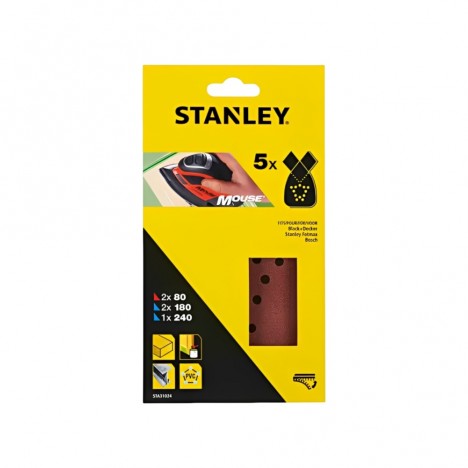
- Holed / Non-holed: Affects dust extraction, service life, and compatibility with sanders equipped with dust extraction systems.
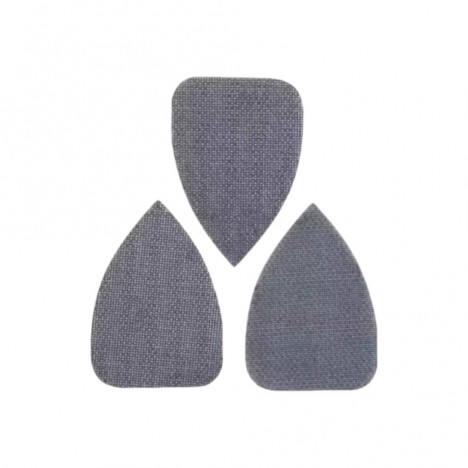
- Mesh: Ideal for jobs requiring high cleanliness; works exceptionally well with dust extraction systems and reduces clogging to the next level.
- Sander compatibility: Affects shape selection—for instance, round discs are used with orbital or random orbit sanders; rectangular sheets with orbital finishing sanders; belts with belt sanders; and small sheets or sponges for hand sanding, while rectangular formats are used with vibrating sheet sanders or finishing sanders.
And all these factors directly affect dust levels, heat dissipation during sanding, and ultimately, the final quality of your work.

Why are there holes? Just for dust extraction? And why does it matter?
Have you ever noticed when buying sandpaper that some sheets have holes while others don't, and wondered why it matters? Many people might think the holes are just for dust extraction, but the truth is… it doesn't stop there!
Holed sandpaper is designed for sanders with dust extraction systems featuring backing pads with holes that align with those on the sandpaper to draw away fine dust generated during sanding. In many cases, this impacts work quality, cleanliness, and even the craftsman's own health! But wait—what if you don't have a vacuum? Would no-hole sandpaper be better? Or is mesh sandpaper the ultimate answer?
Let's clearly break down just how significant those "little holes" on sandpaper are to your surface finishing work.
Holes on sandpaper = Dust vents?
Yes, it sounds simple, but it's totally true! Holed sandpaper is designed for use with sanders equipped with a dust extraction system. These holes work in tandem with the holes on the sander's backing pad to extract dust while working.
So what are the benefits?
- Helps you see the workpiece surface more clearly because dust is drawn away, making it easier to inspect the surface and spot imperfections.
- Reduces airborne dust (good for your lungs and your workspace). Especially when working in enclosed spaces, dust from sanding wood or metal can cause respiratory illnesses.
- Prevents dust clogging, which is the main cause of decreased sanding performance and frequent paper replacements.
- Extends the sandpaper's lifespan because dust particles do not accumulate on the abrasive surface, maintaining its efficiency longer than sandpaper without dust extraction.

So, is the no-hole type at a disadvantage?
Not really. No-hole sandpaper is suitable for sanders not specifically designed for dust extraction systems, such as angle grinders, or for hand sanding in tight spaces where you don't want holes interrupting the overall contact surface. It is also essential for use with belt sanders, which require a continuous, uninterrupted strip of abrasive. Since a belt sander rotates the sandpaper strip over two pulleys, having holes would compromise the structure and could easily cause the belt to tear or slip off during operation, especially when sanding hard materials or applying heavy pressure.
Advantages of no-hole sandpaper:
- Full surface sheet with no interruptions from holes.
- Stronger and more durable (no holes = no risk of tearing at the holes).
- Versatile for use at various angles without worrying about aligning holes with the backing pad.
What is mesh sandpaper? Is it really better than the holed type?
If you've used holed sandpaper before and still experienced dust clogging, or felt that the sanding wasn't smooth even with a vacuum connected, you might need to get to know another, more unusual-looking type of abrasive—mesh sandpaper, or Mesh Sanding Discs/Pads.
Many people might think, "It's just a thin sheet full of porous holes like fabric, can it really sand well?" But once you actually try it, you'll realize it's a whole new level of sandpaper, cleverly designed for cleaner and more continuous sanding than ever before.
The mesh isn't for catching mosquitoes!
Seeing this for the first time, many people wonder, "Is it fabric?" or "It looks so thin, can it really sand?" Let me tell you, it really works, and it works great! This mesh structure isn't just for a breathable look; it allows air and dust to flow across the entire sheet. Unlike holed sandpaper with perforations only in specific spots, this lets dust extraction systems work at peak efficiency, reducing clogging issues and heat buildup during sanding. Especially if you use it with a circular or random orbit sander equipped with dust extraction, the result is a clean, uniform finish, requiring less effort and allowing for longer continuous work.
Advantages of mesh abrasive sheets:
- No dust clogging: Dust is extracted through tiny pores across the entire sheet. These micro-pores aren't limited to specific spots like traditional sandpaper, but are evenly distributed across the whole surface, leaving no chance for dust to accumulate in one area and cause clogging.
- Longer lifespan than holed types: Because no dust clogs the holes or packs tightly onto the abrasive surface, sanding maintains its continuous efficiency.
- Smoother sanding over time: With no dust debris creating drag and extra friction, the mesh contact surface allows for consistently smooth movement.
- Quieter operation: Due to less resistance and no grinding noise from friction caused by accumulated dust on the sanding disc.
Heat from sanding — a seemingly minor issue that's bigger than you think
Don't assume that rubbing back and forth during sanding causes no issues! Especially when using a power sander, the heat generated between the sandpaper surface and the workpiece can discolor the finish, cause burn marks, or rapidly degrade the sandpaper. Besides resulting in an unsightly finish, it risks damage that could have been avoided.
Mesh and holed sandpapers provide better airflow, effectively controlling heat buildup and allowing continuous sanding without frequent pauses. Non-holed versions tend to run hotter due to the lack of ventilation, causing heat to constantly accumulate at the contact point between the paper and the material.
Another factor often overlooked is that dust from certain types of wood can be flammable. Dust trapped on sandpaper combined with high friction can generate temperatures that actually cause a fire! This is especially true in poorly ventilated environments or during prolonged continuous sanding.
To avoid these problems, you should:
- Choose holed or mesh sandpaper when using sanders equipped with dust extraction.
- Avoid pressing down too hard while sanding, which accelerates heat buildup.
- Regularly clean your sandpaper sheets or replace them once they begin to clog.
- Pause and let your sander rest periodically when tackling large projects or running long continuous sessions.

So, which type is suitable for which job?
Now that you know the different types of sandpaper, the next important question is: which type should be used for which job? Not every type is suited for every scenario. The wrong choice can waste time, ruin equipment, or worse, completely destroy the piece, forcing you to start all over again.
Some sandpapers are designed for fine finishing, others for rapid coarse removal, some require specific dedicated sanders, and others are ideal for manual hand sanding in tight spaces. Once you know the results your project requires, choosing the right type of sandpaper to match your objective is a crucial step that shouldn't be overlooked.
For fine finishing and furniture detailing
Holed or mesh types used with circular or rectangular sanders are recommended. These tasks require a smooth finish without dust obscuring the workpiece. Excellent dust extraction provides a clear view of the surface details, preventing dust patches from hiding marks or wood grain lines, while also extending the lifespan of both the abrasives and the tool.
Especially in wood furniture work or painting applications that require a flawlessly smooth finish before coating, these sandpapers have become the top choice for professional craftsmen and serious DIYers.
Suitable application examples:
- Sanding wood before applying lacquer or clear coats
- Sanding MDF surfaces or plywood to a smooth finish
- Sanding interior decorative furniture such as tables, chairs, and cabinets
- Used with random orbital sanders with dust extraction to sand around edges or flat surfaces
For outdoor or rough work
The no-hole type is more suitable because it is durable, can be used for hand sanding or with rough sanders without worrying about holes, and is especially suitable for belt sanders that require a continuous abrasive surface without holes that could cause the sheet to tear easily under prolonged pressure.
Advantages of no-hole sandpaper:
- Suitable for rough sanding or surface preparation in open areas, such as outdoor wood or concrete surfaces
- Easily used with older sander models or machines without dust extraction systems
- Freely used for hand sanding or with sanding blocks without worrying about aligning holes with the sanding pad
- Used with belt sanders that require a seamless, uninterrupted belt
- Economical and widely available on the market
For health-conscious tasks or working in enclosed spaces
Mesh abrasive is the best option because it releases very little dust, keeping the air in the room easy to breathe even after finishing the work. It is suitable for those working in enclosed spaces such as small workshops, condominiums, or factories where dust control is essential, as the dust extraction system of mesh sheets performs superior to all other types.
Additional advantages of mesh sandpaper in enclosed space work:
- Reduces the risk of inhaling fine dust that could be harmful to the respiratory system
- Keeps the room's atmosphere clean, minimizing cleanup after the job is done
- Using it with a sander connected to a vacuum extractor further increases efficiency
- Suitable for fine work, such as furniture making, pre-paint sanding, and surface finish sanding.

Conclusion
Many people might not pay much attention to small things like sandpaper, but if you are getting serious about woodworking, DIY crafts, painting, or home renovation, choosing the right sandpaper from the start will clearly improve the quality of your finished work.
Especially when it comes to the main types of sandpaper—such as holed, non-holed, and mesh types—each option is not just for looks or chosen out of habit. It directly affects the actual sanding process in terms of dust extraction, heat buildup, smoothness of work, disc wear, and the lifespan of both the abrasive sheet and the sander itself.
Holed abrasive sheets are great for dust extraction and cooling, allowing for extended, continuous sanding—especially when paired with sanders equipped with dust extraction systems. Non-holed abrasives are ideal for applications requiring a continuous surface, such as belt sanders, or for hand sanding in areas where power tools cannot be used. Finally, mesh abrasives are the best choice for dust control, durability, and a consistent surface finish.
Don't forget… every detail of your work, whether large or small, comes down to consumables like Sandpaper this right here.