


 EN
 ไทย



Hand Trucks & Carts ...is an apparently simple tool that plays a vital role in everyday tasks for all kinds of users—from office housekeepers and warehouse storekeepers to installation technicians on job sites and market stall owners. This broad versatility makes trolleys indispensable in logistics, business operations, and even household chores.
What many people overlook is that a trolley suitable for light work might not handle heavy-duty use, and a cheap trolley often leads to recurring expenses due to damage or subpar performance, such as stiff wheels, cracked platforms, or bent frames.
Choosing the right trolley requires evaluating several factors, including load capacity, body material, structural design, folding capability, wheels, handles, and shelf configurations or accessories that enhance versatility and convenience.
This article brings together "7 Checkpoints Before Paying" that buyers should know, ensuring that your chosen trolley delivers on performance, value, and long-term operating safety.
1. What is the maximum load capacity?
A trolley's load capacity must never be overlooked, as it determines whether your equipment can operate at full efficiency—especially if you regularly transport heavy goods. A trolley without sufficient load capacity will suffer structural damage and pose serious safety hazards to operators.
- For general applications—such as offices, retail stores, or homes—a trolley rated for around 100–150 kg is typically sufficient.
- However, for warehouses, industrial settings, or building material stores, choose a model rated for at least 300 kg or more, such as the PRESTAR PF-301WR or DEWALT ToughSystem, designed for professional load demands.
Tip: Choose a capacity that allows at least a 20% margin above the actual weight you handle regularly to extend the trolley's service life.
2. Trolley Materials
The trolley's material is a primary factor determining its service life, durability, ease of use, and suitability for specific working environments. Selecting the right material ensures you achieve maximum efficiency and prevents premature wear or breakdown.
Main Material Types
- Painted steel: The most common material, strong, impact-resistant, and affordably priced. Suitable for heavy-duty use such as warehouses, construction materials, or medium-to-large industries. However, the downside is its heavy weight, and if the coating is scratched, it can rust. Therefore, it is not suitable for wet or permanent outdoor areas.
- Stainless Steel: The highlight is corrosion resistance and rust-proof capability even when used in humid or wet areas such as food factories, hospitals, or cold storage rooms. Although higher in price than painted steel models, it offers long-term value, especially for tasks that require hygiene and cleanliness.
- Plastic (PP/PE): Lightweight, easy to maneuver, rust-free, and low maintenance. Ideal for light tasks such as moving office documents, serving food in restaurants, or arranging lightweight goods in department stores. However, this type of material is not suitable for heavy loads, as it may crack or deform under prolonged heavy use.
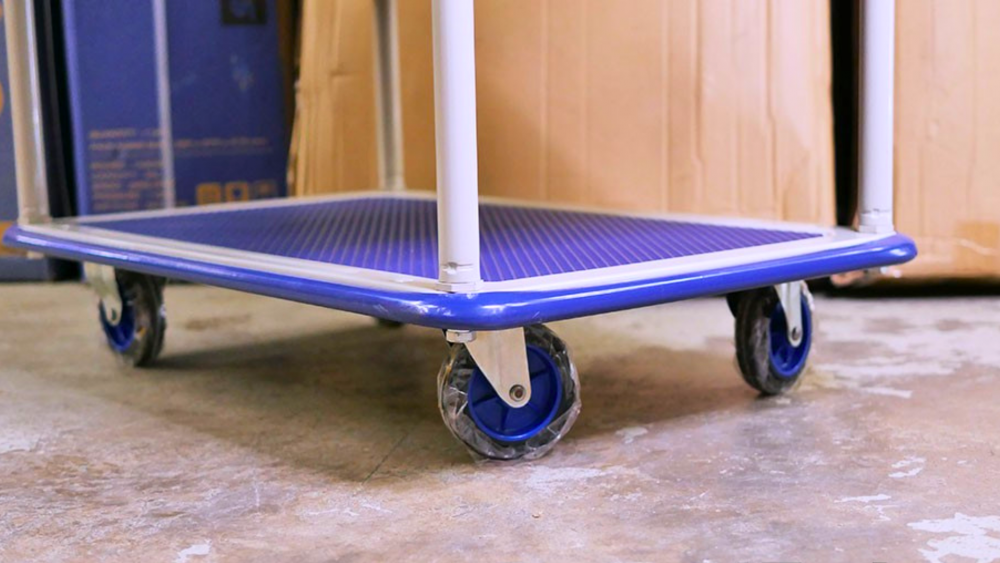
Composite or reinforced materials
In some industrial trolley models, composite materials may be used, such as a steel frame with a plastic platform, or an aluminum frame with a steel mesh, to strike a balance between strength and lightweight design. This is suitable for applications requiring high agility while still supporting loads effectively.
Suitability comparison
| Material | Trolley weight | Strength | Rust resistance | Suitable applications |
| Painted steel | Heavy | High | Low | Warehousing, heavy-duty work |
| Stainless steel | Medium | High | High | Food applications, wet areas |
| Plastic | Lightweight | Medium | High | General use, indoor use |
| Composite materials | Medium | High | Medium | Service work or fast movement |
Additional recommendations: If you are unsure which type of trolley your work requires, try evaluating the working environment (dry/wet), the weight of the items being moved, and the frequency of use. This will help you choose the most suitable material.
3. Is the structure foldable?
A foldable structure is a key feature that provides hand trucks with maneuverability and versatility for various situations, especially for users with limited storage space or those who frequently need to carry a trolley to different locations—such as electricians, air conditioning technicians, event teams, or even online sellers who regularly ship parcels.
Advantages of Foldable Trolleys
- Saves storage space: Can be stored in a storage room, car trunk, or any warehouse corner without taking up much space.
- Convenient to carry: Ideal for frequent travelers without worrying about bulkiness.
- Easy to use: Newer models often come with automatic or semi-automatic folding mechanisms, reducing folding and unfolding steps.
- Fits compact vehicles: Easily folds and fits neatly into the trunk of a sedan or pickup truck.
Notable Model Examples
- STANLEY FT580: Sturdy construction, easy to fold and store, ideal for heavy-duty hauling.
- PRESTAR PB-101P: Lightweight, high-quality wheels, compact when folded.
- Wolfcraft TS 850: Features large wheels, rolls smoothly even on uneven surfaces, and folds in seconds.
Recommendation: If portability is your main priority, don't forget to check whether the trolley's folded weight can be lifted by one person, and ensure it remains sufficiently strong when unfolded for your tasks.
4. Wheel Types and Materials
Wheels are the heart of movement. Trolleys with poor wheels can cause stiff, jammed movement, loud noise, or premature wear. Choosing the right wheels for your work and floor surface is therefore essential. They can be classified by material and swivel mechanism:
Wheel Material Types
- Standard Rubber Wheels: Commonly used in office buildings or on smooth surfaces because they are soft, non-marking, and quiet. Ideal for light-duty applications such as document carts and janitorial trolleys.
- PU (Polyurethane) Wheels: Excellent shock absorption capabilities. Suitable for various surfaces, including semi-rough floors. Highly durable and long-lasting, making them popular for industrial trolleys and tool carts.
- Nylon Wheels: Strong with high load capacity. Suitable for rough floors or concrete warehouse surfaces. While slightly louder, they offer exceptional durability and wear resistance.
Wheel Configurations and Layout
- Standard 4-Wheel (2 Front + 2 Rear): Performs well in a straight line, but changing directions requires lifting or swinging the entire trolley.
- 360° Swivel Casters: Highly maneuverable and easy to steer in tight spaces. Perfect for warehouses, supermarkets, or narrow aisles requiring frequent turns.
Wheel Size
Wheel size also affects maneuverability.
- Small wheels: Lightweight and affordable, but not suitable for uneven surfaces.
- Large wheels: Roll smoothly even on rough surfaces, helping to reduce vibration transferred to the cart.
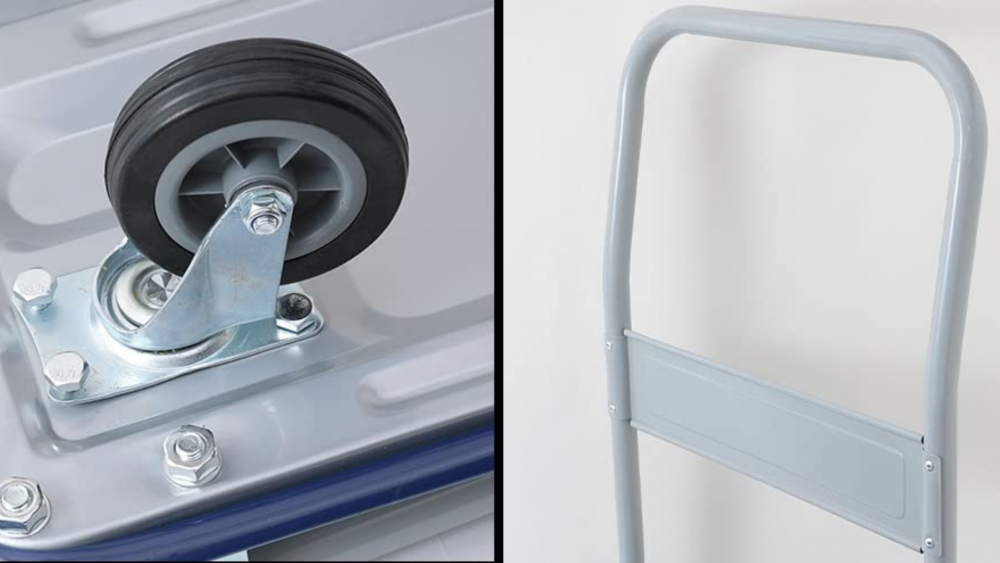
Solid Rubber Wheels vs. Pneumatic Wheels
- Solid rubber wheels: No inflation needed, easy to maintain, ideal for continuous use.
- Pneumatic wheels: Excellent shock absorption, used for heavy-duty or outdoor work, but air pressure must be checked regularly.
Additional Advice
- If you need to use it in wet or waterlogged areas often, you should choose wheel materials that are waterproof and rust-free, such as PU wheels or nylon wheels.
- If you need to move very heavy loads over long distances throughout the day, large PU wheels will help you work smoothly without excessive fatigue.
Choosing the right wheels not only makes transporting items easy, but also helps reduce user fatigue and extends the lifespan of the cart.
5. Handle Style
A cart's handle might seem like a small detail, but in reality, it greatly affects maneuverability, safety, and operational efficiency—especially when pushing over long distances, in tight spaces, or during tasks requiring frequent direction changes. Choosing the right handle style therefore significantly reduces fatigue and improves steering control.
Main Types of Handles You Should Know
- Fixed Handle: The most common standard type. Easy to use, suitable for straight-line pushing in open areas such as factories or spacious warehouses. The downside is that it may be difficult to turn in confined spaces and cannot be folded for storage.
- Foldable Handle: Offers more flexibility, allowing for easier turning or maneuvering than a straight handle, and can be folded away when not in use. Ideal for carts that need to be transported in vehicles or used in locations with limited storage space.
- Dual Handle: Allows operation from both the front and rear without needing to turn the cart around. Suitable for tasks requiring frequent forward and backward movement, such as stocking shelves in supermarkets, warehouses, or retail shops.
Handle Angle and Material
In addition to the style, the curvature, contours, and material of the handle also affect grip comfort:
- Rubber Grip: Helps absorb shock and prevents slipping when hands are sweaty.
- Bare Metal Handle: Durable, but if used outdoors, it may become excessively hot or cold.
- Adjustable handles: Available in newer trolley models, these allow users to adjust the height according to their ergonomics, helping to reduce back pain and shoulder strain.
Example: The PRESTAR NF-304WR is an example of a trolley designed with dual-sided handles, allowing users in tight spaces to instantly switch pushing directions without having to lift and turn it around, greatly increasing maneuverability.
Tip: If you need to use the trolley for long periods, you should test the grip and try pushing it before purchasing to ensure that the handle style suits your usage and body mechanics.
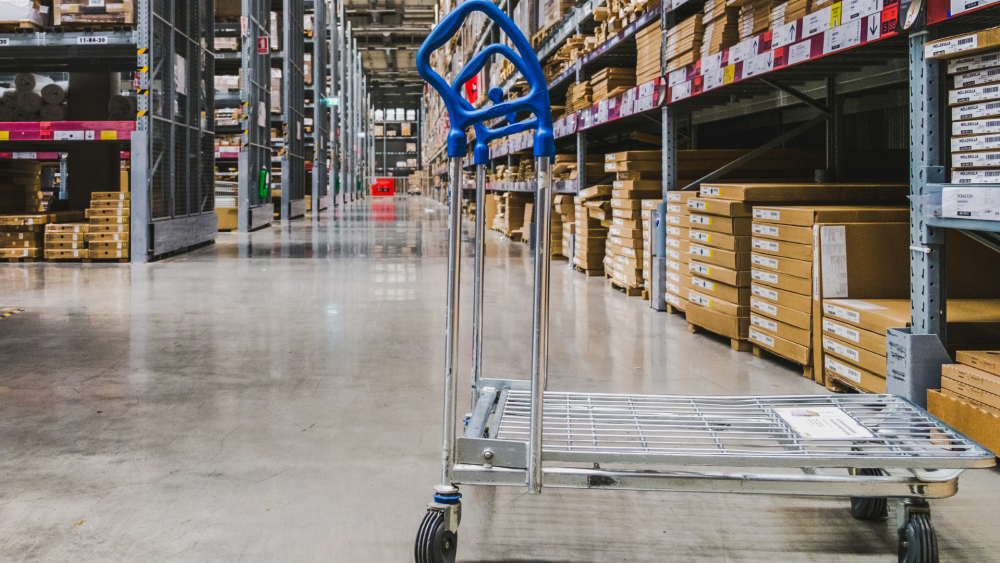
6. Number of tiers or additional mesh sides
Trolleys today have evolved to meet a wider variety of needs. Key elements that enhance functionality are the "number of tiers" and "additional mesh sides", which can transform the material handling experience to be more convenient and safer—especially for those who need to manage large quantities of items, small parts, or goods that require organized sorting.
Types of trolleys by shelf structure
- Single-tier models: These are standard flatbed trolleys, ideal for transporting large or heavy items requiring a wide platform, such as toolboxes, oil drums, or large product cartons. Their advantages are strength, simplicity, and high load capacity.
- 2–3 tier models: Ideal for tasks requiring the transport of numerous and diverse items, such as in coffee shops, restaurants, grocery stores, or clinics organizing medical supplies. The top shelf can be used for lighter items while the bottom shelf holds heavier ones, ensuring easy access and clear organization, such as the PRESTAR NF-305WR or WADFOW tiered models featuring sturdy construction and smooth-rolling casters.
- Mesh-sided models: Ideal for applications where preventing items from falling is critical, such as water bottles, parcels, or small items that might roll off. The mesh frames are typically made from steel or stainless steel, offering durability and neater item arrangement. They also significantly help prevent accidents while pushing.
Additional benefits of shelves and mesh sides
- Reduces transport time by moving more items in a single trip.
- Allows clear categorization of items, improving work organization.
- Enhances safety by reducing the risk of items falling off while moving, especially when turning or pushing on slopes.
- Can be used as a display shelf in retail stores or adapted as a service cart in restaurants or hotels.
Example: The PRESTAR NB-127WR features 2 tiers with mesh sides all around to prevent items from falling during transport, making it ideal for logistics, parcel handling, and offices that need to move multiple items simultaneously with safety.
7. Value for money versus practical use
The decision to buy a trolley shouldn't just be about finding the cheapest price tag. What you should truly consider is the "return value in actual use"—that is, strength, durability, service life, and good after-sales service, which can turn a small investment into long-term savings.
Factors to consider for value for money
- Materials and construction: Trolleys made from quality materials, such as heavy-gauge steel, stainless steel, or industrial-grade aluminum, are much more durable than cheap alternatives made of thin steel or unreinforced plastic.
- Functionality: While some models may cost more, they offer folding capabilities, premium-grade casters, or protective mesh sides, making operation easier, less labor-intensive, and safer.
- After-sales service: Good brands typically have spare parts and support service centers, allowing continuous use without having to buy a new one when minor damage occurs.
Guidelines for comparing brands by price level and usage
- Budget brands: such as WADFOW, Logsmith – suitable for general users, such as offices, residences, or small shops that do not regularly transport heavy items. These models may not be extremely durable, but they are great value for light use.
- Mid-range brands: PRESTAR – a quality brand from Japan, renowned for strength and manufacturing standards. Suitable for logistics, storage, and transport operations with regular, but not excessively heavy, use. Comes with a warranty and spare parts support in Thailand.
- Pro-tier brands: STANLEY, DEWALT, FESTOOL – this group consists of professional-grade brands that can be used with confidence in construction, field work, or heavy factory applications. Even though they carry higher prices, they deliver 5–10 years of durability with proper maintenance, so you won't need to buy replacements frequently.
Example comparison scenarios
- If you only use a trolley a few times a month, a standard small model may be sufficient and more economical.
- However, if you use it daily in a warehouse, PRESTAR will provide confidence and reduce the risk of accidents or damaged goods.
- For outdoor transport jobs dealing with unpredictable surface conditions, investing in STANLEY or DEWALT may be a more worthwhile choice in the long run.
- Note: Cheap trolleys may look attractive at the time of purchase, but if used heavily to the point of needing replacement 2–3 times a year, the total cost could be higher than an expensive, durable model with a quality warranty.
Summary: True value is not about being "cheap", but about "paying once and using it safely for a long time". Because a trolley is a work tool, not home decor, you should choose one that genuinely meets your functional needs rather than just looking at the lowest price.
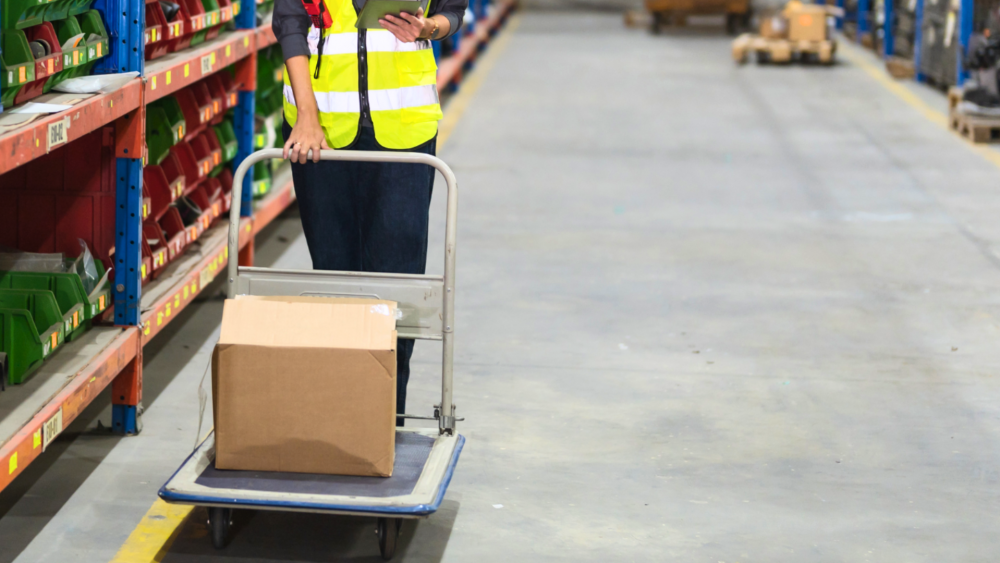
Conclusion: A good trolley means smooth, agile, and safe operations
Don't let an ordinary trolley become a bottleneck in your work! In many cases, delays, loud wheel noise, falling items, or even damage during transport all stem from choosing the wrong trolley.
Buying a good trolley is not just about a low price or a cool-looking design; it's an investment in a tool that saves time, conserves effort, and increases efficiency for every moving task—whether in a factory, in a shop, or right in your own home.
7-point checklist before deciding to buy a trolley
- Does the trolley have enough load capacity? – Don't forget to factor in a safety margin.
- Is the material resistant to your environment? – Wet, hot, or heavy-duty use.
- Is it foldable? – If you need flexible storage space.
- Are the wheels suitable for your actual floor or environment?
- The handle must be comfortable to grip and easy to control.
- Are there extra shelves/wire mesh? – Helps make transporting items safer
- Is it worth it in the long run? – Isn't it better to pay more up front but save money over the long haul?
Final tips
- Test push it before buying, if possible
- Choose a shop with genuine reviews and clear after-sales service
- Don't forget to check the product warranty
Finally... A good trolley shouldn't just roll — it needs to roll smoothly, be durable, and truly make your work flow seamlessly!