


 EN
 ไทย


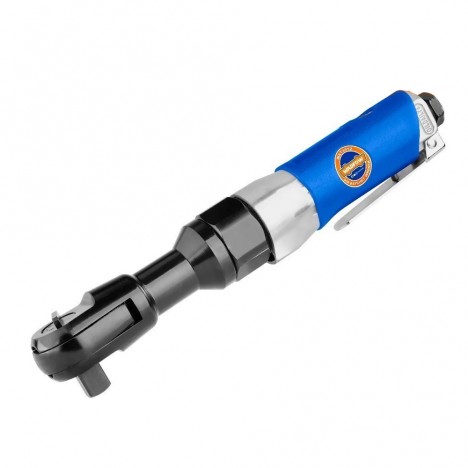
Customers Also Purchased



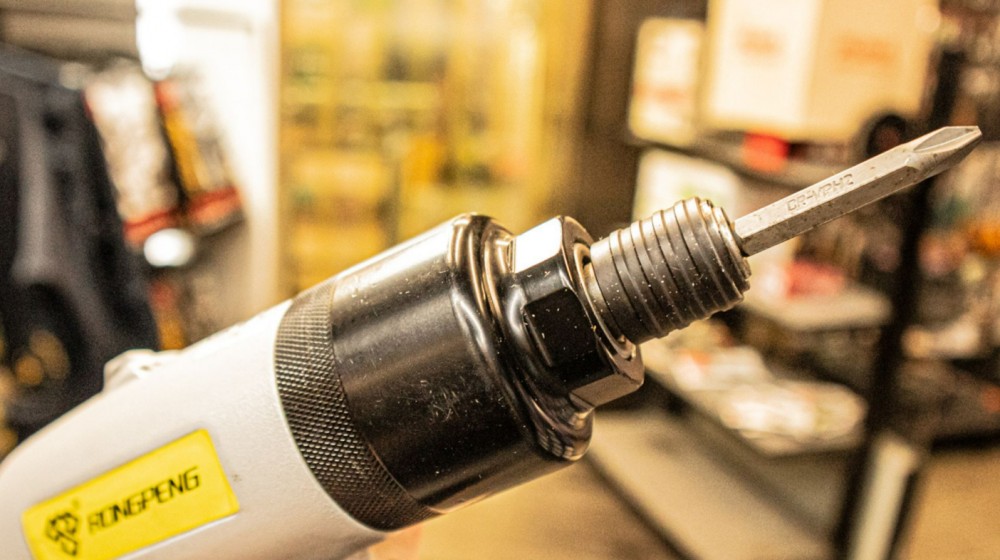
Due to the operational limitation of needing a connection to an air compressor, many may wonder: does an air screwdriver really save time? Or is it just a tool that looks cool but performs no differently than an electric screwdriver? This article will dive deep into air screwdrivers, explaining their operating principles, key advantages, precautions, comparisons with other tools, and guidelines for choosing the right one for general handymen, professional technicians, and assembly line operators—so you can decide with confidence whether an air screwdriver is a must-have tool in your inventory.
Getting to Know Air Screwdrivers First
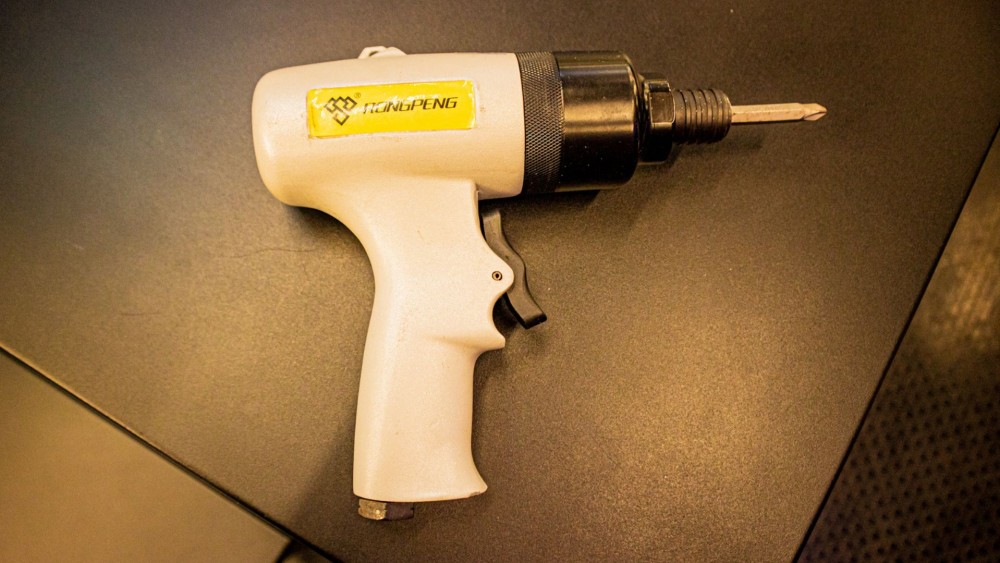
An air screwdriver (Pneumatic/Air Screwdriver) is a tool that uses compressed air from an air pump or compressor as power to drive the bit and screwdriver tip for tightening or loosening screws. The pneumatic power is delivered through an air hose into the internal mechanism of the air screwdriver, generating strong and fast rotation. This differs from electric screwdrivers that rely on battery or mains power, which may face limitations in operating time, dropping power as the charge depletes, or requiring downtime due to heat buildup.
Air screwdrivers have thus gained widespread popularity in the industrial sector, particularly on production lines where numerous screws must be tightened within a short time—such as electronics assembly plants, electrical appliances, automotive, flat-pack furniture, and businesses prioritizing yield and assembly consistency. Air screwdrivers are considered essential tools that boost manufacturing efficiency, reduce screw-driving time at each point, and ease the burden on operators from repetitive manual fastening.
Key Features of Air Screwdrivers
- Uses pneumatic power that is strong and consistent, never fading even during continuous use
- Features very high rotational speed, allowing fast screw driving
- Lightweight compared to electric screwdrivers
- No issues with heat buildup from a motor
- Easy to repair due to uncomplicated internal components
Air Screwdrivers and High-Volume Fastening Tasks
When it comes to fastening high volumes of screws—such as assembling 100 tables in a day or installing 2,000 screws on automotive parts within a few hours—using a manual screwdriver or a standard electric screwdriver may be too slow and can cause operator fatigue or errors from exhaustion.
Conversely, air screwdrivers meet these demands exceptionally well, as they can fasten screws quickly, precisely, and continuously without worrying about battery drain or motor overheating.
Reasons Why Air Screwdrivers Save Time
- Continuous high torque: Torque derived from pneumatic power is more consistent than electric power, allowing screws to be driven tightly and quickly in continuous operation.
- No waiting for battery charges: Air screwdrivers run without time limits as long as there is air supply, unlike cordless screwdrivers that require downtime for recharging.
- Lightweight, reduces fatigue: Users can hold and operate them for extended periods without hand strain.
- Fast response: Once triggered, an air screwdriver responds instantly with zero delay, enabling fast and precise work.
Air Screwdriver Comparison with Other Tools
To give you a clearer picture of air screwdrivers and their suitability for various types of tasks, let's compare air screwdrivers with other widely used and well-known screw-driving tools, such as electric screwdrivers and manual screwdrivers.
Air Screwdriver vs Electric Screwdriver
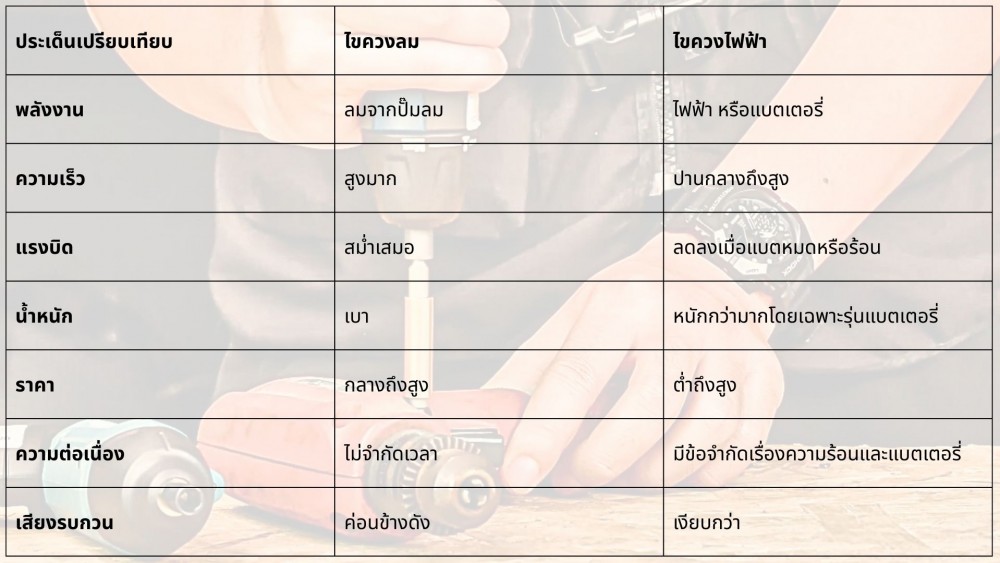
When comparing an air screwdriver to an electric screwdriver, there are several aspects to consider in detail. Starting with the power source, an air screwdriver uses compressed air from an air compressor, delivering consistent torque without battery-drain issues. In contrast, an electric screwdriver relies directly on electrical power or a battery, which may cause torque to drop during continuous use or when the battery is running low. The speed of an air screwdriver is generally much higher, making it ideal for continuous, high-speed screwdriving. Electric screwdrivers offer moderate to high speeds, depending on the model and power output.
In terms of weight, air screwdrivers tend to be lighter, especially compared to electric screwdrivers with built-in batteries that add significant bulk. This factor directly affects operator fatigue during extended, continuous operation.
Regarding price, air screwdrivers range from mid to high tier, especially when factoring in the cost of an air compressor. Electric screwdrivers, on the other hand, range from budget-friendly options to high-end professional models.
Another crucial factor is continuous operation. An air screwdriver can run indefinitely as long as there is an adequate air supply, while an electric screwdriver faces limitations regarding heat buildup and battery run-time per cycle. Lastly, regarding noise levels, air screwdrivers are louder due to the air compressor, which is generally louder than electric tools, whereas electric screwdrivers operate more quietly, making them well-suited for environments that require low noise.
Air Screwdriver vs Manual Screwdriver
Compared to a manual screwdriver, an air screwdriver saves an immense amount of effort and time, especially during repetitive, high-volume screwdriving tasks such as furniture assembly, circuit board assembly, or metal structure installation. The rapid speed of an air screwdriver enables operators to work continuously without pausing to rest or swap tools. Furthermore, consistent torque from compressed air ensures screws are tightened properly, reducing the risk of damage from under- or over-tightening—a common problem with manual screwdrivers or even budget electric screwdrivers.
On the other hand, manual screwdrivers are suitable for small, delicate tasks such as repairing small appliances, assembling toys, or disassembling components where tactile feedback is essential to regulate tightening force. However, for heavy-duty, high-volume tasks such as driving rows of screws on a production line, manual screwdrivers fall short; they cause operator fatigue, increase the risk of repetitive strain injuries (RSI), and take vastly more overall time than using an air screwdriver.
Therefore, when considering workload volume, required speed, and torque precision, an air screwdriver is specifically designed to handle tasks at a scale that manual screwdrivers simply cannot match—particularly in high-efficiency environments such as industrial factories, maintenance workshops, or for professional tradespeople working under tight deadlines on site.
Things to Consider Before Choosing an Air Screwdriver
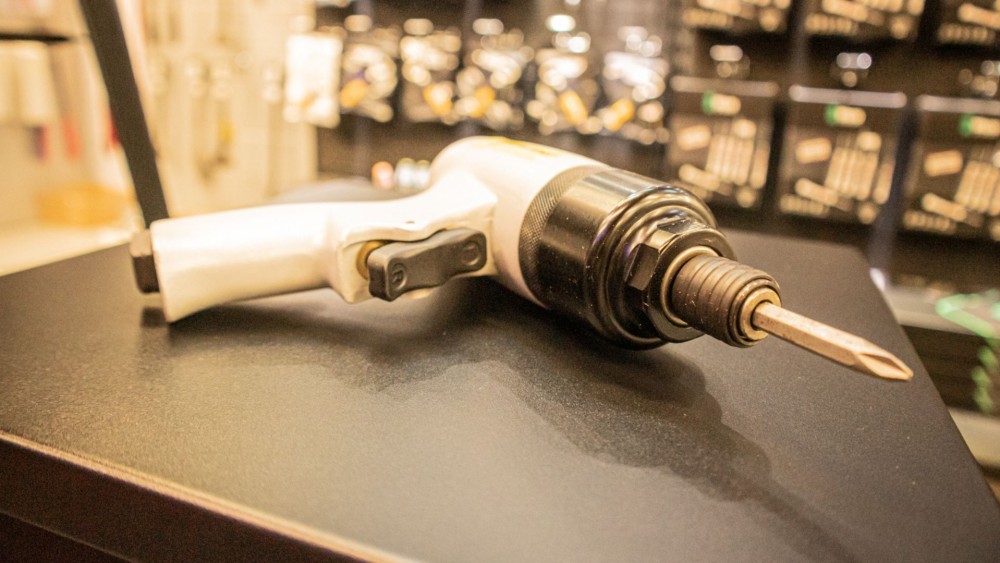
Although air screwdrivers are ideal for driving large volumes of screws, there are several factors to consider before deciding to use one:
- Requires a sufficiently powerful air compressor (recommended 90 PSI or higher)
- Should have an air filter system and lubricator to extend tool life
- Relatively loud; should be used in areas where it will not disturb others
- Not suitable for ultra-delicate tasks, such as micro-electronics
Air Screwdrivers and Increasing Production Line Efficiency
In manufacturing plants with assembly lines, using air screwdrivers significantly boosts production efficiency because torque and speed can be set precisely to standard specifications. Air screwdrivers equipped with an automatic shut-off clutch, which stops rotation once the target torque is reached, ensure uniform quality across all workpieces, reduce human error, and help the assembly process keep pace with the production conveyor seamlessly—without wasting time readjusting torque or retesting as with other tools.
Adopting air screwdrivers also helps reduce worker fatigue, as the lightweight body allows operators to work continuously for long periods without sacrificing accuracy. It also minimizes the risk of repetitive strain injuries (RSI), a common issue on traditional assembly lines. Additionally, air screwdrivers reduce training time for new staff thanks to their straightforward, uncomplicated operation that can be learned quickly—unlike manual screwdrivers or electric models that require manual torque modulation or studying complex settings.
Conclusion
If you are wondering whether an air screwdriver truly saves time, the answer is definitely yes. Especially for tasks that involve driving a large number of screws and repetitive operations in a short period, an air screwdriver can make workflows fast and smooth, reducing time lost to manual fastening or waiting for cordless screwdrivers to recharge. In addition, it reduces the risk of errors caused by operator fatigue from prolonged repetitive work. When the fastening torque is consistent, the resulting work quality remains uniform, minimizing downstream issues like dropped screws, loose screws, or uneven torque across fastening points.
Although air screwdrivers offer numerous advantages, selection should not be based on speed alone. Users should also take various factors into account, such as the budget for accessories, as well as noise levels that might impact other workers in the vicinity.
If you are looking for a tool to elevate team efficiency, boost productivity, and reduce time costs, air screwdrivers is an option well worth serious consideration. With its speed, precision, and operational durability, this tool will become an essential asset in production workflows ranging from everyday tradesmen to industrial manufacturing plants.