


 EN
 ไทย


Customers Also Purchased

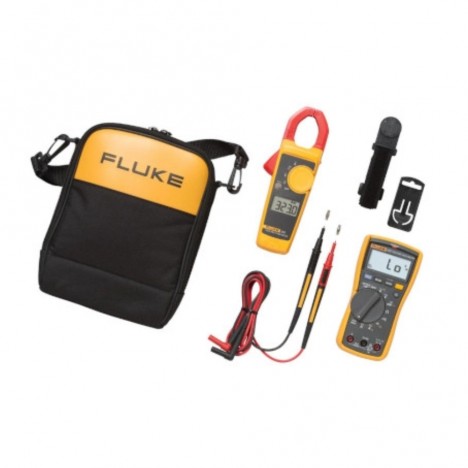

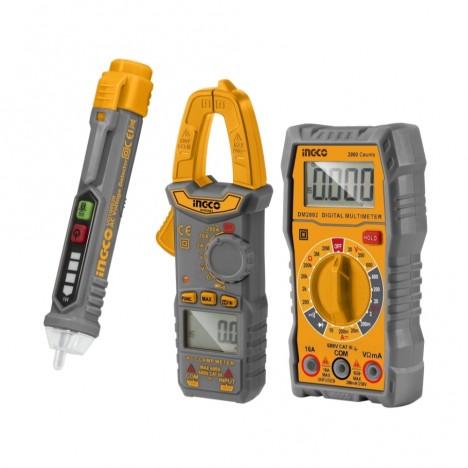

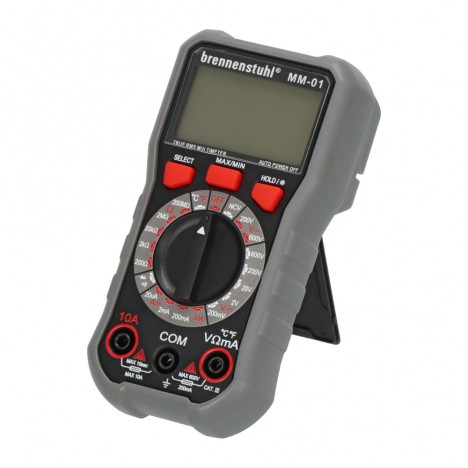
Have you ever wondered why sometimes when using Multimeters to measure current or voltage in certain electronic devices or machinery—such as inverters, variable-speed motors, or modern appliances with switching power supplies—the readings from some multimeters seem inaccurate, consistently measuring “lower than actual” or “higher than actual”? That is because the electrical waves emitted from these devices are not standard sine waves.
This is precisely where the “True RMS” function in high-quality multimeters plays a crucial role. It can capture distorted waveforms and deliver measurements that are as close to reality as possible. If you wonder what True RMS is and why it makes some multimeter models significantly more expensive than others, this article has the answers.
1. Understanding "Waveforms" in Electrical Systems
1. Sine Wave
This is the waveform typically found in standard residential and commercial electrical supplies. For sine waves, standard multimeters can calculate values quite accurately.
2. Non-Sinusoidal Waveforms
These are waveforms that might be distorted by inverters, motor speed controllers (VFD – Variable Frequency Drive), switching devices, or modern electronic circuits that generate PWM signals, etc., which regular multimeters cannot accurately calculate because they are designed only for sine waves.
2. The Meaning of RMS and True RMS
2.1 Basic RMS
RMS Stands for Root Mean Square which is a method for calculating the power-based average value of an electrical signal; in other words, finding the "average electrical energy" over a period of time. The advantage of RMS is that it can convert signals with negative values (such as AC waveforms) into numbers that accurately represent "real energy".
2.2 How is True RMS Different?
- Multimeters Standard (non-True RMS) often use the Average Responding method to process values, based on the assumption that the electrical waveform is a relatively stable sine wave.
- When encountering distorted waveforms, such as complex waves with sharp peaks or clipped sections (Clipped Sine Wave), direct-averaging devices will yield highly inaccurate readings.
- However, True RMS takes numerous samples of the wave over short periods, then calculates the power energy (squaring → averaging → square rooting), thus achieving values that are closest to "reality" even if the electrical wave is not a pure sine wave.

3. Operating Principle
1. Sampling (Data acquisition)
- The multimeter samples signal values at split-second intervals, such as every 1/10,000 of a second (depending on specifications).
2. Squaring
- Values obtained from sampling are squared to turn negative portions into positive values (since AC power alternates between positive and negative).
3. Mean (Average)
- Takes the squared values to calculate the average over a specified period.
4. Root (Square root)
- The final step is taking the square root to obtain the actual True RMS value.
In the real world, electrical signals in industrial applications—such as motors, inverters, or various switching circuits—naturally have waveform clipping, distortion, or noise. As a result, the RMS value obtained from traditional average responding methods may not accurately reflect the actual power consumed.
4. Why is a True RMS Multimeter Essential?
1. Accuracy with Distorted Waveforms
For standard AC waveforms or household electricity, a conventional multimeter might handle the job well enough. However, when waveforms are distorted, or shaped as square waves, pulses, or complex signals, having True RMS helps reveal the actual electrical power.
2. Reduces the Risk of Misdiagnosis
In certain tasks, such as repairing complex electronics or taking measurements on a production line, an incorrect electrical measurement could waste time replacing spare parts that are not actually damaged, or even cause accidents.
3. Industrial Applications
In systems with inverters (VFDs – Variable Frequency Drives) or non-linear loads (such as computers and LED lamps), electrical readings are often distorted. Obtaining accurate values helps you design circuits or optimize systems appropriately.
5. Why True RMS Multimeters Cost More
1. Complex Hardware and Software Architecture
They require high-speed processor circuits for sampling and waveform analysis, as well as high-grade noise-filtering systems.
2. Sensor Quality and Safety Standards
Leading brands such as Fluke, Hioki, Kyoritsu, and others comply with CAT III and CAT IV standards to handle high voltages and effectively protect against power surges, which increases production costs.
3. Other Special Features
True RMS multimeters often come with measurements for Frequency, Capacitance, Temperature, or even Bluetooth / USB connectivity features for data logging.

6. What Happens If You Use a Standard Multimeter Instead of True RMS?
1. Measurements May Be Inaccurate
When encountering electrical currents with high distortion, you may get readings that are significantly lower or higher than actual values.
2. Incorrect Troubleshooting
If you are an electrician or engineer, you might make the wrong decisions when modifying or fixing circuits, causing unresolved issues or damaging other components.
3. Safety Risks
When voltage or current readings are inaccurate, circuit breakers might not function properly, or overloads may occur unnoticed.
7. Buyer's Guide for True RMS Multimeters
1. Look for Reliable Brands
Such as Fluke, Hioki, Kyoritsu, UNI-T, or other brands that have solid reviews and after-sales warranties.
2. Budget and Features
- If you do not need to measure many parameters, a mid-range model priced around 2,000–5,000 THB may be sufficient.
- However, if you need advanced features such as measuring temperature, capacitance, or PC connectivity, you should opt for a higher-end model.
3. Inquire About Warranty and After-Sales Service
Because measuring instruments can be damaged if used incorrectly, having a service center or support team provides greater peace of mind.
4. Check CAT Safety Ratings
- CAT II: General use, such as household appliances.
- CAT III: For buildings or medium-sized industrial facilities.
- CAT IV: For outdoor field work or high-voltage utility systems.

8. Examples of Common Issues People Encounter
"The measured value differs greatly from the stated specifications."
- This is often caused by signals with harmonics or non-sinusoidal waveforms.
- Using a True RMS multimeter is necessary to obtain accurate measurements.
"Why do cheap measuring tools have such high measurement errors?"
- Standard devices may use averaging methods. If you're not sure which type your device is, check the specifications or look for the "True RMS" symbol on the unit.
"Is it always necessary to buy an expensive True RMS meter?"
- If your work frequently encounters distorted signals—such as from inverters, variable frequency drives, or LED lights—or if you require high precision, investing in a reliable True RMS meter is recommended.
- However, for general household use, such as measuring 220V mains electricity, checking batteries, and working with minimally distorted waveforms, a standard multimeter may be sufficient.
9. Conclusion: Is True RMS Worth It?
- If you only need to measure electricity with standard sine waves (such as basic household power or entry-level DIY projects), Multimeters a standard one may be sufficient.
- However, if you deal with distorted wave signals or work in industrial and advanced electronics fields, choosing a True RMS multimeter provides significantly higher accuracy. It is an investment that saves time, reduces risks, and prevents losses caused by inaccurate measurements.
When choosing to buy Multimeters next time, don't forget to evaluate the type of work you will encounter. If it involves distorted power waveforms, inverters, or industrial systems, investing in True RMS will definitely meet your needs. Even with a higher price tag, you will gain safety, precision, and additional features that make electrical measurements easier than ever.
We hope this article helps everyone understand the importance of True RMS and choose a multimeter with greater confidence! If you have any questions or want to ask more about choosing a True RMS multimeter or electrical measurement techniques, feel free to leave a comment or ask anytime!