


 EN
 ไทย


Customers Also Purchased


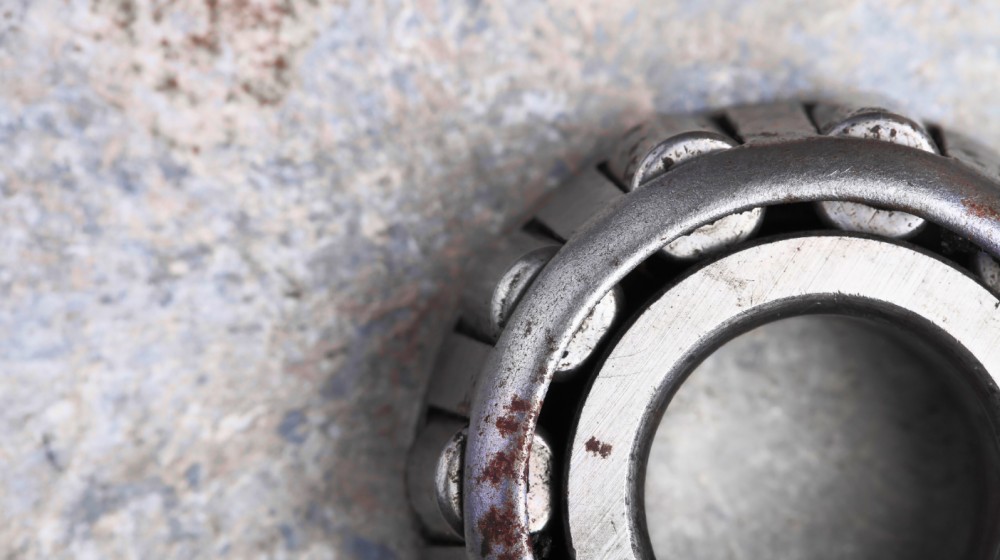
Ball bearing (Bearing) is a critical mechanical component that reduces friction and supports loads during the rotation of various parts, from motors and industrial machinery to vehicles. If bearings are subjected to loads exceeding their design specifications, or if installation and maintenance are improper, this inevitably induces 'stress' that leads to premature bearing failure. This article explains Why 'Stress' Affects Bearing Service Life and dives into engineering analysis with FEA (Finite Element Analysis) to predict failure and extend bearing service life.
What is Stress and how does it relate to bearings?
1. Compressive Stress or Tensile Stress
- When a load is applied to a bearing, such as compressive force from a shaft or tensile force from other rotating components, slight deformation occurs within the bearing material.
- If that force exceeds what the material grade can withstand, cracking or wear will occur, shortening the bearing's service life.
2. Torsional Stress
- In some systems, there may be high torque or rapid changes in rotational direction, subjecting the bearing to alternating loads.
- If not designed to handle that torque, accumulated stress will accelerate micro-cracks in the bearing, which can then spread into major damage.
3. Impact Stress
- Occurs when a bearing receives a sudden shock load, such as shaft impact, severe vibration, or emergency stops during production processes.
- Impact stress can rapidly cause bearing surface damage (spalling).
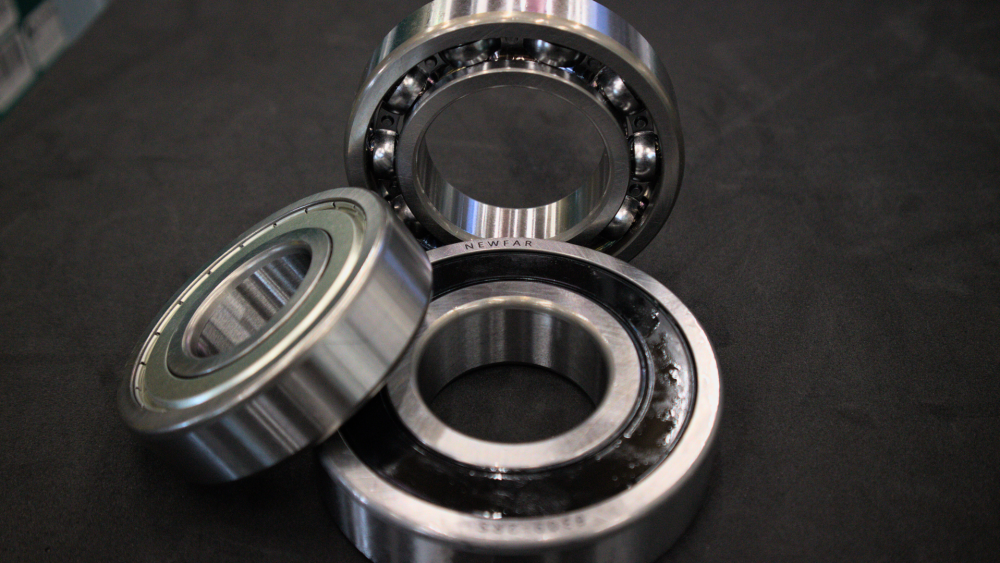
Analyzing 'Stress' with FEA (Finite Element Analysis)
FEA or Finite Element Analysis This is an engineering simulation technique that divides a component (bearing) into a fine mesh and calculates the distribution of forces and stresses at each point. This helps engineers accurately analyze and predict failures before actual deployment.
1. Key steps in performing FEA for bearings
- Create a 3D model: Use CAD software (such as SOLIDWORKS, Autodesk Inventor) to build a bearing model matching exact actual specifications.
- Define Boundary Conditions: Input load data such as compressive force, torque, rotational speed, or temperatures the bearing will encounter.
- Set Material Properties: Elastic Modulus, Yield Stress, and Hardness of the bearing material, such as steel, ceramic, or composite materials.
- Run the Simulation: The software calculates stress distribution across each node or mesh element.
- Review results: Observe areas of highest stress concentration or points exceeding the material's yield strength.
2. Insights gained from FEA
- Identifying "critical areas" that could potentially cause bearing failure
- Roughly calculate operating lifespan (Fatigue Life) considering alternating loads, rotational speeds, and environmental conditions.
- Design improvements, such as resizing, increasing or decreasing the curvature of the bearing raceways, changing materials, or switching lubrication systems to prevent damage.
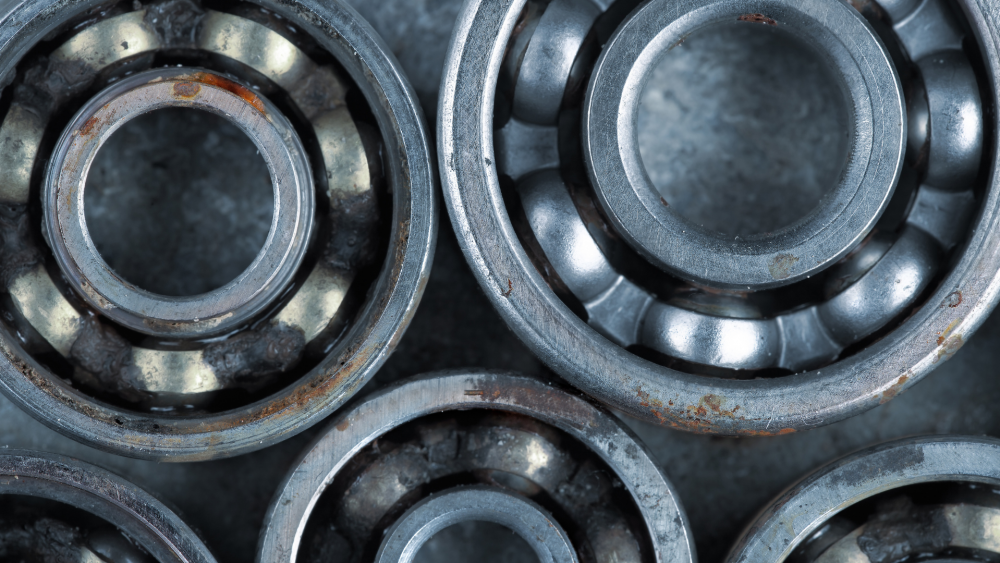
Examples of causes and effects of stress on bearing service life
1. Overloading
- If the bearing is incorrectly specified and operated continuously beyond its load rating, the stress will exceed the safe limits of the material.
- Fatigue builds up, leading to cracks and pitting on the contact surfaces until it can no longer rotate smoothly.
2. Misalignment
- When the shaft or the housing where the bearing is installed is out of alignment, stress is distributed unevenly, causing the edges of the bearing to bear more load than other areas.
- In the long run, the bearing overheats, generates abnormal noise, or deteriorates faster than normal.
3. Impact force from improper installation (Improper Mounting)
- Sometimes using a hammer or installing bearings without dedicated equipment (Bearing Mounting Tools) causes dents or structural cracks.
- The localized stress generated at that point accelerates deterioration.
4. Improper lubrication (Improper Lubrication)
- If the bearing lacks lubrication or the wrong type of lubricant is used, friction immediately increases, generating hot spots and high stress.
- Bearing service life decreases rapidly.
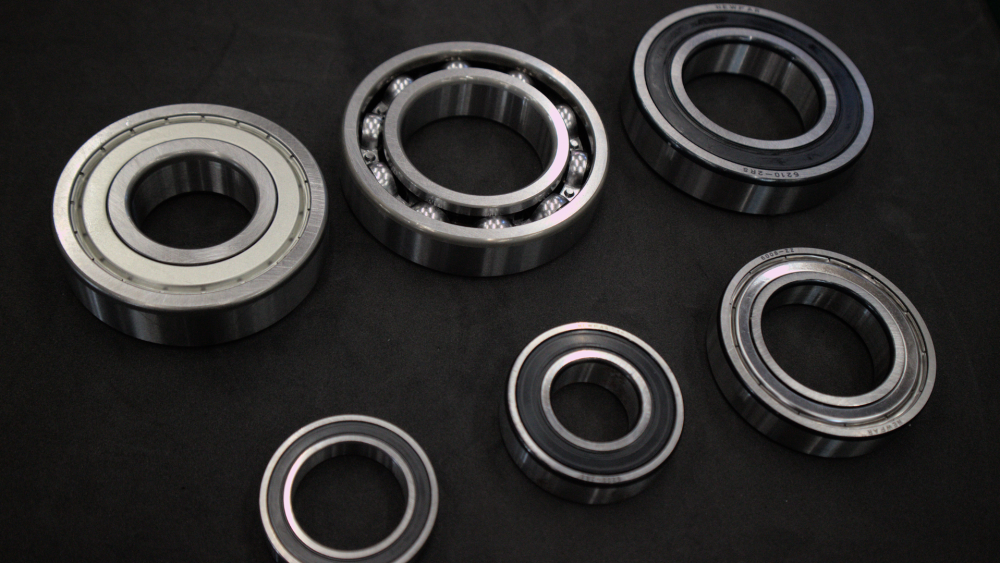
Managing stress to extend bearing service life
1. Choose the correct bearing specifications
- Consult the bearing brand's catalog to select the appropriate type for your load and rotational speed.
- Check the dynamic load rating to ensure it can withstand actual operating conditions.
2. Design and install according to standards
- Measure shaft and housing alignment to ensure they are parallel or concentric.
- Use dedicated tools for installing and removing bearings to reduce the risk of impact damage.
3. Plan lubrication and maintenance
- Use grease or lubricants according to the manufacturer's recommendations.
- Implement predictive maintenance to detect wear signals or abnormal vibrations before major issues occur.
4. Supplement with FEA analysis before actual use
- For new projects or machinery upgrades, FEA simulation helps prevent long-term failures.
- Adjust geometries or select new materials based on FEA results.
Conclusion
Ball bearing are crucial components that support loads in machinery. However, we often overlook analyzing "stress" factors, which are the primary cause of shortened bearing lifespan. Conducting analysis using FEA (Finite Element Analysis) will help us visualize the overall stress distribution within the bearing and identify risk areas before actual operation. Whether in industrial plants, business owners, or mechanical engineers, properly understanding and managing stress will help extend bearing service life, reduce maintenance costs, and sustainably improve production efficiency.
Tip: Beyond the bearing itself, choosing the right grease, proper installation, and monitoring with vibration and thermal detection technology also play a part in preventing excessive stress issues.