


 EN
 ไทย


Customers Also Purchased


What is a Reflective Vest?
Highlights of Reflective Vests
- Clearly visible at night: With reflective strips that bounce light back toward its source, the wearer remains prominently visible even in the dark or in low light, which is extremely beneficial for those working at night or in heavy traffic areas.
- Lightweight and easy to wear: Reflective vests are usually made of mesh or polyester fabric that is lightweight, breathable, and not constricting, allowing them to be worn all day without feeling tired or uncomfortable.
- Affordable: Reflective vests come in a variety of grades and price points, from basic models suitable for general work to premium models with special features like water resistance, dust resistance, or storage pockets, making it easy to choose according to your budget and requirements.
- Suitable for various occupations: Whether for electricians, construction workers, security guards, transport drivers, municipal workers, runners, or night cyclists, reflective vests cater to every environment and work style.

Why Wear a Reflective Vest?
Electrician
- Often working at heights, near roadways, utility poles, or high-traffic routes where low-light conditions prevail—especially during early mornings or nights—putting workers at high risk of accidents.
- Risk of accidents from vehicles that may fail to notice workers in time, such as speeding passing cars or transport vehicles on site, which could lead to severe hazards without reflective gear to enhance clear visibility.
Builder
- Work areas often feature heavy machinery, such as backhoes, loaders, compactors, or cranes, which are constantly in motion. This poses a high risk to workers walking or working nearby if they are not clearly visible from a distance.
- Additionally, construction sites often have dust, smoke from welding or cutting materials, and visual obstacles such as debris, plywood, or steel frames that obstruct visibility. This creates blind spots where machine operators may not see workers. It is therefore vital for construction workers to wear reflective vests to enhance visibility and reduce the risk of collisions or accidents.
Security Guards
- Stationed at posts in low-light areas such as building entrances, parking lots, or roadsides, which often have poor visibility conditions, especially at night or during rain when visibility drops significantly.
- It is essential for road users or passersby to see them clearly so they can slow down or avoid them in time. They also have duties such as controlling traffic, communicating with drivers, or ensuring the safety of people and property in the area they oversee. Having a reflective vest that is visible from a distance is therefore extremely important in this profession.
Anyone working outdoors or in hazardous areas should not overlook the importance of reflective vests, because "visibility" is the first line of safety!
Standards to Know Before Buying
What are ANSI/ISEA and EN ISO?
These standards specify the retroreflective performance levels of materials used to manufacture reflective vests, based on key factors such as the area of reflective tape on the vest, visibility distance, wash and wear durability, and retroreflection measurements under various conditions like entrance angles and background garment colors. These standards assure buyers that the reflective vests they choose have tested properties proven to enhance safety in practical use.
- ANSI/ISEA 107: A U.S. standard that specifies visibility levels for high-visibility safety apparel, categorized into different types based on use, such as reflective vests for general work, roadway work, or emergency response. It covers reflective materials, background colors, and the minimum area requirements of reflective tape for each class.
- EN ISO 20471: A European standard focused on wearer visibility in low-light environments. It specifies requirements for reflective materials, wash durability, tape placement design, and the minimum required area of reflective material on the garment to ensure that the wearer is visible from a distance at all angles.
service life
Generally, reflective tape degrades in performance after about 25–50 washes, depending on several factors such as material quality, frequency of use, washing method (hand or machine wash), and drying conditions—for instance, line drying in direct, harsh sunlight can accelerate degradation. Using a wash bag and avoiding corrosive detergents helps extend the life of the reflective tape. Performance should be checked monthly; if the reflective tape appears dull or no longer reflects light clearly, it should be replaced immediately.
> What are reflective materials made of, and which type is suitable for reflective vests?

How does the color of a reflective vest matter?
- Hi-Vis Lime Green Reflective Vest: A high-luminance color designed to provide clear visibility in all environments, especially at night or in low-light areas such as roadside work zones or under bridges. This color is highly responsive to the human eye, particularly when reflecting vehicle headlights, effectively reducing the chance of accidents caused by poor visibility. It is also popular among professions requiring maximum safety, such as electrical utility workers and road maintenance crews.
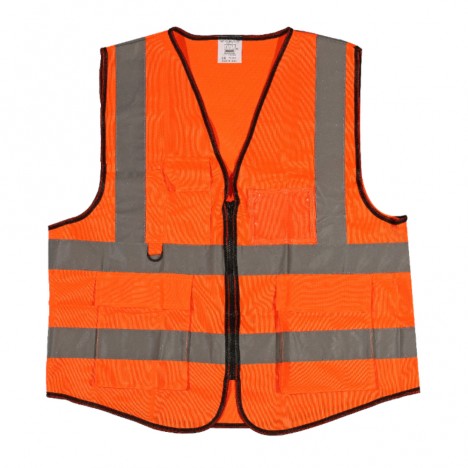
- Hi-Vis Orange Reflective Vest: Another popular color for field work. Psychologically, this color evokes a sense of caution and warning, making it ideal for areas with obstacles or complex surroundings, such as construction sites filled with machinery, dust, and loud noise. Orange contrasts well with the environment, making workers stand out and easy to spot from a distance during the daytime, and it performs effectively in areas with bright natural sunlight, such as outdoors at midday.
Which Color Suits Whom?
- Electricians: Hi-Vis Lime Green Reflective Vest – Excellent visibility day and night. Because lime green is bright and eye-catching, it enhances visibility when working in low-light conditions, such as under utility poles or on road shoulders, and also contrasts well against dark backdrops in typical work environments.
- Construction Workers: Hi-Vis Orange Reflective Vest – Distinctly contrasts with dust and machinery. Orange is rarely found in nature and has high color intensity, making it easy to distinguish in areas with dust, construction debris, or steel structures. It provides even greater long-distance visibility in daylight or bright sunlight.
- Security Guards: Both colors can be used depending on the work environment. If stationed in parking lots or on busy roads with heavy traffic, lime green is preferable for its superior visibility in the dark. However, if working in front of facilities or near construction zones with varied materials and colors, orange may offer better contrast, depending on the environment and shift hours.
Conclusion
Choose reflective safety vests suitable for the profession and job risk level Certified by safety standards such as ANSI or EN ISO Distinct colors contrasting with the work environment Comfortable, durable, and cost-effective for long-term use Maintain properly so the reflective strips stay effective
>>> Choose Reflective Vest More