


 EN
 ไทย



Customers Also Purchased
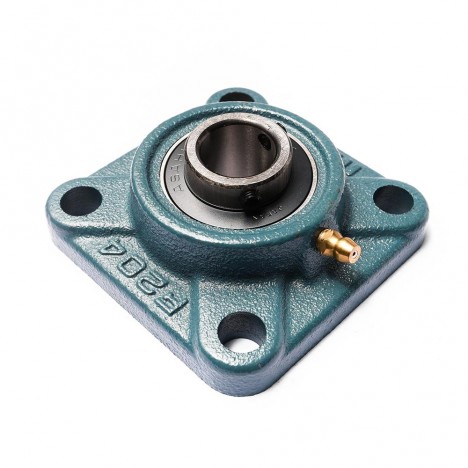
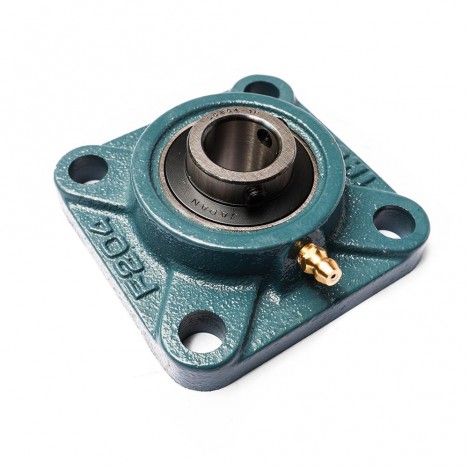
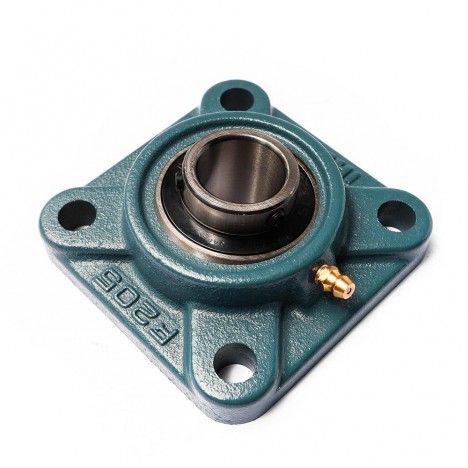
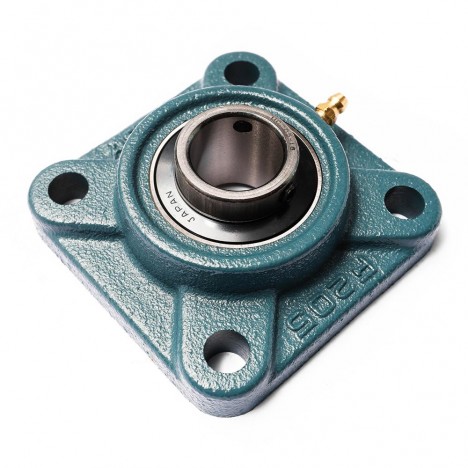
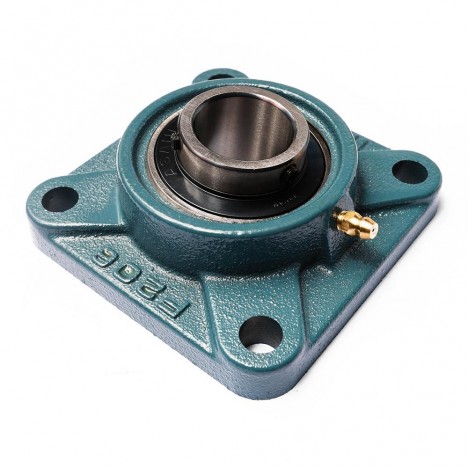
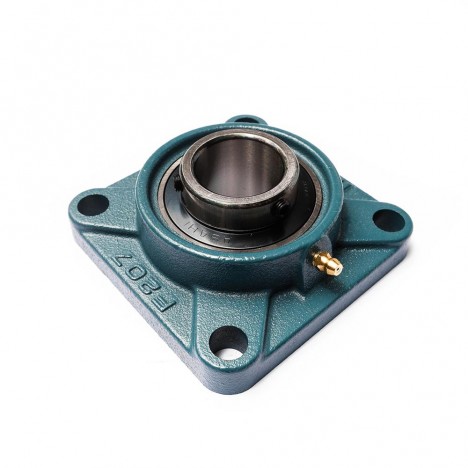
When considering shaft support solutions (Shaft) for continuous rotation, one of the most popular choices is “Pillow block bearings” (Pillow Block Bearing) pillow block bearings, because they are easy to install, simple to maintain, and less expensive than more complex shaft support systems. However, selecting the right size or model is crucial for strength, durability, and overall service life. This article will help you understand how to read codes such as UCP, UCFL, UCF, etc., as well as the key factors to consider when choosing the pillow block bearing that truly fits your needs.
1. Getting to Know Pillow Block Bearings: A Brief Overview
A pillow block bearing consists of 2 main parts:
- Insert Bearing: Insert Bearing: Features an extended inner ring on the sides and includes a shaft-locking mechanism, such as set screws or an eccentric locking collar.
- Housing: A cast iron or other material structure used to mount the bearing to a base or machine frame, featuring bolt holes or various mounting configurations.
The key feature of Pillow block bearings It is easy to install, accommodates a degree of shaft alignment without requiring complex techniques, and many models come equipped with a grease nipple for convenient maintenance.
2. How to Read UC, UCP, UCFL, UCF Codes… What Do They Tell You?
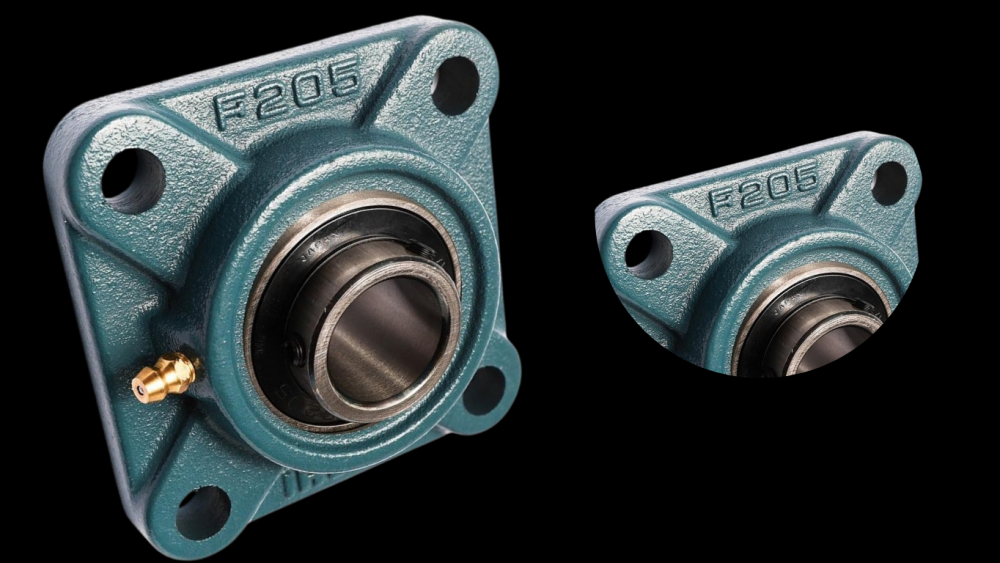
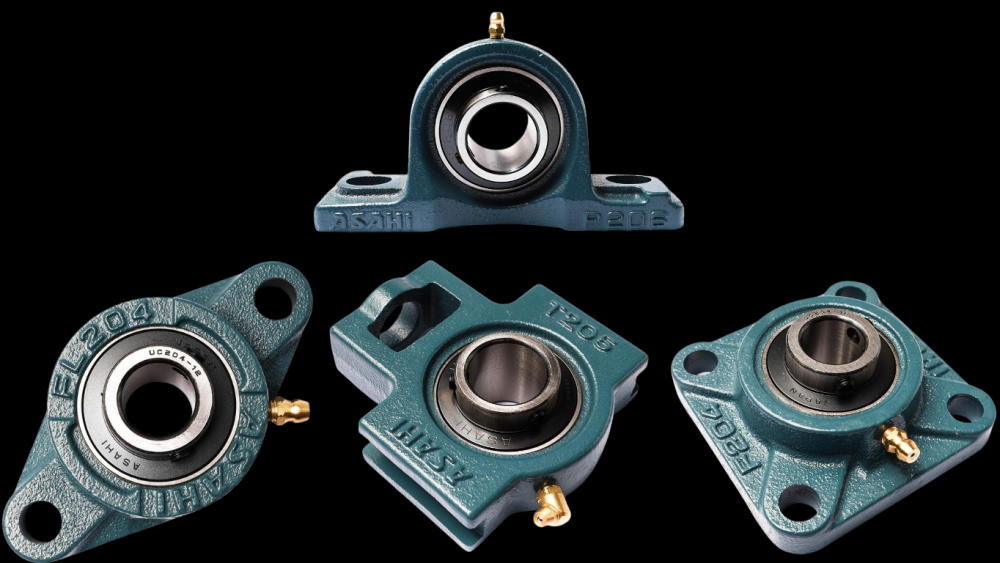
When selecting or checking a pillow block bearing, you will often see codes starting with “UC…” followed by numbers, such as UCP205, UCF204, UCFL207 etc., with the general meanings as follows:
1. UC: An abbreviation indicating that it is an insert bearing designed for use with standard-series housings.
- P = Pillow Block (flat pedestal base) A shape designed with a flat bottom to sit flush on the floor/base.
- F = Flange (square / 4-bolt) A flange-mounted housing.
- FL = Flange (2-bolt) An oval or diamond-shaped flange.
- T = Tapped Base or Take-Up Designed for adjustable tensioning/travel distance.
- There are also other letters that may indicate specific shapes, such as FC, FB, PA, etc.
2. The last three digits (e.g., “205”, “204”, “207”)
- mostly indicate the Bore Diameter
- The number “205” usually means a 25 mm bore diameter, “204” is a 20 mm bore diameter, while “207” is a 35 mm bore diameter, etc. (Depending on manufacturer standards, sometimes 20 means directly 20 mm, or in some models, it must be multiplied by 5)
- UCP205 = Pillow Block mounted bearing, UC series, bore diameter ~25 mm
- UCF204 = Flange Square mounted bearing unit, UC series, bore diameter ~20 mm
3. P, F, FL, T, etc.: The following letter indicates the “Housing shape”
Examples
Note: Some brands may use detailed designations or add special letters; for example, “UCP205-16” may indicate a 1-inch (25.4 mm) bore diameter instead of the standard 25 mm. Therefore, manufacturer specifications should always be checked.
3. Key factors in selecting mounted ball bearings
3.1 Shaft Size
- This is one of the first factors to consider because the insert bearing must fit properly or have a slight interference fit to prevent the shaft from slipping or becoming loose.
- Pay attention to selecting the shaft locking type, such as set screws on the bearing collar or an eccentric locking collar, depending on the application.
3.2 Load
- Each mounted bearing size supports different radial loads and axial loads.
- If the application involves high shock loads, choose a heavy-duty series or upsize as a safety margin rather than using the minimum rated model.
3.3 Speed
- High rotational speeds (RPM) easily generate heat buildup, causing grease degradation and bearing wear.
- Select a model rated by the manufacturer for high speeds, or use high-temperature grease if necessary.
3.4 Environment
- Is there heavy dust, high humidity, salt water, or chemicals?
- You should consider choosing a stainless steel housing or one with effective dust/water seals, as well as planning for appropriately frequent grease replenishment.
3.5 Installation and Maintenance
- Check which housing shape fits the installation space (pillow block, flanged, square, oval).
- Should there be convenient clearance for hands or tools to apply grease?
4. How Do Precision Grades P0, P6, P5 (ABEC) Affect Performance?
In bearing specifications, grades are sometimes specified as P0, P6, P5 (according to ISO standards) or ABEC 1, ABEC 3, ABEC 5 (according to US standards), which primarily refer to internal "precision level" and "clearance".
- P0 (Abec 1): This is the standard grade commonly used in general applications.
- P6, P5 (Abec 3, Abec 5): Higher precision grade, suitable for high-speed applications or where greater shaft stability is required.
- With a higher grade, dimensional tolerance and vibration decrease, but the price typically increases accordingly.
Most pillow block bearing applications typically use standard grades, (P0, Abec 1) as the focus is on ease of installation and applications that do not require as high precision as CNC spindles. However, for high-speed and vibration-sensitive applications, you should move up to P6 or P5 for added stability.

5. Summary Tips for Choosing the Right Pillow Block Bearing
1. Correctly specify the bore diameter and housing shape
Use the code UC, UCP, UCF, UCFL, etc., matching the mounting position and shaft size.
2. Check the loads and speeds involved
For heavy loads or high speeds, choose a bearing size capable of handling the operation and with appropriate grease specifications.
3. Consider the environment
If exposed to excessive dust, water, or moisture, select appropriate seals and housing materials (stainless steel or rust-resistant cast iron).
4. Consider the precision level
For general applications, P0 (Abec 1) is sufficient, but high-speed applications may require P6 (Abec 3) or P5 (Abec 5)
5. Plan for maintenance
Choosing Pillow block bearings Finding the right one is not complicated, but it requires understanding the codes, housing types, and factors such as load, speed, and environment, including the bearing's precision level. When chosen correctly, installation will be smooth, machinery or conveyor belts will operate efficiently, and service life will be extended—ultimately reducing your long-term costs!
A method for regreasing or changing grease according to operating cycles should be established to prevent heat accumulation and wear caused by insufficient lubrication