


 EN
 ไทย


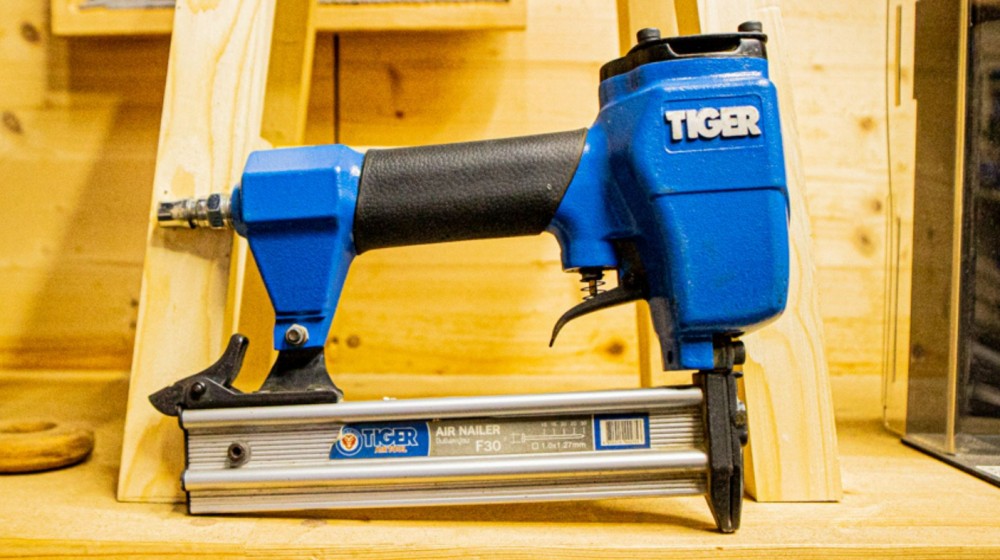
Customers Also Purchased
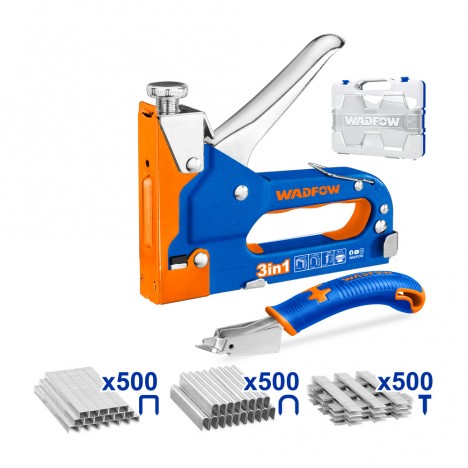


Air stapler Widely used by carpenters, furniture makers, and construction workers due to its convenience, speed, and superior results compared to manual staple guns, or even electric models featuring newer technology. Air nailers and staplers use compressed air from an air compressor to drive staples or nails out of the tool at high speed, allowing rapid and precise fastening into various materials. However, without proper understanding of correct operation, air nailers can cause serious hazards, such as injuries from misfiring or tool malfunctions that compromise safety. Therefore, learning proper operation and adhering to safety precautions are essential to ensure you can work safely and with maximum efficiency.
In this article, we will explore key safety practices at every step of using an air nailer/stapler, including essential precautions and pre-use tool inspections, so you can operate it confidently and with maximum efficiency.
1. Understand the basics of pneumatic nailers/staplers
Before each use of a pneumatic nailer or stapler, users should understand the tool's structure and working principles. Basically, an air nailer operates using air pressure from a compressor to drive nails or staples out of the tool at high speed, enabling fast and precise driving into wood, plastic, or other materials.
Types of pneumatic nailers and staplers
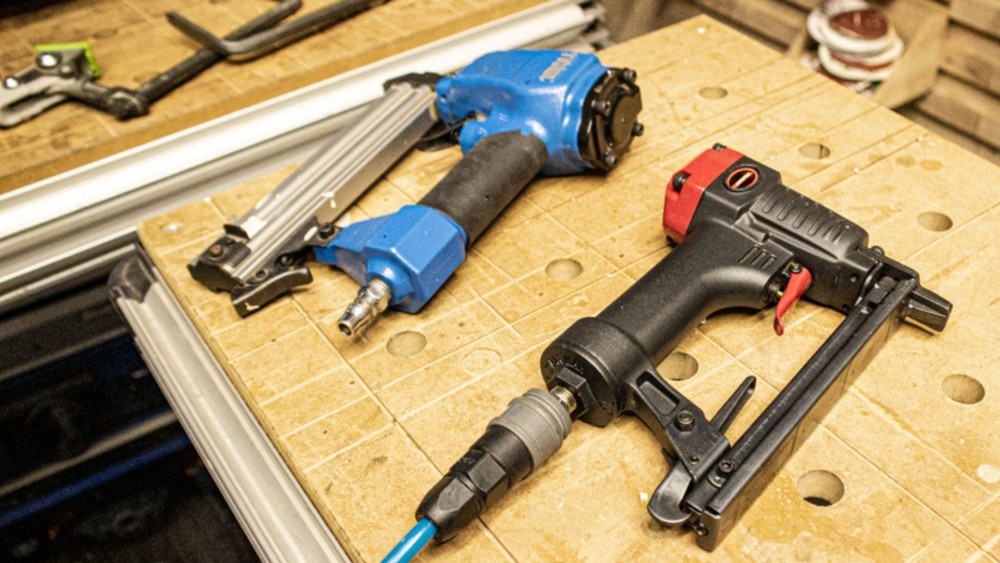
- Pneumatic Brad/Finish Nailer (Single-leg) - An air nailer designed to drive nails flush into materials neatly without leaving large marks. Ideal for interior trim, baseboard installation, window casings, or fastening wood components requiring a seamless finish. This type of work demands high precision, and finish nailers work with small-gauge nails or brads, such as 15–16 gauge, which provide sufficient holding power without damaging the material surface. Using this tool helps get jobs done faster while delivering professional-grade results.
- Pneumatic Framing Nailer / Heavy-Duty Stapler - A heavy-duty, powerful tool used for major construction tasks such as framing, timber house structures, and various structural work. It can accommodate large, long nails (e.g., 2–3.5 inches), significantly reinforcing structural integrity. This type of tool often features selectable firing modes between bump firing and sequential firing, allowing you to adapt to the required task. Typically used with hardwoods or thick materials that require strong holding force, it is an essential piece of equipment for professional carpenters and builders.
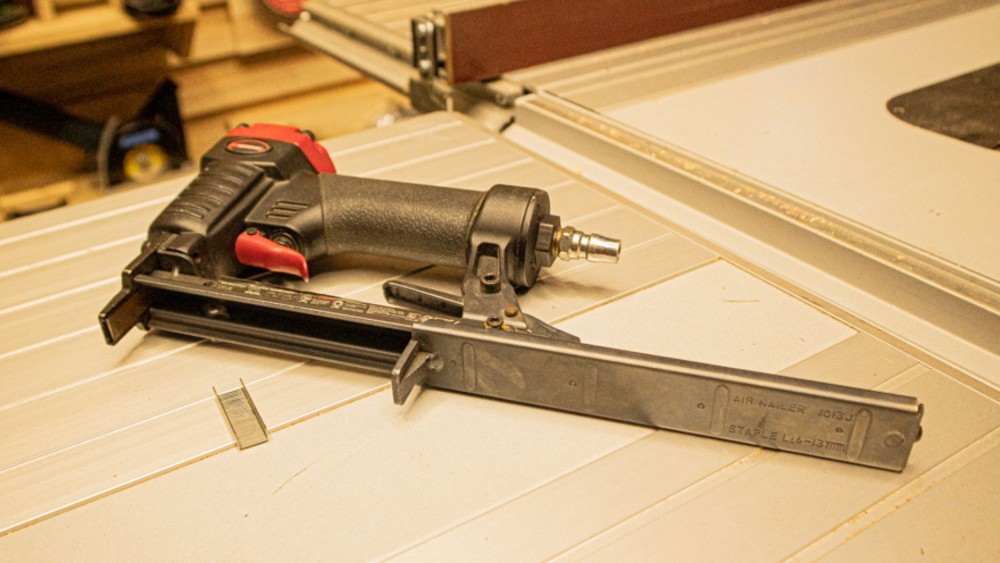
Key components of an air nailer/stapler
- Trigger – Controls the release/discharge of fasteners from the pneumatic tool.
- Nail Guide – The part that contacts the material and directs the firing path.
- Magazine – Used to hold nails or staples ready for firing.
- Safety Mechanism – Prevents accidental firing.
- Air Hose Connector – Connects to the air compressor to supply pressure.
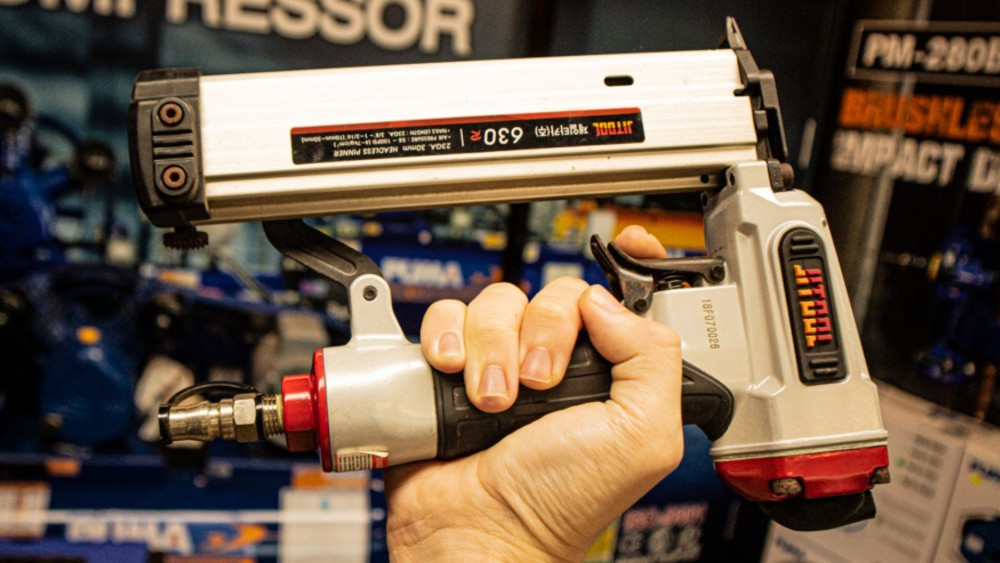
2. Check tool condition before use
Inspecting the tool before use is essential to help prevent accidents and potential damage. Follow these steps:
- Check that the oil in the lubricator line is at an adequate level.
- Check that the air hose and fittings have no leaks or cracks.
- Check that the safety mechanism functions properly and the locking system does not jam.
- Check whether any nails or staples are jammed inside the tool to prevent accidental firing.
- Check the cleanliness of the nail guide and remove any dust or debris that could cause misfires or jams.
3. Wear protective equipment
For safe operation of a pneumatic stapler/nailer, appropriate personal protective equipment should always be worn, including:
- Safety glasses – Protect against debris flying into the eyes.
- Earplugs or earmuffs – Reduce loud noise from the pneumatic nailer to prevent long-term hearing issues.
- Cut-resistant gloves – Protect hands from cuts caused by nails or wood splinters.
- Dust mask – For working in dusty environments, such as woodworking.
- Safety shoes – Reduce the risk of heavy objects falling on your feet.
4. Set the appropriate air pressure
Excessive air pressure can cause nails or staples to shoot through the material and cause hazards, while pressure that is too low may cause nails to not drive in completely. Therefore, air pressure should be set appropriately for the type of work being done. Typically, suitable pressures are as follows:
- Softwood: 60-90 PSI
- Hardwood: 90-120 PSI
- Thin metal: 100-130 PSI
- Heavy construction: 120-150 PSI
5. Work in an appropriate position
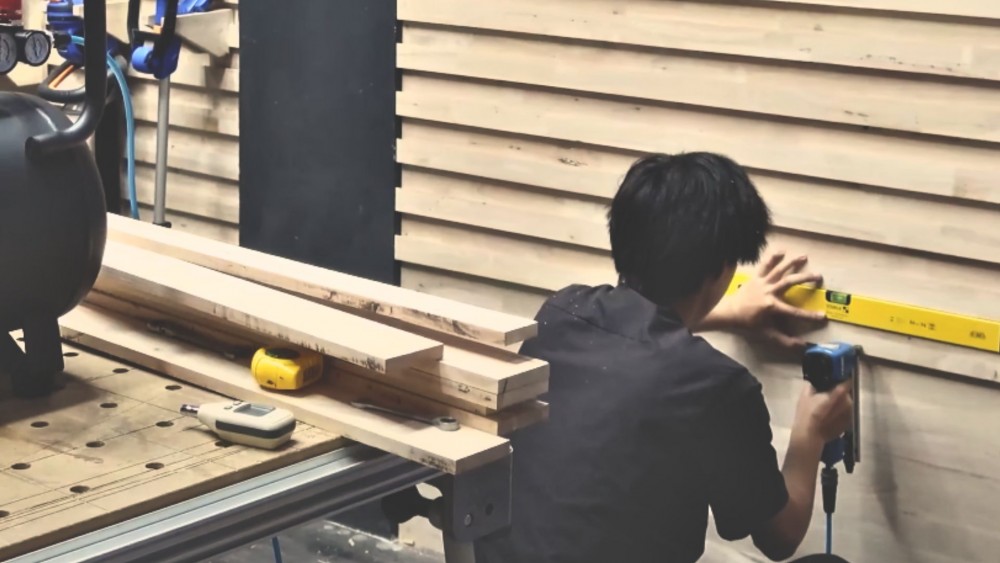
To use an air nailer/stapler correctly, you should be mindful of your working position to prevent accidents and increase work efficiency. Before each firing, make sure the workpiece is held securely and does not wobble or shift easily. Hold the tool firmly and perpendicular to the target surface. Avoid firing at angles that could cause nails to ricochet or punch out through the material. In addition, never point the air nailer at yourself or others, and keep the hand not holding the tool well away from the firing area to reduce the risk of injury. Working in an area with adequate lighting and no obstructions will give you a clear view of where you are firing, reducing the chance of errors.
- Avoid pointing the air nailer at yourself or others
- Keep the hand not holding the tool away from the firing area when holding the material
- Do not operate the air nailer on unstable surfaces or around obstacles
6. Special precautions when using pneumatic nailers/staplers
Pneumatic nailers and staplers have high firing power and can cause injury if used improperly. For maximum safety, observe the following precautions:
- Never let children use an air nailer unsupervised – high air pressure can lead to severe accidents.
- Do not operate the air nailer near flammable materials or in areas with combustible vapors – the tool may produce small sparks that could cause a fire.
- Avoid using the air nailer in extreme heat or cold – improper temperatures can cause malfunctions in the pneumatic system, affecting both performance and tool safety.
- Always read the user manual for your specific model for proper operation – users must understand the features and limitations of each tool to avoid misuse.
- Keep your hands and all parts of your body away from the nose/firing area during operation – to reduce the risk of ricocheting nails or staples.
- Inspect the workpiece before starting – ensure there are no hidden hard materials, such as metal, which could cause nails to deflect back toward you.
- Disconnect the air supply and unload all staples or nails from the tool after every use – to prevent accidental firing when not in use.
Following these precautions will help you operate your air nailer safely, minimize the risk of accidents, and boost work efficiency.
Conclusion
Pneumatic nailers and staplers make work faster and more convenient, but they carry risks if used incorrectly. Safe operation is therefore essential. In addition to improving work efficiency, it also helps reduce the chance of accidents that could harm you or those around you.
Following safety procedures is essential. Start by inspecting the tool before use to ensure that no parts are loose or damaged, which could cause malfunctions. Setting the air pressure appropriately for the type of material being fastened and cleaning the tool after use are also crucial factors that will help extend the lifespan of your pneumatic stapler/nailer.
Additionally, wear appropriate personal protective equipment, such as safety glasses, cut-resistant gloves, earplugs, or a dust mask if working in a dusty environment. Keeping your hands and body in a safe position at all times while firing fasteners also significantly reduces the risk of accidents.
Ultimately, using a Air stapler properly isn't just about aiming and firing; it requires caution and an understanding of the tool's mechanisms. If you follow these guidelines and safety precautions, you will be able to operate your pneumatic stapler/nailer confidently, safely, and extend the working life of the tool even longer.