


 EN
 ไทย


Customers Also Purchased

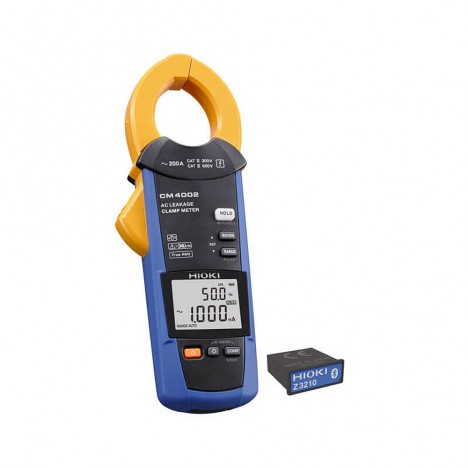


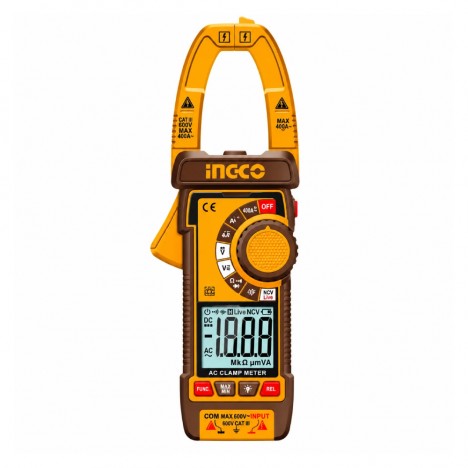

A True RMS clamp meter is like the pro-grade version of a standard clamp meter! Its key highlight lies in its ability to measure electrical current in "True RMS", which is more accurate and suitable for use in more complex electrical circuits.
What is RMS?
RMS stands for Root Mean Square, which is the root mean square value of an alternating current (AC) signal that represents the actual electrical power quantity.
Root Mean Square or RMS sounds like technical jargon, but it's actually easier to understand than you think! Try picturing this...
Suppose we have a "wave" that fluctuates up and down inconsistently, like ocean waves or sound waves. How would we find the average value of these waves?
The answer is: use RMS!
RMS is the root mean square of a wave.
Here is how to calculate it:
Square: Square the value of each point on the wave (so that all values become positive).
Mean (Average): Add all the squared values together, then divide by the total number of points.
Root: Take the square root of the resulting average value.
Just like that, you get the RMS value, which represents the true effective average of that wave.
So why is RMS important?
Indicates energy: The RMS value indicates the true energy of a wave; for example, in electrical circuits, the RMS value of electrical current indicates the delivered electrical energy.
Measures accurately: In circuits with noise or non-sinusoidal signals, using RMS values allows for more accurate measurements.
Used in engineering: RMS values are used in designing and analyzing various systems, such as audio systems and electrical power systems.
Examples of RMS applications
Audio equipment: Indicates the output power of speakers or amplifiers (e.g., 100 Watts RMS)
Electricity: Measures electrical current and voltage
Vibration: Measures machinery vibration levels
Hope this helps you understand RMS better!
Why True RMS?
In standard electrical circuits, the AC electrical signal usually has a clean sine wave shape. However, in modern electronic circuits or circuits using motors, inverters, and UPS systems, the AC signal is often distorted and not a pure sine wave, known as a "Non-sinusoidal waveform".
Standard clamp meters typically measure RMS by assuming the signal is a pure sine wave, which leads to measurement errors if the signal is non-sinusoidal.
However, True RMS clamp meters calculate the RMS value based on the actual waveform shape, providing accurate readings no matter how distorted the signal is.
Advantages of aClamp MetersTrue RMS type
Measures accurately: Suitable for circuits with noise or non-sinusoidal waveforms
Versatile applications: Measures accurately in both general electrical circuits and electronic circuits
Reduces risks: Inaccurate readings can lead to wrong decisions and cause equipment damage.
Who should use it?
Electricians and electronics technicians working with complex circuits
Engineers and researchers requiring high measurement accuracy
Professionals working with UPS systems, inverters, and motors
True RMS clamp meters may be more expensive than standard ones, but they deliver greater accuracy and confidence in your work—making them well worth the investment for professionals and anyone who demands maximum precision.