


 EN
 ไทย


Customers Also Purchased


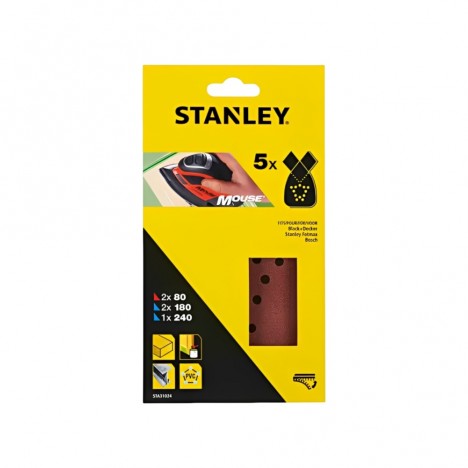
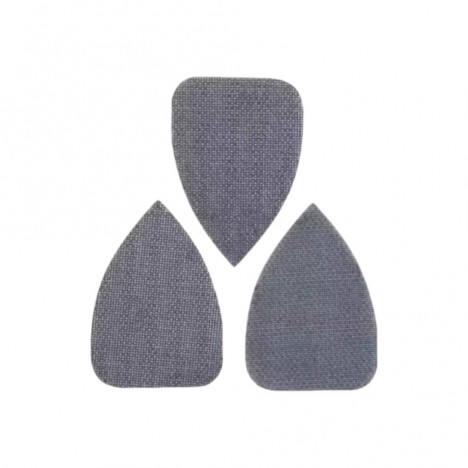


With the widespread use of sanders, various types of sandpaper have been designed to suit different sanders appropriately. In this article, we will introduce 5 types of sandpaper: abrasive belts, flap discs, triangular sanding pads, abrasive discs, and sanding sponges. Each type has specific properties and applications as follows:

1. Abrasive Belt
Abrasive belts are essential for sanding tasks that require speed and high smoothness, especially in industrial applications or when sanding large workpieces. Abrasive belts are made from materials such as aluminum oxide and ceramic, which are suitable for sanding wood, metal, and plastic. Abrasive belts form a continuous loop, similar to belts found in automotive engines, and range in grit sizes from 40 for rough sanding up to 400+ for ultra-fine finishing. Abrasive belts are widely used in manufacturing industries, such as preparing wood surfaces prior to painting or coating.
Advantages and Precautions
Abrasive belts can rapidly sand large surface areas. Constructed with durable materials and strong joints, they offer high durability and a long service life. In addition, abrasive belts stand out for their versatility, offering various sizes and grit ratings to suit the job. Users should take care not to apply excessive pressure to reduce wear, and replace the belt immediately once the abrasive grains become worn.

2. Flap Disc
Flap discs are highly popular in industrial work that requires grinding metal or high-durability materials. They feature overlapping layers of abrasive cloth arranged like a fan, which provides long-lasting and high-efficiency grinding. Flap discs are typically used for grinding weld seams, deburring metal edges, or preparing surfaces before painting or coating. Using materials like aluminum oxide, flap discs are suitable for heavy-duty grinding and high-strength materials. Flap discs are available from grit 24 (coarse) to grit 120 (medium), ideal for grinding tasks that require both speed and precision.
Advantages and Precautions
The advantage of flap discs lies in their long service life, as the layered abrasive flaps prevent premature wear and can be used continuously until all layers are depleted. This makes them ideal for long-term grinding and fine surface finishing tasks, such as smoothing metal or intricately shaped workpieces. Furthermore, they are versatile, handling everything from weld seam removal to grinding small to large steel components. However, care should be taken not to apply excessive pressure, which can lead to uneven grinding and cause the flap disc to wear out quickly.

3. Triangular Sanding Pads
Triangular sanding pads are designed for sanding in tight and hard-to-reach areas, such as edges, corners, or narrow grooves. The triangular shape allows them to reach into angles that other sandpaper types cannot. They are ideal for intricate tasks or sharp corners, such as finishing furniture edges, sanding curved woodwork, or working in confined spaces that require high precision. Triangular sanding pads are available for both dry and wet sanding and can be used with various sanders, such as handheld sanders or oscillating multi-tools, with grit sizes ranging from 40 to 400.
Advantages and Precautions
The advantage of triangular sanding pads is their application flexibility. They can reach tight corners and complex surfaces effectively, allowing users to sand with precision and detail—especially on detailed wood furniture or small, intricate workpieces. However, users should be cautious not to apply too much pressure, which could damage the workpiece surface.

4. Abrasive Disc
Abrasive discs feature a circular shape used for sanding surfaces that require uniform flatness and smoothness. They are typically used with rotary sanders or random orbital sanders. Abrasive discs are available in both holed and non-holed designs, where the holes aid in dust extraction during sanding, improving overall sanding efficiency. Abrasive discs can be used on a wide variety of materials, including wood, metal, and plastic, with various grits to suit the job: from coarse grits (40–80) for heavy stock removal or removing severe blemishes, to fine grits (180–400+) for smooth finish sanding. Furthermore, abrasive discs come in various diameters ranging from 4 to 9 inches, with 5 inches being the most widely used size.
Advantages and Precautions
Abrasive discs excel at fast and uniform sanding. They can be used with pneumatic sanders that rotate and oscillate to reduce swirl marks and create a finer finish. They are suitable for medium to large surface sanding on materials like wood, metal, or plastic. With many grits available to achieve the desired finish, they accommodate various sanding applications. However, when using abrasive discs, care must be taken to choose the appropriate grit for the task; using a coarse grit during the wood finishing stage could damage the surface, while applying excessive pressure can cause the disc to clog or glaze quickly.

5. Sanding Sponge
Sanding sponges are primarily designed for hand sanding curved surfaces or uniquely shaped contours. They consist of a sponge coated on one or more sides with standard abrasives such as aluminum oxide or silicon carbide. The sponge core provides flexibility and allows for both dry and wet sanding applications. Sanding sponges are popular for sanding wood furniture, curved profiles, or intermediate sanding between coats of paint. Sanding sponges are available in various grit grades, from coarse for paint stripping or surface leveling, to fine for detailed finishing work requiring extra smoothness.
Advantages and Precautions
A key feature of sanding sponges is their flexibility and ability to reach areas that conventional sandpaper struggles to access, such as curved surfaces or small corners. In addition, when used properly, they excel at minimizing unwanted scratches on materials. However, you should select the right grit for your specific job and avoid applying excessive pressure, as this can damage the sponge or over-sand and deform the workpiece. Cleaning the sponge after use is also essential to extend its lifespan and maintain its sanding performance.

Conclusion
Sandpaper is a versatile tool for surface sanding and smoothing materials. Today, sandpaper has been developed in various forms to suit different applications, whether for wood, metal, plastic, or complex contoured surfaces. Each type is designed for a specific purpose: belt sandpaper is ideal for fast material removal on large-scale jobs, flap discs effectively remove weld seams on metal, detail (triangular) sandpaper tackles tight corners and hard-to-reach areas, and highly flexible sanding sponges are perfect for curved surfaces or intricate contours.
Sandpaper is not just a tool that improves the appearance of surfaces; it also reflects the user's craftsmanship in manufacturing and material finishing. Selecting and using the right sandpaper is key to elevating work quality across all levels—from professional trades to meticulous, dedicated crafts.
Select Sandpaper More here