


 EN
 ไทย



Customers Also Purchased


Have you ever wondered why high-pressure water pumps play such a vital role in so many applications, from technician tasks and manufacturing to industrial levels? Knowing and understanding how high-pressure water pumps work can help you select and use this equipment more suitably and efficiently. This article will take you through what types of work high-pressure water pumps are suitable for, as well as their pros and cons, providing you with comprehensive information so you can make confident decisions and achieve maximum efficiency.
The goal of this article is to provide in-depth information about the use of high-pressure water pumps, their benefits and limitations, as well as guidelines for choosing the right high-pressure pump for your application, complete with examples of tasks where high-pressure pumps can be utilized.
Table of Content
1. What is a high-pressure water pump?
2. How high-pressure water pumps work
3. What types of applications are high-pressure water pumps suitable for?
4. Advantages of high-pressure water pumps
5. Disadvantages of high-pressure water pumps
6. Guide to choosing a high-pressure water pump
7. Summary
8. Frequently Asked Questions
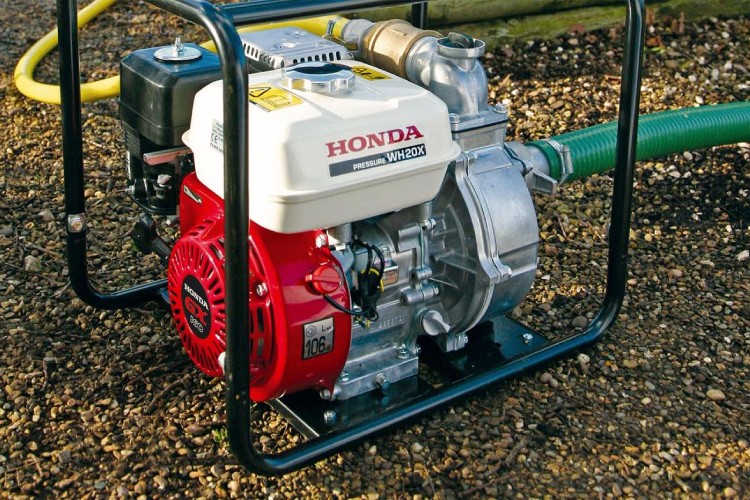
1. Basic understanding of high-pressure water pumps
High-pressure water pumps are designed to increase water pressure within piping systems, used to deliver water to high elevations or over long distances. This equipment is commonly used in various industries, including agriculture, construction, and manufacturing. High-pressure pumps are available in various types and sizes to suit different applications. Mainly, they are categorized by their operating mechanism as follows:
Types of high-pressure water pumps
- Centrifugal Pump Uses impellers to increase water pressure; suitable for general applications such as irrigation and water supply systems.
- Piston Pump Uses the reciprocating motion of pistons to increase water pressure; suitable for applications requiring extremely high pressure, such as industrial washing and cleaning.
- Diaphragm Pump Uses the movement of a diaphragm to generate water pressure; suitable for applications requiring precise pressure control.
High-pressure water pumps operate using a motor or engine to rotate an impeller inside the pump casing. When water is drawn into the pump, the impeller spins to increase the velocity and pressure of the water. The water is then discharged through pipes or hoses for use. The operation can be explained in further detail in the following section.
2. In-depth look at how high-pressure water pumps work
Operation of Water Pumps High pressure is a complex process that relies on components working together efficiently to achieve the desired high water pressure. In the operation of a high-pressure water pump, there are key steps and operating principles based on the main components of a high-pressure water pump: The motor drives the impeller to rotate; the motor may be powered by electricity or fuel. The impeller serves to increase the pressure and velocity of the water. The pump housing is the structure that supports and protects the internal components of the pump. The seal prevents water leakage inside the pump. The valve controls the flow of water into and out of the pump. The operating steps are as follows:
Working Steps
1. Suction
The process begins when the water pump draws water in from a water source through the suction pipe. The pressure inside the pump drops to create a vacuum, causing water to be drawn into the pump body.
2. Impeller Rotation
The impeller inside the pump rotates at high speed, driven by a motor or engine. As the impeller rotates, the drawn-in water is forced toward the outer edge of the impeller by centrifugal force.
3. Pressure Increase
As the impeller rotates, the water accelerates and is directed toward the pump outlet. This increased water velocity is converted into pressure, raising the water pressure to the desired level.
4. Discharge
The high-pressure water is discharged through the discharge pipe to the intended application point, such as for cleaning, irrigation, or plumbing systems.
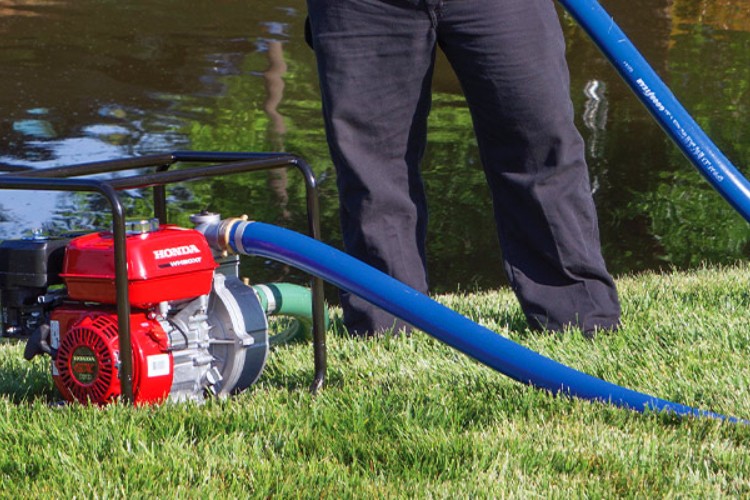
3. What applications are high-pressure water pumps suitable for?
High-pressure water pumps are versatile devices that can be applied to various tasks requiring high water pressure. Their versatility stems from remaining based on fundamental water pumping principles, allowing them to be adapted for diverse applications and industries, which the author has categorized as follows:
1. Cleaning Work | This type of water pump can be used as a water supply for spraying and cleaning various items, such as washing cars or cleaning hard-to-clean surfaces. It can also be used in construction or industrial plants to clean machinery and equipment stained with stubborn dirt, such as oil, chemicals, or dense sludge.
2. Irrigation and Agriculture | High-pressure water pumps can be used for water delivery in irrigation or agriculture, such as in sprinkler systems to water crops, delivering high-pressure water to remote areas where water is needed, or agricultural plots located far from water sources.
3. Plumbing Systems | In high-rise buildings or industrial plants that require large volumes of water at consistent pressure, a high-power water pump is necessary—such as one with high delivery head capacity or MAX head—to deliver water to upper floors, like buildings with 5 or more floors, condominiums, or manufacturing plants. In water supply applications, it helps boost water pressure in low-pressure systems to ensure thorough water distribution to households.
4. Firefighting | High-pressure water pumps can be used to deliver high-pressure water to fire standpipes inside buildings for building fire suppression systems, or installed in fire trucks to spray high-pressure water for extinguishing fires in emergencies.
5. Industrial applications | The use of high-pressure water pumps in manufacturing processes, such as water washing and cleaning, water usage in production and processing, water spraying for dust suppression and area cleaning in mining, water jetting in construction and civil engineering, and water use in chemical and petrochemical industries, etc.
Using high-pressure water pumps in these various industries helps increase work efficiency, reduce operating time and costs, and also helps achieve high-quality and standardized results in many other types of water-dependent applications.
4. Advantages of high-pressure water pumps
High-pressure water pumps offer numerous advantages that make them useful and essential equipment across a wide range of applications, such as water delivery efficiency: high-pressure water pumps can deliver large volumes of water at high pressure, making them suitable for tasks requiring high water pressure. They can be used for diverse tasks such as vehicle washing, floor washing, factory equipment cleaning, plumbing water delivery systems, and firefighting. Additional advantages also include:
- Pressure can be easily controlled and adjusted, allowing users to tailor the water pressure precisely to the task requirements.
- Can be installed in various configurations, both vertically and horizontally, and adapted according to job requirements.
High-pressure water pumps are highly efficient tools with many operational benefits. Choosing a high-pressure water pump tailored to your job requirements will ensure smooth operation, energy savings, and maximum efficiency.
5. Disadvantages of high-pressure water pumps
High-pressure water pumps also have disadvantages that should be considered when selecting them. High-pressure pumps are often more expensive than standard water pumps because the design and manufacturing materials are of higher quality to withstand heavy pressure and heavy-duty use. They may require regular maintenance and more complex servicing than conventional water pumps. Maintenance may require specialists and entail additional costs, and other factors such as:
- High-pressure water pumps may not be suitable for tasks requiring low water pressure or light-duty use, such as general garden watering.
- Operating at high pressure may pose risks of leaks or ruptures in pipes and internal pump components if not properly inspected and maintained.
- High-pressure water pumps can run louder than standard water pumps, which may be problematic in quiet environments.
- High-pressure water pumps are often large and heavy, making installation and transportation more difficult, and requiring more installation space.
Although high-pressure water pumps offer high efficiency and are ideal for high-pressure applications, they have drawbacks that should be considered. Choosing a high-pressure water pump should be based on job suitability and maintenance capability to achieve the best operating results.
6. Buying Guide for High-Pressure Water Pumps
Key features to consider when choosing to buyWater Pumpsa high-pressure pump include evaluating quality and reviewing technical data, such as maximum output pressure, flow rate, and motor power. Choose a pump size appropriate for your installation space and water usage volume. Check whether the pump's flow rate matches job requirements. Consider the working environment, such as temperature, humidity, and installation site conditions. Before purchasing, verify whether the pump is designed to handle your application's flow rate, pressure, inlet piping conditions, operating temperature cycles, and fluid compatibility. Considering these key features will help you choose the most suitable and efficient high-pressure water pump.
Conclusion
A high-pressure water pump is a device used to deliver water at high pressure, capable of increasing water pressure for various applications such as cleaning, irrigation, firefighting, and industrial use. High-pressure water pumps have diverse industrial applications, including washing parts and equipment, water use in manufacturing and processing, water jetting for drilling and breaking ground layers in mining, water spraying in construction and civil engineering, and fluid injection in the chemical and petrochemical industries. Selecting a suitable high-pressure water pump that matches your needs will ensure smooth operations and maximum efficiency.
Other related articles - Which should you choose: a gasoline water pump or a diesel water pump?
Frequently Asked Questions (FAQ)
1. What size high-pressure water pump should you choose for your application?
- When choosing the size of a high-pressure water pump, consider your application requirements. For example, if it is for cleaning or irrigation, choose a pump with an appropriate pressure and flow rate. Additionally, check the installation space as well as the inlet and outlet pipe sizes to ensure compatibility with your existing system.
2. What are the advantages of high-pressure water pumps?
- High water delivery efficiency, capable of delivering large volumes of water at high pressure; versatile applications, suitable for various tasks such as cleaning, irrigation, and firefighting.
3. What disadvantages or precautions should be considered with high-pressure water pumps?
- Although high-pressure water pumps offer many advantages, there are disadvantages to consider, including high costs, complex maintenance, and the risk of leaks and pipe bursts if a check valve is not installed.