


 EN
 ไทย


Customers Also Purchased


Choosing a fountain or waterfall pump for your home or garden may seem challenging, as there are many factors to consider, such as the required water volume, area characteristics, and intended use. To make the most appropriate and efficient choice, this article will introduce you to the key steps and factors in selecting a fountain or waterfall pump, helping you make the best decision suited to your needs and environment.
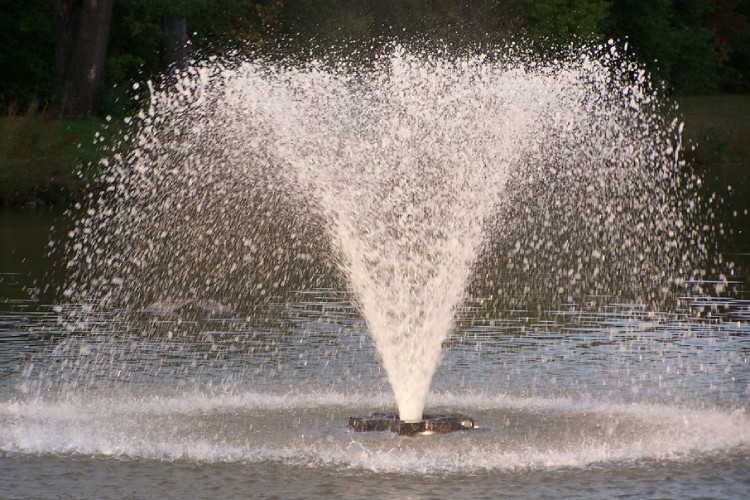
Types of Fountain and Waterfall Pumps
Fountain pump and Waterfall pump Some are developed into forms similar to submersible pumps, specially designed mainly for submerging into ponds or pools to create water flow within water systems. Those commonly used for making waterfalls or fountains are divided into 3 types, each with different applications as follows:
1. Submersible Pumps
Direct Drive submersible pumps are ideal when you need to handle large volumes of water and achieve maximum flow rates. Magnetic Drive Pumps are designed for continuous duty without seals, eliminating leaks, and are suitable for indoor use due to their quiet operation. For the most part,
2. Fountain Pumps
Fountain pumps operate on a simple mechanism and are often installed dedicated to ponds or pools for easy maintenance and overall care. Fountain Pumps are devices used to create fountains in gardens, parks, or even homes and other locations to enhance aesthetic appeal and potentially help regulate surrounding temperature and humidity.
3. External (In-line) Pumps
This is a type of pump used for water circulation in aquariums, fountain pumps, waterfall pumps, hydroponic systems, or industrial processes. Unlike submersible pumps that must be placed directly in the water, external pumps are positioned outside and connected to the plumbing via pipes or hoses. They operate using a motor that drives an impeller to rotate; as the impeller spins, it creates centrifugal force that draws fluid, similar to a centrifugal pump.
How to Choose Fountain and Waterfall Pumps
1. Choose a Pump with the Right GPH Rating
GPH on a water pump stands for Gallons Per Hour. It is a value that indicates the pumping capacity of various pump sizes, measured in gallons per hour. General fountain and waterfall pumps typically have 3 standard GPH sizes from lowest to highest: 750 GPH, 1500 GPH, and 2250+ GPH upwards, with a simple calculation formula:
Average Pump Size/FT X Width of Area (Fountain, Waterfall) = Recommended GPH Flow
Users must choose correctly based on how much water flow the fountain or waterfall requires.
2. Consider Pipe Friction Loss
The size and type of pipe are crucial because as water is pumped through the piping system, friction occurs due to the viscosity of water. The recommended pipe size is related to the friction loss over every length of pipe. Keep friction low to achieve maximum flow. See the example table.

From the table, it can be seen that if the pump has a flow rate of 3,000 (GPH), the appropriate pipe size is 2 inches, yielding the lowest friction loss of 0.05.
3. Consider Total Dynamic Head (TDH)
Total Dynamic Head (TDH) is the value that indicates the total discharge head of your water pump. The TDH value is used to select the right pump for the job, calculated from several factors affecting overall pump operation, such as vertical lift height, pipe pressure loss, and various fittings, using the following formula:
TDH = Total Static Head + Total Head Loss
For the calculation of each part, formulas and relevant data such as pipe length, pipe size, flow rate, etc., can be used. Information relevant to the water system to be calculated must be used to achieve the most accurate and beneficial results.
4. Area and pipe size
Choosing the right pipe size is important when using water for various applications. We might think that two 1.5-inch pipes have the same capacity as one 3-inch pipe, but in reality, that is not the case. Calculating the cross-sectional area of both pipes reveals that four 1.5-inch pipes are needed to equal one 3-inch pipe (Area = ∏r2). However, four 1.5-inch pipes will have twice the inner surface area of a 3-inch pipe, which creates twice the friction even though the cross-sectional area is the same. Assuming a flow of 8,000 gallons per hour through a 3-inch pipe results in a friction loss of 0.05 per meter of pipe, the same loss through a 1.5-inch pipe occurs at a flow of 1,375 gallons per hour. Therefore, six 1.5-inch pipes would be needed to match the same flow and friction as a 3-inch pipe.
5. Power consumption of the pump
The power consumed byFountain pump and Waterfall pumpdepends on the type of pump and the user's operational requirements. Fountain pumps used for garden maintenance or freshwater fish farming typically use low power. Fountain and waterfall pumps must use sufficient power to operate efficiently and in accordance with the design of the pump control system, usually taking into account safety and continuous operating efficiency.
Conclusion
When choosing a fountain or waterfall pump, you should consider the GPH rating to suit your application and account for the friction loss in the pipes to select the proper pipe size and reduce friction losses. In addition, you should consider the pump's Total Dynamic Head (TDH) to choose the right pump, as well as the size and characteristics of the pipes to ensure efficient flow. Finally, you should consider the pump's power consumption for safety and operational efficiency.
Other Related Articles - Tips for maintaining your waterfall pump