


 EN
 ไทย


Customers Also Purchased


Water Pumps plays a crucial role in our lives, from construction, agriculture, industry, to residential living. Water pumps come in many types, designed to meet specific requirements and conditions. In this article, I will take you through the various types of water pumps, their applications, and how to choose the right water pump for your needs.
What is a water pump?
A water pump is a device whose primary function is to increase water pressure to transfer water or fluids from one place to another. Water pumps can be powered by electricity, fuel, or even solar power in remote locations. Although there are many types of water pumps, the core principle remains the same: the motor converts energy (kinetic or rotational) into hydrodynamic energy for fluid flow.
Water pumps help deliver water for consumption and utility, and can also be used in wastewater treatment to protect the environment. Today, there are many types of water pumps depending on the application, but the most common for household use are electric models, which are convenient and easy to use.
The general operating principle of a water pump uses a motor to drive the pump mechanism, moving water from one point to another by pressure and volume, while also helping maintain consistent and steady water pressure during water usage.
Types of Water Pumps
Broadly, water pumps are classified into 2 categories: domestic water pumps and agricultural water pumps. These two different categories of water pumps exist to meet all domestic and diverse agricultural needs. Choose a water pump based on your budget and daily water usage.
Automatic Water Pump
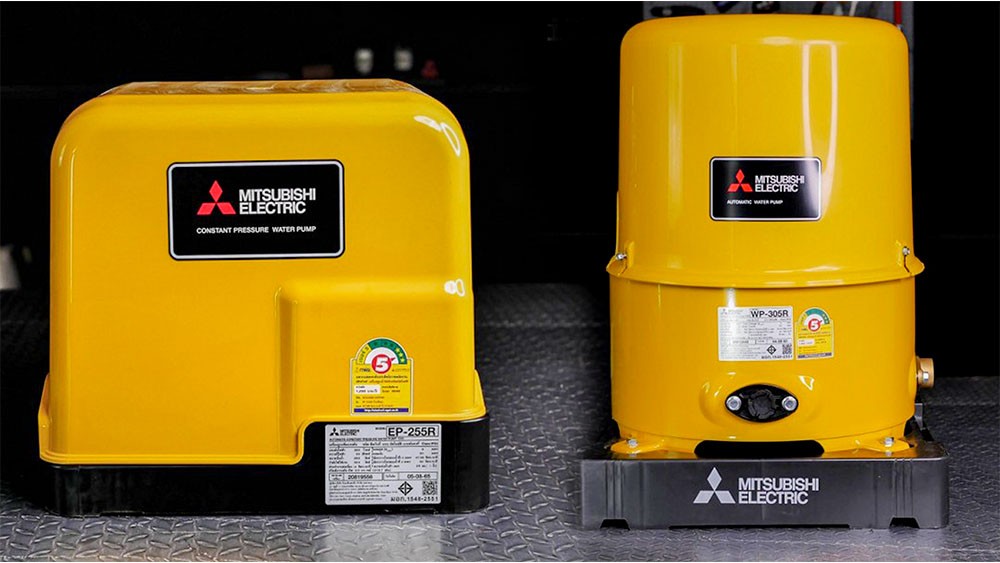
automatic water pump Also known as round-tank water pumps, this type of water pump has been in use since the beginning. Its function is to draw water and store it in a steel tank called a pressure tank, which is popular for use in houses and residential buildings. It operates by turning on and off automatically based on device triggers. It still provides good power to deliver water to various points throughout the home.
Constant Pressure Water Pump
Constant pressure water pumps, also known as square-tank water pumps, work on a similar principle to automatic water pumps, but with some differences. They utilize pressure generated from a small internal metal drum filled with nitrogen gas, which has high heat resistance and more consistent pressure than normal air. This ensures consistent water flow at every point of use, such as providing steady hot water when used with water heaters. Suitable for apartments, commercial buildings, townhouses, or single-detached houses.
Electric Centrifugal Pumps
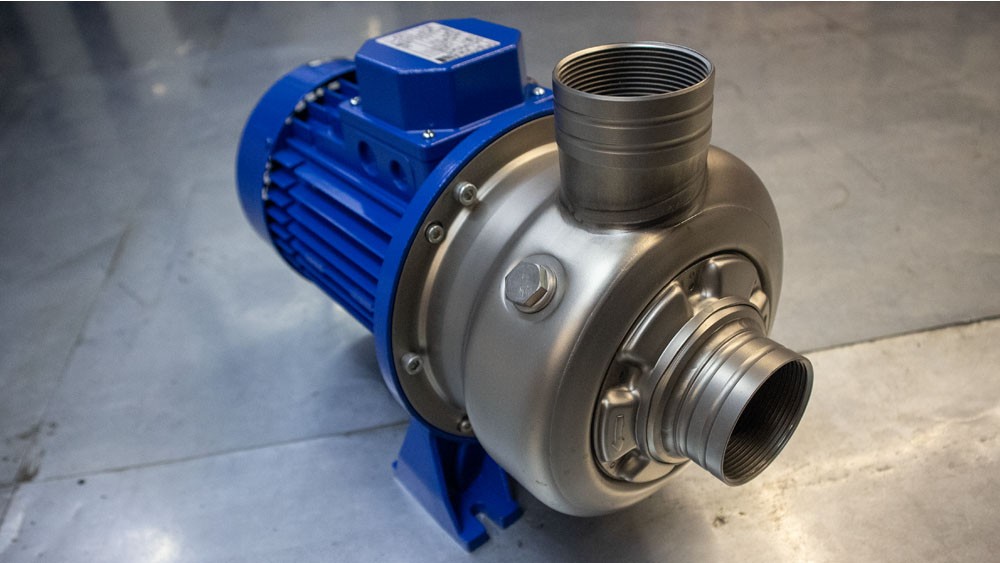
Electric Centrifugal Pumps This type of water pump relies on centrifugal force to operate. When centrifugal force acts on the water pump, the pressure at the center of the pump drops to near-vacuum, causing atmospheric pressure from outside to push water from the storage tank into the pump's center. The impeller rotates due to the continuous vacuum and centrifugal forces, allowing water to flow through the pump from low to high levels.
Suitable for long-term and continuous operation, such as agricultural work, pumping water up high-rise buildings, pumping water from tanks or ponds, sprinkler systems, etc. In addition, it can pump large volumes of water or provide high transmission power because centrifugal pumps have high horsepower.
Submersible Pump or Divo Pump
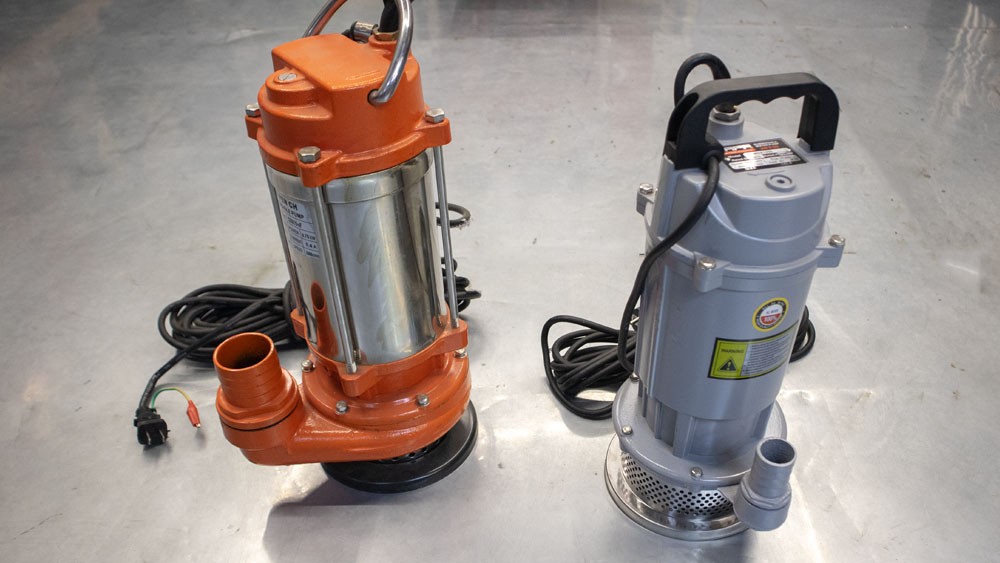
Submersible Pump Commonly known as a 'Divo' pump, it is used for pumping water out of ponds or draining wastewater from canals. It has low head pressure but can pump a large volume of water. There are 2 types of this pump: with a float switch, where the float rises when submerged in high water, allowing the machine to operate, and when the water is drained, the float sinks and the pump automatically cuts off; and without a float switch, which requires manual switching on and off. Aside from water suction, the water pressure also depends on the power capacity.
How to Properly Install a Water Pump?
Many people have encountered issues with water pumps, such as the pump suddenly stopping or, in worse cases, the pump not running at all, unstable pump pressure, or many other problems. These may be caused by choosing the wrong installation location. Therefore, you should select a suitable area to properly install the water pump.
When installing a water pump, it should not be located too far away, ensuring proper suction and water distribution. It should not be installed outdoors exposed to direct sunlight or rain, as this can damage the pump; if unavoidable, build a roof or shelter over it. The water pump should be installed at least 30 centimeters away from walls to facilitate heat dissipation and allow easy maintenance.
Select Water Pumps to suit your application