


 EN
 ไทย


Customers Also Purchased


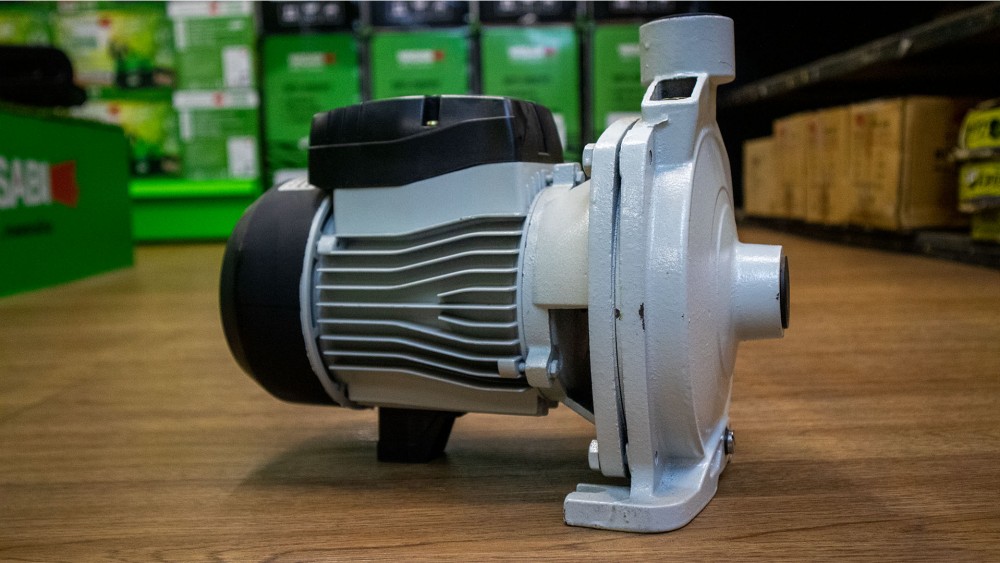
Water Pumps Water pumps play a vital role in transferring water or liquids from one location to another. Therefore, it is essential to understand the basics of water pump design to ensure efficient operation. Generally, a water pump consists of three main components: the casing, the impeller, and the motor. The casing is the mainframe of the water pump, which houses the impeller and the fluid being pumped. The impeller is a set of rotating blades that helps move fluid through the pump. Finally, the motor supplies the power necessary to rotate the impeller and create suction.
Proper Water Pump Design
It is important to know first that there are many types of water pumps, and each type is designed for specific tasks. But in this article, I will talk about centrifugal water pumps, widely used in electric power generation due to their broad range of performance (including flow rate, pressure head, and media property loss), compact size, simple structure, ease of operation, steady flow, and long service life.
Components of Water Pump Design
Although many factors affect the performance of a water pump, the construction of its various components is perhaps the most important. Understanding these fundamental principles can help ensure that your water pump operates efficiently. There are many types of centrifugal pumps. While the structures of different types vary, their core components are essentially the same. The main components of a centrifugal water pump include:
1. Impeller
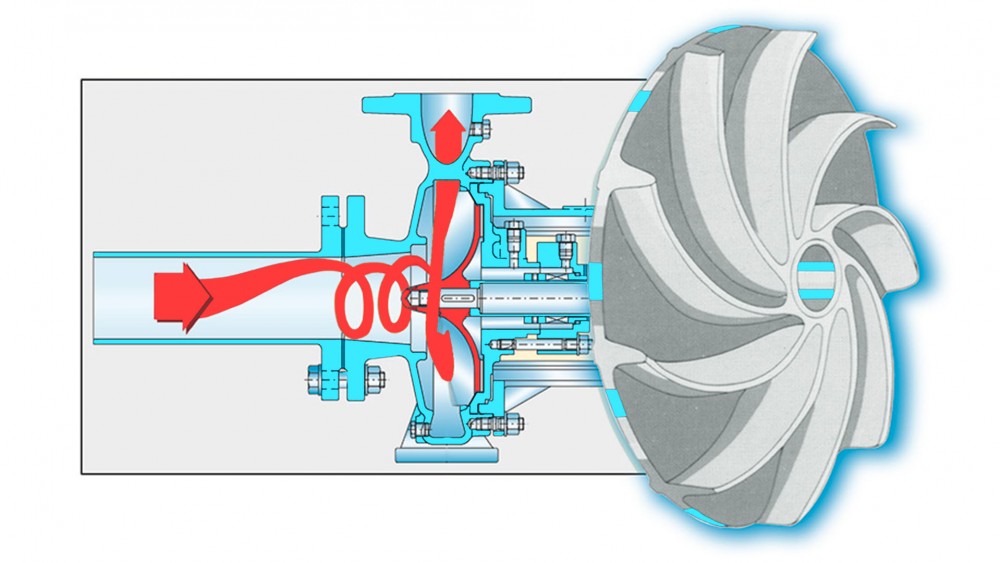
The impeller is the working part of a centrifugal water pump. It relies on high-speed rotation to work on the fluid and can be considered an essential part of a centrifugal pump. Generally, an impeller consists of three parts: the hub, blades, and shroud plates. The shroud is divided into a front shroud and a rear shroud.
When the water pump starts running, the pump shaft drives the impeller to rotate at high speed, forcing the pre-filled liquid between the blades to rotate. Under the action of centrifugal inertial force, the liquid moves radially from the center of the impeller to the outer circumference.
The fluid gains energy during the movement through the impeller; static pressure energy increases, and the flow rate increases. When the fluid leaves the impeller and enters the pump casing, it slows down due to the expansion of the flow path in the casing, and part of the kinetic energy is converted into static pressure energy, finally flowing into the discharge pipe along the tangential direction.
2. Pump Shaft
The primary role of the pump shaft is crucial in ensuring that the centrifugal pump operates efficiently and stably; it transmits power and supports the impeller to remain in its operating position for normal operation. One end of the shaft is connected to the motor shaft via a coupling, and the other end supports the impeller for rotational movement. The shaft is equipped with components such as bearings and axial seals.
Common materials for pump shafts are carbon steel and stainless steel. A well-designed pump shaft can withstand the load and pressure generated during operation without causing deformation or bending. Understanding the characteristics and properties of the pump shaft is essential knowledge that users should possess for proper and safe maintenance and use of the water pump.
3. Mechanical Seal / Seal
The seal in a water pump is an essential component for preventing water leakage caused by movement between the housing and the motor. An accurate and suitable seal can greatly improve pump efficiency. It is important to know the type of seal, its application with the machinery, the type of liquid involved, as well as the overall operating environment of the water pump.
Selecting a seal depends on the type of fluid being pumped and the environmental conditions under which the water pump must operate. An effective seal can withstand heat, pressure, and other conditions. Water pumps used in chemical environments or with complex dynamics may require seals that are resistant to chemicals or corrosion.
4. Bearings
Bearings play a role in supporting weight and are used to keep the shaft precisely aligned both radially and axially. They function to balance loads between the water pump body and the motor, helping to reduce friction generated during shaft rotation and allowing the water pump to operate stably. High-quality bearings must be able to support both radial and axial loads. Choosing strong and durable bearings affects pump efficiency and also helps reduce shaft deflection.
5. Pump Casing
Considered a vital component that withstands the various forces generated by water flow and the centrifugal force from the impeller in the water pump. With its volute-like shape, the pump casing helps the water pump operate efficiently in delivering water at different pressures. Its importance lies in bearing the forces that occur during water flow; constructing a strong and durable pump casing allows it to handle the pressure and resistance of water or other fluids.
6. Volute
The volute refers to a spiral flow channel with a cross-sectional area that gradually increases from the impeller outlet to the inlet of the next stage impeller or to the water pump discharge pipe. The flow channel gradually expands, and the outlet forms a diffuser. After the fluid exits the impeller, its flow rate decreases smoothly so that most of the kinetic energy is converted into static pressure energy.
The advantage of the volute design is that it is easy to manufacture, offers a wide high-efficiency zone, and the pump efficiency changes less after the impeller is turned. To be fair, it also has disadvantages: the volute shape is asymmetrical, and when a single volute is used, the pressure exerted radially on the rotor is uneven, which can easily cause the shaft to bend.
The volute material is typically cast iron, stainless steel for corrosion resistance, or other corrosion-resistant materials such as fiber-reinforced plastics. Due to the high pressure, multistage pumps require high material strength, and the pump volute is generally made of cast iron.
Maintenance and Common Water Pump Problems
Maintenance and common problems with water pump components. You should inspect the system every 6 months to prevent various damages as an essential measure. This inspection should include checking seals, the condition of the pump shaft, and the belts. Keeping these intact will help the water pump operate efficiently and prevent potential damage.
To prevent overheating and insufficient pressure, cleaning the fan is an important step. Residue and dirt trapped on the fan can impair the pump's efficiency. Regular cleaning should be performed to maintain system efficiency.
For safety and operational efficiency, inspecting the belt is an essential part. A properly fitted belt helps the pump shaft rotate efficiently. Checking and adjusting belts that are loose or improperly tensioned will reduce damage and extend the pump's lifespan.
Select Water Pumps To suit the job you need