


 EN
 ไทย


Customers Also Purchased


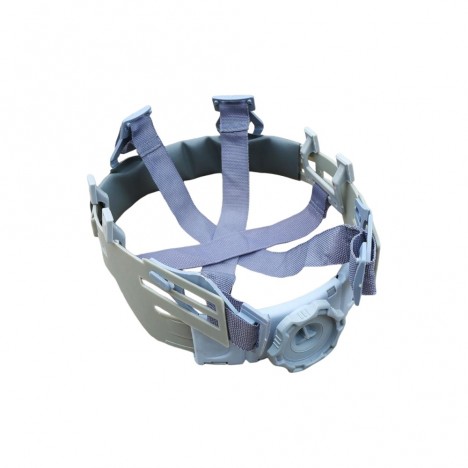
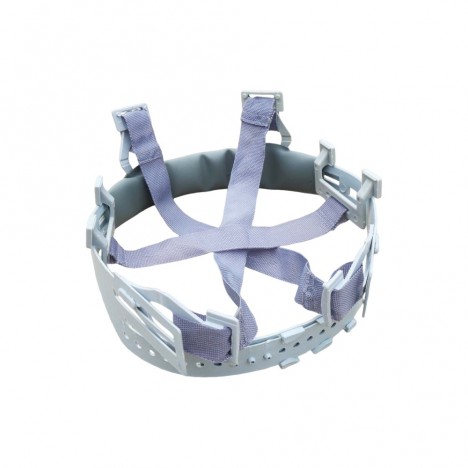


Many people are probably somewhat familiar with Safety Helmet They are plastic hats in various colors that we often see technicians or workers wearing while on construction sites, in smelting plants, factories, mines, or anywhere with a high risk of danger from objects flying or falling onto the head. Inside, safety helmets are lined with impact-absorbing materials.
First, it must be understood that safety helmets 
Safety Helmets: Yellow vs. White - What's the Difference? Why Distinguish by Color?
Safety helmets come in many colors, but the most commonly seen are white and yellow. Quite a few people still wonder and are confused, not knowing the difference between these 2 colors of safety helmets.
Generally, the properties of safety helmets are similar; thus, the color of a safety helmet helps distinguish the roles and job positions of workers.
Many people can imagine that on a job site there are a large number of people. The larger the workspace, the more people there are. If there is an urgent problem that needs to be addressed, running all over the place would be difficult and quite time-consuming. Therefore, safety helmet colors help solve these problems, allowing workers to walk up and inquire about issues with the right person.
People wearing white safety helmets are project engineers, supervisors, foremen, managers, or project overseers whose duty is to supervise, manage, inspect, and control the overall work. When an on-site issue arises, look for them. Even if they cannot solve the problem immediately, they can still promptly report the matter to the person directly responsible.
For those wearing yellow safety helmets, they are general laborers who perform various assigned tasks.

What about other colors of safety helmets?
As mentioned, safety helmets come in many colors, each with properties indicating different roles of workers as follows:
- Specialists involved in welding and high-heat work often wear brown fiberglass safety helmets, such as welders, steel cutters, and steel grinders.
- Safety inspectors and OSHA (Occupational Safety and Health Administration) officers wear green safety helmets.
- Carpenters, technical consultants, machinery supervisors, and electricians wear blue safety helmets.

- Traffic controllers, road workers, slingers, or signalers for slings and cranes used to lift or move large, heavy machinery wear orange safety helmets.
- Firefighters or site visitors wear orange or red safety helmets. For example, when students come on a study trip or project stakeholders visit hazardous work areas, everyone will wear these two helmet colors.
- Meanwhile, architects often wear black safety helmets.

Classes of Safety Helmets
Various items are often categorized by type or quality, and safety helmets are no exception. Generally, safety helmets are simply divided into classes: Class A, B, and C.
Class A Safety Helmets Offers impact and penetration resistance, as well as protection against voltage up to 2,200 volts.
Class B Safety Helmets Provides higher quality protection against electrical hazards than other classes, withstanding high voltage up to 20,000 volts and burn resistance, while still maintaining impact and penetration resistance from flying or falling objects.
Class C Safety Helmets Provides the most lightweight comfort, offering impact protection, but cannot withstand electrical voltage like the other classes.
Important Aspects of Safety Helmets
✦ Safety helmets are designed to protect against small objects, not heavy or sharp items.
✦ A good, quality safety helmet must clearly state the manufacturer's name, date of manufacture, usage requirements, application type, and compatible head size, and comply with ANSI standards.
✦ A good safety helmet should have an internal label to prevent fading, loss, or users forgetting essential information.
✦ Safety helmets should be free of prior impact marks, such as dents, cracks, or holes; if found, they should be replaced with a new one.
✦ Hard plastic safety helmets easily degrade from UV radiation. Therefore, inspect before use to ensure the safety helmet has not lost its gloss, does not produce chalky flakes or powder when touched, and is not peeling, brittle, or faded. If any of these are found, stop using it and replace it with a new one.
✦ PPE safety helmets are also divided into classes with different applications, which should be selected appropriately as follows:
- Class G (General) PPE Safety Helmets are voltage tested up to 2,200 volts, protecting against impact, penetration, and low-voltage electrical conductors.
- Class E (Electrical) PPE Safety Helmets are voltage tested up to 20,000 volts, protecting against impact, penetration, and high-voltage electrical conductors.
- Class C (Conductive) PPE Safety Helmets provide no electrical insulation, offering only impact and penetration protection. Focused on strength and durability, they are often made of aluminum, which is an electrical conductor; therefore, they must never be used in situations involving electrical hazards.

Precautions and Recommendations for Using Safety Helmets
★ Safety helmets must always be inspected thoroughly before use to check for degradation or damage, ensuring the safest and most effective use.
★ It is recommended to replace safety helmets every 5 years, regardless of how new they may appear, as materials degrade over time—in other words, safety helmets have an expiration date. This is why manufacturers must clearly indicate the date of manufacture.
★ For safety helmets used in hazardous environments, severe weather, or frequent temperature fluctuations—such as high-temperature steel mills, job sites exposed to harsh sunlight, or indoors with certain chemicals and radiation—they should be replaced more frequently, such as every 1-2 years.
★ You should not repair or replace safety helmet components on your own, because a safety helmet's design is calculated for safety with various precise specifications. Replacing components by yourself may reduce the helmet's protective performance or make it less effective than when it was new.
★ No matter how hot it gets, never drill holes in the safety helmet to increase ventilation.
★ Keep out of sunlight and high-heat areas, as this will cause the safety helmet's materials to deteriorate faster than they should.
★ Do not put stickers or anything else on the safety helmet, as they will conceal signs of wear or damage. Continuing to use a damaged helmet will do more harm than good.

Harmful Consequences of Not Wearing a Safety Helmet
Wearing a safety helmet is truly essential. The human brain can suffer severe injury from hard impacts or violent concussions. Even turning your head too quickly is risky, as it can cause sudden jolting of nerves and blood vessels in the brain, affecting various areas of the brain.
Safety helmets are designed to absorb impact forces from hazardous objects. They feature a thick and relatively hard foam layer similar to a motorcycle helmet. When the wearer collides or impacts with hard surfaces, it cushions the blow; the head hits the interior foam padding instead of a hard surface capable of supporting a truck, thereby minimizing the impact on the brain.
Therefore, wearing a safety helmet is extremely important and necessary. People often don't realize how careless they are until it's too late. Even if you can't imagine a day where you get hurt, you still shouldn't be reckless. While it cannot guarantee 100% safety, treating an injury is certainly far easier than having no protection at all.
Back to page Safety Helmet >>>