


 EN
 ไทย


Customers Also Purchased




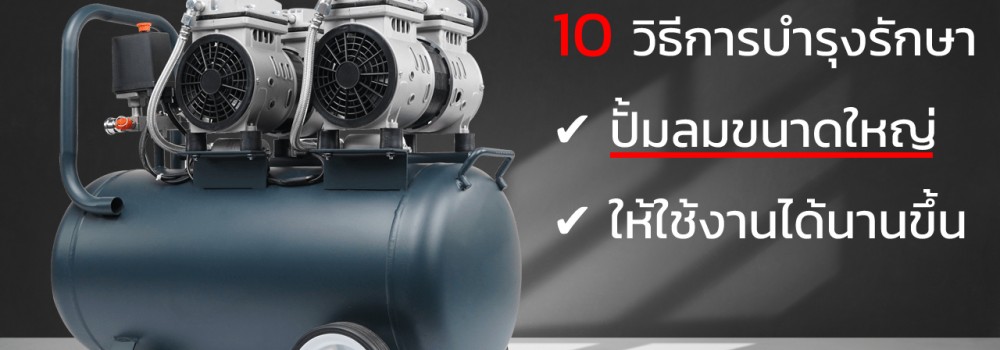
10 Maintenance Tips for Large Air Compressors to Extend Their Lifespan
Regular Maintenance a large air compressor to extend the life of your air compressor is crucial for prolonging its service life, ensuring compressor components operate at peak efficiency, and preventing wear and tear on parts that might fail or deteriorate prematurely. We are here to share maintenance tips as a guideline for keeping your large air compressor safe, reliable, and cost-effective.
How to Maintain a Large Air Compressor

- Read and follow your air compressor manual
- Regularly drain moisture from the tank
- Clean the air intake vents
- Regularly inspect all fasteners to ensure they remain tight
- Regularly check hoses and pipes
- If the compressor is equipped with a safety relief valve system, test it regularly to ensure it still functions
- Inspect and replace the air filter element when due
- Inspect and change the compressor oil
- Replace worn components
- Clean the cooling unit/heat exchanger
1.) Read and follow your air compressor's manual
The manual included with the air compressor contains detailed instructions for use and may include simple maintenance tips recommended by the manufacturer to extend the life of the machine. In addition, precautions may be stated to prevent users from being harmed by the air compressor and to prevent potential damage to the machine if operated incorrectly. Therefore, the first and most important thing to consider is to read the manual thoroughly and keep the air compressor manual for reference or for basic troubleshooting if issues arise.
2.) Regularly drain moisture from the tank
When used continuously, the air storage tank often accumulates residual moisture because air contains water vapor. This can cause the inside of the tank to rust or corrode, and moisture may contribute to preventing the air compressor from operating at full efficiency. Most water accumulates around the drain valve. Therefore, you should make sure to regularly drain off the accumulated moisture. Before draining the moisture, you should release the air pressure from the tank first for safety against accidents that could occur at that moment.
3.) Clean the air intake vents
Operating an air compressor in dusty or dirty environments may prevent it from running at peak efficiency, as dust can keep the engine or motor components from compressing air effectively. Therefore, you must regularly inspect and clean it as necessary to keep it in a ready-to-use condition at all times.
4.) Regularly check that all fasteners are tight
In an air compressor, the main component is the rotor that constantly turns the blades while the compressor is operating. This causes bolts or fastening pins to loosen over time. To avoid operational hazards, you should regularly inspect the condition of bolts and fasteners to ensure they remain tight and prevent parts from coming loose from the machine, ensuring the safety of both the equipment and the operator.
5.) Regularly inspect hoses and piping
You should regularly inspect your various pipe and hose connections to ensure they are ready for use, as air compression and pressure can cause cracking or degradation, ultimately leading to leaks. This may prevent the air compressor from delivering consistent air pressure. Therefore, always check for damage, and if the piping system shows signs of deterioration, replace it to maintain optimal performance throughout its service life.

6.) If the compressor has a safety system, regularly test if it is still working
Test your air compressor's safety system to verify it functions normally if your air compressor is equipped with a safety feature. This guarantees an extra layer of user safety to protect you in case unexpected events occur during operation; for instance, if the air compressor overheats, it will automatically shut off, which also helps extend the service life of the compressor.
7.) Inspect and replace the air filter on schedule
The air filter of the a large air compressor is an essential part that filters out debris or dust that could clog the main unit of the air compressor. To ensure the compressor runs smoothly, inspect the air filter regularly. When it is time for a replacement, change it according to the maintenance schedule. Replacement is recommended every 6 months or sooner to maximize your air compressor's operating performance.
8.) Inspect and change the compressor oil
For oil-lubricated models, you should check your air compressor daily after use to ensure it has not run dry, and then service it every 100-500 operating hours to keep the compressor running smoothly. Allowing the oil to run dry can damage your air compressor, potentially causing seizures, preventing pistons or impellers from operating properly, or causing overheating that can create safety hazards.
9.) Replace worn components
Regularly check the service life of the air compressor's spare parts or machine components, as some parts wear down over time and may not be noticeable to the naked eye. Certain parts that need replacement require opening up the machine for inspection, such as the oil check valve that prevents excessive oil consumption, which must be replaced every 1,000 operating hours; otherwise, more oil may mix into the compressed air and oil may deplete too quickly. Ensure that all components are functioning properly and replace them regularly.
10.) Clean the heat exchangers / cooling fins
If your equipment builds up excessive heat, it may put your equipment at risk of damage and could also be hazardous to you. Cleaning dirt and debris from the heat exchanger/cooler can greatly help extend its service life. Therefore, you should clean it regularly to ensure optimal heat dissipation for the machine.
All in all, following the advice mentioned above will ensure that your air compressor has a longer lifespan. Maintaining your air compressor well keeps it running properly at all times. Understanding how an air compressor works is also part of maintenance, as it gives you the knowledge of what kind of care the machine requires.
Other articles: Top 5 Most Popular PUMA Direct Drive Air Compressors: Which One Is Right for You?