


 EN
 ไทย


Customers Also Purchased


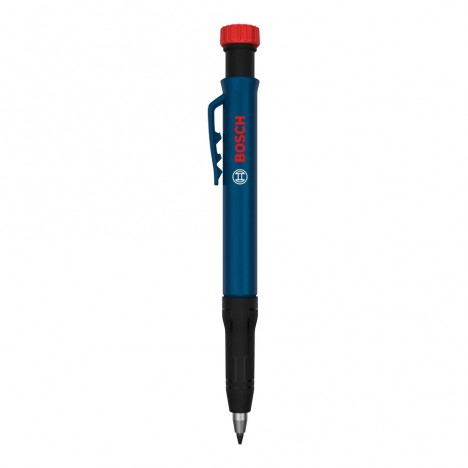


If you work in woodworking—whether as a professional or a hobbyist—you have certainly seen or used a carpenter pencil before. These marking tools are not like standard pencils found in stationery stores. Carpenter pencils are thicker and oval-shaped, differing from standard pencils.
What Is a Carpenter Pencil?
Carpenter Pencils It is a tool used to mark wood, typically made of wood containing graphite, commonly referred to as "lead." These pencils are used to mark clear, visible lines on almost any type of surface. Lines and shapes are marked and then used as guides for shaping and cutting the material.

In addition to carpentry, these builder pencils are also frequently used by masons and construction workers, as well as in other trades. Because these pencils are made for use on concrete, stone, and wood, they may not work well on coated or glossy surfaces. In this article, I will take a deeper dive into carpenter pencils.
What Are Carpenter Pencils Made Of?

Most carpenter pencils share a similar composition. The main body of this type of pencil is usually made of high-quality hardwood that provides exceptional strength and durability. Pencil "lead" got its name because long ago, cores were crafted from lead. Today, modern carpenter pencils use graphite to produce the core—a mineral composed of carbon atoms. Pencil lead has been used for centuries up to the present day.
Why Are Carpenter Pencils Flat?

Carpenter pencils have an oval or rectangular shape, unlike regular pencils which are typically round or hexagonal. They are also extremely durable and perfect for jobsite use. The stronger, thicker lead can be used to mark many types of building materials, such as lumber, gypsum, drywall, stone, and concrete. There are other reasons why these pencils are designed differently.
What tasks require a carpenter pencil?
Essentially, almost every task in construction (at some point) requires a carpenter's pencil. Various types of work require you to make marks as guidelines for measuring or cutting materials accurately. A carpenter pencil is suitable for use by electricians, plumbers, and carpenters, as well as for concrete/masonry work.

You can use a carpenter pencil on almost any building material, whether it is wood, plaster, drywall, stone, concrete, or metal. Unlike using regular pencils (which are too brittle and fine), a carpenter pencil is the ideal marking tool for almost all construction work. The lead not only lasts a long time, but is also break-resistant and inexpensive to purchase.
How to sharpen a carpenter pencil?

The correct way to sharpen Carpenter Pencils using a knife or chisel consists of the following 5 steps:
- Start by holding the carpenter pencil firmly with your dominant hand, and make sure to leave at least 2 inches between your fingers and the tip you want to sharpen.
- Using a knife or chisel in your dominant hand, point the sharpening tool down along the pencil (and most importantly, away from you) at a 45-degree angle about 1/2 inch from the tip of the handle.
- Begin whittling the wood off the pencil tip, starting with the narrow side first and then moving to the wide side.
- Continue shaving until you reach the pencil lead. Stop sharpening once you have exposed at least 1/4 inch of lead.
- To adjust the sharpness of the pencil lead, use sandpaper. Simply drag the tip across the abrasive surface until you achieve the desired thickness.