


 EN
 ไทย


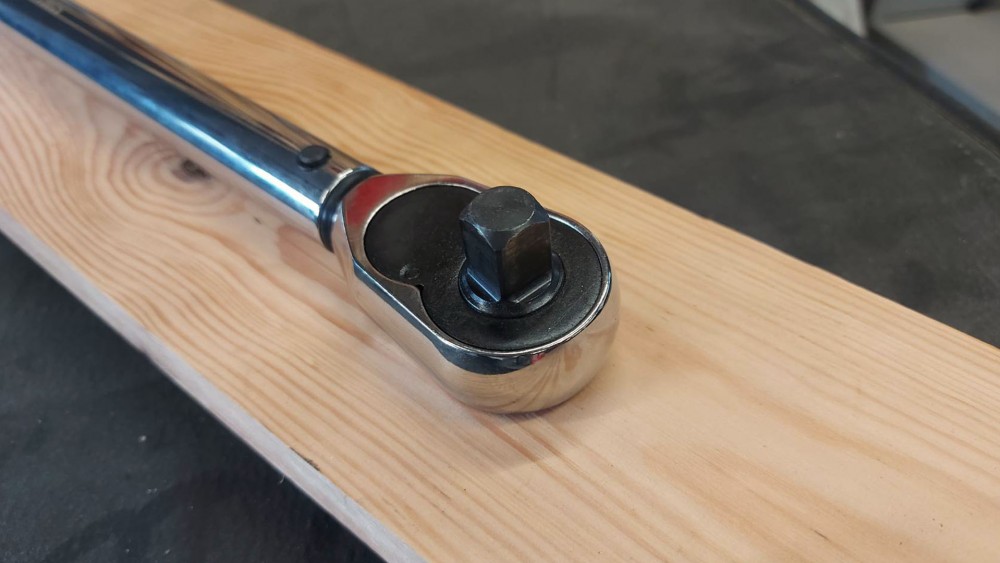
A torque wrench is an essential part of any mechanic's toolkit, used to tighten nuts and bolts. Its unique construction, which includes threaded fasteners, allows users to apply the correct amount of torque load to tighten them properly without damaging your engine or other internal components. A torque wrench uses a ratcheting mechanism combined with a gear set to rotate the wrench handle back while holding the fastener in place, tightening and loosening bolts to the correct torque. The best torque wrenches provide accurate torque readings (displayed in foot-pounds), feature durable construction, and are available in four drive sizes: 1/4 inch, 3/8 inch, 1/2 inch, and 3/4 inch.
A torque wrench is a tool used to tighten nuts and bolts to a specified torque level. It is a type of wrench with a calibrated mechanism that measures and indicates the amount of force applied to the fastener.
Here are the basic steps for using a torque wrench:
1. Determine the required torque: Check the manufacturer's specifications for the bolt or nut you are tightening to determine the required torque level. This information can often be found in the vehicle owner's manual or on the part itself.
2. Set the torque wrench: Set the torque wrench to the desired torque level by adjusting the handle or rotating knob on the wrench. Be sure to use the correct unit of measurement (such as foot-pounds or Newton-meters).
3. Position the wrench: Place the torque wrench onto the bolt or nut you want to tighten. Ensure the square drive is securely seated in the socket.
4. Apply force: Apply force to the wrench by turning it in the direction required to tighten the bolt or nut. Continue turning the wrench until it clicks or the indicator shows that the desired torque has been reached.
5. Recheck the torque: After tightening the bolt or nut to the desired torque, double-check the torque level with the torque wrench to ensure it has been tightened correctly.
6. Store the torque wrench properly: When not in use, store the torque wrench in a dry, clean place and avoid dropping or damaging it.
By following these steps, you can use a torque wrench to ensure that bolts and nuts are tightened to the correct torque level, helping to prevent overtightening or undertightening that could damage or cause the fastened parts to fail.
Why Buy a Torque Wrench
You will get accurate measurements by using a torque wrench. Because many automotive components require proper torque levels to be safe, a torque wrench provides a precise way to hit the correct torque specifications the first time, making it easy to reach manufacturer-recommended levels every time. This is especially crucial for parts like lug nuts that secure critical components. The main reason a torque wrench is so essential comes down to safety: torquing parts too much or too little is dangerous. Beyond the hazards of loose parts, excessive torque can damage the components.
Types of Torque Wrenches
Click Torque Wrench - A great choice for automotive work in most garages and for professional mechanics. When the correct amount of torque is applied, you will feel and hear a click to notify you that the proper torque has been reached. This means you don't need to keep your eyes glued to a gauge while contorting like an acrobat under your car tightening hard-to-reach bolts. It is crucial that you do not apply additional torque once you hear the click, because although the proper torque has been reached, the wrench does not prevent you from exerting extra force. These are our favorites and the type we recommend for most automotive jobs.
Electronic Torque Wrench - Also known as a digital torque wrench, it operates on the same principle as a click torque wrench, but instead of clicking, it beeps. Electronic torque wrenches provide both an audible alert when the correct torque is reached and a digital torque reading. They also feature cool options like peak torque memory, etc. As you might expect, these added features come with an extra cost. We found that we didn't really make use of all the bells and whistles an electronic torque wrench offers, so it didn't justify the extra cost over a click type.
Beam Torque Wrench - This is the oldest and simplest design available, but it can be the least accurate and least reliable. With this type, a beam flexes against a visible scale that indicates the amount of applied torque in real time. Beam torque wrenches are often the most economical, making them a great option for those who do not foresee using a torque wrench frequently. It should be noted that although beam torque wrenches are inexpensive, they are generally quite heavy. You must visually monitor the scale, which makes them slightly more cumbersome to use, and they are only as accurate as your hand-eye coordination.
Features of a Torque Wrench
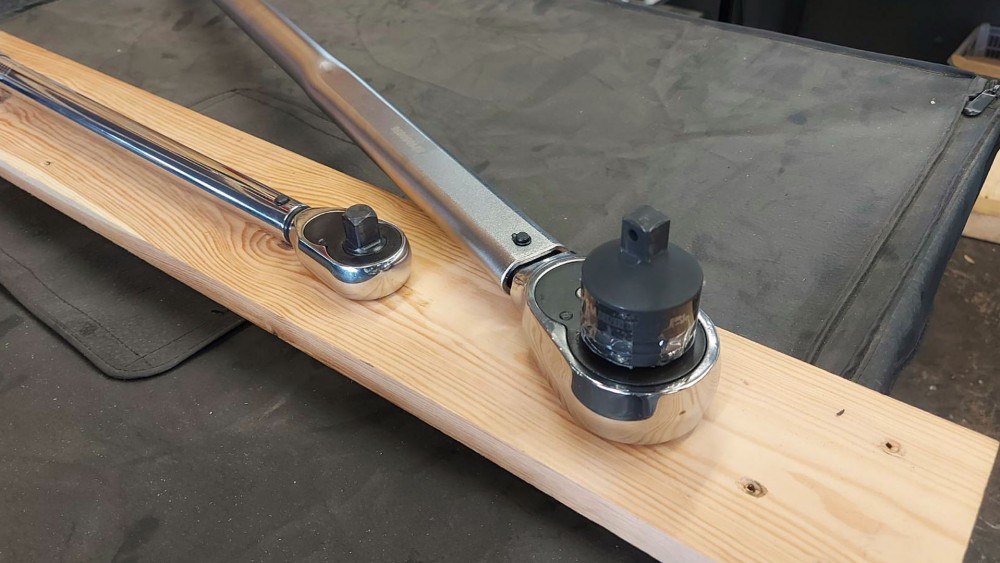
Size and Torque Range - Nuts and bolts used in automotive applications come in all shapes and sizes, each requiring a different torque range specified in ft-lb or in-lb. Torque wrenches come in four drive sizes: 1/4 inch, 3/8 inch, 1/2 inch, and 3/4 inch. The larger the size, the greater the torque capacity. A 1/4-inch torque wrench works with small nuts and bolts with a torque range usually up to 50–250 in-lb. A 3/8-inch drive works with standard nut and bolt sizes found in almost any mechanic shop, operating from 15–75 ft-lb. 1/2-inch and 3/4-inch drive torque wrenches are used for larger internal components such as engine mounts, transmission mounts, and center lug nuts with ranges of 30 ft-lb and up.
Accuracy - Torque wrenches vary in accuracy. Good ones have an accuracy better than 5%. A quality torque wrench will come with a dated certificate indicating calibration and accuracy. On that note, torque wrenches should be recalibrated periodically according to the manufacturer's maintenance schedule to maintain their accuracy.
Torque Range - Our recommendation is to look for a torque wrench with a range of 150 ft-lb or more, which is sufficient for tightening automotive lug nuts. Some can deliver up to 500 ft-lb, which is required for heavier-duty applications. Anything under 100 ft-lb is typically reserved for light-duty tasks, such as bicycles and scooters.
Comfort and Extra Features - If a torque wrench is not ergonomically optimized for comfort, it can lead to wrist fatigue. Many modern torque wrenches feature rubberized handles, knurled grips, or steel handles with raised textures. Some models come with a flexible head—up to 15 degrees—which allows access to hard-to-reach spots. Don't forget readability. Click-type and beam torque wrenches use handle-mounted scales to display torque values. Digital torque wrenches feature a digital display, which is the most straightforward. Only slip-type torque wrenches do not use a scale.
Storage - Never underestimate the value of a good carrying case for your torque wrench. Repeated wear and tear or constant banging around in a toolbox can cause it to lose sensitivity and accuracy over time. Look for a torque wrench with a protective case that includes ample padding.
Torque Wrenches is an essential tool for anyone working in the automotive industry. It is crucial for properly tightening engine bolts, nuts, and other automotive components.