


 EN
 ไทย


Customers Also Purchased


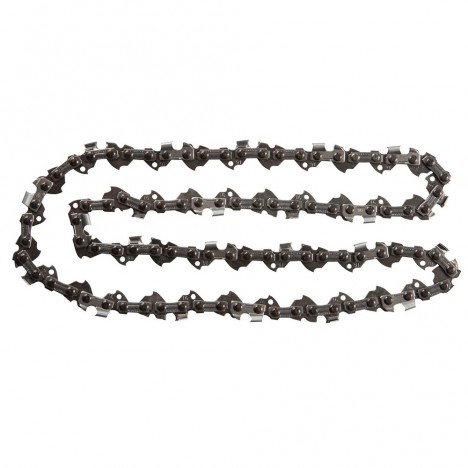
Are you thinking of buying Chainsaws your first one, but not sure whether to choose a gas chainsaw or an electric chainsaw? If so, you should read this article to help you make the right decision. I have compiled this comprehensive guide to electric chainsaws and gas chainsaws in detail below.
How do electric chainsaws work?
There are 2 types of electric chainsaws: corded and cordless, and both operate in the same way, which is chain-driven. The only difference between the two is how the electric chainsaw is powered. A corded electric chainsaw requires power from an outlet during operation, whereas a cordless electric chainsaw runs on a battery.

How electric chainsaws work that you need to know
Electric chainsaws are driven by an electric motor.
Electric motors have fewer moving parts than gas engines. An internal power-producing component called the "armature" converts electrical energy into mechanical energy in the form of torque.
Torque is transferred to a shaft inside the electric chainsaw that causes the chain to rotate around the guide bar.
How do gas chainsaws work?
There are 2 types of gas chainsaws: 2-stroke engines and 4-stroke engines. For the purposes of this guide, the only difference you need to know between the two is that a 2-stroke chainsaw requires you to mix 2-cycle oil with gasoline and pour it into a single tank to fuel the engine. This fuel mixture is what properly lubricates the engine components. Meanwhile, a 4-stroke chainsaw does not require an oil/gasoline mix because it has 2 separate tanks.

How gas chainsaws work that you need to know
- Fuel moves through the carburetor to mix with air.
- The air/fuel mixture passes into the cylinder.
- Inside the cylinder, the air/fuel mixture is ignited by the spark plug.
- As the air/fuel mixture combusts, it releases energy that pushes the piston back and forth.
- The connecting rod and crankshaft convert the linear motion of the piston into rotary motion.
- The driveshaft transmits power to the clutch.
- A centrifugal clutch connects the engine to the chain via a sprocket that rotates it around the guide bar.
Why Choose an Electric Chainsaw?
Pros
- Lightweight and compact, making it easy to handle for people of all sizes.
- Quieter than gas chainsaws and only makes noise when you pull the throttle.
- Electric chainsaws do not require gasoline or produce odors.
- Starts with just the push of a button.
- Electric chainsaws are best suited for tree trimming, pruning branches, cutting small logs, and other cutting tasks around your home or garden.
- Easy to maintain because there is no mixed fuel or filters to clean.
- Easy to store; simply turn off the electric chainsaw and unplug it or remove the battery.
- Corded electric chainsaws are cheaper than gas chainsaws, costing about one-third the price.
- Corded electric chainsaws run continuously as long as they are plugged in, but cordless electric chainsaws are limited by battery charge (typically running for 30 minutes to 1 hour).
Disadvantages
- Electric chainsaws lack the bar length and power to cut large trees. The longest guide bar you will find on an electric chainsaw is 18 inches.
- Cuts slower than gas chainsaws and is best suited for trimming, landscaping, and cutting small trees. Corded electric chainsaws are limited by the length of the power cord.
- Battery-powered electric chainsaws run for approximately 1 hour and take between 20 minutes to 1 hour or more per charge.
Why Choose a Gas Chainsaw?
Pros
- Best suited for heavy-duty work and handles tasks such as pruning, felling large trees, chopping firewood, etc.
- Available with bar lengths up to 72 inches.
- Cuts faster than electric chainsaws.
- Highly portable and can be used anywhere, without range limitations like electric chainsaws
- Gas chainsaws can run all day long, as long as you have enough fuel.
Disadvantages
- Gas chainsaws are much heavier than electric chainsaws and harder to handle for extended periods
- Gas chainsaws require you to keep fuel on hand and carry it with you while cutting
- Gas chainsaws require a specific mix of fuel and oil if equipped with a 2-stroke engine
- Gas chainsaws emit odors and exhaust fumes
- Gas chainsaws are very loud, and operators should wear hearing protection
- Gas chainsaws are more expensive than corded electric chainsaws, but comparable in price to cordless electric chainsaws
- Gas chainsaws require regular engine maintenance to run efficiently
- Gas chainsaws use a pull-start cord, which can become difficult as the engine ages
Comparison Chart: Gas Chainsaw vs. Electric Chainsaw

|
Electric Chainsaw |
Gas Chainsaw |
|
Lightweight and compact |
Heavy |
|
Quiet with zero fuel emissions |
Loud with gas odor |
|
Runs on electricity or battery |
2-stroke uses mixed fuel, and 4-stroke uses gas only |
|
Starts with a button |
Starts with a pull cord |
|
Suitable for basic tasks |
Suitable for all types of heavy-duty tasks |
|
Relatively maintenance-free |
Requires regular maintenance |
|
Cheapest type (for corded electric models) |
Most expensive type |
|
Runs indefinitely (for corded electric models) |
Runs as long as you can refuel it |
|
Limited reach (for corded electric models) |
No reach limits |
|
Bar length up to only 18 inches |
Bar length up to 72 inches |
Hopefully, this article will be helpful in deciding which one to choose Chainsaws type—gasoline or electric to best suit your application