


 EN
 ไทย


Customers Also Purchased

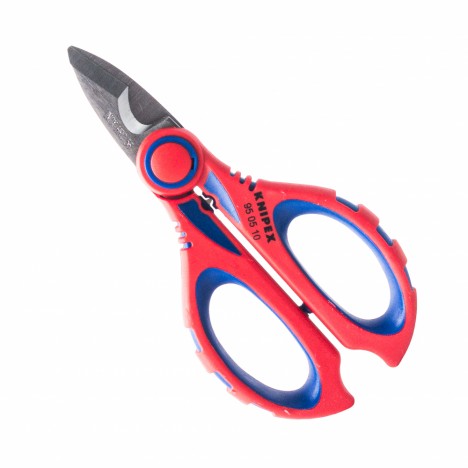
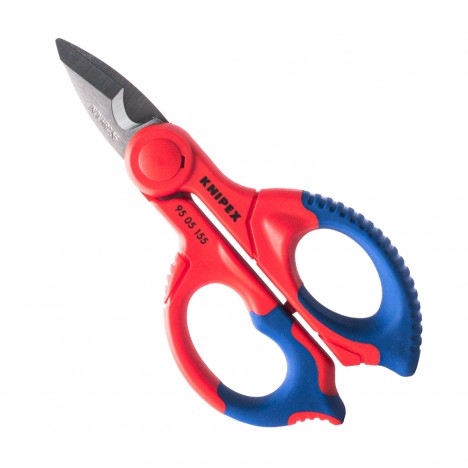


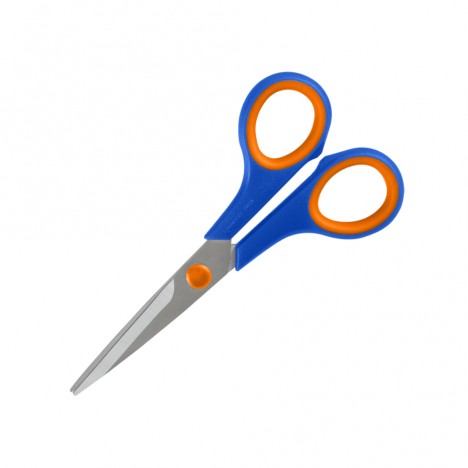
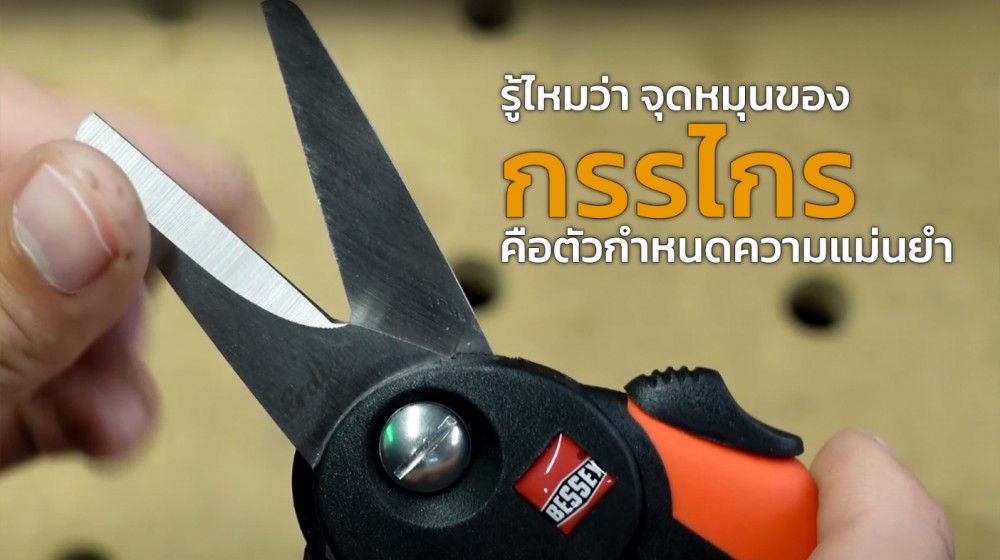
Imagine this: Scissors Take a look at the scissors you use every day, whether they are fabric shears, paper scissors, or tin snips. All types of scissors have one thing in common: the "pivot point" located right in the center between the handles and the blades. It can truly be considered the heart of the entire pair of scissors.
We believe many people might not have ever paid attention to it, because when we pick up a pair of scissors to cut, we usually focus on "the sharpness of the blades, right?" Who would have thought that the small bolt in the middle is actually the one controlling everything—from clamping force, smoothness, cutting precision, to the tactile feedback when squeezing the handles.
Therefore, whenever you pick up a pair of scissors to cut anything, take a quick look at that "pivot point." You might just realize that a great pair of scissors isn't only about the sharpness, but about the "perfect pivot" balancing force and feel in your hand.
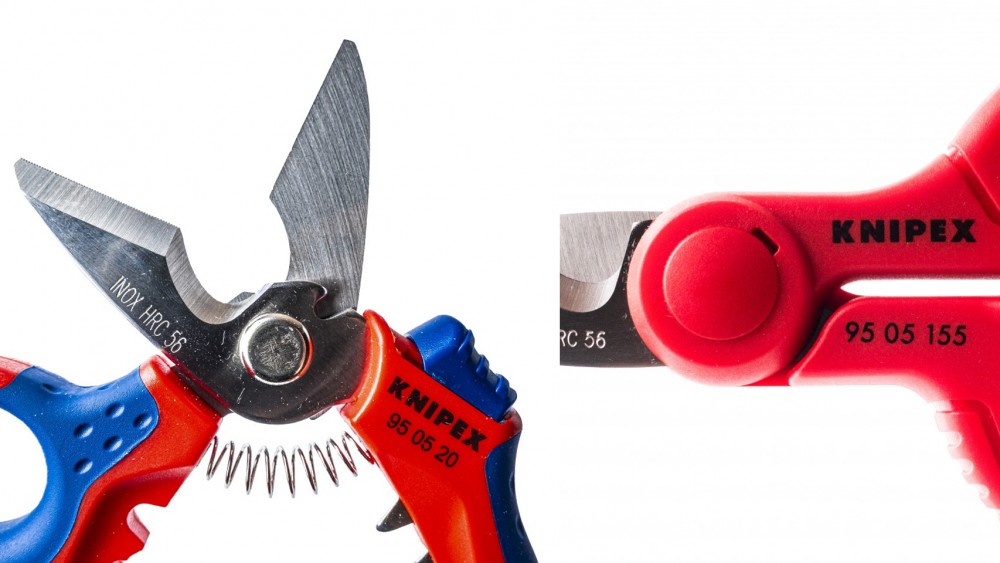
Why is the pivot point so important to scissors?
Many people think scissors are merely two blades coming together. In reality, it's far more complex. The force exerted by your hand through the handles is transmitted to the pivot point before being distributed to both blades. If the pivot point is poorly designed or not assembled tightly enough, all that force gets lost along the way.
Have you ever used scissors that felt powerless—unable to cut through even thin paper, or requiring you to squeeze with all your might just to make a cut? Such problems aren't always caused by dull blades; they often stem from a loose pivot point or an off-center design.
For good scissors, the pivot point must be positioned optimally relative to the blade angle and handle length to ensure force is transferred from the hand as efficiently as possible. It works just like a lever in physics: if the "fulcrum" is placed correctly, minimal effort can generate immense cutting power.
From budget scissors to professional grade
If you have ever tried cheap scissors versus high-end ones, you will immediately notice the difference in feel. Cheap scissors usually use a standard steel rivet hammered into the blades without any adjustment mechanism. Over time, the rivet loosens and the blades begin to separate, causing them to "pinch rather than cut."
On the other hand, professional-grade scissors feature pivot systems with "tension adjustment screws" or "ball bearings" that provide smoother blade movement and allow you to adjust blade tension to suit the material being cut. For example, professional tailors' fabric shears require the pivot to be calibrated just right—neither too tight that it binds, nor too loose that it slips—because fabric stretches easily and demands very consistent cutting pressure.
We once tried a pair of Japanese tailoring shears costing several thousand baht. Right from the first touch, it was clear they were completely different from ordinary scissors. The subtle, crisp "click" as the blades met was incredibly solid and precise. The pivot moved so smoothly it required virtually no effort, yet you could distinctly feel consistent blade pressure along the entire edge. It’s an experience that immediately makes you understand: "This is what sets great scissors apart."
Simple physics of scissors you might not know
Scissors are tools that operate on the principle of a lever, with the pivot serving as the "fulcrum." The force from your hand is multiplied according to the ratio of the handle length to the blade length. Longer handles provide more force at the tip of the blades. However, if the pivot deviates from its optimal balance point, force is immediately lost.
Simply put, if your scissors have a pivot point that isn't properly aligned—such as being skewed too far to one side or having an uneven gap between the blades—the cutting force will be distributed unevenly. This results in cutting only near the base while the tips fail to cut through, a problem many encounter without realizing why.
In addition, the pivot material directly affects cutting performance. For instance, pivots with stainless steel bearings are smoother and more durable than those using ordinary steel rivets, ensuring cutting power doesn't degrade even after years of continuous use.
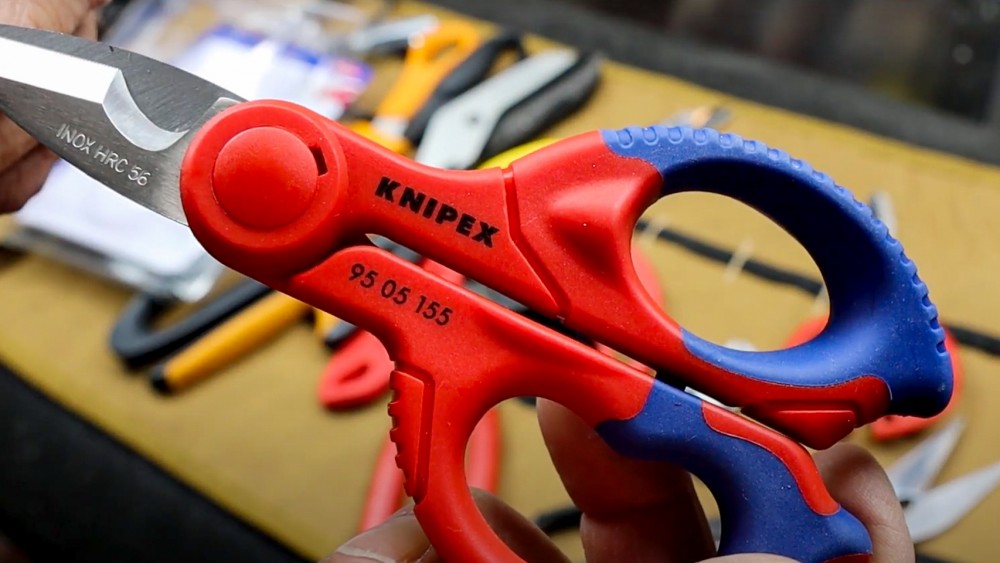
Loose pivot = ruined work
Many don't realize that even a slightly loose pivot is enough to make a favorite pair of scissors completely unusable. When the pivot loosens, the two blades no longer "mesh" properly, preventing cutting force from reaching the tips. Have you ever tried cutting plastic or rope, only to have the blades slip right past it? That is a clear sign of a loose pivot. If you experience this, don't force it—doing so accelerates pivot wear and can even warp the blades permanently.
Some scissors are designed with an adjustable pivot that can be tightened with a small screwdriver or wrench, allowing users to fine-tune the blade tension themselves. This is a huge advantage for heavy users like tailors, electricians, or metalworkers, as they can "reset the cutting tension" whenever the scissors start to feel loose.
So, how tight should the pivot point be on scissors?
The true answer is "just right for your hand." But what feels right varies from person to person. You have to try it out yourself to find the sweet spot, because different cutting tasks require very different amounts of force.
For instance, with fabric scissors, the pivot point should be slightly tighter than standard scissors. When cutting fabric, we need continuous pressure that glides along the entire line without letting the fabric shift or slip out from the cutting edge. Simply put, it needs to be "tight but not stiff," like a firm, confident handshake that isn't strained.
On the other hand, for paper or thin plastic scissors used in offices or small DIY projects, they should be set to feel "smooth and effortless." This allows for continuous opening and closing, enabling fast cutting without exerting much effort. If the pivot is too tight, you will immediately feel wrist fatigue during prolonged cutting. But when it comes to metal or aluminum shears, that's an entirely different story. The pivot must be truly tight so that the pressure from the handles is fully transferred to the blade tips. If it ever becomes loose, the cutting power disappears instantly—like swinging a hammer with a wobbly handle, it will barely cut at all.
A simple way to check if your scissors' pivot is properly set is to hold the scissors vertically and try wiggling the blades. If the blades have excessive play or wobble, it means they are too loose. However, if they won't budge at all and feel stiff from the start of the squeeze, that's a bit too tight. You need to loosen the screw just a tiny bit, just enough so you feel the blades are still making contact without straining your fingers.
The material of the scissors' pivot is just as important.
Not all scissors use the same material for their pivot. Some models use chrome-plated steel, some use brass, and professional-grade models use stainless steel or actual ball bearings for smoothness and durability.
- Brass: Suitable for tasks requiring smooth, quiet rotation, such as Japanese fabric shears. Because brass possesses self-lubricating properties and does not rust, you can immediately feel that opening and closing is gentle on the hands, without any annoying squeaking sounds. It's almost as if it naturally contains its own lubricant.
- Hardened steel: Strong and highly resistant to clamping force, making it suitable for metal snips or heavy-duty mechanical work. When handling them, you can clearly feel the solid grip, as if extra power is built right into the blades. When cutting sheet metal or wire, you can feel it shear cleanly in a single stroke without having to exert excessive force.
- Ball bearings: Used in premium scissors, such as carbon fiber shears. They help keep opening and closing steady and reduce the need for frequent oiling. When using them, you'll immediately notice how exceptionally smooth they are, as if assisted by an internal rotating force. You don't need to push hard yet you get full cutting power, and the opening and closing action is whisper-quiet, assuring you of precision craftsmanship.
We once tried a pair of vintage scissors with a brass pivot belonging to a veteran tailor. He told us he had been using them for over 10 years, and they still rotated as smoothly as new—just needing a drop of sewing machine oil once a month. That is precisely the difference quality materials make. And if you want your own scissors to stay with you for a long time without dulling, stiffening, or loosening, we have 10 maintenance tips to keep your scissors sharp at all times So you can use them for a long time
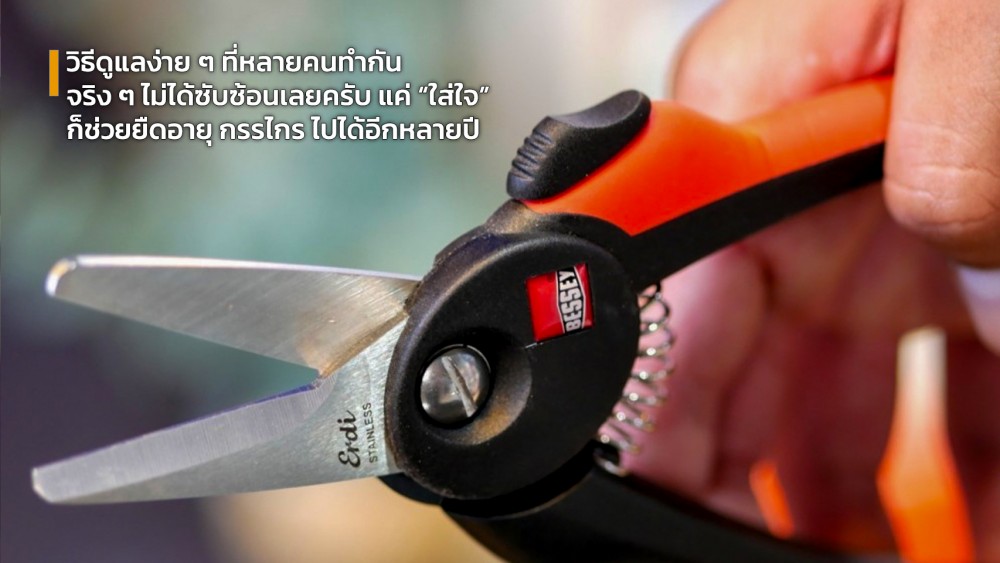
Caring for the pivot point to extend the lifespan of scissors
No matter how good or expensive a pair of scissors is, if you don't take care of the "pivot point," it will inevitably deteriorate. This part works the hardest, bearing the load every time we squeeze and release. Anyone who uses scissors frequently knows that once the pivot gets stiff or starts making a "clicking" noise, that's a warning sign it is starting to wear out.
- Try wiping them clean after every use, especially around the pivot area. If dust particles, fabric fibers, or small metal shavings get inside, they will grind and cause wear. Over prolonged use, the pivot will loosen without you realizing it.
- Apply a light drop of oil every 1–2 months. There is no need to drench it; just a dab of sewing machine oil or general lubricant is enough. It helps the pivot rotate more smoothly and provides excellent rust protection. This is especially noticeable if you store your scissors in a toolbox exposed to humidity.
- Do not attempt to hammer or squeeze the blades yourself when they feel stiff. Force applied in the wrong direction can bend the rivet or loosen the pin even further. If it really feels too tight or stiff, gently adjusting the screw with a screwdriver or wrench is much safer.
- If there is a "squeaking" or "clicking" sound, stop using them and inspect immediately. Fine dust might have gotten inside, or the screw's torque may have loosened slightly, which will cause more damage if left unchecked.
Select Scissors to suit the application