


 EN
 ไทย


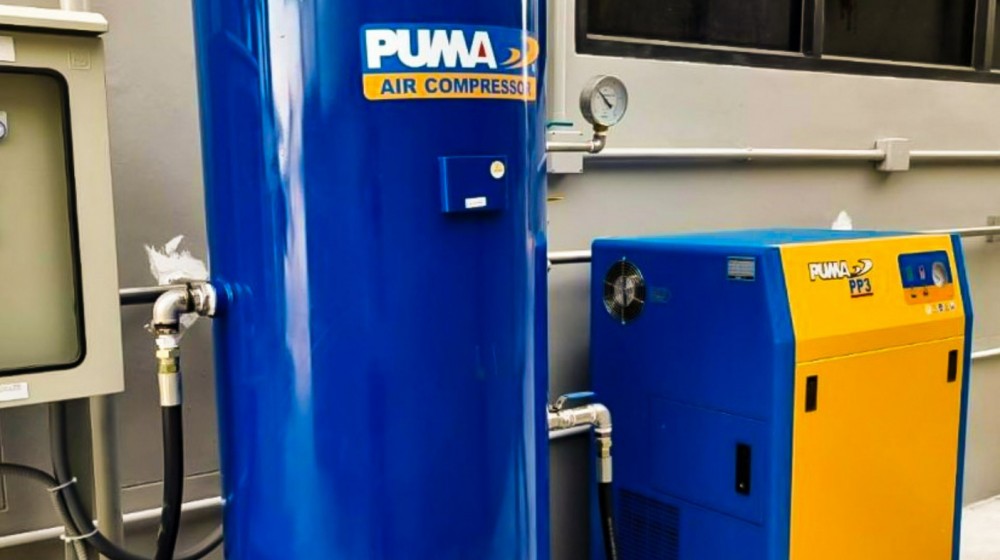
Customers Also Purchased


Selecting the right air compressor for your specific workload is crucial. Choosing a model that doesn't match the duty cycle can lead to performance issues, compromise the machine's service life, and increase long-term operating costs. One option gaining growing popularity in applications requiring continuous operation is the Screw Air Compressor (Screw Air Compressor), well-known for its durability, quiet operation, and steady air delivery.
In this article, I will introduce you to screw air compressors in greater depth—covering their operating principles, advantages, and why many factories choose them over traditional models—helping you easily decide which type suits your work best. We'll delve deep into the pros, highlights, and reasons why screw compressors are a top choice for heavy-duty, continuous applications.
An air compressor isn't just an air pump; it's the heart of the production system
Before we discuss whether a screw compressor is suitable or not, let's consider what an air compressor really is. Many might view it merely as a machine for inflating tires or blowing dust. But in industrial operations—be it food production lines, electronics factories, spray painting, pneumatic CNC systems, or furniture manufacturing—compressed air serves as the lifeblood of the entire process. If air pressure drops, fluctuates, or the compressor breaks down, the entire line could grind to a halt, wasting production time and running up costs.
So for major operations, can we really rely on a small unit that needs frequent cooldown breaks and overheats during use?
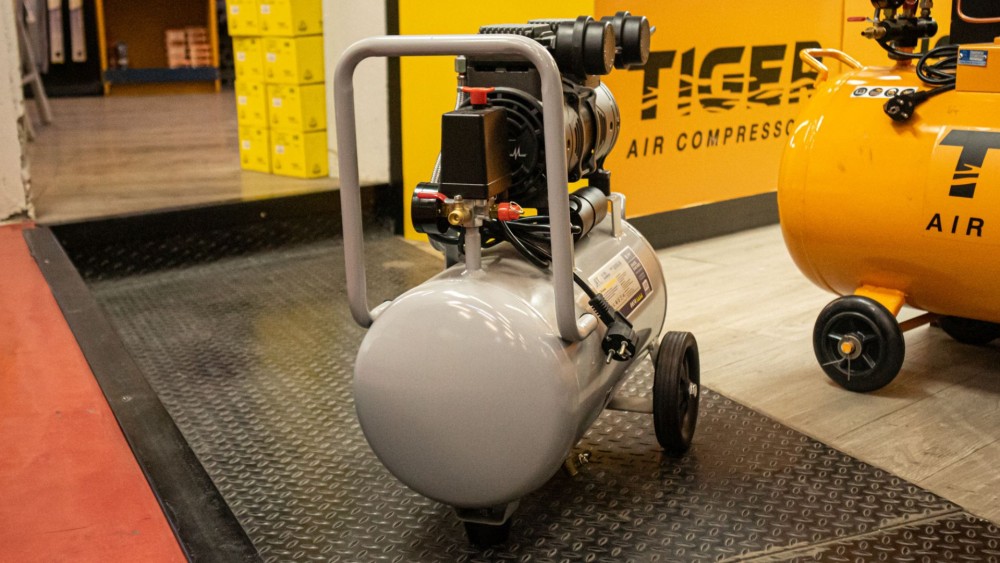
Can piston air compressors handle heavy-duty work?
At this point, many may wonder: can an affordable piston air compressor do the job? The answer is "yes, but with limitations." Piston compressors are suited for light, intermittent air usage—such as a carpenter firing pneumatic nails occasionally, or a small car wash. However, for applications requiring continuous air delivery—like heavy air-consuming machinery running all day—a piston compressor will overheat rapidly and require frequent breaks to prevent breakdown.
Piston air compressors come in various types to choose from based on size and capacity, such as 1-cylinder and 2-cylinder models that deliver different air outputs, suitable for general tasks up to jobs requiring slightly higher air volume. They are also divided into belt-driven and direct-drive types; direct-drive models connect the motor directly to the compressor pump without belts, making the unit more compact, lightweight, easy to install, and free from long-term concerns about belt slackening or breakage.
Direct-drive piston compressors are mostly of the following type:
- Rotary type, which uses a motor to drive smooth, continuous air compression.
- Oil-free air compressors (silent air compressors) do not use lubricating oil in the cylinders. They are ideal for applications requiring clean air and, most importantly, operate much more quietly than conventional piston air compressors.
Overall, direct-drive piston air compressors are suitable for light, intermittent use where quiet operation is the main priority. Belt-driven models, on the other hand, offer greater long-term durability and higher air output, making them ideal for professional craftsmen or small-scale factory operations.
One point to consider is that noise from piston air compressors is relatively loud. If installed in an enclosed space or near employee workstations, you may need to implement soundproofing or use a separate machine room. In addition, the air pressure and volume delivered are pulsating, which can sometimes cause "surges," especially with tools that require a steady, consistent airflow.
To make a simple comparison, a piston compressor is like a sprinter: fast and powerful, but needs frequent rests and is not built for running a marathon.
So, how is a rotary screw air compressor different?
A rotary screw air compressor can truly be called an air compressor designed for continuous, all-day operation. The machine is engineered to run for long periods without needing to shut down to cool off—unlike piston air compressors, which suffer from heat accumulation limitations and must be paused periodically to prevent damage. Simply put, piston air compressors have a specific Duty Cycle that limits continuous runtime; for example, running for 5 minutes may require 5 minutes of rest to prevent heat buildup from damaging the unit. Forcing them to run continuously without rest can cause internal components to wear out rapidly or fail in a short period.
Most rotary screw air compressors are designed with a duty cycle of up to 100%, meaning they can operate continuously around the clock without needing to rest. They are ideal for factories or systems requiring a non-stop air supply.
This makes rotary screw air compressors ideal for automated machinery or paint spray lines that require consistent airflow, effectively eliminating various issues caused by fluctuating air pressure.
In addition to being more durable, rotary screw air compressors feature a compression system that operates smoothly without pressure surges. This makes them ideal for machinery or automated systems that require steady, stable air pressure without frequent fluctuations. Most importantly, they run considerably quieter than standard air compressors, making them much easier to use in shared workspaces alongside personnel.
In terms of operational performance, to put it simply: a piston air compressor is like a sprinter, while a rotary screw air compressor is a true marathon runner.
Working Principle of a Rotary Screw Air Compressor
A rotary screw air compressor operates through the rotation of two interlocking helical screw rotors that draw air in and compress it within the space between the threads before delivering it to an air receiver tank or various machinery that requires it.
Without reciprocating pistons moving up and down, operation is smooth, noise is low, and most importantly, there is no need for rest intervals—allowing it to run continuously 24 hours a day with ease.
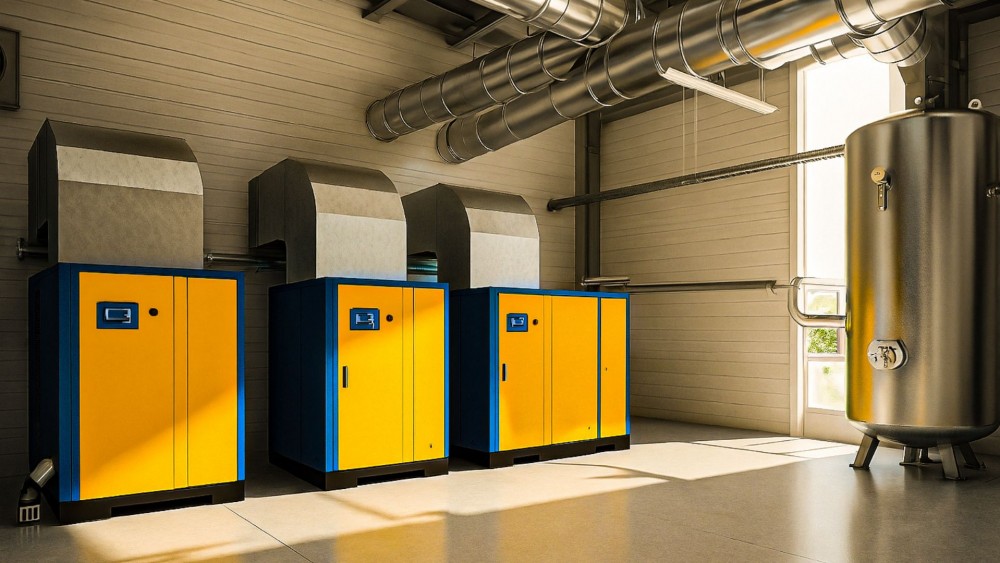
Key Highlights of Rotary Screw Air Compressors: Why They Are the Choice for Heavy-Duty Work
For anyone considering an air compressor for systems that demand high continuity, rotary screw air compressors offer several outstanding advantages, such as:
- Long Continuous Operation: Rotary screw air compressors can run 24 hours a day without stopping, unlike piston compressors that require cooling periods to avoid breakdown.
- Much Quieter Operation: In factories requiring a low-noise environment, quieter machine operation is a distinct advantage.
- Consistent Airflow Without Surges: Screw air compressors are ideal for machinery that requires high precision, such as CNC machines or paint spray lines.
- More energy-efficient in the long run: Many screw air compressor models come with an inverter system that adjusts power consumption according to air demand. This helps save significant electricity costs, even when running continuously for long periods.
- Easy maintenance with clear service intervals: Screw air compressors do not require piston replacements—only filter and oil changes according to the schedule.
- Long service life: They can easily last for over 10 years if maintained according to the manual.
What applications make a screw air compressor worth the investment?
If your business or factory fits the following operating characteristics, a screw air compressor is definitely worth considering. Although the price is noticeably higher than a conventional piston air compressor, what you get in return is stability, long-term cost-effectiveness, and clearly superior operational continuity:
- Manufacturing plants running air systems throughout entire shifts
- Industrial spray painting that requires continuous air supply
- CNC machinery or automated systems requiring precise air pressure
- Food processing plants using compressed air in packaging or conveying processes
- Operations using multiple pneumatic tools simultaneously and continuously
- Businesses aiming to reduce long-term energy costs
Screw air compressors in everyday life
Many might think screw air compressors are only for large industrial factories, but in reality, they can be found much closer to our daily lives than expected. Screw air compressors are not limited to factory production lines; they are also used in various settings that demand continuous air, quiet operation, and energy efficiency, such as:
- Auto service centers: Air compressors are often used to supply air to various pneumatic tools, especially paint spray systems. Medium-sized garages and above, which may need to run air continuously throughout the day, often choose screw air compressors because they deliver consistent airflow, operate quietly, and support multiple pneumatic tools simultaneously.
- Automatic car washes: Used to control robotic arms, water jets, rotating brushes, automatic doors, and post-wash blow-dry systems—all of which require consistent and continuous air pressure. Screw air compressors ensure smooth, uninterrupted operation and run quieter than conventional air compressors, making them suitable for shops located in residential areas or shopping malls.
- Hospitals: Can be used in compressed air systems for certain medical devices, such as ventilators, surgical tools, and pure air delivery systems that require clean air and constant pressure at all times. Especially in controlled environments like operating rooms and cleanrooms, oil-free screw air compressors are often chosen because they deliver stable air free of oil contamination.
- Small and medium-sized industrial applications: Such as furniture factories, metal foundries, or packaging production lines that require continuous air supply across multiple points at all times. Screw air compressors fit the bill by delivering steady airflow, quiet operation, and supporting multiple machines simultaneously. Some facilities also use them in laboratories or scientific instruments.
- High-end households or home offices with complex automation systems are also starting to use small screw air compressors designed specifically for limited spaces and ultra-quiet operation.
Which screw air compressor is right for you?
Not every screw air compressor is suitable for every job. I recommend considering the following factors:
- Horsepower (HP): The larger the machine, the more air it produces, but it also consumes more electricity. Choose a size that matches your actual load.
- Air demand (CFM or L/min): You need to know beforehand how much air your machinery uses per day to choose the right size.
- Does it have an inverter?: Models with an inverter are more energy-efficient for applications with fluctuating, non-constant air demand.
- How good is the oil separator and air filtration system?: Highly crucial for food or electronics applications that require clean air.
Conclusion: If your work is heavy-duty and continuous, do not overlook screw air compressors.
I understand that every business has a limited budget and every machine is an investment. However, if your work requires continuous air all day long, consider weighing the options: buying traditional piston compressors that require frequent repairs and downtime, versus investing once in a screw air compressor that offers stability, energy savings, and reduces the risk of your entire operation coming to a halt.
Finally, I'm not saying screw air compressors are the answer for every job. But for heavy-duty, high-air-demand, and continuous use, this is a choice that I truly believe is irreplaceable.
If you are still not sure which screwair compressor size or model is right for you, feel free to consult with our experts in-store or via chat.