EN
 ไทย


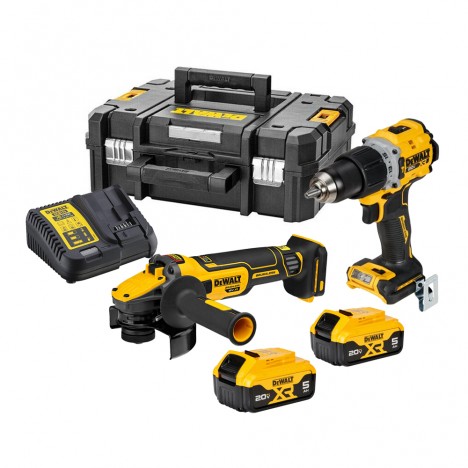
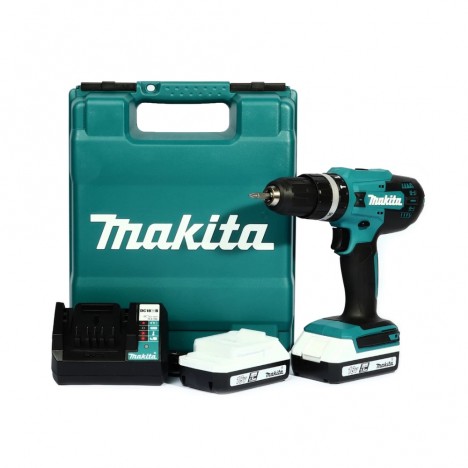
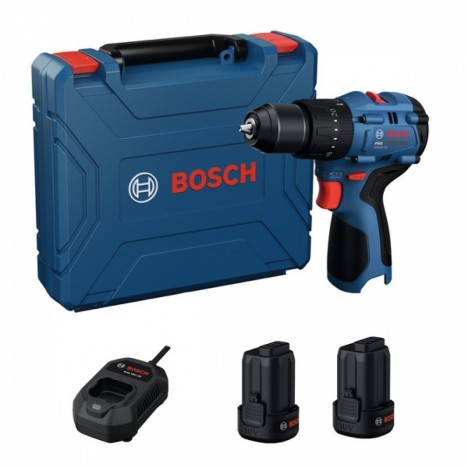
Customers Also Purchased
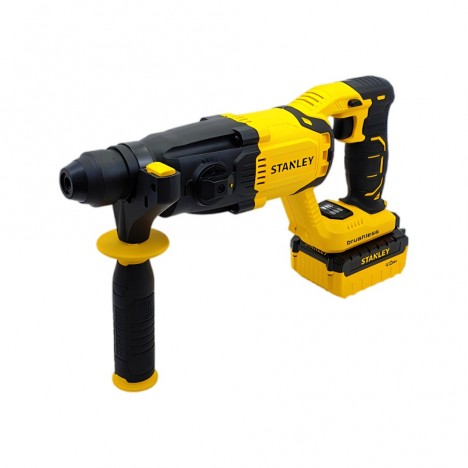
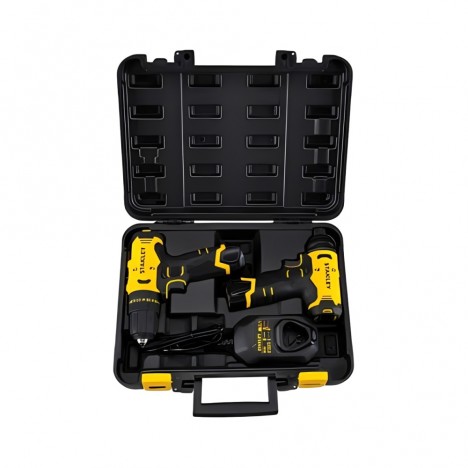
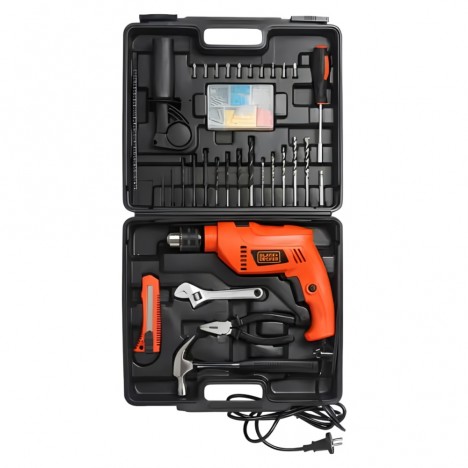


I believe many people who are not professional tradesmen or those just starting out with home DIY have probably been confused by the term "hammer drill." The name sounds quite aggressive, doesn't it? As if it's meant to pound into something with great force. But in reality, it isn't quite that intimidating, and there are good reasons why you should understand what it is, when to use it, and what jobs it suits best.
In this article, I'll clear up all the doubts about impact/hammer drills in an easy-to-understand way, so you can read it and make better-informed purchasing and usage decisions with deeper insight.
What is an impact/hammer drill? And why does it have the word "impact" (or hammer) in its name?
Before we dive into what a hammer drill is, let's imagine a scenario: suppose you have to drill into a hard wall like plaster or cement, and you grab a regular drill. After drilling for a while, the bit just spins in place without penetrating. Many people who rarely do handyman work might not know that each type of drill serves a different purpose. And this slightly serious-sounding "impact/hammer drill" was built specifically to make drilling hard materials much easier.
How a Hammer Drill Works
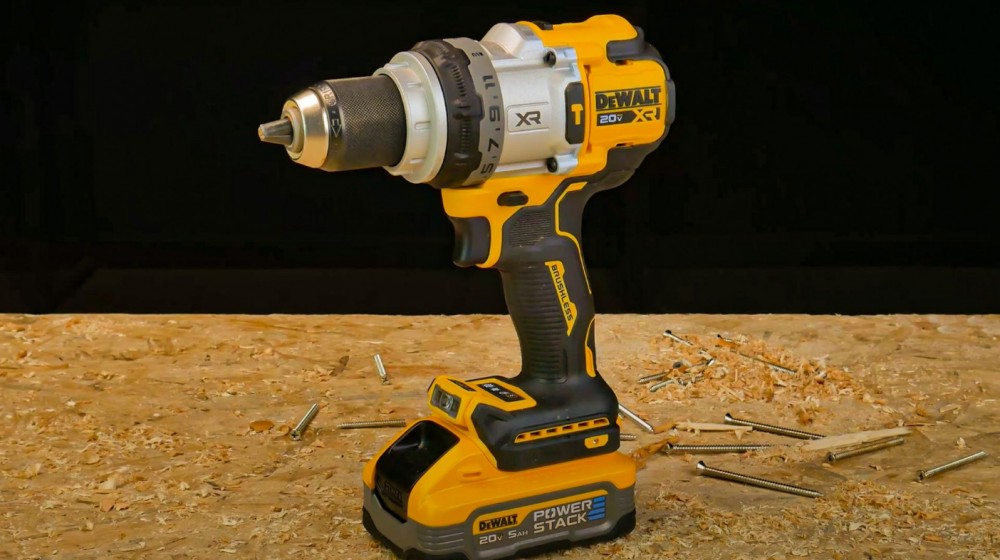
First, let's clarify that a hammer drill—sometimes also called an impact drill—is a drill that can "drill" just like a regular drill, but adds a special extra function: the "hammering" mechanism.
This hammering system works by generating an impact force along the linear axis of the drill bit. When drilling into hard walls or materials like plaster, brick, or cement, the drill doesn't just rotate the bit; it also delivers rhythmic pounding impacts simultaneously.
Simply put, instead of just spinning like threading a screw, it both rotates and hammers the drill bit into the material. This allows it to drill through hard materials faster, with less effort, and with less fatigue than using a standard drill.
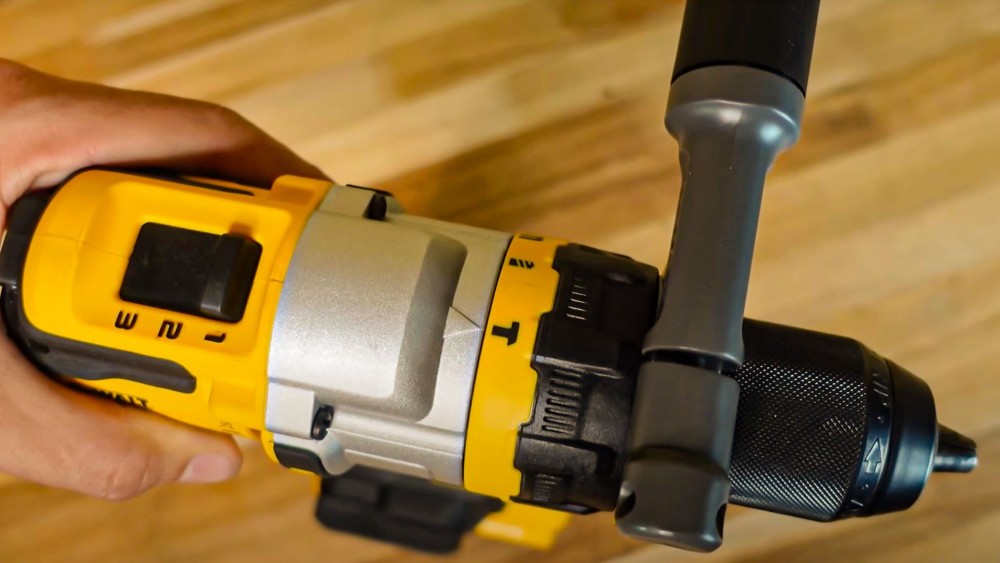
So how does it differ from a regular drill?
Another popular question is: if a regular drill can already drill, why complicate things with a hammer drill? The answer is simple: it's the capability to drill hard materials such as plaster walls, brick, or lightweight concrete.
A regular drill has enough torque for drilling wood, drilling metal, or driving screws. However, whenever you try to drill into a masonry wall, you'll often find the bit only penetrates shallowly before stalling or spinning freely in place, because masonry materials are both hard and brittle—too tough for the bit to penetrate with rotational force alone.
With a hammer drill, however, it helps "hammer" the drill bit forward faster, making drilling much easier without having to push hard or force it, and most importantly, it's safer for the user.
Who is a hammer drill suitable for?
So who should actually use a hammer drill? This question might sound basic, but it's actually very important. Even though this tool seems interesting and versatile, not everyone necessarily needs one or will get full value out of it. Let me take you through an in-depth look at which groups of people should keep a hammer drill at home or choose it as their primary work tool.
1. Beginners and DIY Enthusiasts
If you are someone starting DIY projects—such as mounting shelves, installing curtain rods, hanging pictures, etc., that require drilling into home walls—a hammer drill is an essential tool to have at home, because drilling into masonry becomes so much easier.
- Easier to use than a regular drill: A hammer drill reduces the downward pressure you need to apply, allowing even first-time users to drill walls easily.
- Fast and clean drilling: Thanks to the built-in hammering action, the drill bit penetrates the wall quickly without needing heavy force, and the resulting holes are generally cleaner.
- Adjustable operating modes: Some models allow you to switch between standard drilling and hammer modes as suited for the job, making it much more versatile.
Therefore, even if you just want to hang a small picture frame or mount a shelf at home, having a hammer drill around will make your life a whole lot easier.
2. Professional Tradespeople
For professional tradespeople or those who regularly perform installations, wall drilling, or construction work, an impact drill is practically an essential, must-have tool. In real work, you don't just drill into wooden walls or steel frames; you also encounter plaster walls, brick walls, or concrete.
- Work fast and save effort: When using an impact drill, the hammering action helps drive the drill bit into hard materials faster without requiring much pushing force from the user.
- Reduces the risk of burning out or damaging the tool: Because the tool doesn't have to overwork itself like a standard drill does when drilling concrete.
- Increases working precision: The drilled holes are straighter and have a more accurate depth, reducing the chance of errors when installing equipment or various structures.
3. People who want an all-in-one tool
Another group consists of people who don't want to buy multiple tools. If you only want to buy a single versatile drill, choosing an impact drill is considered a cost-effective choice because it can be used in both standard mode and hammer mode when needed.
- Saves space and money in the long run: No need to buy both a standard drill and a rotary hammer separately; a single tool can handle both jobs.
- Simple to use and suitable for a wide variety of tasks: Drilling wood, drilling metal, drilling masonry—it covers everything from general handyman jobs to home decoration.
What is the difference between an impact drill and a rotary hammer?
This is another question that comes up just as often. Many people wonder, "Are impact drills and rotary hammers the same thing? Or is buying just one enough?" This question sounds simple, but in reality, there's quite a bit behind it. Although their names are similar and both feature hammering action in their definitions, these two types of drills have quite different working mechanisms and strengths.
How do their hammering mechanisms differ?
An impact drill uses a mechanical ratchet/gear mechanism, which provides a suitable impact force for drilling brick walls, plaster, or general masonry for home installations or semi-professional jobs. A rotary hammer, on the other hand, uses an internal pneumatic piston system, which delivers a much higher impact energy—ideal for heavy drilling, construction work, and very hard materials like reinforced concrete.
And what about power? How different are they?
- If you are drilling standard plaster/masonry or only need to drill occasionally, an impact drill is more than enough; there's no need to invest in a rotary hammer.
- However, if you need to drill into concrete floors, thick walls, or use it every day on a job site, I recommend considering a rotary hammer instead because it is much more powerful and faster.
Size, weight, and maneuverability
- Impact drills are noticeably lighter and easy enough to use even for those without prior experience.
- Rotary hammers are larger, heavier, and always require two hands to control properly. They are suited for experienced users or heavy-duty applications.
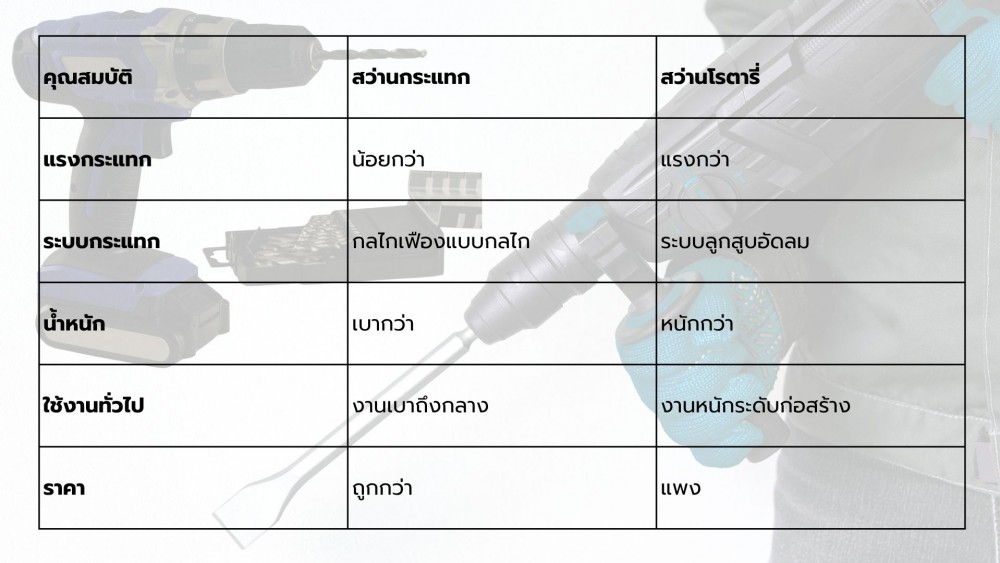
If you prioritize value, ease of use, and do not regularly handle heavy-duty drilling, an impact drill covers your needs very well. But if you are a contractor who needs to drill frequently, drill deep, or work on construction sites, I recommend investing in a rotary hammer because it is more durable, more powerful, and genuinely designed to handle heavy workloads.
Does an impact drill use the same drill bits as a standard drill?
Anyone interested in buying a new drill or looking to upgrade from a standard drill to an impact drill/hammer drill might wonder: can existing drill bits be used with an impact drill, or do you have to buy a whole new set?
The answer is... yes, you can.
Yes, most impact drills use the same type of chuck as standard drills. This means general drill bits for drilling wood and metal, as well as standard non-SDS masonry bits, can be used with an impact drill right away with no installation issues.
However, things to watch out for include...
- Bit Quality: In hammer mode, the bit is subjected to high vibration. Cheap drill bits or those made from insufficiently hardened materials can break easily or wear out faster than usual.
- Type of Job: For drilling masonry or concrete, choose drill bits specifically designed for that application, such as carbide-tipped masonry bits, as standard bits may burn out or break quickly.
Can SDS bits be used?
This depends on the impact drill model. Standard impact drills do not support SDS bits. However, models closer to rotary hammers may feature dedicated SDS chucks, which are exclusively compatible with specialized SDS bits.
- Most standard drill bits can be used with an impact drill.
- For heavy-duty tasks like concrete drilling, use high-quality masonry drill bits.
- Match the drill bit to the task, and always check which bit types the chuck supports.
Can an impact drill be used for light-duty tasks?
This is another common question, as many wonder, "Are impact drills meant only for heavy-duty work?" Like drilling masonry, concrete, or professional trade jobs? "If I just want to drill wood to hang pictures, or do a bit of wood and metal drilling, is buying an impact drill overkill?"
The truth is: it works great and is quite convenient.
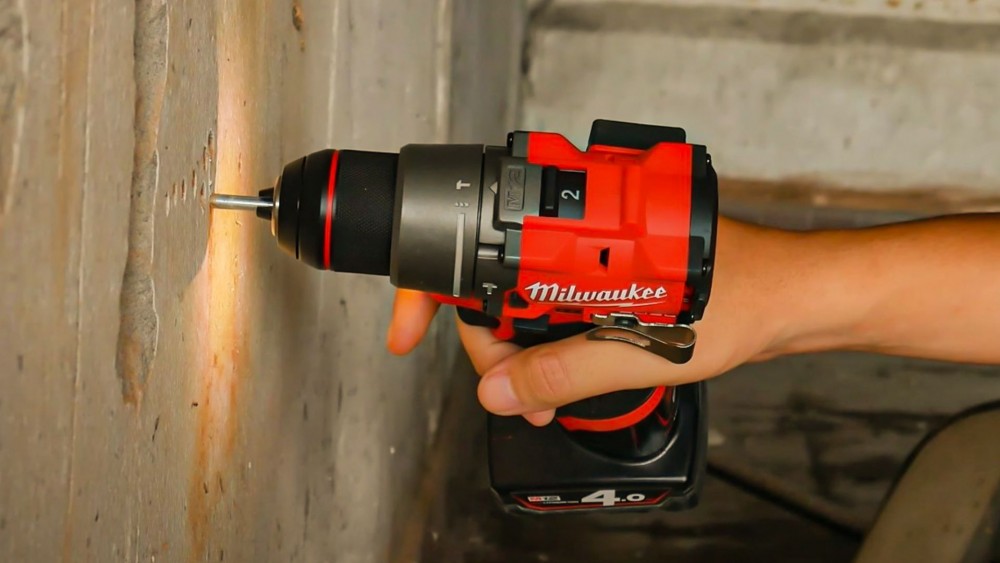
Modern impact drills are designed for both standard and impact modes. This means you can switch modes on the tool by turning off the hammer action when you don't need the pounding force, allowing it to function fully as a "standard drill."
Advantages of using an impact drill for light-duty tasks:
- No need to buy multiple tools; one tool covers it all.
- Higher torque than standard drills, easily drilling through thicker materials.
- Variable speed control makes precision tasks, such as drilling wood or thin sheet metal, easier and more accurate.
Things to watch out for:
- Impact drills might be slightly heavier than regular drills, especially cordless models that use batteries.
- The noise and vibration may be higher than with regular drills, even when the hammer mode is turned off.
Therefore, if you want an all-around drill capable of drilling both home walls and handling light DIY tasks, an impact drill is definitely the best solution.
Conclusion
An impact drill is not just a stronger regular drill; it is a tool designed to drill hard materials more easily. Suitable for both beginners and professionals, it has a wide range of uses—from small tasks around the house to effortlessly drilling cement walls. Especially nowadays, with selectable modes for both regular rotary drilling and hammer drilling, it is a truly worthwhile choice for diverse situations.
Whether you are looking for a drill to keep at home or choosing a reliable companion tool for professional work, hammer drill it is an answer worth considering.