


 EN
 ไทย


Customers Also Purchased


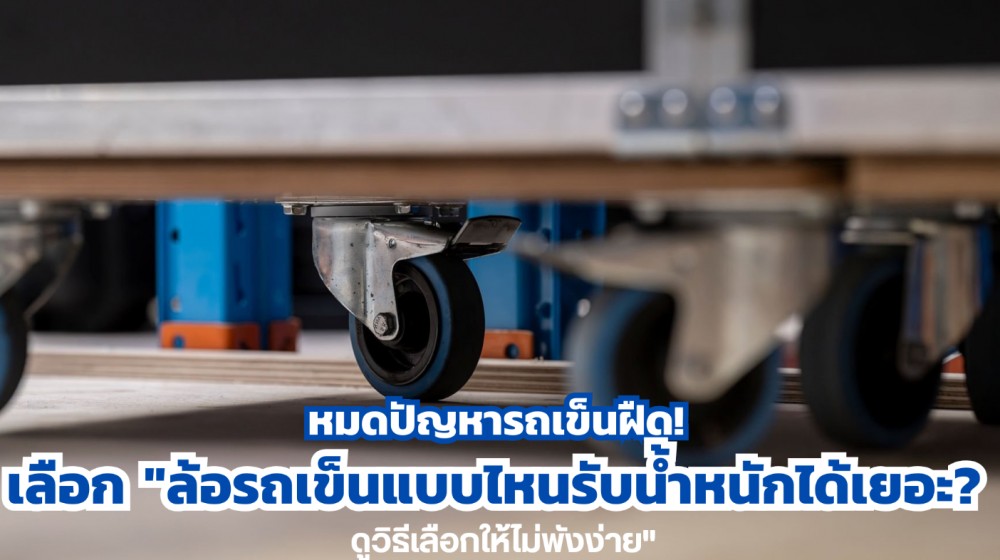
Have you ever been frustrated by a cart that's hard to push? Sometimes it's stiff, the wheels get stuck, it makes loud squeaking noises when moving, or the wheels break completely—even when the load isn't that heavy. That's because choosing "Cart wheels" is not as trivial a matter as we might think. It is actually extremely important for our daily use.
Choosing the wrong type of trolley wheels—ones that don't suit the floor surface or cannot handle the load weight—not only wastes your energy and makes pushing difficult, but can also cause wheels to wear out quickly, damage the trolley, and potentially drop and damage the transported goods.
Today, we're going to discuss what to look for when choosing trolley wheels to completely eliminate the problem of stiff, hard-to-push trolleys. We will look at the properties of each wheel type to see which is suitable for what surface and load capacity, helping you get the best value and performance from your choice.
Understanding the Basics: Why Are Trolley Wheels So Important?
You've probably seen many types of trolleys, from supermarket shopping carts and factory utility carts to heavy-duty trolleys used on construction sites. In every move, the key heart of the cart is the "trolley wheel."
Trolley wheels aren't just parts that make the cart move; they also bear the entire load placed on the trolley. Just imagine if the wheels are poor quality, cannot support the weight, or are unsuitable for the surface—pushing the cart immediately becomes a struggle, or worse, the wheels could crack, break, or come off entirely.
Therefore, choosing the right trolley wheels that fit your application is something you should never overlook.
Choosing "Trolley Wheels" to Match the Surface: Smooth Rolling with No Hiccups
The surface where you frequently use the trolley is one of the very first factors to consider, as each type of wheel is designed for different floor surfaces.
1. Wheels for smooth surfaces (e.g., polished concrete, tiles, epoxy factory floors)
Polyurethane (PU) wheels: This type of wheel is very popular for smooth surfaces.
- Pros: Highly durable, excellent wear resistance, won't easily scratch or damage floors. They also resist oil and certain chemicals, and roll quietly.
- Suitable for: Factories with epoxy floors, warehouses, storage facilities, or offices that require cleanliness and floor protection against scratches.
Nylon wheels:
- Pros: Very hard, lightweight, high load capacity, and relatively affordable.
- Limitations: Can leave marks on softer floor surfaces and are slightly noisier than PU wheels when rolling.
- Suitable for: Heavy-load applications on hard, flat surfaces where noise is not a major concern.
Cast iron wheels:
- Pros: Extremely strong, capable of carrying massive loads, and exceptionally resistant to wear.
- Limitations: Very heavy, hard to push on uneven surfaces, easily scratches floors, and produces a lot of noise.
- Suitable for: Extremely heavy-duty loads on steel or very strong concrete floors where noise or floor marking is not a concern at all.
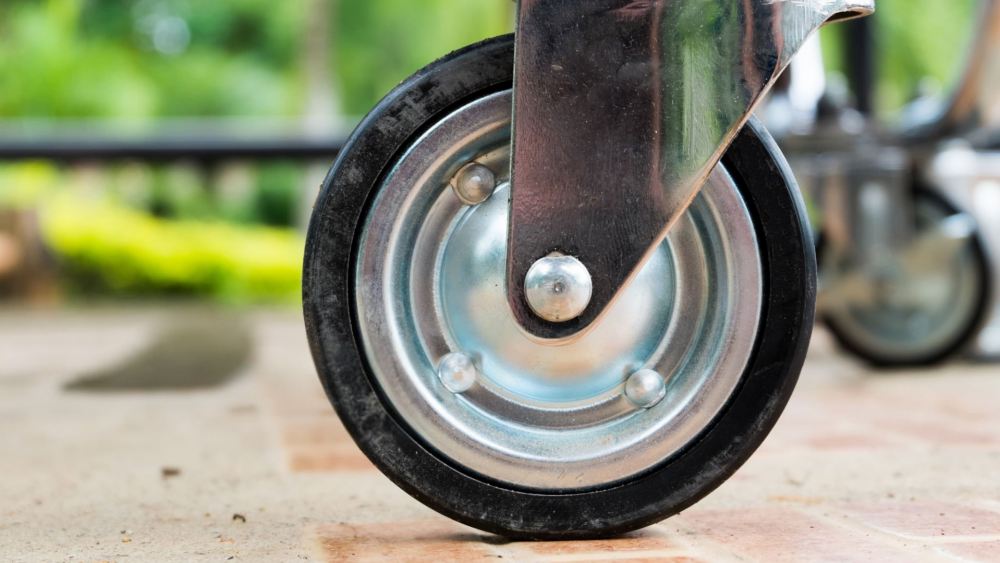
2. Wheels for rough surfaces or surfaces with debris (e.g., concrete, dirt, gravel, asphalt)
Solid Rubber Wheels:
- Pros: Highly elastic, absorbs shocks well, allows for relatively smooth rolling over rough surfaces, produces low noise, and offers good surface traction.
- Cons: May wear out faster than some rigid wheels when carrying very heavy loads or constantly rolled over rough ground.
- Suitable for: General use on concrete, asphalt, or surfaces with small debris.
Pneumatic Rubber Wheels:
- Pros: Best shock absorption because of the air inside, allowing for very smooth rolling over rough ground, dirt, gravel, or grass, while helping protect the transported goods.
- Cons: Requires regular tire inflation like car tires, with the risk of punctures or flats when encountering sharp objects.
- Suitable for: Outdoor work, construction sites, agricultural areas, or very uneven surfaces that require a smooth, cushioned roll.
- Keep in mind: Check the surface you frequently push your cart on and choose wheels that suit it for smooth rolling and long-lasting use.
Choose "Cart Wheels" suited to the weight you need to carry: handle the load without breaking easily
Besides the floor surface, the weight of the items you transport is equally important, as each type of wheel has a different load capacity rating.
1. Wheels for light loads (less than 50 kg per wheel)
Plastic/PP Wheels:
- Pros: Lightweight, most affordable, non-marking on floors.
- Cons: Low load capacity, less impact-resistant, wears down relatively fast.
- Suitable for: Light-duty carts at home or in offices that carry light loads and are not used frequently.
2. Wheels for medium loads (50-200 kg per wheel)
Polyurethane (PU) Wheels: The best choice for medium loads.
- Pros: Strong, durable, high load capacity, non-marking, and quiet rolling
- Suitable for: Carts in warehouses, storage facilities, and supermarkets carrying medium loads
Solid Rubber Wheels:
- Pros: Good shock absorption, suitable for slightly uneven surfaces, handles medium loads well
- Suitable for: Utility carts and general work in factories
3. Wheels for heavy to extra heavy loads (200 kg and above per wheel)
Nylon wheels:
- Pros: High hardness, excellent load capacity
- Limitations: Can be noisy and may scratch certain floor surfaces
- Suitable for: Heavy-duty factory work on smooth concrete floors
Cast iron wheels:
- Pros: Strongest, extremely high load capacity, exceptional wear resistance
- Limitations: Very heavy, hard to push, scratches floors, and very noisy
- Suitable for: Extra heavy-duty industrial work carrying loads of several tons on steel floors or very strong concrete floors
Polyurethane on Cast Iron Wheels:
- Pros: Combines the best of both materials; the cast iron core handles massive loads, while the polyurethane tread ensures smoother rolling, reduced noise, and floor protection
- Suitable for: Heavy-duty applications requiring a balance between load capacity and rolling smoothness
Things to remember: Calculate the maximum load you will carry, then choose wheels with a sufficient total load capacity across all wheels, including a safety margin.
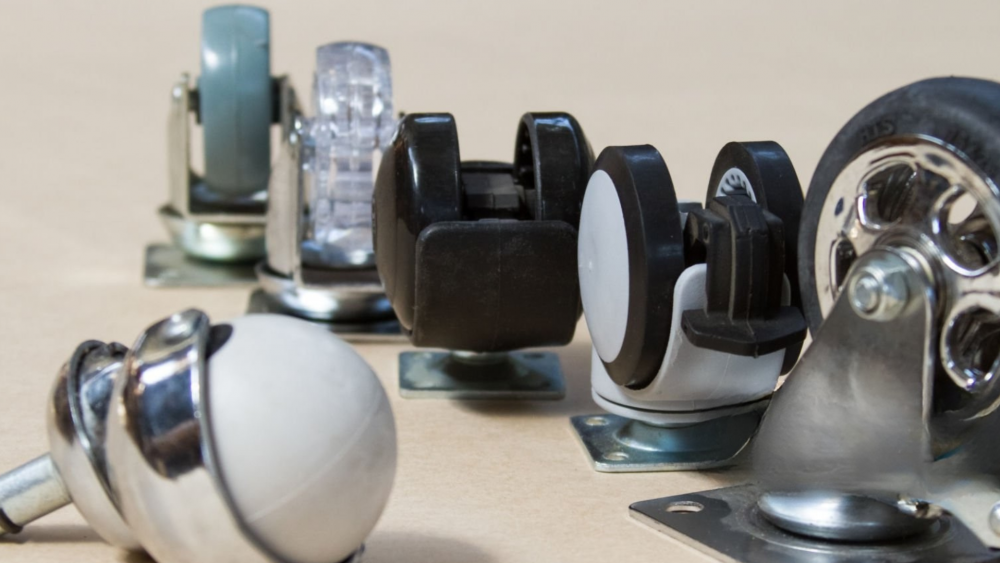
3 other important factors to consider
Besides wheel type and load capacity, here are 3 more points to examine carefully before purchasing caster wheels.
1. Caster Type and Mounting
Rigid Caster: The wheel can only move straight forward and backward.
- Pros: Provides stability when pushing in a straight direction
- Suitable for: Carts that require straight-line stability, such as pallet trucks.
Swivel Caster: Wheels can rotate 360 degrees, making steering easy.
- Pros: Highly maneuverable, turns easily, suitable for pushing in tight spaces or where frequent U-turns are needed.
- Suitable for: General utility carts, supermarket carts.
Brake Caster: Casters equipped with a braking system that helps lock the wheels in place.
- Pros: Increases safety when parking carts on slopes or when stopping the cart to load and unload goods.
Recommendation: There should be at least 1-2 brake casters per cart for operational safety.
2. Wheel Diameter
Small Wheels:
- Pros: The cart has a lower profile, making it easier to control in tight spaces.
- Limitations: Difficult to push on rough surfaces, and may easily get stuck when encountering small obstacles.
Large Wheels:
- Pros: Easier to push on uneven surfaces, better at rolling over small obstacles.
- Limitations: The cart will be taller and may not be suitable for very confined spaces.
Recommendation: If the surface is relatively rough or you want effortless pushing, choose wheels with a slightly larger diameter.
3. Bearing Quality
- Wheel bearings have a huge impact on smooth rolling. Wheels with high-quality bearings (such as Ball Bearings) provide extremely smooth rolling, require less effort, operate quietly, and are more durable.
- Some wheels may only use bushings, which might not roll as smoothly and can be noisier.
Recommendation: If you need smooth rolling, reduced effort, and continuous use, choose wheels with high-quality bearings.
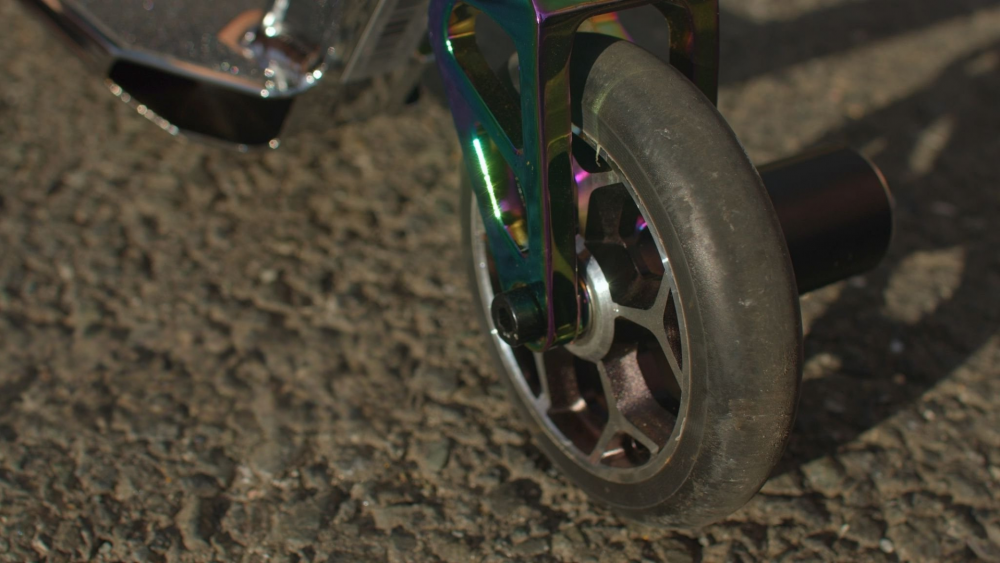
Choosing the right "caster wheels" makes life so much easier!
Choosing Casters and Wheels It may seem like a small detail, but it is actually the key heart to making your trolley perform well, efficiently, and most importantly, work safely.
Before deciding to buy trolley wheels or a complete trolley, try using the checklist we discussed today—from the surfaces you use most frequently and the weight of the items you will carry, to the type of wheels and other features.
Choosing the right trolley wheels not only saves effort when pushing, but also extends the trolley's lifespan, lowers maintenance costs, and most importantly, reduces the risk of workplace accidents. Choose the "right" one, and your work life will be much easier.