


 EN
 ไทย


Customers Also Purchased


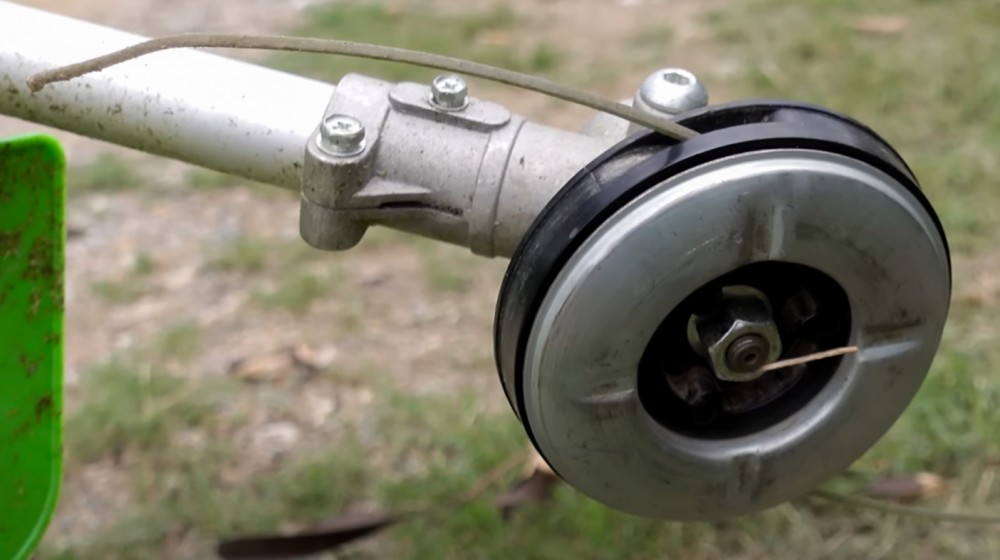
Have you ever been happily trimming your lawn when suddenly—CLANG! The loud snap of the trimmer line breaking echoes out! Then you have to sit down in frustration and replace it, even though you chose a String Trimmer line that looks durable, tough, or expensive, yet you still run into the same old problem until many people start asking: Why does it break so easily? In this article, we will uncover 5 main reasons why grass trimmer lines snap faster than they should and explain the effect of each cause, along with practical tips you can apply to find out which type of work will extend line life and maximize performance.
1. Choosing the wrong type of trimmer line
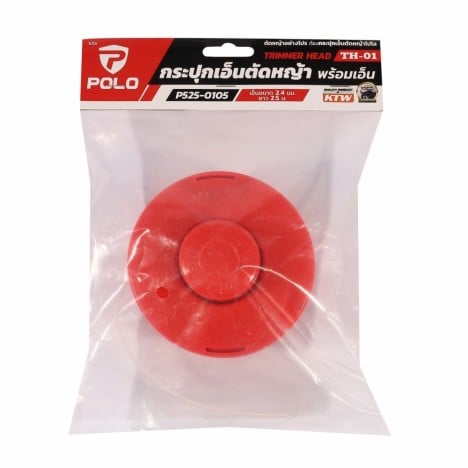
Have you ever felt like you're heading into a garden battle, but brought the wrong weapon? That is exactly the situation when you choose the wrong type of trimmer line. Not only does it fail to cut effectively, but it can also ruin your grass trimmer prematurely. The root of the problem: many people pick round trimmer lines because they are cheap and widely available. However, round trimmer lines are only suitable for light-duty tasks, such as even lawns, tender grass, or regularly maintained lawns. If used on thick grass, weeds, or tough branches, the line cannot withstand the impact and easily breaks. Because a round shape lacks sharp cutting edges and cannot disperse impact force effectively, high friction occurs and snaps the line quickly, especially in areas with obstacles or hard surfaces.
Matching the job type to the trimmer line shape
- Light-duty work: Round trimmer line — ideal for cutting soft grass on home lawns or smooth areas without weeds or hard stems.
- Medium-to-heavy work: Square trimmer line — ideal for areas with dense grass or weeds, requiring higher cutting power for speed and efficiency.
- Quiet operation in residential areas: Twisted trimmer line — reduces noise while cutting; ideal for use in neighborhoods or quiet zones, such as near schools and hospitals.
- Overgrown areas: Wire-reinforced trimmer line — used for dense weeds in neglected, overgrown areas. Offers the highest strength and durability.
Recommendation
Before buying a grass trimmer line, inspect your job site and carefully read the packaging label to see what types of applications it supports—for example, clear indications for light-duty, heavy-duty, or noise-reduction properties. Also, check the compatible diameter and the manufacturer's recommendations regarding compatible grass trimmers to prevent the line from snapping quickly or not working at all.
2. Using a trimmer line size incompatible with the trimmer head and machine
Line too thick = High drag
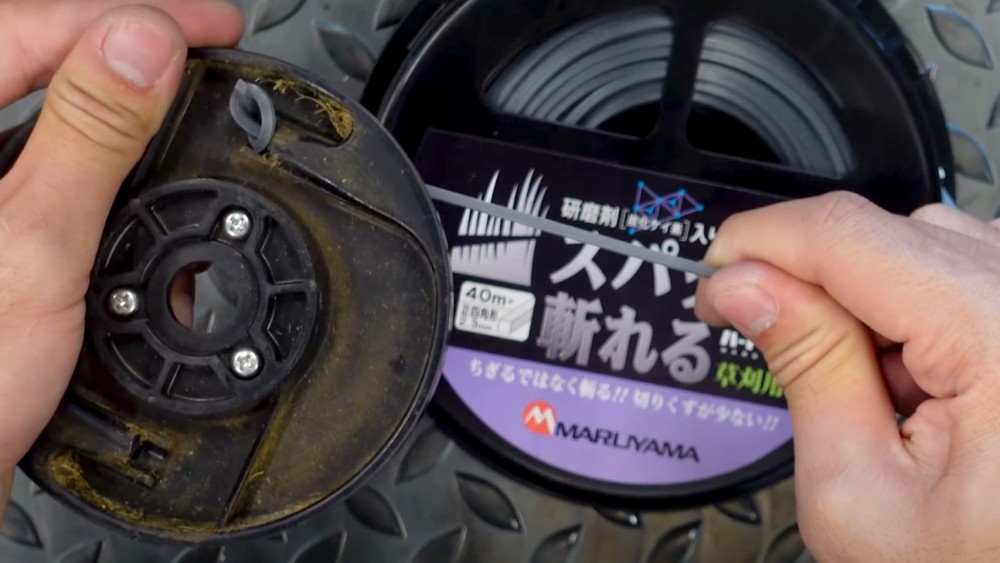
Many people mistakenly believe that thicker lines are always more durable, which is only partly true. If your machine lacks sufficient power, such as compact or electric trimmers, installing a 3.0 mm line will cause the trimmer head to drag, overload the motor, and risk snapping midway or burning out the motor. Furthermore, the drag generated during rotation makes it harder to control cutting direction, forcing the user to exert more effort and tire out faster. In addition, an overly thick line can cause an unbalanced rotation, leading to premature trimmer head wear or loose parts caused by excessive vibration.
Line too thin = Breaks easily
Conversely, using an undersized line on dense weeds or hard terrain—such as gravelly soil or ground interspersed with stones—will cause the line to tear or wear out very quickly because the impact and friction far exceed what a thin line can handle. An undersized line can also result in unclean cuts, requiring multiple passes, which builds up heat and vibration—all contributing to premature and uneconomical line wear.
Recommendation
Check the supported line size in your machine's user manual or directly on the trimmer head. Some models have recommended sizes marked, such as "For 2.0–2.4 mm line only," or feature a clear label on the head warning against exceeding the specified diameter, as it creates high rotational drag and risks overheating or rapid damage to the machine. Pairing your trimmer with the right line size ensures smooth cutting and extends the lifespan of both the line and the tool in the long run.
3. Operating at the wrong angle and improper cutting technique
Striking directly = Guaranteed breakage
Swinging the trimmer head too vertically or directly down causes the ends of the line to strike the ground or hard surfaces directly, leading to premature wear or snapping—especially if the ground has stones, gravel, or construction debris. Repeated whipping also causes kickback force on the line, which not only snaps the line but also causes the trimmer head to wear out faster.
Angled position = Long life
When trimming grass, slightly tilt the trimmer head at about 30–45 degrees so that the tips of the line make contact at an angle. This reduces the direct impact and friction against the ground or hard surfaces, making the line last much longer. It also reduces kickback force transmitted to the user's hands, reducing fatigue during work and helping you control the cutting direction more precisely.
Recommendation
Try practicing controlling the trimmer head angle in an open area before actual use. This will help you move more naturally and avoid unnecessarily striking the line. Practicing in an open field also helps users become familiar with the centrifugal force of the machine and learn the right rhythm to tilt the head so that the line tips operate at maximum efficiency without touching hard ground or other objects that could cause the line to wear or snap quickly.
4. Encountering hard surfaces or debris
Concrete, stones, bricks = The enemies of trimmer line
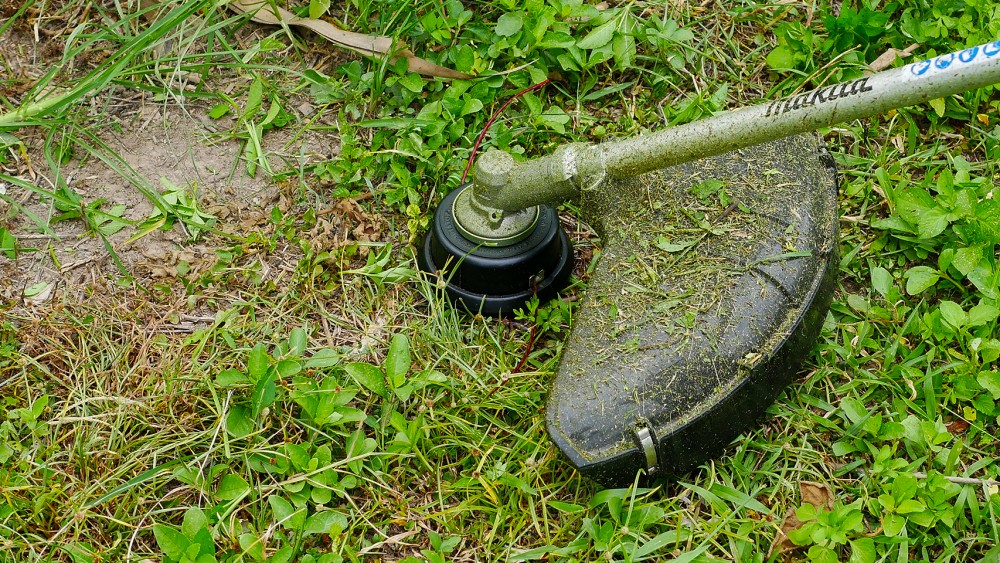
Trimming grass around stones, brick fragments, or concrete surfaces causes the line to wear down much faster than normal because these materials are hard and sharp enough to quickly scrape or tear the line. In addition, shock waves can occur when the tips hit hard ground, causing the line to twist or snap immediately, especially when spinning at high speeds or if the head angle is improper. Therefore, these areas should never be overlooked, no matter how small they seem, as they directly impact the lifespan of the trimmer line.
Not clearing the area before trimming = Guaranteed breakage
Some people trim grass without checking the area first for wires, nails, bottle caps, stones, or other hard objects hidden in the grass or soil. When the line hits these objects, sudden resistance causes it to snap immediately. In some cases, it can cause debris to ricochet back at the user, which not only damages the trimmer line but also poses a serious safety hazard.
Recommendation
Before trimming grass, walk through the area and clear away all hard objects, especially along walkways, corners, under bushes, or near garden beds where debris often hides—such as bottle caps, broken tiles, nails, or plastic parts concealed in the grass. Even if they are not immediately visible, spending just a few minutes clearing the area before starting can significantly extend line life and reduce the risk of accidents.
5. Trimmer line degrades from improper storage
Sun exposure = Brittle, cracked, quick to break
Storing trimmer line in excessively hot places or under direct sunlight causes the plastic material to degrade, become brittle, and lose its elasticity, as UV rays from the sun accelerate the breakdown of polymers in the line. Leaving it outdoors or in a car parked in the sun where temperatures exceed 40–50°C makes the line dry, stiff, and much more brittle than usual, resulting in cracks or easy breakage during use, even if it is brand new.
Moisture = Stiff or misshapen spooling
Line exposed to moisture or kept in damp, stuffy areas can harden or lose its shape, causing uneven feeding, erratic rotation, or frequent breakage. Moisture also causes the plastic to absorb water and alter its properties, becoming rough, less flexible, and unevenly coiled. Especially when stored in areas with fluctuating temperatures or condensation, this moisture accelerates material degradation.
Recommendation
Store trimmer line in a ziplock bag or a dry cabinet, away from sunlight, heat, and moisture. If not used up within the season, store it in an airtight container or wrap it in moisture-proof plastic along with a desiccant pack to help the plastic maintain its elasticity longer. Keep it in a temperature-stable location, such as a tool room or an indoor equipment shelf.
Conclusion
No matter how good a trimmer line you choose, using it improperly is just ruining a good product faster. Understanding proper care, mastering operation techniques, and choosing the right line for your machine and task will definitely keep you from having to replace your line every 5 minutes.